


Mobile Network and Internet in Srinagar During Winter
Understand mobile network and internet access in Srinagar during winter, including connectivity expectations, possible weather-related disruptions and practical preparation for travellers.
+91 9910402252
admin@chalbanjare.com


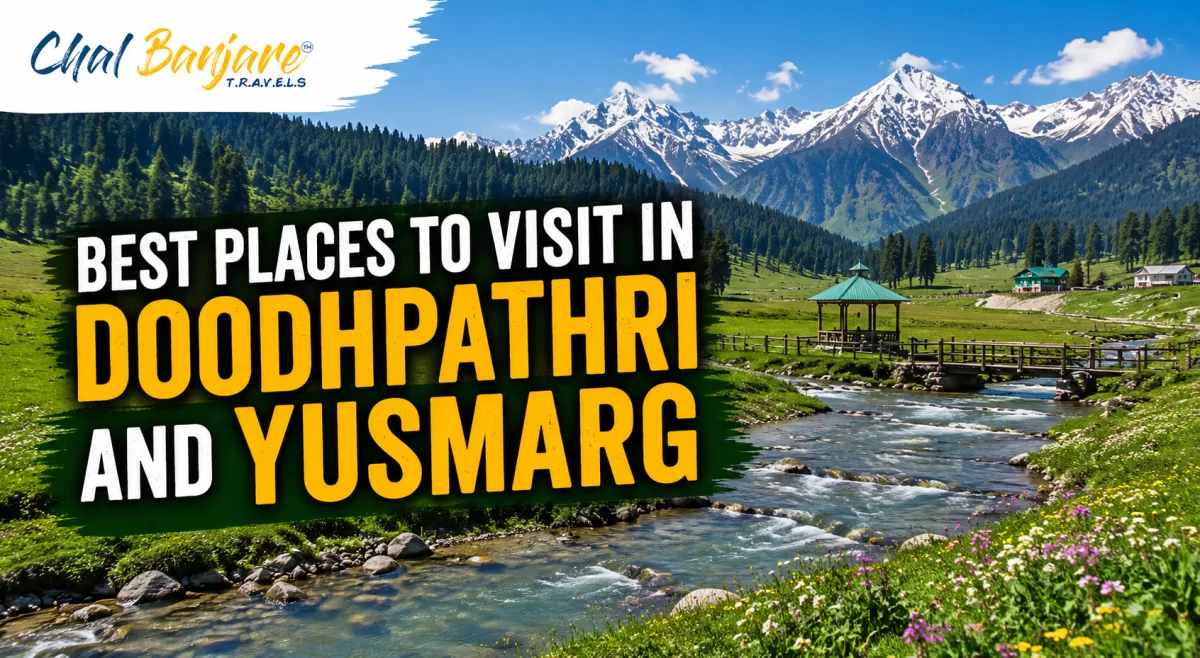
Doodhpathri and Yusmarg offer lush meadows, rivers, pine forests, hidden valleys, and peaceful landscapes, making them among Kashmir’s best offbeat destinations.
Doodhpathri is one of Kashmir's most attractive meadow destinations, located in the Budgam district at the foothills of the Pir Panjal range. The destination is known for expansive grasslands, gently rolling hills, glacier-fed streams, and surrounding conifer forests that remain relatively less commercialized than Gulmarg or Pahalgam. Visitors are welcomed by open landscapes where mountain peaks, grazing fields, and flowing water create a peaceful natural setting throughout the warmer months.
Unlike destinations centred around multiple built attractions, Doodhpathri is appreciated for its natural scenery. Wide meadows stretch across the valley floor while small wooden bridges, mountain streams, and scattered tree clusters provide changing viewpoints during short walks. The landscape transforms continuously with shifting sunlight, passing clouds, and seasonal wildflowers, making every section of the meadow visually distinct without requiring long hikes.
Visitors benefit from walking beyond the immediate roadside areas to appreciate the full scale of Doodhpathri's meadows. A slower pace allows changing perspectives of rivers, forests, and surrounding mountains while preserving the peaceful character that makes the destination unique.
Beyond the open meadows, Doodhpathri contains numerous natural attractions that contribute to its reputation as a peaceful mountain retreat. Glacier-fed streams flow through the valley before joining larger river systems, while dense conifer forests surround many sections of the grasslands. These forests provide shade during warmer months and create an attractive contrast with the open alpine landscape.
Several informal walking routes follow streams through forest edges and quiet meadow sections, allowing visitors to enjoy nature without undertaking difficult trekking. The sound of flowing water, fresh mountain air, and surrounding woodland combine to create a calm environment suited to photography, birdwatching, and relaxed outdoor exploration. Since much of the attraction is natural, visitors should avoid disturbing vegetation or leaving waste behind.
Exploring these streams and forests reveals a quieter side of Doodhpathri beyond its famous meadows. Spending time within these natural surroundings provides a deeper appreciation of the valley's ecological diversity and peaceful atmosphere.
One of Doodhpathri's greatest strengths is the number of peaceful locations available for visitors seeking relaxation rather than busy sightseeing. Broad meadow sections, riverside clearings, forest edges, and elevated grassy slopes offer opportunities to enjoy uninterrupted views while listening to flowing water and mountain winds. Even during the tourist season, quieter areas can often be reached by walking a short distance from the main visitor zones.
These locations encourage slow travel where visitors spend time observing changing weather, seasonal flowers, grazing livestock, and distant mountain ridges instead of moving rapidly between attractions. The valley is particularly rewarding for families, photographers, and nature lovers looking for a calm outdoor environment within easy reach of Srinagar.
Visitors who spend time away from the busiest parking and picnic areas often discover Doodhpathri's most memorable landscapes. Allowing enough time for quiet walks and riverside relaxation transforms the destination from a short sightseeing stop into a rewarding mountain nature experience.
Yusmarg is one of Kashmir's most peaceful meadow destinations, situated in the Budgam district and surrounded by dense forests and the Pir Panjal mountain range. Unlike larger tourist centres, Yusmarg retains a calm atmosphere where open grasslands, pine forests, mountain streams, and distant snow-covered peaks dominate the landscape. The destination is well suited to visitors seeking nature, photography, and relaxed outdoor exploration.
The central meadow extends across a broad valley where grazing horses, traditional wooden structures, and surrounding forests create an authentic Himalayan setting. Walking across the open grasslands reveals changing views of nearby mountains, while seasonal flowers and cool mountain breezes enhance the overall experience. Since commercial activity remains limited, the emphasis stays firmly on enjoying the natural surroundings.
Exploring Yusmarg slowly allows visitors to appreciate its changing mountain scenery, quiet atmosphere, and open landscapes. Spending time beyond the main arrival area reveals broader views and a stronger connection with the surrounding natural environment.
Sang e Safed, meaning "White Stone," is one of the most popular natural attractions near Yusmarg and is reached by walking or pony rides through forests and meadows. The route itself forms an important part of the experience, passing through peaceful woodland, open grasslands, and mountain streams before reaching the valley. The landscape gradually becomes more rugged while maintaining the quiet atmosphere that characterizes the Yusmarg region.
The surrounding area provides attractive viewpoints where visitors can observe river valleys, forests, and distant mountain ridges. Seasonal vegetation, flowing streams, and cool mountain air make the journey enjoyable even before reaching the final destination. Visitors should wear suitable footwear because sections of the trail may become muddy or uneven after rainfall.
The journey to Sang e Safed should be enjoyed as much as the destination itself. Frequent pauses along the trail reveal changing landscapes that highlight the natural beauty of Yusmarg beyond its central meadow.
Yusmarg's forests and streams create numerous opportunities for relaxed outdoor exploration. Conifer woodlands surround much of the valley, while clear mountain streams cross open meadows before flowing towards lower elevations. These natural features provide ideal settings for leisurely walks, photography, birdwatching, and quiet breaks away from busy tourist environments.
The peaceful atmosphere encourages visitors to move at a slower pace while appreciating seasonal changes across the landscape. During summer, fresh greenery dominates the forests, whereas autumn introduces warm colours throughout the surrounding vegetation. Visitors should remain on established paths and help preserve the area's natural beauty by avoiding disturbance to local wildlife and vegetation.
Yusmarg rewards visitors who take time to appreciate its forests, streams, and peaceful mountain atmosphere rather than treating it as a quick sightseeing destination. A relaxed day spent exploring these natural surroundings offers one of the most tranquil experiences in Kashmir.
While most visitors spend their time in the central meadow, several quieter areas around Doodhpathri offer equally rewarding scenery with far fewer people. Gentle hills surrounding the valley provide elevated viewpoints overlooking the grasslands, winding streams, forest edges, and distant Pir Panjal mountains. These natural viewpoints are not developed observation platforms but open grassy slopes and roadside locations where visitors can appreciate the landscape from different perspectives.
Walking a short distance beyond the busiest picnic areas often reveals peaceful corners where the sounds of flowing water and mountain winds replace the activity around the main tourist zone. Early morning is particularly suitable for visiting these quieter locations because the weather is generally calmer, mountain visibility is better, and visitor numbers remain low. These hidden viewpoints allow travelers to experience the valley's natural beauty without feeling rushed.
Visitors who explore beyond the main meadow discover that Doodhpathri's greatest attraction lies in its peaceful natural setting rather than a single viewpoint. Allowing additional time for relaxed walks often leads to the valley's most memorable landscapes.
The forests surrounding Doodhpathri contain numerous small streams, shaded clearings, and quiet woodland sections that many visitors overlook. These areas provide a refreshing contrast to the open meadows, with tall conifer trees creating cool walking environments during warmer months. Fresh mountain water flows through narrow channels before joining larger streams across the valley, adding movement and natural sound throughout the forest landscape.
Several informal walking paths pass through these woodland areas, allowing visitors to experience the transition between dense forest and open meadow. Seasonal wildflowers, moss-covered rocks, wooden bridges, and gently flowing streams create attractive natural scenes that reward slower exploration. Since these are fragile mountain ecosystems, remaining on existing paths helps protect vegetation and prevents unnecessary erosion.
Exploring Doodhpathri's hidden forests and streams provides a different perspective from the open meadow landscapes. Visitors who combine both environments gain a more complete appreciation of the valley's natural diversity and peaceful mountain character.
Doodhpathri's surrounding countryside contains several offbeat landscapes where visitors can experience Kashmir's mountain environment without the activity found near the main visitor zone. Quiet grazing areas, forest roads, small streams, and lesser-used meadow sections offer opportunities for slow travel, photography, and peaceful outdoor exploration. These locations remain attractive because they preserve their original natural appearance with minimal commercial development.
Exploring these quieter landscapes does not require demanding trekking. Gentle walks through meadows and forests reveal changing views of mountain ridges, scattered shepherd shelters, grazing livestock, and seasonal wildflowers. Travelers should carry drinking water and suitable footwear because facilities become less frequent beyond the main tourist area.
The quieter sections around Doodhpathri reward visitors who prefer peaceful landscapes over crowded sightseeing areas. By spending time beyond the main meadow, travelers discover a more authentic and tranquil side of this beautiful mountain destination.
Beyond Yusmarg's central meadow lie several peaceful valleys and mountain landscapes that receive far fewer visitors than the main tourist area. These remote surroundings combine forests, grazing meadows, small streams, and gently rising mountain slopes into quiet environments where the emphasis remains firmly on nature. The routes towards Sang e Safed and nearby forest clearings provide opportunities to explore scenery that changes gradually with every kilometre travelled.
Many of these valleys remain free from large commercial facilities, allowing visitors to appreciate uninterrupted mountain views and the natural rhythm of the landscape. Seasonal flowers, cool mountain air, and the sound of flowing streams enhance the experience throughout the warmer months. Visitors looking for relaxation rather than structured sightseeing often find these hidden locations to be the highlight of their journey.
These hidden valleys demonstrate why Yusmarg is appreciated by travelers looking for slower, quieter experiences in Kashmir. Taking time to walk beyond the central meadow allows visitors to experience the region's untouched mountain environment more fully.
Several lesser-used walking trails around Yusmarg pass through conifer forests, open grasslands, and elevated viewpoints overlooking surrounding valleys. While these routes are generally easier than major trekking trails, they provide rewarding opportunities to experience the area's diverse landscapes without large crowds. Forest sections remain cool even during summer afternoons, making them particularly enjoyable for nature walks.
The viewpoints reached along these trails reveal broad panoramas across meadows, rivers, and distant mountain ranges. Visitors should remain on established paths because woodland terrain may include uneven roots, loose stones, and seasonal mud after rainfall. Early departures also help avoid afternoon weather changes while improving opportunities for photography.
These lesser-known trails highlight the diversity of Yusmarg's landscapes beyond its central meadow. Combining forest walks with elevated viewpoints allows visitors to appreciate both the woodland environment and the broader Himalayan scenery surrounding the valley.
The wider Yusmarg region remains one of the quieter natural destinations in Kashmir because much of its surrounding landscape has experienced relatively limited commercial development. Forests, streams, mountain meadows, and open valleys continue to dominate the scenery, creating an environment where nature rather than infrastructure remains the primary attraction. Visitors often discover that the peaceful atmosphere itself becomes one of the destination's greatest strengths.
Exploring these untouched surroundings encourages slow travel. Rather than focusing on individual attractions, visitors can appreciate changing weather, forest sounds, grazing horses, mountain streams, and seasonal colours throughout the day. Carrying essential supplies and allowing extra time for unplanned stops helps create a more relaxed experience while preserving flexibility within the itinerary.
Visitors who explore beyond the main tourist area discover that Yusmarg's greatest attraction is the harmony between forests, meadows, streams, and surrounding mountains. A slower pace allows the destination's untouched natural beauty to be appreciated in its fullest form.
Doodhpathri and Yusmarg together represent two of Kashmir's finest destinations for experiencing untouched alpine landscapes. Both regions combine expansive meadows, glacier-fed streams, dense conifer forests, and panoramic Himalayan scenery while maintaining a quieter atmosphere than many of Kashmir's more commercial tourist destinations. Although they share similar natural features, each destination offers a distinct landscape shaped by its elevation, terrain, and surrounding forests.
Doodhpathri is characterised by rolling grasslands intersected by fast-flowing streams and surrounded by open mountain slopes, while Yusmarg combines broad meadows with dense forests and the backdrop of the Pir Panjal range. The gradual transition between grasslands, rivers, woodland, and mountain ridges creates diverse scenery suitable for sightseeing, photography, nature walks, and quiet outdoor relaxation throughout the warmer months.
Visitors who combine Doodhpathri and Yusmarg within the same itinerary experience two complementary landscapes that showcase Kashmir's natural diversity. Allowing sufficient time at both locations creates a richer understanding of the region's forests, rivers, and alpine meadows.
Both destinations provide numerous peaceful outdoor locations where visitors can enjoy uninterrupted mountain scenery away from crowds. Quiet riverside meadows, shaded forest clearings, elevated grassy slopes, and woodland trails create natural spaces suitable for relaxation, photography, birdwatching, and leisurely walks. Unlike destinations focused on structured attractions, Doodhpathri and Yusmarg encourage visitors to appreciate nature through unhurried exploration.
Moving only a short distance away from the busiest arrival points often reveals secluded areas where the sounds of flowing water and birds replace visitor activity. These peaceful locations remain especially attractive during early mornings when mist lingers across the meadows and the surrounding forests remain calm. Visitors should remain on established paths to protect the fragile mountain vegetation and preserve these quiet natural environments.
These quiet outdoor locations reward visitors who value relaxation over fast-paced sightseeing. Spending time in forests, beside rivers, or across open meadows allows a deeper appreciation of Kashmir's natural beauty and the tranquil atmosphere shared by both destinations.
Doodhpathri and Yusmarg are particularly well suited to slow travel because neither destination depends on long checklists of attractions. Instead, the experience revolves around observing changing landscapes, walking through meadows, exploring forest paths, photographing mountain scenery, and enjoying the peaceful atmosphere created by relatively limited commercial development. Every hour spent within these valleys reveals new perspectives shaped by changing light, weather, and seasonal vegetation.
Visitors who spend an entire day or more at each destination often experience far more than those making short sightseeing stops. Morning mist across the grasslands, afternoon sunlight illuminating surrounding forests, and evening shadows stretching across the valleys all create different visual experiences. This slower approach also allows opportunities to interact respectfully with local communities and appreciate the rhythm of mountain life beyond conventional tourism.
Slow travel transforms Doodhpathri and Yusmarg from simple sightseeing stops into meaningful nature experiences. Visitors who embrace this approach discover that the destinations' greatest attractions are their peaceful landscapes, changing mountain scenery, and authentic Himalayan environment.
Both Doodhpathri and Yusmarg offer numerous natural viewpoints where visitors can appreciate broad panoramas of alpine meadows, dense forests, winding streams, and the surrounding Himalayan mountains. These viewpoints are generally formed by gentle hillsides, meadow edges, and elevated walking paths rather than constructed observation decks. The open terrain allows uninterrupted views that change continuously as visitors move through the landscape.
In Doodhpathri, higher meadow slopes reveal sweeping views across grasslands crossed by glacier-fed streams, while Yusmarg's elevated forest edges provide impressive perspectives of the Pir Panjal mountains and surrounding valleys. Morning hours often provide the clearest visibility because clouds are generally less developed than later in the day. Visitors should allow time to explore multiple viewpoints rather than remaining near the main arrival areas.
Exploring several viewpoints throughout the day reveals how sunlight and weather transform the appearance of both destinations. Each location offers a slightly different perspective, rewarding visitors who take time to move beyond the most popular stopping points.
Elevated locations around Doodhpathri and Yusmarg provide ideal vantage points for appreciating the scale of Kashmir's mountain landscapes. From these natural rises, visitors can observe rivers flowing across open meadows, forests extending towards distant ridges, and seasonal grazing areas surrounded by towering peaks. The gradual increase in elevation creates wider perspectives while remaining accessible to most visitors through comfortable walking routes.
Landscape photographers often favour these higher viewpoints because they allow foreground elements such as meadows and streams to combine naturally with distant mountain ranges. Changing weather conditions frequently produce dramatic cloud formations, shifting light, and colourful skies that enhance panoramic photography throughout the day.
Visitors should spend time observing the landscape rather than quickly taking photographs and moving on. Changing light conditions often produce entirely different views within a short period, making these elevated locations rewarding throughout the day.
Away from the busiest sections of Doodhpathri and Yusmarg are several peaceful viewpoints where visitors can enjoy uninterrupted mountain scenery in a quiet environment. Forest openings, riverside slopes, meadow ridges, and elevated walking paths create natural observation points where the sounds of flowing water, birds, and mountain winds become part of the experience. These locations remain ideal for visitors seeking relaxation as much as sightseeing.
Because these viewpoints are scattered throughout the surrounding landscape, they encourage slow exploration rather than hurried travel. Many are reached simply by following meadow paths or forest trails for a short distance. Visitors should carry drinking water, wear comfortable footwear, and respect the natural environment by remaining on established routes while enjoying these peaceful mountain settings.
These peaceful viewpoints capture the true character of Doodhpathri and Yusmarg by combining forests, meadows, rivers, and mountain scenery within a calm natural setting. Visitors who take time to explore beyond the main tourist areas often discover the destinations' most memorable landscapes.
Doodhpathri and Yusmarg are among Kashmir's finest destinations for landscape photography because they combine expansive alpine meadows, glacier-fed streams, dense conifer forests, and distant Himalayan peaks within relatively undisturbed surroundings. Unlike heavily commercialized tourist areas, both destinations provide wide natural compositions where open grasslands gradually merge into forests and mountain ridges, allowing photographers to capture authentic Himalayan scenery.
Morning hours usually provide the clearest visibility, softer light, and fewer visitors across both destinations. The gentle slopes surrounding the meadows allow photographers to include flowing streams, grazing horses, scattered trees, and snow-covered peaks within a single frame. Since weather changes frequently in the mountains, patience often rewards photographers with dramatic clouds, changing sunlight, and shifting shadows throughout the day.
Photographers who explore beyond the central visitor areas often discover quieter compositions without crowds. Walking a short distance across the meadows frequently reveals fresh angles that highlight the peaceful character of both destinations.
Each season transforms the appearance of Doodhpathri and Yusmarg, providing completely different photographic opportunities throughout the year. Summer fills the valleys with bright green grass, flowing streams, and colourful alpine flowers, while autumn introduces golden vegetation and crisp mountain visibility. Morning mist occasionally settles across the meadows, creating atmospheric scenes before gradually lifting as sunlight reaches the valley floor.
Changing weather plays an important role in photography across these mountain landscapes. Passing clouds often create dramatic light patterns across forests and meadows, while occasional rainfall enhances colours and reflections within streams. Visitors willing to spend several hours at one location frequently experience multiple lighting conditions without changing viewpoints.
Rather than photographing only during clear weather, visitors should embrace changing mountain conditions. Mist, moving clouds, and soft rainfall often produce some of the most memorable images across these peaceful Himalayan landscapes.
Sunrise is one of the most rewarding times for photography in both Doodhpathri and Yusmarg. Early light gradually illuminates mountain ridges before reaching the meadows, producing soft shadows, gentle colours, and calm conditions across rivers and forests. Wildlife activity is also generally greater during the early hours, creating opportunities to photograph birds and grazing animals within natural surroundings.
Nature photographers can focus on much more than panoramic landscapes. Wildflowers, forest textures, flowing water, tree patterns, moss-covered rocks, and seasonal vegetation provide attractive close-range subjects throughout both destinations. Since visitor numbers remain low early in the day, photographers have greater freedom to compose images without interruption.
Visitors who begin exploring before the main tourist arrivals experience the best combination of lighting, peaceful surroundings, and natural activity. Sunrise photography captures the calm atmosphere that defines both Doodhpathri and Yusmarg throughout the warmer months.
The villages surrounding Doodhpathri and Yusmarg provide visitors with an opportunity to observe authentic mountain life beyond the meadow landscapes. Agriculture, livestock grazing, orchard cultivation, and traditional rural lifestyles continue to shape these communities throughout the year. Unlike destinations focused entirely on tourism, these villages remain active residential settlements where local customs and seasonal farming activities are still central to everyday life.
Walking respectfully through village lanes reveals traditional wooden homes, cultivated fields, grazing animals, and the slower pace of rural Kashmir. Visitors may observe seasonal farming, hay collection, and everyday household activities while appreciating the close relationship between local communities and the surrounding mountain environment.
Village visits become most rewarding when approached with patience rather than as sightseeing stops. Observing daily routines provides a deeper understanding of the communities that have lived alongside these mountain landscapes for generations.
Food around Doodhpathri and Yusmarg reflects the traditions of rural Kashmir, with meals prepared using locally available ingredients, seasonal vegetables, dairy products, and regional spices. Small local eateries and guesthouses often serve freshly prepared dishes that provide visitors with a simple yet authentic introduction to Kashmiri mountain cuisine.
Beyond food, the mountain lifestyle itself forms an important cultural experience. Daily routines revolve around farming, animal husbandry, forestry, and adapting to changing seasons. During summer, surrounding meadows become active grazing grounds, while villages prepare gradually for the colder months that follow.
Sampling local food while observing everyday village life allows visitors to appreciate the cultural identity of these mountain communities. These experiences complement the surrounding natural landscapes and provide greater insight into rural Kashmir.
Beyond the famous meadows, the communities surrounding Doodhpathri and Yusmarg offer visitors opportunities to experience Kashmir away from conventional tourist routes. Small villages, local markets, farming areas, and forest settlements reveal a quieter side of the region where traditions remain closely connected to the surrounding landscape.
Visitors who spend additional time interacting respectfully with local residents often gain valuable insights into seasonal life, traditional livelihoods, and the challenges of living in Himalayan environments. Responsible tourism, including supporting local businesses and respecting community customs, contributes positively to these mountain destinations while preserving their authentic character.
Exploring the local communities around Doodhpathri and Yusmarg adds cultural depth to a nature-focused itinerary. Combining village experiences with forests, meadows, and mountain landscapes creates a balanced journey that reflects both the natural beauty and everyday life of this peaceful region.
Summer is the most suitable season for visiting both Doodhpathri and Yusmarg because the meadows are fully green, mountain roads remain accessible, and weather conditions support comfortable outdoor exploration. During this period, glacier-fed streams flow strongly through the valleys, forests remain lush, and distant Himalayan peaks continue to display patches of snow. Pleasant daytime temperatures make sightseeing, photography, walking, horse riding, and nature exploration enjoyable throughout the day.
Long daylight hours also allow visitors to explore both destinations without rushing. Families, photographers, and nature lovers benefit from the comfortable climate, while seasonal wildflowers enhance the beauty of the grasslands. Since these destinations remain cooler than the plains even during summer, carrying a light jacket is recommended for mornings and evenings when temperatures become noticeably lower.
Travelers planning to experience both Doodhpathri and Yusmarg should allocate enough time to enjoy each destination separately. Summer provides the greatest flexibility while showcasing the valleys at their most vibrant and accessible.
Autumn transforms Doodhpathri and Yusmarg into peaceful mountain destinations with golden grasslands, colourful forests, and exceptionally clear views of the surrounding Himalayan ranges. Visitor numbers generally decrease after the peak summer period, creating a quieter atmosphere for sightseeing, photography, and nature walks. Crisp air and comfortable daytime temperatures make autumn one of the most rewarding seasons for travelers who enjoy peaceful landscapes.
The changing colours across forests and meadows create a completely different visual experience from summer. Early mornings often provide outstanding mountain visibility, while evenings become noticeably cooler because of the higher elevation. As autumn progresses, visitors should monitor weather forecasts because occasional early snowfall at higher elevations may influence travel conditions towards the end of the season.
Autumn suits visitors who prefer peaceful scenery, comfortable weather, and landscape photography. Spending time in both destinations during this season reveals a calm side of Kashmir that differs significantly from the busy summer travel period.
Winter brings heavy snowfall across Doodhpathri and Yusmarg, transforming the meadows into white mountain landscapes while also creating travel limitations. Snow-covered roads, icy conditions, and changing weather may temporarily affect accessibility depending on the intensity of snowfall. Although the scenery becomes spectacular, visitors should understand that outdoor movement and sightseeing opportunities are more restricted than during warmer seasons.
Road conditions should always be confirmed before departure because snowfall may influence vehicle movement, especially during or immediately after winter storms. Walking across snow-covered meadows also requires greater care due to slippery surfaces. Travelers visiting during winter should carry appropriate cold-weather clothing, waterproof footwear, and allow additional travel time because mountain weather can change rapidly.
Winter offers beautiful snowy landscapes for travelers prepared for mountain conditions, but visitors seeking unrestricted meadow exploration, forest walks, and comfortable sightseeing generally find summer and autumn more practical for experiencing both Doodhpathri and Yusmarg.
Doodhpathri and Yusmarg share many natural characteristics, yet each destination offers a slightly different travel experience. Doodhpathri is well known for its expansive rolling meadows, glacier-fed streams, and open valley landscapes, making it ideal for visitors who enjoy broad panoramic scenery and riverside relaxation. Yusmarg combines open grasslands with dense conifer forests and mountain trails, making it particularly attractive for travelers interested in peaceful woodland walks and longer outdoor exploration.
Visitors with limited time can comfortably enjoy either destination as a day trip, while those seeking a deeper connection with nature should consider visiting both over separate days. Families generally appreciate the easy walking areas and open spaces, photographers benefit from changing seasonal landscapes, and nature enthusiasts enjoy the quiet atmosphere that distinguishes both destinations from Kashmir's busier tourist centres.
Choosing the right destination depends largely on personal interests rather than popularity. Travelers who combine both meadows within the same itinerary gain a more complete appreciation of Kashmir's quieter mountain landscapes.
Successful travel planning begins with selecting the appropriate season and allowing realistic travel times between destinations. Both Doodhpathri and Yusmarg are reached by scenic mountain roads from Srinagar, making them suitable for day excursions or overnight stays depending on the overall itinerary. Beginning the journey early allows visitors to enjoy quieter roads, better mountain visibility, and sufficient daylight for exploring forests, streams, and meadow trails.
Travelers intending to spend more time photographing landscapes or enjoying nature walks may prefer overnight accommodation in nearby areas where available. Weather conditions should always be checked before departure, particularly during autumn and winter when changing mountain conditions may influence travel. Carrying drinking water, snacks, and warm clothing enhances comfort throughout the journey.
Careful planning ensures visitors spend more time enjoying nature rather than managing travel logistics. A relaxed itinerary allows both Doodhpathri and Yusmarg to be experienced at their natural pace while adapting comfortably to mountain conditions.
Preparing properly before visiting Doodhpathri and Yusmarg improves both safety and comfort throughout the journey. Mountain weather remains cooler than surrounding plains, even during summer, while walking routes across meadows and forests require suitable footwear. Visitors should also travel responsibly by respecting local communities, preserving natural surroundings, and following designated walking paths wherever possible.
Simple preparation allows travelers to focus entirely on enjoying the meadows, forests, rivers, and mountain scenery. Carrying essential items and maintaining flexibility in response to weather changes contributes to a smoother and more enjoyable experience across both destinations.
Thoughtful preparation helps visitors experience Doodhpathri and Yusmarg comfortably while preserving the natural beauty that makes these destinations special. With realistic planning and responsible travel, both meadows offer memorable opportunities to explore Kashmir's peaceful Himalayan landscapes.


Get customized Jammu and Kashmir tour planning designed around seasonal weather patterns, valley travel routes, snow conditions, and realistic hill road timing. Whether you are visiting for scenic landscapes, serene lakes, spiritual journeys, meadow stays
⚡ Quick Response | 💰 Free consultation | 🕒 24×7 expert support

