

Best Hidden and Less Crowded Beaches in Goa
Discover quieter beaches in Goa away from the busiest tourist areas, with insights into secluded coastal spots, accessibility, facilities and tips for peaceful beach outings.
+91 9910402252
admin@chalbanjare.com


Discover Goa beyond its beaches with historic forts, heritage churches, waterfalls, wildlife sanctuaries and cultural attractions, plus practical ideas for planning varied sightseeing experiences.
Goa has several interesting tourist attractions away from its beaches, including historical monuments, religious landmarks, waterfalls, museums and natural landscapes. These places offer opportunities to understand Goa's history, culture and environment while enjoying a different side of the state. Many attractions can be visited through organised sightseeing routes, although forest excursions and remote heritage sites require additional planning.
The Basilica of Bom Jesus is one of Goa's most important religious and historical landmarks. Located in Old Goa, it forms part of the UNESCO-listed Churches and Convents of Goa and is known for housing the mortal remains of St Francis Xavier.
Visitors can appreciate the church's Baroque architecture, religious artwork and historical significance. The basilica is suitable for families, history enthusiasts and travellers interested in Goa's Portuguese-era heritage. Dress respectfully and follow restrictions on photography and access during religious services.
Aguada Fort in North Goa was built by the Portuguese in 1612 to protect the approaches to the Mandovi River. The fort is known for its historic defensive structures, freshwater storage system and old lighthouse.
Visitors can explore the permitted areas of the fort and learn about Goa's maritime history. The elevated location also offers views of the surrounding coastline. Morning or late-afternoon visits are generally more comfortable because some sections have limited shade.
Chapora Fort is situated on a hill overlooking the Chapora River and the surrounding coastal landscape near Vagator. It is popular for historical sightseeing, photography and panoramic views.
Reaching the fort involves an uphill walk over uneven ground. Travellers should wear comfortable footwear, carry drinking water and avoid exposed edges. The visit may be unsuitable for people with significant mobility limitations.
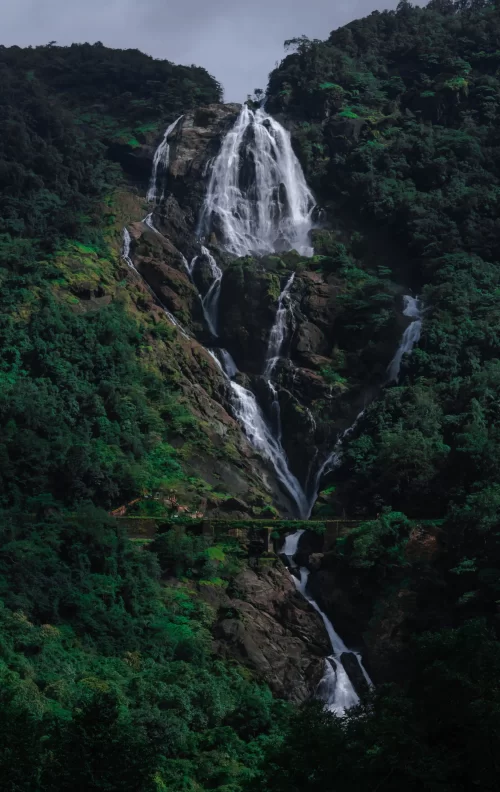
Dudhsagar Waterfalls is one of Goa's most impressive natural attractions. Located within the Bhagwan Mahavir Wildlife Sanctuary landscape, the waterfall descends through forested hills in the Western Ghats.
The waterfall is particularly powerful during the monsoon, but heavy rainfall can also lead to access restrictions. Visitors should confirm current forest department permissions, transport arrangements and safety conditions before planning an excursion.
Fontainhas is a historic neighbourhood in Panaji known for its colourful houses, narrow lanes and Portuguese-influenced architecture. It offers an opportunity to explore Goa's urban heritage away from the main tourist beaches.
Visitors can enjoy a short heritage walk, appreciate traditional buildings and explore nearby cafés. As the neighbourhood is residential, tourists should respect private property and avoid disturbing residents while taking photographs.
Shri Mangueshi Temple at Mangeshi in the Ponda region is one of Goa's important Hindu religious landmarks. Dedicated to Lord Shiva in the form of Manguesh, the temple is known for its traditional architecture and religious significance.
Travellers interested in Goa's spiritual heritage can include the temple in a cultural sightseeing route. Visitors should follow the temple's dress code, photography rules and entry arrangements.
Tambdi Surla Mahadev Temple is a historic stone temple dedicated to Lord Shiva, situated in a forested area of eastern Goa. It is associated with the Kadamba period and is recognised for its intricate stone architecture.
The temple is appealing to travellers interested in history, architecture and nature. Because it is located away from the main tourist centres, visitors should arrange dependable transport and allow sufficient time for the journey.
Dr Salim Ali Bird Sanctuary is located on Chorao Island in the Mandovi River estuary. The sanctuary protects mangrove habitats that support various birds and other coastal wildlife.
Birdwatching experiences may involve authorised guided boat excursions depending on tides, weather and operating arrangements. Early morning is generally preferable for observing birds, although sightings are never guaranteed.
The Goa State Museum maintains collections relating to Goa's history, archaeology, art and cultural heritage. It can be an interesting educational attraction for visitors who want to understand the state beyond its beaches.
Exhibition locations, public access and opening arrangements may change, so travellers should verify the museum's current operating status and venue before including it in an itinerary.
Bondla Wildlife Sanctuary is a relatively small protected area in Goa, known for its forest surroundings and nature-focused visitor experiences. It can be suitable for families and travellers interested in wildlife conservation.
Available facilities and activities depend on current forest department operations. Visitors should confirm access arrangements before travelling and should not expect guaranteed wildlife sightings.
Travellers visiting Goa for the first time can begin with Aguada Fort, Old Goa's churches and Fontainhas. These attractions provide a useful introduction to the state's history and culture without requiring difficult forest excursions.
Goa's forts reflect its maritime history, regional conflicts and long period of Portuguese rule. Many were built or strengthened to protect river entrances, coastal trade routes and important settlements. Today, these historical landmarks offer opportunities to explore old defensive structures, understand Goa's past and enjoy views of the surrounding landscape.
Aguada Fort is located near Sinquerim in North Goa. Built by the Portuguese in 1612, it was designed to protect the entrance to the Mandovi River and provide a strategic coastal defence position.
The fort is associated with a freshwater storage system that supplied ships arriving along the coast. Its historic lighthouse and defensive structures remain important features of the site.
Visitors can explore the permitted fort areas, observe the architecture and enjoy elevated coastal views. Some sections have uneven surfaces and limited shade, so comfortable footwear and drinking water are recommended.
Suggested sightseeing time: Approximately 45 minutes to one hour for the commonly accessible fort area, depending on visitor interest and current access arrangements.
Chapora Fort stands on a hill overlooking the Chapora River and the coastline near Vagator. The present fort is associated with Portuguese reconstruction in the early 18th century, although the site has an earlier history.
The remaining fort walls and elevated position provide views of the surrounding landscape. Visitors interested in photography often prefer the late afternoon, when temperatures are more comfortable.
The approach requires an uphill walk, and the ground can be uneven. Avoid visiting during heavy rainfall or attempting to climb unsafe sections of the fort walls.
Suggested sightseeing time: Approximately one hour, with additional time for the uphill approach and return.
Reis Magos Fort is situated on the northern bank of the Mandovi River, opposite Panaji. The fort has a long history connected with Portuguese coastal defence and was later used for other administrative purposes.
The restored structure now offers visitors an opportunity to explore historic spaces and heritage displays, depending on current exhibitions and visitor arrangements.
It is a useful attraction for travellers interested in Goa's history because it combines architecture, exhibitions and river views. Some areas involve stairs, so visitors with mobility limitations should check accessibility before travelling.
Suggested sightseeing time: Approximately one to one-and-a-half hours, depending on the exhibitions available.
Cabo de Rama Fort is situated on a coastal headland in South Goa. The site has a history associated with local rulers and later Portuguese control, and its name is linked to traditions concerning Lord Rama.
Visitors can explore the accessible fort area, observe the old walls and enjoy views of the surrounding coastline. The setting is quieter than many of North Goa's busiest historical attractions.
Some sections have uneven paths and exposed edges. Travellers should avoid approaching cliffs or unstable structures, especially during strong winds and rainfall.
Corjuem Fort is located on Corjuem Island in North Goa. It is a relatively small Portuguese-era fort and offers a quieter historical sightseeing experience than Aguada or Chapora.
Visitors can explore the accessible sections of the fort and appreciate its defensive layout. The surrounding island environment provides a different perspective on Goa's historical landscape.
Facilities may be limited, so travellers should confirm the route and plan the visit during daylight hours.
Tiracol Fort, also called Terekhol Fort, stands near the mouth of the Tiracol River at Goa's northern edge. The fort has a history connected with regional rulers and later Portuguese occupation.
The historic property has been adapted for hospitality use, so access to particular areas may be restricted to guests or subject to property policies. Travellers should not assume unrestricted entry to the fort complex.
The surrounding river and coastal landscape can still make the region interesting for sightseeing, provided access arrangements are confirmed.
Suggested fort sightseeing route: Aguada Fort and Reis Magos Fort can be combined during a North Goa and Panaji sightseeing day. Chapora Fort is better paired with attractions around Vagator and Anjuna. Cabo de Rama should be included in a separate South Goa itinerary.
Goa's religious and cultural heritage reflects centuries of interaction between local traditions, Indian dynasties and Portuguese colonial influence. The state has important churches, Hindu temples, historic neighbourhoods and protected monuments that offer a deeper understanding of Goan culture. Old Goa is particularly important for Christian heritage, while the Ponda region is known for several prominent Hindu temples. Travellers can explore these attractions through separate heritage routes rather than attempting to cover everything in one day.
The Basilica of Bom Jesus in Old Goa is one of India's most important historic churches. It forms part of the UNESCO World Heritage property known as the Churches and Convents of Goa and is associated with the mortal remains of St Francis Xavier.
The basilica is known for its Baroque architecture, richly decorated interiors and religious significance. Visitors can appreciate the architecture and learn about the role of Christianity during Goa's Portuguese colonial period.
As the basilica remains a place of worship, visitors should dress respectfully, maintain silence where required and follow instructions concerning photography and access during religious services.
Se Cathedral is located in Old Goa, close to the Basilica of Bom Jesus. Dedicated to St Catherine of Alexandria, it is among the most significant churches constructed during Portuguese rule.
The cathedral is recognised for its large interiors, architectural details and religious artwork. Its famous Golden Bell is an important historical feature.
Travellers can comfortably combine Se Cathedral with the Basilica of Bom Jesus because both are situated within the same heritage area. Allow additional time for walking and visiting other nearby monuments.
The Church of St Francis of Assisi is another important monument in Old Goa. The building is associated with the Franciscan religious order and contains architectural and artistic elements reflecting Goa's colonial history.
The adjoining former convent complex has been associated with archaeological displays managed by the Archaeological Survey of India. Visitors should verify the current status of museum access before planning a visit.
This attraction is particularly interesting for travellers who enjoy religious art, historical architecture and museum experiences.
The Church of Our Lady of the Immaculate Conception is one of Panaji's most recognisable landmarks. Its white facade, prominent staircase and elevated position make it a popular architectural attraction.
Visitors can appreciate the exterior and explore the church when entry is permitted. The staircase may be inconvenient for people with mobility limitations, although the building can also be viewed from the surrounding streets.
The church is conveniently located for travellers exploring Panaji's heritage neighbourhoods, markets and local restaurants.
Shri Mangueshi Temple is located at Mangeshi in the Ponda region and is dedicated to Lord Shiva in the form of Manguesh. The temple is an important religious destination and is known for its traditional Goan temple architecture.
Visitors can observe the temple's distinctive structure and experience the religious atmosphere while respecting worshippers and temple customs.
Photography, dress and entry rules may vary, so travellers should follow the instructions displayed at the temple.
Shri Shantadurga Temple at Kavlem, near Ponda, is dedicated to Goddess Shantadurga. It is one of Goa's prominent Hindu temples and is recognised for its architecture and religious significance.
The temple complex provides an opportunity to understand Goa's Hindu traditions and architectural heritage. Visitors should dress modestly and avoid interrupting religious ceremonies.
Shri Shantadurga Temple and Shri Mangueshi Temple can be included in the same regional sightseeing route.
Tambdi Surla Mahadev Temple is situated in a forested area of eastern Goa, away from the major coastal tourist centres. The temple is generally associated with the 12th-century Kadamba period and is known for its carved stone construction.
Its architecture differs considerably from many of Goa's later temples, making it particularly interesting for history and architecture enthusiasts.
The surrounding forest setting adds to the experience, but the remote location requires careful transport planning. Travellers should avoid arriving after dark and check road conditions during the monsoon.
Safa Masjid, also known as Safa Shahouri Mosque, is a historic Islamic monument in the Ponda region. It is associated with the Adil Shahi period and provides evidence of Goa's diverse architectural and religious history.
The mosque and its traditional water tank are of historical interest. Visitors should respect religious practices and confirm whether access is permitted before entering any part of the complex.
Fontainhas in Panaji is known for its colourful houses, narrow streets and traditional architecture. Although it is not a single monument, the neighbourhood provides an important example of Goa's surviving urban heritage.
Visitors can explore the public streets and observe architectural details such as balconies, tiled roofs and brightly painted facades. Since the area is residential, photography should be respectful and private property should not be entered without permission.
Visitor recommendation: Old Goa's major churches can be explored in approximately half a day at a relaxed pace. Ponda's temples and Tambdi Surla are better planned separately because of the additional driving distances. Check religious schedules, current visiting arrangements and photography restrictions before travelling.
Goa's inland landscapes include waterfalls, forested hills, lakes and river valleys, particularly around the Western Ghats and the state's eastern regions. These attractions offer a different experience from coastal tourism and are especially appealing to nature lovers and photographers. However, waterfall access is strongly influenced by seasonal rainfall, forest regulations and road conditions. Travellers should distinguish between the season when a waterfall looks most impressive and the season when visiting it is safe and permitted.
Dudhsagar Waterfalls is located on the Mandovi River in the Western Ghats, within the Bhagwan Mahavir Wildlife Sanctuary landscape near the Goa-Karnataka border. The waterfall is approximately 310 metres high and descends through several tiers of forested terrain.
Its name means Sea of Milk, referring to the white appearance of the cascading water. The railway bridge crossing the waterfall landscape is another recognisable feature, although railway infrastructure is not an authorised pedestrian sightseeing route.
Visitors commonly plan excursions from the Mollem and Kulem region through regulated arrangements when access is operating. Depending on the current rules, excursions may involve designated vehicles and walking over uneven or rocky ground.
Best visiting period: The post-monsoon and cooler months are generally more practical for authorised tourist excursions. Heavy monsoon rainfall may make the waterfall more powerful but can also lead to closures and dangerous conditions.
Important: Do not walk along railway tracks or attempt unauthorised trekking routes. Confirm current forest department permissions, transport arrangements and operating status before travelling.
Harvalem Waterfall, also called Arvalem Waterfall, is located near Sanquelim in North Goa. It is a relatively accessible waterfall attraction compared with remote forest waterfalls and can be combined with nearby heritage sightseeing.
The waterfall's appearance changes significantly with rainfall. During wetter periods, the water flow can be stronger, while the surrounding rocks and paths may become slippery.
Visitors should use designated viewing areas and avoid entering pools or approaching the base of the waterfall when conditions are unsafe.
Arvalem Caves are located near Harvalem Waterfall and are an interesting stop for travellers combining natural scenery with history. The rock-cut chambers are associated with Goa's early historical and religious heritage, although aspects of their original use and dating remain debated.
The caves are suitable for a short visit rather than an extended excursion. Visitors interested in architecture can observe the rock-cut chambers and explore the surrounding area where access is permitted.
Combining Arvalem Caves with Harvalem Waterfall provides a practical half-day outing from nearby parts of North Goa.
The Netravali region of South Goa contains forested hills, streams and waterfalls, including Savari Waterfall. These attractions appeal to travellers interested in Goa's less commercial natural landscapes.
Reaching some waterfalls involves forest trails and may require authorised local guidance. Trail difficulty, water flow and access restrictions vary by season.
Visitors should check with the relevant forest authorities before planning an excursion. Remote waterfall trails are not suitable for every traveller, particularly during heavy rainfall.
Bamanbudo Waterfall is located in the forested interior of South Goa, around the Gaodongrem region. It is known for water flowing over a series of rocky surfaces near the road.
The waterfall is more prominent during the rainy season, but slippery rocks and strong water flow can make approaching it dangerous. Travellers should avoid climbing the rocks or entering fast-moving water.
Road access and stopping arrangements should be checked locally, particularly during periods of heavy rainfall.
Kesarval Spring is a natural spring attraction in the Verna-Cortalim area of Goa. It has traditionally been associated with local bathing and wellness beliefs.
Travellers interested in smaller natural attractions may include it in a regional sightseeing plan, but should verify current public access and site conditions before visiting.
Claims about medicinal or therapeutic benefits should not be treated as established medical facts. Water quality and bathing safety should also not be assumed.
Mayem Lake in North Goa offers a quiet inland setting surrounded by greenery. It can be a pleasant stop for travellers who want a relaxed nature outing without attempting a difficult waterfall trek.
Visitors can enjoy the lakeside environment and photography. Recreational facilities, including boating, may vary according to current operations and should be confirmed in advance.
Chorla Ghats is a scenic hill region near the Goa-Karnataka-Maharashtra border. The landscape includes forested slopes, valleys and seasonal streams, making it attractive for travellers interested in nature and landscape photography.
Views can be particularly green during and after the monsoon, but heavy rain and fog may reduce visibility and affect road conditions.
Travellers should use safe designated stopping areas rather than parking on narrow bends or approaching unstable roadside slopes.
Travel recommendation: Dudhsagar is best planned as a dedicated excursion because transport and forest access can take considerable time. Harvalem Waterfall and Arvalem Caves are more practical for travellers seeking a shorter nature and heritage experience.
Goa has a rich natural environment that extends well beyond its coastline. The state's wildlife sanctuaries protect forests, mangroves, rivers and habitats within the Western Ghats, while spice plantations provide opportunities to learn about traditional agriculture and regional food culture. These experiences are particularly suitable for nature lovers, families and travellers interested in Goa's biodiversity. However, wildlife sightings, plantation activities and visitor facilities depend on seasonal conditions and local arrangements.
Bhagwan Mahavir Wildlife Sanctuary is located near Mollem in eastern Goa. It is one of the state's largest protected forest areas and includes Mollem National Park within the wider sanctuary landscape.
The region supports tropical forest vegetation, birds, reptiles and mammals. Wildlife species associated with the protected landscape include gaur, deer, various primates and several forest bird species, although sightings are unpredictable.
Travellers can explore approved visitor routes and selected attractions according to forest department regulations. The sanctuary is also associated with Dudhsagar Waterfalls and the historic Tambdi Surla region.
Best for: Nature lovers, birdwatchers and travellers interested in forest ecosystems.
Bondla Wildlife Sanctuary is a relatively small protected forest area in Goa. Its manageable scale makes it a popular choice for family-oriented nature excursions.
The sanctuary has been associated with nature interpretation facilities and designated visitor areas. However, the operating status of individual facilities should be verified before travelling.
Families can use the visit to learn about local wildlife and conservation. Visitors should follow designated paths, avoid feeding animals and respect forest department instructions.
Best for: Families with children, educational nature outings and visitors seeking a less demanding forest experience.
Dr Salim Ali Bird Sanctuary is situated on Chorao Island in the Mandovi River estuary near Panaji. The sanctuary protects mangrove habitats that support resident and migratory birds, along with other estuarine wildlife.
Birdwatching is generally more rewarding during suitable morning conditions. Authorised boat excursions may be available depending on tides, weather and operating arrangements.
Visitors should use approved routes, maintain a respectful distance from wildlife and avoid loud noise. Bird sightings depend on natural conditions and cannot be guaranteed.
Best for: Birdwatchers, photographers and travellers interested in mangrove ecosystems.
Cotigao Wildlife Sanctuary is located in the Canacona region of South Goa. It protects forest habitats and is known for its relatively peaceful surroundings.
Visitors interested in forest ecology and birdlife may enjoy approved nature walks or other activities offered through the forest department. Some trails may involve uneven ground and require additional physical effort.
The sanctuary is better suited to travellers who appreciate quiet forest environments than those expecting guaranteed animal sightings or commercial entertainment.
Best for: Nature enthusiasts, birdwatchers and travellers exploring southern Goa.
Netravali Wildlife Sanctuary is located in southeastern Goa and forms part of the Western Ghats landscape. The region contains forests, streams and habitats supporting diverse plant and animal life.
Travellers can explore permitted nature experiences and nearby scenic attractions when access arrangements allow. Some areas require walking through forest terrain, and conditions can become difficult during heavy rainfall.
Visitors should check entry permissions and use authorised guides where required. Wildlife sightings should never be assumed.
Best for: Forest enthusiasts, experienced nature travellers and visitors interested in Goa's inland biodiversity.
Mhadei Wildlife Sanctuary is located in northeastern Goa and protects important forest habitats within the Western Ghats. The landscape includes hills, streams and biodiversity-rich forests.
It is primarily a conservation area rather than a conventional sightseeing destination with extensive tourist facilities. Access to particular areas may be restricted, and travellers should not enter forest routes without appropriate permissions.
Best for: Travellers with a serious interest in ecology and guided nature experiences.
The Ponda region is known for spice plantations where visitors can learn about crops traditionally grown in Goa's tropical climate. Depending on the plantation, guided experiences may introduce visitors to spices such as black pepper, cardamom, cinnamon, cloves and nutmeg.
Some plantations also demonstrate local agricultural practices and offer meals featuring regional ingredients. The exact activities, crops and facilities vary by property and season.
Travellers should confirm whether guided tours, meals and other experiences are included in the entry price before booking.
Sahakari Spice Farm is a known plantation attraction in the Ponda region. It has offered guided plantation visits that introduce travellers to spices, plants and aspects of Goan agriculture.
Visitors interested in food culture may find the experience informative, particularly when the tour explains how different spices grow and are used.
Current operating arrangements, guided tour availability and meal inclusions should be confirmed directly before visiting.
Tropical Spice Plantation in the Ponda region is another established plantation tourism destination. Visitors may be able to explore the plantation through guided arrangements and learn about spices and tropical plants.
The experience can be suitable for families and travellers who want a relaxed activity between temple visits and other inland sightseeing.
Confirm current opening arrangements, accessibility and charges before travelling, as plantation packages may differ.
Chorao Island offers a combination of estuarine scenery, village surroundings and access to Dr Salim Ali Bird Sanctuary. It is an interesting destination for travellers who want to explore Goa's mangrove environment and quieter island landscapes.
Access generally involves a ferry connection from the Ribandar side, subject to current service arrangements. Visitors should respect local communities and avoid entering protected habitats without permission.
Travel recommendation: A spice plantation and the temples around Ponda can be combined during a relaxed cultural sightseeing day. Wildlife sanctuaries and remote forest excursions should be planned according to their location, current access conditions and the time required.
Exploring Old Goa, Fontainhas and traditional villages is one of the best ways to understand Goa beyond its beaches. These places reveal the state's architectural heritage, religious traditions, local markets, agricultural landscapes and everyday community life. Unlike major tourist attractions, many village experiences involve walking through residential areas, so visitors should explore respectfully and avoid treating private homes or religious spaces as unrestricted sightseeing locations.
Old Goa, also known as Velha Goa, was the capital of Portuguese India before the administrative centre shifted to Panaji. Today, it is known for its churches, convents and historic religious monuments.
The Churches and Convents of Goa are recognised as a UNESCO World Heritage property. Important attractions include the Basilica of Bom Jesus, Se Cathedral and Church of St Francis of Assisi.
Visitors can explore the major monuments on foot within the heritage area, although distances and exposed walking sections should be considered during hot weather.
Allow approximately three to four hours for a comfortable visit to the main Old Goa heritage area, depending on which monuments are open and how much time is spent at each site.
Fontainhas is a historic neighbourhood in Panaji, known for its colourful buildings, narrow lanes and Portuguese-influenced architecture. The area is often called Goa's Latin Quarter because of its distinctive urban heritage.
Visitors can observe traditional houses with tiled roofs, decorative balconies and brightly painted facades. The neighbourhood also has cafés and cultural establishments that can be included in a relaxed walking route.
Fontainhas remains a residential area, so visitors should avoid entering private courtyards, blocking doorways or photographing residents without permission.
São Tomé is another historic neighbourhood in Panaji, located near Fontainhas. It contains traditional streets and buildings that reflect the city's older architectural character.
Travellers interested in heritage photography can explore the public streets while appreciating the area's residential atmosphere. A combined Fontainhas and São Tomé walk can be completed at a relaxed pace with café breaks.
Chandor in South Goa is known for its historical associations and traditional Goan houses. The village has links to Goa's earlier regional history and contains heritage properties reflecting later Portuguese-influenced domestic architecture.
One of its notable landmarks is the Braganza House, a historic mansion associated with Goa's colonial-era residential heritage.
Access to private heritage houses may require advance permission or guided arrangements. Visitors should not assume that every property is open to the public.
Loutolim is a village in South Goa known for its traditional houses, green surroundings and cultural heritage. It offers an opportunity to experience Goa's quieter inland environment away from the main tourist areas.
The village is associated with heritage attractions such as the Big Foot Museum, which presents aspects of traditional Goan village life through displays and reconstructed settings.
Visitors can combine a cultural attraction with a short village outing, but should respect residential areas and confirm museum opening arrangements.
Divar Island lies in the Mandovi River region near Old Goa and is known for its peaceful villages, churches, traditional houses and green countryside.
The island is reached through ferry connections from surrounding mainland areas, subject to service schedules. Its narrow roads and village atmosphere make it appealing for relaxed sightseeing rather than rushed tourist activities.
Visitors can appreciate the local landscape and traditional architecture while respecting private homes and places of worship.
Chorao Island is known for its village environment and Dr Salim Ali Bird Sanctuary. It offers a combination of traditional settlements, estuarine scenery and protected mangrove habitats.
Travellers interested in local culture can explore public village areas and observe the landscape, while birdwatchers may arrange authorised sanctuary experiences.
Ferry schedules, tides and visitor permissions should be checked before planning activities.
Saligao in North Goa is known for its village surroundings and the distinctive Mae de Deus Church, recognised for its Neo-Gothic architectural style.
The village offers a quieter cultural stop for travellers exploring the Calangute and Porvorim region. Visitors can appreciate the church's exterior and surrounding landscape while following current entry arrangements.
Aldona is a village in North Goa known for its river surroundings, traditional houses and historic church architecture. It offers an alternative to commercial beach sightseeing for travellers interested in quieter local environments.
The area is suitable for a short cultural drive and photography from public spaces. Visitors should avoid disturbing residents and should not enter private properties without permission.
Mapusa Market is an established commercial centre in North Goa, known for local produce, spices, household goods and traditional shopping activity. The market is particularly lively on Fridays, when additional vendors and shoppers gather.
Visitors can explore local food ingredients and observe everyday market life. The experience is different from tourist-oriented souvenir shopping because the market also serves local residents.
Travellers should keep valuables secure, avoid blocking busy stalls and ask before photographing vendors.
Suggested cultural route: Old Goa and Divar Island can be explored together when ferry timings permit. Fontainhas and São Tomé are best combined with Panaji sightseeing. Chandor and Loutolim are more practical as part of a separate South Goa heritage outing.
A Goa sightseeing itinerary without beaches can include historic forts, churches, temples, heritage neighbourhoods, museums and natural attractions. The key is to group places geographically rather than travelling repeatedly between North Goa, South Goa and the inland forest regions. Two days are suitable for major heritage attractions, while three days allow an additional nature or cultural excursion. The following itineraries are designed for travellers using a private car or reliable local transport.
This two-day itinerary focuses on North Goa, Old Goa, Panaji and the Ponda region. It is suitable for first-time visitors who want to understand Goa's history and culture without spending time at beaches.
This route keeps the major sightseeing attractions within Old Goa and Panaji. Exact timings should be adjusted for religious services, traffic, visitor access and personal interests.
This is a relatively full sightseeing day. Travellers with senior citizens or young children may prefer removing one fort and spending more time at the temples. Temple visits should be arranged around current opening periods and religious activities.
A three-day itinerary offers a more comfortable balance between historical sightseeing, cultural attractions and nature. The first two days focus on heritage and temples, while the third day can be reserved for a major waterfall or wildlife excursion.
Travellers particularly interested in spice plantations may prefer skipping one fort and allowing more time for the plantation experience.
Dudhsagar should be treated as the main excursion for the day. The duration can vary considerably according to the starting location, road conditions, entry procedures and authorised transport availability.
If Dudhsagar access is closed or the excursion is unsuitable, travellers can choose a more manageable nature and heritage route instead.
Choose one main alternative rather than attempting all four. These attractions are spread across different parts of Goa, and some involve remote roads or seasonal access restrictions.
Travellers who are more interested in history than waterfalls can use the third day to explore traditional villages and lesser-known heritage attractions.
Which itinerary should you choose? Two days are sufficient for selected churches, forts, temples and Panaji heritage attractions. Three days provide a better opportunity to explore Goa's natural environment or traditional villages without rushing through the main historical sites.
The best time to explore Goa beyond beaches depends on the attractions you want to visit. November to February generally offers comfortable weather for forts, churches, temples and heritage walks, while the monsoon brings greener forests and stronger waterfall flows but can also create dangerous conditions and access restrictions. Travellers should plan around seasonal weather, current entry arrangements, transport availability and the physical requirements of inland sightseeing.
November to February is generally the most comfortable period for exploring Goa's non-beach attractions. The weather is usually less humid than during the monsoon, making it easier to walk around forts, churches, heritage neighbourhoods and temple complexes.
This period is also suitable for many organised nature experiences, subject to forest department permissions and local conditions.
However, Christmas, New Year and other major holiday periods can bring heavier traffic, crowded attractions and higher accommodation prices. Travellers who prefer quieter sightseeing may find weekdays outside major holiday dates more convenient.
March to May is generally hotter and more humid, particularly during the afternoon. Exposed forts, hilltop viewpoints and heritage walks can become uncomfortable during peak daytime temperatures.
Travellers should schedule outdoor sightseeing early in the morning or later in the afternoon. Midday hours can be used for lunch, rest or suitable indoor attractions.
Carry drinking water, wear lightweight clothing and use sun protection. Travellers with children or senior citizens should avoid prolonged walking in direct sunlight.
Goa experiences its main southwest monsoon season from June to September. Forests, hills and agricultural landscapes become greener, and waterfalls often carry more water.
However, heavy rainfall can affect road conditions, visibility, forest access and outdoor sightseeing. Waterfalls and streams may become dangerous because of strong currents, slippery rocks and sudden increases in water flow.
Some forest excursions and waterfall access routes may be closed during the monsoon. Travellers should not assume that Dudhsagar or other waterfalls are accessible simply because the water flow is at its strongest.
Heritage attractions may remain visitable when weather permits, but exposed forts and steep walking routes should be avoided during heavy rain or thunderstorms.
Entry charges vary between government-managed monuments, privately operated attractions, wildlife sanctuaries and guided experiences. Some religious sites may not charge ordinary entry fees, while museums, forts, plantations and protected areas may have separate ticketing arrangements.
Because charges and operating policies can change, travellers should verify the latest official information rather than relying on outdated online price lists.
Before booking, confirm the total amount payable, payment methods, inclusions, refund conditions and whether separate charges apply to cameras, guides or vehicles.
Goa is connected to major Indian cities by air, rail and road. The most suitable arrival point depends on the location of your accommodation and the attractions you plan to visit.
Travellers should not assume that every attraction is close to their hotel simply because Goa is a relatively small state. Forest destinations and remote temples can require considerable driving time.
Private taxis and self-drive cars are generally convenient for exploring Goa's non-beach attractions, particularly when visiting several places in one day. Public buses can be economical on established routes but may not reach remote forest areas or the final entrance of every attraction.
Confirm taxi fares, waiting charges, parking fees and sightseeing inclusions before departure. Avoid relying on rented scooters for difficult forest roads or long journeys during heavy rainfall.
Non-beach sightseeing can involve risks different from ordinary city tourism. Forts may have exposed edges and uneven ground, while forests and waterfalls can involve slippery trails, wildlife habitats and limited emergency access.
For most travellers, November to February is the most convenient period for exploring Goa's historical monuments, temples, heritage neighbourhoods and inland attractions. Old Goa, Panaji, Aguada Fort and the Ponda temple region provide a practical introduction to the state's cultural heritage.
Nature lovers can add Dudhsagar Waterfalls, wildlife sanctuaries or spice plantations according to current access conditions. A two-day itinerary is suitable for major heritage attractions, while three days allow a more relaxed combination of history, culture and nature.
Prioritise realistic travel schedules, verified visiting arrangements and safe access to protected areas. Goa's inland landscapes and cultural landmarks are rewarding destinations in their own right and deserve time beyond a typical beach-focused holiday.


Get customized Delhi tour planning designed around traffic flow, seasonal weather comfort, heritage site exploration time, and realistic city pacing. Whether you are visiting for historical monuments, cultural experiences, food walks, shopping districts,
⚡ Quick Response | 💰 Free consultation | 🕒 24×7 expert support

