

Best Hidden and Less Crowded Beaches in Goa
Discover quieter beaches in Goa away from the busiest tourist areas, with insights into secluded coastal spots, accessibility, facilities and tips for peaceful beach outings.
+91 9910402252
admin@chalbanjare.com


Compare North Goa and South Goa by beaches, nightlife, sightseeing, accommodation, transport and overall atmosphere to decide which region suits your travel plans.
The main difference between North Goa and South Goa is the overall tourist atmosphere. North Goa has several busy coastal areas with restaurants, markets, nightlife venues and organised activities. South Goa generally offers a quieter holiday experience, with longer stretches of beach, resort properties and coastal villages where tourism is less concentrated.
However, the distinction is not absolute. North Goa has peaceful beaches such as Ashwem and Mandrem, while South Goa has active tourist areas such as Colva and Palolem. Choosing the right beach or neighbourhood is often more important than choosing a region alone.
North Goa is suitable for travellers who want to visit several beaches, explore cafes, enjoy nightlife and spend time shopping. Popular tourist areas include Baga, Calangute, Candolim, Anjuna, Vagator, Morjim and Arambol.
The coastal belt around Baga, Calangute and Candolim has a large concentration of tourist facilities. Visitors can find restaurants, hotels, shops and transport services without travelling too far between popular locations.
South Goa appeals to visitors who prefer spending more time relaxing near the sea rather than following a busy sightseeing schedule. Popular destinations include Colva, Benaulim, Varca, Cavelossim, Agonda and Palolem.
Several southern beaches have comparatively peaceful surroundings, making them suitable for couples, families and travellers who want quiet mornings and less commercial activity.
North Goa is often more convenient for first-time visitors who want to experience busy beaches, markets, restaurants and popular tourist attractions during a short holiday. Staying around Candolim or Calangute provides access to several well-known destinations.
South Goa is equally suitable for a first visit when relaxation is the main priority. Travellers staying around Colva or Benaulim can enjoy beach time while remaining connected to Margao and other nearby areas.
For travellers who want a mixture of lively entertainment and quiet beach time, a longer holiday divided between North Goa and South Goa can provide a more balanced experience.
Both North Goa and South Goa have excellent beaches, but the experience differs between individual locations. North Goa's popular beaches generally have more restaurants, commercial activities and visitors, while several South Goa beaches offer longer, quieter stretches of sand. Cleanliness, crowd levels and swimming conditions vary by beach, season and local maintenance, so neither region should automatically be considered cleaner or safer.
1. Baga Beach – Best for a Lively Beach Experience
Baga is suitable for travellers who enjoy beach shacks, restaurants, shopping and entertainment. The beach attracts large numbers of tourists, particularly during weekends and the winter holiday season.
Visitors can enjoy coastal walks, beachside dining and organised water sports when permitted. However, the main beach entrances can become crowded, making Baga less suitable for travellers seeking complete peace.
2. Calangute Beach – Best for First-Time Tourists
Calangute is one of North Goa's busiest beaches and has a wide selection of hotels, restaurants and tourist services. It is convenient for families and first-time visitors who want facilities close to the beach.
Its popularity also means that parking, traffic and crowding can be challenging during peak periods. Visitors looking for quieter surroundings may prefer accommodation away from the main beach entrance.
3. Candolim Beach – Best for a Balanced Beach Holiday
Candolim offers a good combination of beach access, restaurants and nearby sightseeing. It is generally a more relaxed alternative to central Baga, although some sections can still become busy.
The beach is convenient for visitors planning to explore Sinquerim and Fort Aguada. Couples and families often find Candolim suitable because of its accommodation choices and tourist facilities.
4. Anjuna Beach – Best for Cafes and Coastal Scenery
Anjuna has a different character from the long sandy stretches around Calangute. Its shoreline includes rocky sections, while nearby cafes, music venues and markets attract independent travellers.
The beach is suitable for sightseeing and spending time at coastal restaurants, but visitors should be cautious about entering the water near rocks and follow local safety instructions.
5. Vagator Beach – Best for Sunset Views
Vagator is known for its coastal cliffs, rocky landscape and views towards the Arabian Sea. It is a good choice for travellers interested in photography, sunset experiences and nearby Chapora Fort.
Some beach approaches involve slopes or steps, so visitors with mobility difficulties should check accessibility before travelling.
6. Ashwem and Mandrem – Best for Quieter North Goa Beaches
Ashwem and Mandrem are suitable for visitors who want a calmer atmosphere without leaving North Goa. These beaches generally attract fewer crowds than the busiest parts of Baga and Calangute, although visitor numbers rise during popular holiday periods.
1. Colva Beach – Best for Convenience
Colva is one of South Goa's better-developed beaches, with restaurants, hotels and transport facilities nearby. It is a practical choice for families and visitors staying around Margao.
The main beach entrance can become busy, particularly during weekends and holidays. Travellers looking for quieter surroundings can explore suitable sections away from the busiest access points.
2. Benaulim Beach – Best for Relaxed Family Holidays
Benaulim offers a relatively peaceful beach atmosphere with accommodation and dining options nearby. It is suitable for families and couples who want beach walks and relaxed evenings without a busy nightlife environment.
3. Varca Beach – Best for Spacious Coastal Surroundings
Varca is known for its broad sandy shoreline and comparatively relaxed surroundings. It is particularly appealing to travellers staying at nearby resorts who want to spend time on the beach rather than move between multiple attractions.
4. Cavelossim Beach – Best for Resort Holidays
Cavelossim is suitable for travellers seeking comfortable accommodation, beach walks and a quieter holiday atmosphere. The nearby Sal River and Mobor coastal area provide additional opportunities for sightseeing and organised excursions.
5. Agonda Beach – Best for Peaceful Beach Time
Agonda appeals to travellers who prefer smaller accommodation properties and less commercial activity. Its long beach is attractive for walking and relaxing, but visitors should not assume that a quiet beach is automatically safe for swimming.
6. Palolem Beach – Best for Scenic Beach Stays
Palolem is recognised for its curved sandy bay, palm-lined surroundings and beachfront cafes. It is popular with couples, backpackers and travellers who want a relaxed coastal atmosphere with restaurants nearby.
Palolem can become busy during the main tourist season, so visitors seeking complete quiet may prefer nearby Patnem or Agonda.
It is not accurate to say that every South Goa beach is cleaner than every North Goa beach. Cleanliness depends on visitor numbers, waste management, local maintenance, tides and weather conditions.
Less-developed beaches may appear cleaner because they receive fewer visitors, but they may also have fewer waste disposal facilities. Tourists should avoid littering and use designated waste collection points wherever available.
Swimming safety depends on sea conditions, currents, seasonal restrictions and lifeguard guidance rather than whether the beach is in North Goa or South Goa.
During the monsoon, rough seas and dangerous currents can make swimming unsafe. Always follow lifeguard instructions, warning flags and local restrictions before entering the water.
North Goa and South Goa offer much more than beaches. North Goa is convenient for exploring coastal forts, Panaji's heritage neighbourhoods and the historic churches of Old Goa. South Goa has scenic forts, traditional villages, heritage mansions, temples and access to several inland nature attractions.
For tourists interested in history, architecture and culture, both regions are worth visiting. The main difference is the location and type of attractions rather than the overall quality of sightseeing.
1. Fort Aguada
Fort Aguada is a historic Portuguese-era coastal fort near Sinquerim and Candolim. It offers views of the Arabian Sea and the surrounding coastline, making it a popular sightseeing stop for tourists staying in central North Goa.
Visitors can combine Fort Aguada with Sinquerim Beach and Candolim on the same day. Check current monument access arrangements before visiting.
2. Chapora Fort
Chapora Fort overlooks the Chapora River and the Vagator coastline. It is particularly popular for coastal views and photography.
Reaching the fort involves an uphill approach, so comfortable footwear and drinking water are recommended. Visiting during cooler morning or late-afternoon hours is generally more comfortable than walking uphill in strong midday heat.
3. Reis Magos Fort
Reis Magos Fort is located across the Mandovi River from Panaji. The restored fort is associated with Goa's colonial history and hosts cultural displays and exhibitions, subject to current arrangements.
It is suitable for visitors interested in heritage architecture and quieter sightseeing experiences.
4. Fontainhas and Panaji
Fontainhas is a historic neighbourhood in Panaji known for colourful houses, narrow streets and Portuguese-influenced architecture. Visitors can explore the area on foot while respecting residents and private property.
The Church of Our Lady of the Immaculate Conception is another prominent landmark in Panaji and can be included in the same city sightseeing route.
5. Basilica of Bom Jesus and Se Cathedral
The Basilica of Bom Jesus and Se Cathedral are located in Old Goa, within North Goa district. They are among the most important historic religious attractions in the state and form part of the wider UNESCO-listed Churches and Convents of Goa heritage complex.
Tourists interested in architecture and history should allow sufficient time to explore the Old Goa heritage area. Religious services, conservation work and visitor regulations may affect access to individual sections.
1. Cabo de Rama Fort
Cabo de Rama Fort is located on the southern coastline and offers views of the Arabian Sea from its elevated setting. It is a good option for travellers interested in historic ruins and coastal scenery.
Visitors should wear comfortable footwear and take care near uneven surfaces and exposed cliff edges.
2. Braganza House, Chandor
Braganza House is a historic mansion in Chandor associated with Goa's Portuguese-era architectural heritage. It is of interest to visitors who want to understand the state's residential history beyond churches and forts.
Because it is a privately maintained heritage property, tourists should confirm current visitor arrangements and access conditions before travelling.
3. Margao and Traditional Goan Neighbourhoods
Margao is an important town in South Goa with markets, churches and traditional neighbourhoods. It offers a different experience from the coastal resort areas and is useful for travellers interested in local shopping and everyday Goan culture.
4. Shree Shantadurga Temple and Mangeshi Temple
These important Hindu temples are located in the Ponda region of South Goa district. They are suitable for visitors interested in Goan religious traditions and temple architecture.
Travellers should dress respectfully and follow temple-specific photography and entry rules.
5. Bhagwan Mahavir Wildlife Sanctuary and Mollem National Park
The Mollem area offers forest landscapes and nature-focused sightseeing. Access to particular trails, forest areas and activities depends on official permissions and seasonal conditions.
Wildlife sightings are never guaranteed, and tourists should follow forest department regulations.
6. Dudhsagar Waterfalls
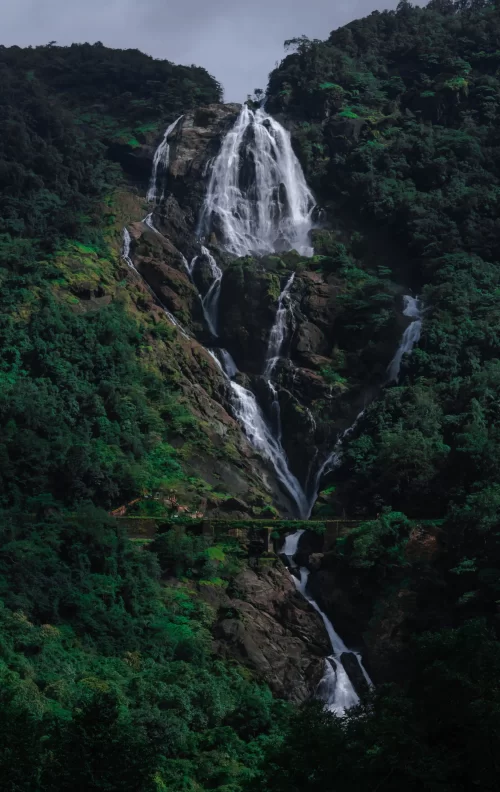
Dudhsagar Waterfalls is one of Goa's best-known natural attractions, located in the Western Ghats near the Goa-Karnataka border. It can be included in a nature-focused itinerary when access is officially permitted.
Jeep excursions, forest entry arrangements and seasonal access can change. Travellers should verify the latest forest department instructions rather than assuming that waterfall visits are available throughout the year.
North Goa is particularly convenient for tourists interested in combining Fort Aguada, Chapora Fort, Panaji and Old Goa's historic churches. These attractions can be organised into practical sightseeing routes from accommodation around Candolim or Panaji.
South Goa is suitable for travellers interested in Cabo de Rama Fort, traditional villages, heritage mansions and inland cultural attractions. Some destinations are spread farther apart, so a taxi or rental car may be useful.
For a longer Goa holiday, combining selected heritage attractions from both regions provides a more complete understanding of the state's history and culture.
North Goa is generally the better choice for tourists whose main priorities are nightlife, beach parties, shopping and organised water sports. South Goa offers entertainment too, but it is more commonly associated with relaxed beachfront dining, resort activities and quieter evenings.
North Goa has a concentration of nightclubs, bars, beachside music venues and entertainment areas. Baga, Anjuna and Vagator are particularly popular among travellers planning evenings outside their hotels.
Operating hours, event schedules, entry charges and music permissions vary. Travellers should check current arrangements before planning an evening around a particular venue.
South Goa has restaurants, beachfront dining and selected music venues, particularly around Colva, Cavelossim and Palolem. However, large nightlife clusters are less common than in North Goa.
Palolem is known for relaxed beachfront evenings and has hosted headphone-based music events. Such events are seasonal and venue-dependent, so availability should be confirmed before travelling.
South Goa is better suited to visitors who prefer a peaceful dinner, a coastal walk or an evening at their resort rather than visiting multiple nightclubs.
North Goa has several established tourist beaches where organised water sports may operate during suitable weather and permitted seasons.
Activity availability depends on weather, sea conditions, operator permissions and safety restrictions. Tourists should never assume that a particular activity will operate on every day of their holiday.
South Goa also offers water-based activities at selected locations, including organised boat excursions and seasonal water sports.
Visitors staying around Colva, Cavelossim and Palolem can enquire about activities offered by authorised operators. The type of activity and departure location vary, and some services may not operate during the monsoon.
Boat excursions should be booked with operators who provide appropriate safety equipment and follow applicable regulations. Wildlife sightings during marine excursions cannot be guaranteed.
Choose authorised activity operators, use proper safety equipment and follow lifeguard instructions. Water sports can be suspended during rough seas or unfavourable weather.
Travellers enjoying nightlife should arrange reliable return transport and avoid driving after consuming alcohol. Beach parties and entertainment venues must follow local operating and noise regulations.
If nightlife is the main purpose of your Goa trip, staying in North Goa will usually reduce travel time and late-night taxi expenses.
Both North Goa and South Goa are suitable for families, couples and solo travellers, but the best region depends on personal preferences and holiday plans. North Goa generally provides easier access to busy tourist facilities and social activities, while South Goa offers several quieter beach areas and resort-focused stays.
Families should consider hotel facilities, restaurant availability, travel distances and beach conditions before choosing a location. A quieter beach can be attractive, but easy access to transport, pharmacies and suitable meals is also important.
North Goa for Families
Candolim and selected parts of Calangute are practical choices for families who want sightseeing, restaurants and tourist facilities nearby. Hotels with swimming pools and family rooms can make the stay more comfortable.
Families should avoid accommodation directly beside busy nightlife venues if young children need quiet evenings.
South Goa for Families
Benaulim, Varca and Cavelossim are suitable for families seeking a more relaxed beach holiday. Several resorts in these areas offer swimming pools, dining facilities and space for children, although amenities vary between properties.
Families with young children should remember that quieter beaches are not necessarily safer for swimming. Follow lifeguard instructions and supervise children closely near the sea.
Couples who enjoy cafes, nightlife, shopping and sightseeing may prefer North Goa. Candolim, Vagator, Ashwem and Mandrem offer different combinations of convenience, coastal scenery and relaxed accommodation.
South Goa is a good choice for couples who want beach walks, peaceful surroundings and comfortable resort stays. Cavelossim, Agonda and Palolem are particularly appealing depending on the desired atmosphere.
Honeymooners seeking privacy and a resort-focused holiday may prefer South Goa, particularly around Cavelossim, Varca and Agonda. These areas provide opportunities for relaxed dining and spending time together without a busy sightseeing schedule.
North Goa is also suitable for honeymooners who want more activities and entertainment. Boutique properties around Ashwem, Mandrem and Vagator can provide quieter surroundings while keeping other attractions accessible.
North Goa is often more convenient for solo travellers who want hostels, cafes, group activities and opportunities to meet other visitors. Anjuna, Vagator and Arambol have established independent travel communities.
South Goa suits solo travellers interested in quiet beach stays, reading, walking and slower travel. Palolem and Agonda offer smaller accommodation properties and a relaxed atmosphere.
Solo travellers should check transport availability, accommodation security and late-night return arrangements, particularly when staying in quieter areas.
Senior citizens may prefer accommodation with convenient road access, lifts or ground-floor rooms, reliable dining and limited walking requirements.
Candolim and Colva offer access to several tourist facilities, while selected resorts in Benaulim and Cavelossim can be suitable for relaxed holidays.
Travellers with mobility difficulties should check whether the hotel has steps, steep approaches or long walking routes to the beach.
The best choice depends more on your accommodation location and daily activities than on the region's general reputation.
Accommodation, food and shopping experiences differ between North Goa and South Goa, although both regions provide options for different budgets. North Goa generally has more concentrated tourist shopping areas, hostels and nightlife-oriented accommodation. South Goa offers a mixture of guesthouses, village restaurants, beachfront properties and resort-focused holidays.
North Goa has a broad range of accommodation, including backpacker hostels, budget hotels, serviced apartments, villas, boutique properties and luxury resorts.
Properties close to popular beaches and nightlife venues may charge higher rates during peak tourist periods. Hotels a short distance inland can sometimes provide better value.
South Goa is suitable for travellers who want peaceful beach resorts, smaller guesthouses and relaxed accommodation. However, not every South Goa hotel is expensive, and budget-friendly properties are available in several tourist areas.
Some seasonal beach cottages and shacks may close during the monsoon. Travellers should confirm that their chosen accommodation is operating before booking.
North Goa has a wide variety of restaurants, beach shacks, cafes and international dining options. Popular tourist areas such as Baga, Candolim, Anjuna and Vagator offer choices ranging from casual meals to upscale dining.
Visitors can also try traditional Goan dishes such as fish curry rice, xacuti, cafreal, vindaloo and local seafood preparations. Menus and recipes vary between establishments.
South Goa offers traditional Goan restaurants, local eateries, beach shacks and resort dining. Areas such as Margao, Colva, Benaulim and Cavelossim provide different food experiences.
Travellers interested in local cuisine should consider visiting established eateries in towns and villages rather than relying entirely on beachfront restaurants. Fresh seafood prices may vary according to the catch, season and restaurant.
North Goa is generally more convenient for tourists interested in beachwear, souvenirs, accessories, handicrafts and tourist markets.
Market schedules can change, especially during the monsoon and quieter tourist months. Confirm operating days before making a special journey.
South Goa has local markets, small shops and tourist shopping areas, although the concentration of major tourist markets is generally lower than in North Goa.
North Goa is generally better for travellers who want numerous cafes, tourist markets and shopping streets within a relatively concentrated area.
South Goa is suitable for visitors who prefer relaxed dining, local markets and quieter coastal restaurants. Both regions offer opportunities to experience traditional Goan food, so visitors do not need to choose North Goa solely for cuisine.
The cost of a North Goa or South Goa holiday depends on accommodation category, travel season, transport choices, dining preferences and planned activities. North Goa is not automatically cheaper, and South Goa is not always expensive. Both regions have budget and premium options, although the types of accommodation and tourist facilities differ.
North Goa has a large selection of hostels, guesthouses, budget hotels and apartments, particularly around Calangute, Anjuna and Arpora. South Goa offers affordable accommodation in places such as Colva and Palolem, alongside upscale resorts in Cavelossim and Varca.
For preliminary planning, the following broad nightly accommodation budgets may be useful. These are indicative estimates, not verified live hotel rates, and actual prices may be significantly higher during peak holidays.
These ranges can apply to properties in either region. Travellers should compare actual hotel quotations for their dates and check taxes, meals and extra occupancy charges.
Transport expenses depend on how far your hotel is from the places you want to visit. North Goa's central tourist belt allows visitors to explore several nearby attractions without very long journeys, although traffic can be heavy.
South Goa's beaches and sightseeing destinations can be spread farther apart, particularly when travelling between Colva, Cavelossim, Agonda and Palolem. Visitors staying in remote areas may spend more on taxis if they do not have their own transport.
Both regions have inexpensive local eateries and higher-priced tourist restaurants. Dining at beachfront venues, premium cafes or resort restaurants generally costs more than eating at simple local establishments.
North Goa offers a high concentration of cafes and restaurants around popular beaches, while South Goa has a mixture of village eateries, beach shacks and resort dining.
For budget planning, tourists should compare actual menus and consider whether their hotel includes breakfast. Seafood dishes may be priced according to the type and quantity ordered, so confirm the price before placing an order.
North Goa visitors may spend more on nightlife, organised water sports and shopping because these activities are concentrated in several popular tourist areas.
South Goa travellers may spend more on resort facilities, private transfers or longer sightseeing excursions, depending on their itinerary.
However, many enjoyable Goa experiences do not require expensive activities. Beach walks, exploring public areas of coastal villages and visiting selected viewpoints can help keep expenses manageable.
North Goa can be economical for backpackers and travellers using hostels, budget hotels and shared transport. South Goa can also be affordable when staying in guesthouses around Colva or Palolem and keeping sightseeing distances manageable.
The biggest savings usually come from selecting suitable accommodation, reducing unnecessary transport and controlling optional activity expenses rather than choosing one region based on its reputation.
Choosing whether to stay in North Goa, South Goa or both depends on your holiday duration, preferred activities and travel style. North Goa is generally more convenient for nightlife, shopping and busy tourist attractions, while South Goa suits visitors who want peaceful beaches and relaxed accommodation. Travellers with enough time can experience both regions without rushing.
North Goa is a good choice when your itinerary includes popular beaches, cafes, forts, shopping and evening entertainment. Staying around Candolim, Calangute, Baga or Anjuna can reduce travel time between several major tourist attractions.
South Goa is suitable for travellers who want to spend more time relaxing near the beach. Benaulim, Varca, Cavelossim and Agonda offer quieter surroundings than Goa's busiest tourist centres.
For a three-day holiday, staying in one region is usually more practical than changing hotels. Travellers interested in nightlife and popular attractions can choose Candolim or Calangute, while those seeking relaxation can stay around Colva or Benaulim.
Avoid spending too much of a short holiday travelling between distant beaches. Choose two or three nearby attractions each day and allow time to enjoy the destination.
For a five-day holiday, tourists can either stay in one region and explore it thoroughly or divide their accommodation between North Goa and South Goa.
A practical split-stay plan is three nights in North Goa and two nights in South Goa. This allows time for sightseeing, markets and nightlife in the north, followed by a quieter beach stay in the south.
However, changing hotels involves packing, checking out and travelling between regions. Families with young children may find one convenient hotel more comfortable.
A seven-day holiday provides enough time to explore both North Goa and South Goa at a comfortable pace. Travellers can spend three or four nights in North Goa and the remaining nights in South Goa.
For example, stay around Candolim for Fort Aguada, Panaji, Anjuna and Vagator, then move to Benaulim or Cavelossim for relaxed beach time and selected South Goa attractions.
Travellers interested in far southern beaches can consider Palolem or Agonda instead, but should account for longer transfers to some central Goa attractions.
North Goa is generally better for travellers who want nightlife, shopping, busy beaches and a wide selection of tourist activities. South Goa is better suited to visitors who prefer peaceful coastal surroundings, resort holidays and relaxed sightseeing.
Neither region is universally better. The right choice depends on your budget, holiday duration and the experiences that matter most to you.
For a short Goa trip, select one region that matches your interests. For a longer holiday, spending time in both North Goa and South Goa can provide a more varied experience without requiring daily long-distance travel.


Get customized Delhi tour planning designed around traffic flow, seasonal weather comfort, heritage site exploration time, and realistic city pacing. Whether you are visiting for historical monuments, cultural experiences, food walks, shopping districts,
⚡ Quick Response | 💰 Free consultation | 🕒 24×7 expert support

