



Best Hidden and Less Crowded Beaches in Goa
Discover quieter beaches in Goa away from the busiest tourist areas, with insights into secluded coastal spots, accessibility, facilities and tips for peaceful beach outings.
+91 9910402252
admin@chalbanjare.com


Explore Goa's weather month by month, including temperature ranges, rainfall patterns, humidity and seasonal changes, to plan beach holidays, sightseeing and outdoor activities.
Goa has a tropical monsoon climate characterised by warm temperatures throughout the year, high humidity and distinct dry and rainy seasons. Unlike northern Indian destinations, Goa does not experience a cold winter. Instead, its weather changes mainly through rainfall, humidity, sunshine and sea conditions.
Goa's weather is generally most comfortable between November and February, when rainfall is limited and humidity is comparatively manageable. March to May brings increasing heat and humidity, while June to September is dominated by the southwest monsoon. October is a transitional month when rainfall usually decreases and the main tourist season gradually begins.
Daytime temperatures in Goa generally range from approximately 28°C to 35°C throughout the year. Night-time temperatures commonly remain between 19°C and 27°C, depending on the season and location.
December and January usually have the coolest nights, while April and May are among the hottest and most humid months.
During the monsoon, daytime temperatures are often slightly lower because of cloud cover and frequent rainfall, but high humidity can make the weather feel uncomfortable.
Goa receives most of its annual rainfall during the southwest monsoon, usually between June and September. The state's coastal areas commonly receive approximately 2,500 to 3,500 mm of rainfall annually, while some inland and elevated areas receive considerably more.
July is generally one of the wettest months. December, January and February are usually among the driest.
Rainfall totals vary by location and year, so monthly averages should be treated as climatic guidance rather than predictions for specific travel dates.
Humidity remains relatively high in Goa because of its coastal location. Conditions are generally more comfortable during the winter tourist season, while the pre-monsoon and monsoon months often feel particularly humid.
North Goa and South Goa experience broadly similar seasonal weather because both lie along the Arabian Sea coast. However, local rainfall, wind and temperature can differ slightly between coastal towns, inland villages and elevated areas.
Places such as Panaji, Calangute, Margao and Palolem generally follow the same overall seasonal pattern. Inland areas closer to the Western Ghats can experience heavier rainfall during the monsoon.
Weather summary: Goa remains warm throughout the year, but rainfall and humidity create significant seasonal differences. Travellers should consider both temperature and rain when choosing their travel dates.
January and February are among the most comfortable months for visiting Goa. Both months generally experience warm days, relatively pleasant evenings, limited rainfall and favourable conditions for outdoor sightseeing.
January is one of Goa's driest months. Days are usually sunny and warm, while nights can feel comparatively cool, particularly away from the immediate coast.
January is excellent for travellers interested in beaches, sightseeing, heritage attractions and outdoor dining.
Popular destinations such as Calangute, Baga, Candolim, Anjuna, Palolem and Agonda generally offer favourable weather for coastal holidays.
However, the beginning of January can remain busy because of New Year tourism.
February remains warm and generally dry. Daytime temperatures are similar to January, although afternoons can become slightly hotter towards the end of the month.
Both months are suitable for beach holidays. February may appeal to travellers who want pleasant weather without concentrating their trip around the New Year holiday period.
However, tourist numbers and hotel prices still depend on weekends, festivals and local events.
The sea is often calmer than during the southwest monsoon, making these months generally suitable for authorised water sports and beach activities.
Nevertheless, currents, waves and wind can create unsafe conditions on individual days. Swimming and water sports should always follow lifeguard instructions and official restrictions.
Travel recommendation: January and February are among the best months for first-time visitors, families and couples seeking pleasant weather and a wide range of outdoor activities.
March, April and May form Goa's summer and pre-monsoon period. Temperatures rise, humidity becomes more noticeable and outdoor sightseeing can feel tiring during the afternoon. Although the sea breeze provides some relief near the coast, hot and humid conditions remain an important consideration.
March marks the transition from the comfortable winter season towards hotter summer weather. Most days remain relatively dry, but temperatures and humidity begin increasing.
March can still be suitable for beach holidays, especially for travellers comfortable with warm weather.
Early mornings and evenings are generally preferable for outdoor sightseeing, while midday is better reserved for rest or indoor activities.
April is generally hotter and more humid than March. The combination of heat and moisture can make outdoor activities uncomfortable, especially away from shaded areas.
May is usually one of Goa's hottest and most humid months. As the southwest monsoon approaches, pre-monsoon thunderstorms and showers become more likely.
Yes. May can receive pre-monsoon showers, particularly during the latter part of the month.
Rainfall is generally much lower than during June or July, but thunderstorms can be locally intense and may disrupt outdoor activities.
Yes, beaches remain accessible during much of the summer, but heat and humidity can reduce comfort.
Morning and late-afternoon visits are generally preferable. Visitors should avoid prolonged sun exposure and follow lifeguard instructions before entering the sea.
Some water sports may operate during March and April when weather and sea conditions are suitable.
As the monsoon approaches, operations may become more limited. Activities can be suspended because of wind, thunderstorms or rough seas.
Travel recommendation: March is generally the most comfortable of the three summer months. April and May are better suited to travellers who can tolerate high humidity and plan outdoor activities around cooler hours.
June, July and August are the core southwest monsoon months in Goa. This period brings frequent heavy rainfall, cloudy skies, high humidity and lush green landscapes. The weather is very different from the dry winter tourist season, particularly along the coast.
Monsoon rainfall can be intense and prolonged. Road conditions, visibility, sea safety and access to natural attractions may change rapidly, making flexible travel planning essential.
June usually marks the arrival of the southwest monsoon. Rainfall increases sharply compared with May, and strong winds and rough sea conditions become more common.
July is typically one of the wettest months in Goa. Rainfall can continue for long periods, with occasional intense downpours.
July is generally among Goa's rainiest months, although June or August may occasionally receive more rainfall in individual years or locations.
Visitors should expect wet weather and avoid planning a trip that depends on uninterrupted outdoor activities.
August remains part of the active monsoon season. Rainfall is often substantial, although the intensity and frequency of showers vary.
Moisture-laden southwest monsoon winds move inland from the Arabian Sea. As this air reaches the Western Ghats, it rises and produces substantial rainfall.
This geographical effect contributes to Goa's heavy monsoon precipitation, particularly in inland and elevated areas.
Strong waves, rip currents and rough sea conditions make swimming dangerous during the monsoon.
Swimming restrictions and official warnings must be followed. Many sea-based water sports and seasonal boat excursions are suspended during this period.
Beach walks may still be possible when conditions are safe, but visitors should remain away from dangerous surf and exposed coastal areas during severe weather.
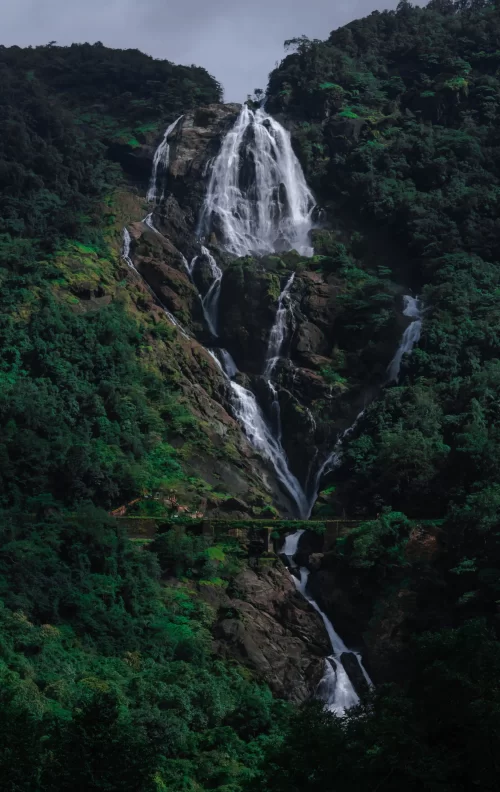
Waterfalls can become particularly dramatic during the rainy season, but heavy rainfall also creates significant safety risks.
Access to places such as Dudhsagar Waterfalls may be restricted, and authorised safari services may be suspended during the monsoon.
Visitors should never attempt unauthorised forest routes, restricted railway tracks or dangerous river crossings.
Travel recommendation: June to August is suitable for travellers interested in Goa's monsoon greenery and rainfall, but not for those prioritising beach swimming, water sports or unrestricted outdoor sightseeing.
September and October form Goa's transition from the southwest monsoon towards the drier tourist season. Rainfall generally decreases, sunshine becomes more frequent and outdoor conditions gradually improve. However, both months can still experience heavy showers, thunderstorms and high humidity.
September remains a monsoon-influenced month. Rainfall is generally lower than during July, but wet weather can continue throughout the month.
Rainfall is still common in September, but it does not necessarily rain continuously every day.
Some days may have long dry intervals, while others experience heavy showers.
Travellers should plan flexible itineraries and avoid relying on consistently dry weather.
September can appeal to visitors interested in greenery, quieter accommodation and a relaxed atmosphere.
However, sea-based water sports and many seasonal beach services may remain unavailable.
It is not the most dependable month for a conventional beach holiday.
October is generally the main post-monsoon transition month. Rainfall decreases substantially compared with the wettest monsoon months, although occasional showers and thunderstorms remain possible.
October generally offers more favourable weather for sightseeing because rainfall usually decreases and sunny periods become more frequent.
However, early October may still experience unsettled weather, and the exact timing of monsoon withdrawal varies.
Late October can be more suitable for coastal sightseeing than September, although safe swimming and water sports are not guaranteed.
The southwest monsoon generally withdraws from Goa around late September or October, depending on the year.
Rainfall can continue after the formal withdrawal because of local weather systems and post-monsoon thunderstorms.
Travellers should not assume that a particular calendar date guarantees dry weather.
Beaches can be visited for sightseeing when conditions are safe, but swimming depends on sea conditions and local restrictions.
September often remains unsuitable for many marine activities. Conditions generally improve during October, although rough seas may persist.
Sea-based water sports generally resume after monsoon restrictions are lifted and conditions are considered safe.
Reopening dates vary by activity, location, official permissions and operator readiness.
Visitors should confirm availability before booking.
Travel recommendation: October is generally preferable to September for travellers seeking improving weather and a gradual return to beach-season activities. September is better suited to rain-focused and nature-oriented holidays.
November and December mark the beginning of Goa's main dry-season tourism period. Rainfall becomes limited, humidity generally decreases and the weather becomes more comfortable for beaches, sightseeing and outdoor activities.
These months are particularly popular among families, couples and visitors interested in Goa's festive atmosphere.
November generally brings warm days, improving humidity levels and mostly dry weather.
Occasional showers remain possible, particularly during unusual weather conditions.
November is generally an excellent month for beach holidays, sightseeing and outdoor dining.
Seasonal tourism services often resume as the main visitor season begins, although exact reopening dates vary.
Travellers may find some dates less crowded than the Christmas and New Year period.
December is usually one of Goa's driest and most comfortable months. Days are warm and sunny, while evenings and nights can feel relatively pleasant.
December is one of the most popular months because of its favourable weather and festive atmosphere.
However, hotel prices and tourist crowds can increase sharply around Christmas and New Year.
Travellers who prefer quieter holidays may find November, January or February more suitable.
Sea conditions are generally more favourable than during the monsoon, and many authorised marine activities operate during the main tourist season.
Nevertheless, weather, wind and local sea conditions can affect activities on individual days.
Always follow lifeguard guidance and official safety restrictions.
Tourist demand generally increases during November and becomes particularly strong during late December.
Popular North Goa beaches, restaurants and hotels may become crowded during the festive period.
Travellers seeking a quieter atmosphere can consider selected South Goa destinations.
Accommodation prices typically increase as the main tourist season begins.
Late December is often among the most expensive periods for hotels and resorts.
Prices depend on location, property category, booking lead time and demand.
Travel recommendation: November is an excellent option for travellers seeking pleasant weather before the busiest festive period. December is ideal for those who want a lively holiday atmosphere and are comfortable with higher seasonal demand.
Goa's monthly weather patterns show a clear difference between the dry tourist season and the southwest monsoon. Temperatures remain warm throughout the year, but rainfall changes dramatically between January and July.
The following figures are rounded, illustrative coastal climate ranges based on typical long-term weather patterns. They are not live forecasts or official station-specific monthly normals. Rainfall can differ substantially between Panaji, coastal South Goa and the wetter inland areas near the Western Ghats.
April and May are generally among the hottest months, particularly when humidity is considered.
Although average daytime temperatures may differ only slightly from other months, the combination of warm nights and moisture can make summer feel significantly hotter.
January generally has some of the coolest night-time temperatures, although Goa remains warm by the standards of most northern Indian winter destinations.
Cold-weather clothing is usually unnecessary for ordinary coastal sightseeing.
July is typically among the wettest months, often receiving several hundred millimetres of rain and sometimes more than one metre in particularly wet locations or years.
June and August also receive substantial monsoon rainfall.
January and February are generally among the driest months, with little or no rainfall in many years.
December is also usually very dry.
A month with a daytime temperature of 30°C can feel very different depending on humidity, rainfall, cloud cover and wind.
For example, July may have lower daytime temperatures than April, but frequent heavy rain and very high humidity make it less suitable for many outdoor tourist activities.
Travellers should compare temperature, rainfall, sea conditions and available activities together.
The best months to visit Goa depend on whether you prefer beaches, water sports, sightseeing, greenery, budget accommodation or quieter surroundings. November to February generally offers the most dependable combination of dry weather and comfortable outdoor conditions, but other months can suit specific travel preferences.
November, December, January and February are generally the most comfortable months for outdoor sightseeing and beach holidays.
January and February are particularly suitable for travellers who want warm days, comparatively pleasant evenings and limited rainfall.
November to February is usually the most suitable period for a conventional Goa beach holiday.
March can also be considered by travellers comfortable with hotter weather.
Swimming must always follow local safety instructions, regardless of the month.
Many commercial sea-based water sports operate during the fair-weather season, generally from November to April, subject to permissions and sea conditions.
December to February often provides favourable seasonal conditions, although activities can be cancelled because of wind, waves or other safety concerns.
November to February is generally best for visiting forts, churches, markets and heritage neighbourhoods.
October and March can also be suitable, but visitors should plan around possible rain or afternoon heat.
November to February is suitable for exploring Calangute, Baga, Candolim, Anjuna, Vagator and other North Goa destinations.
Popular beaches and nightlife areas may become crowded during December and January.
November to February is also suitable for South Goa destinations such as Colva, Benaulim, Varca, Cavelossim, Palolem and Agonda.
Travellers seeking a quieter beach holiday may prefer selected South Goa areas during the main tourist season.
November to February is generally suitable for couples interested in beaches, sightseeing and outdoor dining.
October and March can offer alternative travel periods for couples comfortable with transitional or warmer weather.
The monsoon may appeal to couples who prefer resort stays and rainy landscapes rather than beach activities.
December to February is generally comfortable for families with children because of the relatively pleasant weather.
Families should still consider crowd levels, school holiday demand and beach safety.
December to February is often preferable for senior citizens who want to avoid intense summer heat and heavy monsoon rainfall.
Accommodation accessibility, transport arrangements and individual health needs should also influence travel planning.
June to September offers lush green landscapes and a distinctive monsoon atmosphere.
October can also be attractive because the countryside remains green while rainfall generally begins decreasing.
Access to forests, waterfalls and trekking routes depends on official restrictions and weather conditions.
June to September often brings lower accommodation demand and seasonal hotel offers.
Selected dates in April, May and October may also provide competitive rates.
However, lower prices should be weighed against heat, rainfall and reduced activity availability.
Monsoon months generally have fewer conventional beach holiday visitors than the peak winter season.
Some dates in March, April and October may also be quieter than late December.
Long weekends and public holidays can still attract substantial tourist demand.
January and February are particularly suitable for first-time visitors because they generally offer pleasant weather, limited rainfall and a wide range of available tourist activities.
November and December are also excellent options, although late December can be busy and expensive.
During the monsoon, additional flexibility is useful because outdoor activities may be cancelled or delayed.
January and February are among the best months to visit Goa for pleasant temperatures, low rainfall and comfortable sightseeing. November and December also offer excellent conditions for beach holidays and outdoor activities.
March is suitable for travellers comfortable with increasing heat, while October offers improving post-monsoon weather with occasional rainfall.
June to September is best reserved for travellers interested in monsoon greenery and relaxed stays rather than swimming or water sports.
For the most enjoyable trip, choose your travel month according to weather conditions, planned activities, accommodation costs and your tolerance for heat, humidity and rainfall.


Get customized Delhi tour planning designed around traffic flow, seasonal weather comfort, heritage site exploration time, and realistic city pacing. Whether you are visiting for historical monuments, cultural experiences, food walks, shopping districts,
⚡ Quick Response | 💰 Free consultation | 🕒 24×7 expert support

