
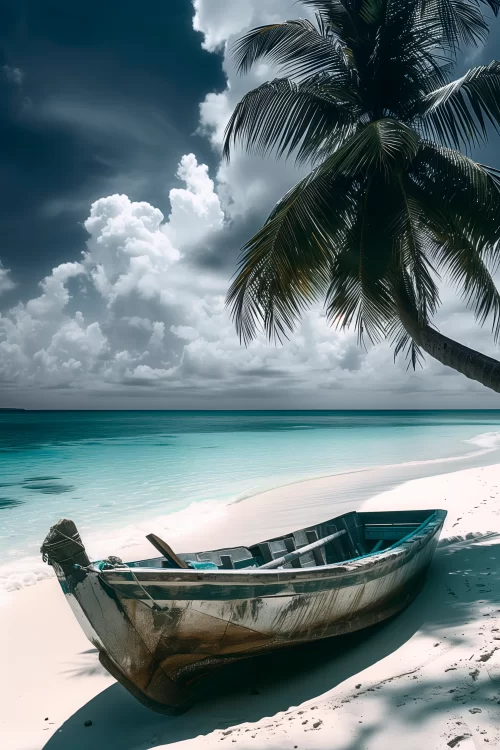
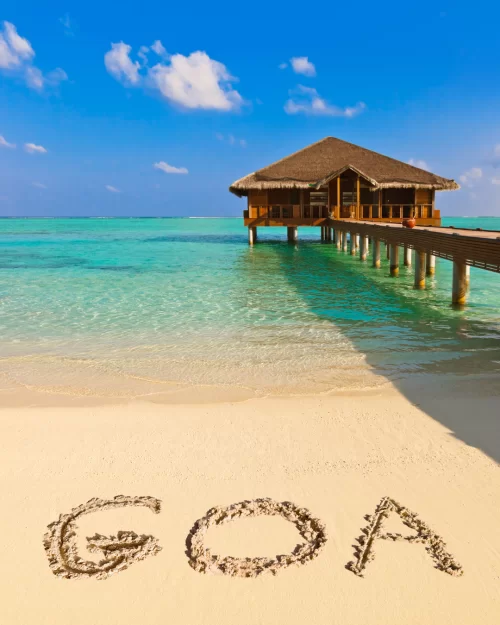
Best Hidden and Less Crowded Beaches in Goa
Discover quieter beaches in Goa away from the busiest tourist areas, with insights into secluded coastal spots, accessibility, facilities and tips for peaceful beach outings.
+91 9910402252
admin@chalbanjare.com


Explore Goa during the monsoon season, including heavy rainfall, lush green landscapes, waterfalls, sightseeing options and practical advice on transport, activities and travel safety.
Goa in monsoon offers a completely different experience from the busy winter beach season. From June to September, the southwest monsoon brings frequent rainfall, lush green landscapes, flowing rivers and cloudy skies. The countryside becomes especially scenic, while the coastal areas experience strong winds, rough seas and restrictions on many beach activities.
The monsoon season is suitable for travellers who enjoy rain, greenery, traditional Goan food, heritage sightseeing and relaxed resort stays. However, it is not the ideal time for swimming, parasailing, jet skiing or other sea-based activities. Heavy rainfall can also affect road conditions, waterfall access and outdoor sightseeing.
The southwest monsoon generally reaches Goa in early June, although the exact arrival date varies each year. Rainfall increases significantly after the monsoon begins, and the wet season usually continues through September.
Rainfall generally starts decreasing towards the end of September, but occasional heavy showers can continue into October.
Goa remains warm throughout the monsoon, although daytime temperatures are generally lower than during the hottest summer months because of cloud cover and frequent rainfall.
These are approximate coastal climate ranges rather than forecasts for particular dates. Actual temperatures vary between coastal and inland locations.
Goa receives most of its annual rainfall during the southwest monsoon. Coastal areas commonly record several thousand millimetres of rain annually, with the majority falling between June and September. Inland areas near the Western Ghats can receive considerably more.
July is generally among the wettest months, followed by substantial rainfall in June and August. September usually experiences a gradual reduction in rainfall.
Humidity remains high throughout the rainy season. Even when temperatures are lower than in summer, the air can feel damp and uncomfortable.
Clothes may take longer to dry, and outdoor activities can become tiring when rainfall stops and humidity remains high.
Rain is frequent during the monsoon, but it does not necessarily rain continuously every day. Some days have short showers followed by dry intervals, while others experience prolonged rainfall.
July and August are particularly unpredictable for outdoor sightseeing. Travellers should avoid planning activities that depend on uninterrupted sunshine.
North Goa and South Goa experience broadly similar monsoon conditions. However, rainfall intensity can differ between individual locations, particularly between coastal areas and the inland hills.
The main difference for travellers is the availability of accommodation, restaurants and activities. Established towns and year-round resorts may offer more reliable services than isolated seasonal beach destinations.
Travel recommendation: Choose Goa during the monsoon if you enjoy greenery, rainfall and quieter holidays. Travellers expecting sunny beach weather, unrestricted swimming and water sports should consider November to February instead.
Goa's monsoon weather changes between June and September. June marks the arrival of the rains, July usually brings some of the heaviest rainfall, August remains very wet and September often sees gradually improving conditions.
June marks the transition from hot pre-monsoon conditions to the southwest monsoon. Rainfall becomes frequent, humidity remains high and the landscape rapidly turns green.
Early June weather depends on when the monsoon arrives. Once heavy rainfall begins, many seasonal beach activities are suspended.
July is typically one of Goa's wettest months. Heavy showers, cloudy skies and high humidity dominate the weather.
Road travel, forest access and outdoor sightseeing can be affected by prolonged rainfall. Visitors should check official weather warnings before travelling.
July can be appealing for travellers who specifically want to experience Goa's rainy landscapes and quiet atmosphere.
However, it is generally unsuitable for a conventional beach holiday because swimming, water sports and many seasonal coastal services are unavailable.
August remains an active monsoon month. The countryside is usually lush, but rainfall can still be intense and unpredictable.
Travellers should not assume that reduced rainfall on one day means the monsoon has ended.
September generally brings a gradual reduction in rainfall as the southwest monsoon approaches withdrawal.
However, heavy showers and rough sea conditions can continue, particularly during active weather systems.
September often offers more dry intervals than the wettest monsoon months, making it relatively easier to plan sightseeing.
Nevertheless, water sports and seasonal beach businesses may remain closed. Sea conditions must be checked before any coastal activity.
Travel recommendation: September may offer more flexibility for sightseeing than July, but travellers should choose their dates according to rainfall tolerance rather than expecting guaranteed dry weather.
Goa's monsoon season transforms its countryside, hills and villages into green landscapes. Historical forts, heritage neighbourhoods, churches and scenic viewpoints can be especially attractive during the rainy season.
However, not every attraction remains accessible during heavy rainfall. Forest restrictions, slippery paths, poor visibility and road conditions can affect sightseeing. Visitors should prioritise officially open attractions and avoid unsafe natural areas.
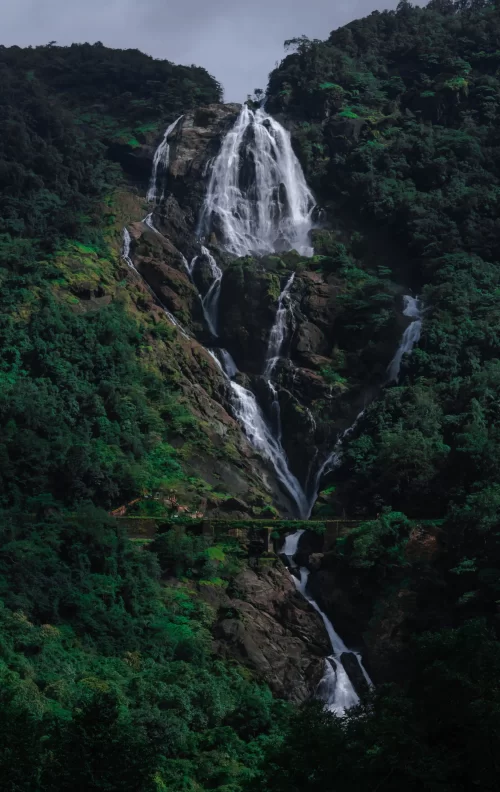
Dudhsagar Waterfalls is one of Goa's best-known natural attractions, located near the Goa–Karnataka border within the Western Ghats landscape.
The waterfall becomes particularly powerful during the monsoon, but heavy rainfall can make surrounding routes dangerous.
Important: Authorised jeep safaris and other tourist access arrangements may be suspended during the rainy season. Visitors should not attempt unauthorised railway-track walks, forest trails or river crossings.
Best for: Nature enthusiasts when officially permitted access is available.
Fort Aguada is a Portuguese-era fort near Sinquerim, known for its historical importance and coastal views.
During the monsoon, the surrounding landscape becomes greener, although heavy rain can reduce visibility.
Best for: History, architecture and photography during safe weather conditions.
Wear footwear with good grip and avoid exposed areas during thunderstorms.
Chapora Fort overlooks the Vagator coastline and surrounding hills.
The monsoon brings greenery to the landscape, making the area visually appealing.
Safety consideration: The uphill approach can become slippery during rain. Avoid visiting during heavy showers, lightning or poor visibility.
Reis Magos Fort overlooks the Mandovi River and offers an opportunity to explore Goa's colonial history.
It can be a useful alternative to remote natural attractions when the weather permits.
Best for: History, architecture and cultural sightseeing.
Confirm current opening hours and visitor access.
Fontainhas is a heritage neighbourhood in Panaji known for colourful houses, narrow lanes and Portuguese-influenced architecture.
Rain-washed streets and historic buildings create a distinctive atmosphere during the monsoon.
Best for: Heritage walks, architecture and photography.
Respect residential privacy and avoid walking through waterlogged lanes.
The Basilica of Bom Jesus is one of Goa's most important religious and historical attractions.
It forms part of the Churches and Convents of Goa UNESCO World Heritage Site.
Best for: History, architecture and religious heritage.
Visitors should dress respectfully and follow any restrictions during worship.
Se Cathedral is a prominent historic church in Old Goa, known for its grand architecture and cultural significance.
It can be explored alongside other nearby heritage attractions, making Old Goa suitable for a relatively compact sightseeing visit.
This prominent white church is one of Panaji's most recognisable landmarks.
It is suitable for a short cultural sightseeing stop when weather conditions permit.
Best for: Architecture, photography and heritage exploration.
Salim Ali Bird Sanctuary on Chorao Island protects a mangrove ecosystem and supports a variety of birdlife.
The monsoon creates a lush environment, but heavy rain, tides and local access arrangements can affect visits.
Best for: Birdwatching and nature observation.
Check authorised access, operating arrangements and weather conditions before travelling.
Chorla Ghat is known for forested hills, misty landscapes and scenic roads in the Western Ghats region.
During the monsoon, the surroundings become especially green.
Safety consideration: Heavy rain, fog, slippery roads and possible landslides can make travel hazardous. Avoid unnecessary journeys during severe weather warnings.
Divar Island offers a quieter experience of Goa's villages, churches and countryside.
The monsoon enhances the surrounding greenery and rural scenery.
Best for: Village sightseeing and cultural exploration.
Check ferry services and weather conditions before travelling.
Cabo de Rama Fort is a historic coastal fort in South Goa, offering views of the Arabian Sea and surrounding landscape.
During the monsoon, the area becomes green and atmospheric.
Safety consideration: Avoid slippery cliff edges, exposed viewpoints and visits during thunderstorms.
Travel recommendation: During heavy monsoon rainfall, prioritise Old Goa, Panaji and accessible heritage attractions. Plan remote waterfalls, forts and hill routes only after confirming weather, road conditions and official access.
The monsoon is one of Goa's most scenic seasons for greenery, forests, plantations and flowing waterfalls. Rainfall transforms the Western Ghats and surrounding countryside, creating lush landscapes and seasonal streams.
However, natural attractions can also become dangerous during heavy rain. Fast-flowing water, slippery rocks, flash floods and restricted forest access are important concerns. Visitors should never treat a visually attractive waterfall as automatically safe to approach.
Dudhsagar Waterfalls is one of the most famous waterfalls associated with Goa.
During the monsoon, the waterfall can become especially powerful because of heavy rainfall in the surrounding Western Ghats.
However, authorised tourist access may be suspended during the rainy season.
Travel advice: Confirm official access arrangements and never attempt restricted routes or railway-track trekking.
Tambdi Surla Waterfall is located within the forested Western Ghats region near Bhagwan Mahavir Wildlife Sanctuary.
The surrounding landscape becomes lush during the monsoon, but the approach can involve slippery forest trails and challenging terrain.
Important: Trekking may be restricted or unsafe during heavy rainfall. Visit only when officially permitted and with suitable local guidance.
Harvalem Waterfall, also called Arvalem Waterfall, is located near Sanquelim in North Goa.
It becomes more dramatic during periods of heavy rainfall.
Best for: Scenic viewing from authorised and safe areas.
Visitors should avoid approaching the waterfall pool or slippery edges during strong water flow.
Kesarval Waterfall is a seasonal natural attraction near Verna.
Water flow generally increases during the rainy season, but access and surrounding conditions can vary.
Safety advice: Confirm whether the site is open and avoid entering water or approaching unstable terrain.
The Netravali area in South Goa is known for forested landscapes and natural attractions.
The monsoon enhances the greenery, but remote roads, forest trails and water bodies may become hazardous.
Best for: Nature-oriented travellers using authorised routes.
Check sanctuary restrictions and avoid unapproved trekking or swimming.
Bhagwan Mahavir Wildlife Sanctuary protects a large forested landscape in eastern Goa.
During the monsoon, the forest becomes dense and green, but heavy rainfall can affect access and outdoor activities.
Best for: Nature appreciation through officially permitted experiences.
Follow forest department instructions and avoid restricted routes.
Bondla Wildlife Sanctuary is a smaller protected area known for its forest environment and nature-related attractions.
Monsoon greenery can make the surroundings attractive, but operating hours and access may change during severe weather.
Best for: Families and nature enthusiasts when facilities are open.
The Ponda region is associated with spice plantations that introduce visitors to crops such as pepper, cardamom, cinnamon and other cultivated plants.
During the monsoon, plantation landscapes become especially green.
Some plantations offer guided experiences and meals, but operating arrangements vary.
Best for: Families, food lovers and travellers interested in agriculture.
Outdoor plantation walks may be shortened or cancelled during heavy rainfall.
Salim Ali Bird Sanctuary offers opportunities to observe mangrove habitats and birdlife.
Rainfall, tides and access conditions can affect birdwatching experiences.
Best for: Nature enthusiasts who prefer low-impact wildlife observation.
One of the simplest ways to appreciate Goa during the monsoon is to explore its countryside from safe roads and accessible villages.
Green paddy fields, traditional houses, coconut groves and rain-soaked landscapes offer a different experience from the coastal tourist areas.
Visitors should respect private farmland and avoid entering flooded fields or restricted property.
Waterfalls can be particularly dangerous during the monsoon. Strong currents, rapidly rising water levels, slippery rocks and flash floods can create life-threatening conditions.
Swimming near waterfalls or entering unfamiliar natural pools is unsafe during heavy rainfall.
Access should be limited to officially permitted viewing areas.
Nature travel recommendation: Choose accessible spice plantations, authorised sanctuaries and safe countryside experiences during the monsoon. Treat waterfalls as weather-dependent attractions rather than guaranteed sightseeing stops.
Goa offers several enjoyable experiences during the monsoon even when beach swimming and water sports are unavailable. Heritage sightseeing, traditional food, local markets, museums, cultural attractions and resort stays are practical alternatives during rainy weather.
The best approach is to plan a flexible itinerary with indoor options and short outdoor activities during safe weather intervals.
Old Goa is known for its important religious and architectural heritage.
Visitors can explore the Basilica of Bom Jesus, Se Cathedral and other accessible historic churches.
Best for: History, architecture and cultural sightseeing.
Check visiting hours and respect religious services.
Fontainhas is known for colourful Portuguese-influenced houses and narrow heritage streets.
The rain-washed architecture creates a distinctive atmosphere, particularly during light showers.
Best for: Photography, architecture and short heritage walks.
Avoid walking through flooded streets and respect local residents.
Museums and galleries can provide useful alternatives during heavy rain.
Goa State Museum collections and exhibition arrangements may change, so visitors should verify the current location, opening hours and available displays.
Best for: Families, history enthusiasts and rainy-day sightseeing.
Monsoon weather is suitable for enjoying local restaurants, bakeries and traditional Goan dishes.
Popular preparations include fish curry rice, chicken xacuti, chicken cafreal, vegetable tonak and regional sweets.
Best for: Food lovers and cultural travellers.
Goa's bakeries are associated with breads such as poi and other local baked products.
Visitors can explore established bakeries in towns and villages, subject to opening hours.
Best for: Local food experiences.
Mapusa Market offers an introduction to local produce, spices, snacks and everyday shopping.
Some market areas may be crowded or wet during heavy rain.
Best for: Local culture and shopping.
Wear footwear with good grip and keep valuables protected.
Margao is an important commercial centre in South Goa, with traditional markets and food establishments.
It offers an opportunity to experience everyday Goan life beyond the beach areas.
Best for: Shopping, food and local culture.
Selected spice plantations offer guided introductions to cultivated spices and local agricultural practices.
The surrounding vegetation is particularly green during the monsoon.
Best for: Families and nature enthusiasts.
Confirm whether outdoor tours are operating during heavy rain.
Some resorts offer attractive rainy-season stays with indoor dining, covered seating areas and other facilities.
Visitors can enjoy the weather without needing to travel extensively each day.
Best for: Couples, families and relaxed holidays.
Check which facilities remain open during the monsoon.
Selected galleries, cultural centres and workshops may provide indoor experiences during rainy weather.
Schedules vary, and some attractions may require advance reservations.
Best for: Travellers interested in local art and culture.
Goa has several important temples, including prominent religious sites in the Ponda region.
Visitors can explore these attractions when road and weather conditions are suitable.
Best for: Religious and cultural sightseeing.
Follow dress codes and photography restrictions.
Goa's villages, historic buildings, coconut groves and countryside become particularly atmospheric during the rainy season.
Photography should be limited to safe, accessible areas.
Best for: Landscape and cultural photography.
Avoid cliff edges, flooded roads and exposed locations during thunderstorms.
Selected countryside routes offer views of green fields, villages and forested hills.
However, heavy rain, poor visibility and slippery roads can make driving dangerous.
Best for: Travellers interested in scenery without strenuous trekking.
Check road conditions and avoid unnecessary travel during severe weather alerts.
Families can plan indoor experiences such as museums, suitable resort activities, cultural workshops and relaxed dining.
These options are particularly useful during prolonged rainfall.
Activity recommendation: Focus on heritage, food, culture and comfortable indoor experiences. Add outdoor sightseeing only when weather and local conditions are safe.
Goa's beaches remain visually attractive during the monsoon, but the experience is very different from the winter tourist season. The Arabian Sea is often rough, strong currents can develop and swimming may be prohibited or strongly discouraged.
Beaches are better suited to viewing the coastline from safe locations rather than entering the water. Many seasonal beach shacks and water sports operators remain closed during this period.
Calangute is one of Goa's best-known beaches. During the monsoon, it generally has fewer conventional beach holiday visitors than in winter.
Visitors can observe the coastline from safe areas, but should avoid entering rough water.
Best for: Short coastal sightseeing visits.
Baga is normally associated with nightlife and beach activities, but the monsoon brings a quieter atmosphere and reduced seasonal services.
Some established restaurants and hotels may remain open, while beach-based operations can be limited.
Best for: Coastal sightseeing and nearby dining.
Candolim offers a broad coastal setting and nearby established accommodation.
During the monsoon, visitors can enjoy views of the sea from safe locations.
Best for: Relaxed stays and coastal photography.
Sinquerim can be combined with a visit to Fort Aguada when weather conditions permit.
The surrounding coastline offers scenic views, but exposed areas can become dangerous during strong winds and heavy rain.
Best for: Short sightseeing stops.
Anjuna is known for its rocky shoreline and distinctive coastal scenery.
During the monsoon, waves can strike the rocks with considerable force.
Safety advice: Stay away from slippery rocks and exposed coastal edges.
Vagator offers views of the coastline and surrounding green hills.
The monsoon can create atmospheric scenery, particularly from safe viewpoints.
Best for: Photography during suitable weather.
Avoid exposed cliffs and rocky areas during thunderstorms.
Morjim offers a relatively relaxed coastal environment.
Visitors should respect wildlife protection areas and any seasonal access restrictions.
Best for: Coastal scenery and nature observation from safe areas.
Colva is an established South Goa beach with nearby restaurants and accommodation.
During the monsoon, the shoreline can experience strong waves and reduced tourist activity.
Best for: Short visits and coastal views.
Benaulim is known for its relaxed coastal surroundings.
During the monsoon, some seasonal beach businesses may be closed.
Best for: Quiet coastal sightseeing when conditions are safe.
Palolem is known for its curved shoreline and surrounding coastal scenery.
During the monsoon, many seasonal beach huts and tourist services may be unavailable.
Best for: Coastal photography and relaxed stays at operating properties.
Agonda offers a quieter setting away from the busiest North Goa tourism areas.
Monsoon conditions can make the sea rough and unsuitable for swimming.
Best for: Relaxed coastal sightseeing.
Swimming is generally unsafe during the southwest monsoon because of rough seas, strong waves and rip currents.
Visitors should obey official restrictions, warning signs and lifeguard instructions. Do not enter the sea when swimming is prohibited.
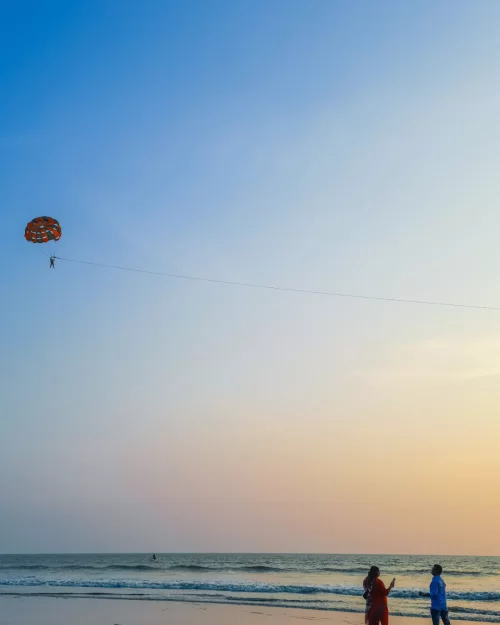
Most commercial sea-based water sports are suspended during the monsoon because of seasonal restrictions and unsafe sea conditions.
Activities such as parasailing, jet skiing, banana boat rides and many boat excursions should not be expected.
Many temporary beach shacks operate seasonally and close during the monsoon.
However, established restaurants, cafés and hotels in nearby towns may remain open throughout the year.
Travellers should confirm current operations before visiting a particular location.
Beach recommendation: During the monsoon, choose beaches for safe coastal sightseeing rather than swimming or water sports. Stay near established tourist areas if you want more reliable year-round restaurants and accommodation.
The monsoon is often one of the more affordable times to visit Goa because demand for conventional beach holidays is lower than during the winter tourist season. Some hotels and resorts offer seasonal discounts, while certain tourist areas experience fewer visitors.
However, lower accommodation prices do not always mean a cheaper or more convenient holiday. Heavy rainfall can increase transport difficulties, restrict activities and affect access to remote attractions.
Many hotels offer lower rates during June, July, August and September compared with peak December dates.
However, pricing depends on property category, location, weekends, public holidays and special offers.
Some seasonal beach accommodation closes completely during the monsoon.
The following figures are broad illustrative budgeting ranges, not verified live quotations. Actual prices can be higher or lower depending on travel dates and property conditions.
Choosing accommodation with reliable road access, indoor facilities and nearby restaurants is particularly important during the rainy season.
A beach resort can be enjoyable during the monsoon if it has comfortable indoor facilities, reliable access and suitable dining arrangements.
However, visitors should not expect normal winter beach services, unrestricted swimming or fully operational seasonal shacks.
Local eateries and traditional Goan restaurants can be affordable throughout the year.
Illustrative food costs include:
Seafood availability and prices may be affected by fishing restrictions and seasonal supply during the monsoon.
Taxi and rental vehicle charges depend on route, vehicle category, operator and demand.
Although tourist demand may be lower, remote transfers and weather-related delays can increase practical travel costs.
Visitors should confirm fares and avoid driving through flooded roads.
The following example assumes three nights of accommodation and excludes flights or long-distance railway tickets.
Illustrative total: Approximately Rs 13,000 to Rs 31,000 for two adults, excluding travel to Goa.
This is a planning estimate rather than a package quotation. Actual costs depend on the itinerary, accommodation and transport arrangements.
Flight prices may be lower on some monsoon dates because tourist demand is reduced, but fares vary by departure city, booking lead time, airline schedules and holidays.
Travellers should compare actual fares rather than assuming every rainy-season flight is inexpensive.
Yes, particularly for travellers who enjoy greenery, traditional food, heritage sightseeing and relaxed resort stays.
However, travellers whose main priorities are beach swimming, water sports and outdoor adventure may find that the seasonal restrictions outweigh the accommodation savings.
Budget recommendation: Compare the total trip cost rather than hotel prices alone. Choose a well-connected accommodation location and maintain flexibility for weather-related changes.
Travelling to Goa during the monsoon requires careful preparation because rainfall can affect roads, beaches, outdoor attractions and transport services. A flexible itinerary, suitable clothing and attention to official weather warnings can make the trip more comfortable and safer.
Heavy rainfall can reduce visibility and create slippery road surfaces. Low-lying roads may experience waterlogging, while some rural and hilly routes can be affected by fallen trees or localised landslides.
Road conditions vary by location and rainfall intensity. Travellers should check current conditions before undertaking long journeys.
Riding a scooter during heavy rain can be risky because of slippery roads, poor visibility, standing water and reduced braking effectiveness.
Travellers unfamiliar with local roads or wet-weather riding may prefer taxis or other suitable transport.
Anyone renting a two-wheeler should carry a valid licence, wear a helmet and avoid riding during dangerous weather.
Goa is served by Goa International Airport at Dabolim and Manohar International Airport at Mopa, along with several railway stations.
Heavy rainfall and adverse weather can occasionally affect flight, train and road schedules.
The Arabian Sea can become extremely rough during the southwest monsoon. Strong waves and rip currents create serious risks.
Waterfalls and forest trails can become hazardous during heavy rainfall. Flash floods, slippery rocks and rapidly rising water levels can create life-threatening conditions.
Day 1 – Panaji and Heritage: Arrive in Goa, check in and explore accessible areas of Panaji and Fontainhas when weather permits. Enjoy traditional Goan cuisine.
Day 2 – Old Goa and Cultural Attractions: Visit the Basilica of Bom Jesus, Se Cathedral and selected indoor attractions. Return to the hotel during heavy rain.
Day 3 – Plantation or Relaxed Resort Stay: Consider an authorised spice plantation experience if operating, or enjoy a relaxed morning at the hotel before departure.
All outdoor activities should remain flexible and subject to weather, road conditions and local permissions.
India's national emergency response number is 112.
Travellers should keep their hotel contact details, transport provider information and essential medical details accessible.
Follow official weather alerts and instructions issued by local authorities.
Goa is worth visiting during the monsoon for travellers who enjoy lush greenery, rain-soaked landscapes, traditional food, heritage attractions and quieter resort stays. June to August offers a strong monsoon atmosphere, while September often brings gradually improving weather.
However, the rainy season is generally unsuitable for visitors whose main priorities are beach swimming, water sports, unrestricted trekking and consistently sunny weather.
For a comfortable monsoon holiday, choose accommodation with reliable access, keep sightseeing flexible, check official weather warnings and avoid dangerous seas, waterfalls and forest routes.


Get customized Delhi tour planning designed around traffic flow, seasonal weather comfort, heritage site exploration time, and realistic city pacing. Whether you are visiting for historical monuments, cultural experiences, food walks, shopping districts,
⚡ Quick Response | 💰 Free consultation | 🕒 24×7 expert support

