
Best Hidden and Less Crowded Beaches in Goa
Discover quieter beaches in Goa away from the busiest tourist areas, with insights into secluded coastal spots, accessibility, facilities and tips for peaceful beach outings.
+91 9910402252
admin@chalbanjare.com


Plan a visit to Dudhsagar Waterfalls in Goa with guidance on reaching the falls, seasonal access, entry procedures, visiting timings and important travel precautions.
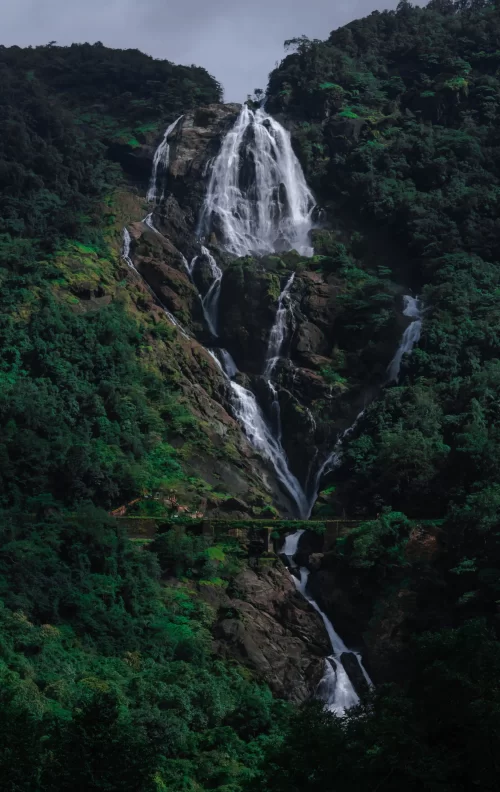
Dudhsagar Waterfalls is a famous four-tiered waterfall located on the Mandovi River in the Western Ghats, close to the Goa–Karnataka border. It lies within the protected forest landscape of Bhagwan Mahavir Wildlife Sanctuary and Mollem National Park in eastern Goa.
The name Dudhsagar means Sea of Milk, referring to the white appearance of water cascading down the rocky slopes. The waterfall is particularly impressive during and shortly after the southwest monsoon, when rainfall increases the river's flow.
Dudhsagar Waterfalls is situated in eastern Goa, near the Karnataka border and the railway route connecting the two states. The main regulated tourist approach from Goa is generally through the Kulem or Collem area.
Dudhsagar Waterfalls is commonly described as approximately 310 metres high, making it one of India's prominent waterfalls. Its water descends through multiple tiers rather than falling in one uninterrupted vertical drop.
The waterfall's dramatic appearance comes from the combination of steep rock faces, surrounding greenery and the large volume of water flowing during wetter months.
The Dudhsagar region forms part of the Western Ghats, an important biodiversity area. Its forests provide habitats for various birds, butterflies, reptiles and mammals.
Visitors may observe forest vegetation, streams and natural rock formations during authorised excursions. Wildlife sightings are unpredictable, and visitors should never approach or feed animals.
Dudhsagar can be an enjoyable nature excursion for families with older children and adults who are comfortable with uneven roads, a lengthy outing and potentially crowded conditions.
However, the jeep journey can be bumpy, and reaching designated viewing areas may involve walking over uneven ground. Families travelling with infants, elderly visitors or people with mobility limitations should assess the journey carefully.
The railway bridge near Dudhsagar is an operational railway structure, not a general tourist walkway. Visitors should not walk along railway tracks, enter tunnels or attempt unauthorised railway treks.
Tourists should use officially permitted forest access routes and designated viewing areas rather than attempting to reach the waterfall through railway infrastructure.
A Dudhsagar excursion generally requires several hours because visitors must travel to the designated access point, complete entry procedures and use authorised transport when operating.
For travellers staying in coastal Goa, it is usually best to reserve most of the day for the excursion. Exact journey and viewing times depend on traffic, queues, weather and current forest regulations.
Travel recommendation: Dudhsagar is best planned as a nature-focused day trip rather than a quick sightseeing stop. Confirm that authorised visitor access is operating before leaving your hotel.
Dudhsagar Waterfalls is located inland, away from Goa's main coastal tourist areas. Visitors usually travel by road to Kulem or Collem, where authorised forest excursions may begin during the permitted season. Private vehicles generally cannot be driven directly to the waterfall viewing area.
The exact route and access arrangements depend on current regulations, road conditions and whether the official jeep service is operating.
Panaji is approximately 60 to 75 kilometres from the Kulem or Collem access area by road, depending on the chosen route and starting point.
Travellers commonly proceed inland through the Ponda and Mollem region towards Kulem.
Visitors should leave early if they intend to join a permitted morning safari, as vehicle allocation and entry procedures may involve waiting.
Madgaon, also known as Margao, is one of the more convenient major towns for reaching the Dudhsagar access area.
The road journey towards Kulem generally covers approximately 40 to 50 kilometres, depending on the starting location and route.
Madgaon can be a practical base for travellers who want to visit Dudhsagar without staying in North Goa.
Calangute and Baga are popular tourist areas in North Goa, but they are relatively far from the waterfall access point.
The road distance to Kulem is generally around 75 to 95 kilometres, depending on the exact starting point and route.
Travellers should allow sufficient time for the return journey, especially when staying near busy North Goa beaches.
Candolim is another convenient North Goa accommodation area, although the waterfall remains a substantial inland journey.
Travellers can reach Kulem through the main road network towards Ponda and Mollem.
Journey times vary considerably with traffic, so an early departure is advisable.
Visitors staying in Colva, Benaulim, Varca or Cavelossim can travel towards Madgaon and continue inland to Kulem.
The total journey depends on the accommodation location. Travellers staying farther south around Palolem or Agonda should allow additional driving time.
Kulem has a railway station, and rail services may connect it with other locations depending on current schedules.
However, reaching a nearby railway station does not provide unrestricted access to the waterfall. Train services do not function as a general sightseeing shuttle to the waterfall, and visitors must not walk along active railway tracks or tunnels.
Use only authorised tourist access arrangements and confirm the availability of suitable transport from the station.
Public buses serve several towns in Goa, but reaching Kulem may require connections and additional local transport.
Bus availability and schedules can be limited for travellers planning an early safari. Families and groups may find a prebooked vehicle more convenient.
Visitors can generally drive to the permitted parking or access area near Kulem, subject to road conditions and local traffic rules.
Private cars and rental vehicles should not be assumed to have permission to enter the protected forest route leading to the waterfall.
During authorised jeep safari operations, visitors normally use vehicles permitted for the regulated forest excursion.
Travel recommendation: Travel to Kulem or the officially designated access point rather than attempting to navigate directly to the waterfall using remote roads or railway routes. Confirm safari operations before beginning the journey.
The regulated jeep safari is the best-known tourist access method for visiting Dudhsagar Waterfalls from the Goa side during the permitted operating season. The excursion normally begins near Kulem or Collem and follows a forest route through the protected area towards the designated waterfall access zone.
Safari availability, booking methods, vehicle allocation and passenger limits are controlled by current local arrangements and forest regulations. Visitors should not rely on outdated booking instructions or assume that services operate throughout the year.
The traditional jeep safari access point is associated with Kulem or Collem in eastern Goa.
Visitors generally travel to the designated booking or reporting area, complete required formalities and board an authorised vehicle when the service is operating.
The exact booking procedure may change between seasons. Depending on current arrangements, reservations or vehicle allocation may be handled through authorised counters, designated booking systems or officially recognised operators.
Visitors should be cautious of unofficial sellers who promise guaranteed access during forest closures or offer unauthorised routes.
Advance booking arrangements depend on the operating season and the system currently authorised by the relevant agencies.
Do not assume that an old online booking portal, telephone number or travel agent arrangement remains valid.
Before paying, confirm whether the booking is recognised by the authorised safari service and understand the cancellation policy.
The traditional jeep excursion follows an approximately 10 to 12 kilometre forest route from the Kulem side towards the waterfall access area. The exact route and permitted stopping points are subject to regulation.
The journey may involve rough tracks, uneven surfaces and water crossings depending on seasonal conditions.
Visitors should expect a bumpy ride rather than a smooth paved-road journey.
The driving portion may take approximately 45 minutes to an hour each way under suitable conditions, although actual travel times vary with road conditions, vehicle movement and official controls.
Additional time is required for registration, queuing, walking and visiting the designated viewing area.
Visitors should allow several hours for the full excursion after reaching Kulem.
Depending on the current drop-off point and access rules, visitors may need to walk a short distance over uneven or rocky ground to reach the designated waterfall viewing area.
Conditions may be slippery, especially near water.
Comfortable footwear with reliable grip is preferable to unsuitable sandals or smooth-soled shoes.
The permitted number of passengers depends on the authorised vehicle type and current operating rules.
Some previous safari arrangements have commonly used shared vehicles carrying around six visitors, but this should not be treated as a guaranteed current capacity.
Confirm the approved passenger limit before booking, particularly when travelling with children.
Children may be allowed under applicable operator rules, but the rough forest journey can be uncomfortable for infants and younger passengers.
Parents should confirm minimum age requirements, seating arrangements and whether the vehicle is appropriate for their children.
Some senior citizens may be comfortable with the excursion, but the bumpy road and uneven walking surfaces can be difficult for visitors with back problems, mobility limitations or other relevant health concerns.
Assess the physical demands before booking and seek medical advice when appropriate.
Alternative routes and activities may exist under specific permissions, but ordinary visitors should not assume they can freely trek, drive or walk to the waterfall.
Forest access, railway movement and trekking are regulated. Unauthorised entry can be dangerous and may result in enforcement action.
Travel recommendation: The authorised jeep safari is the practical option for many tourists when the service is open. Confirm the booking process, fees and access conditions for your exact travel date rather than relying on older travel blogs or advertisements.
The cost of visiting Dudhsagar Waterfalls depends on the authorised safari arrangements, forest entry fees, vehicle-sharing rules, mandatory safety equipment and transport to the access point. Charges may be revised between seasons, so visitors should treat older price lists as historical information rather than confirmed current tariffs.
There is no single reliable all-inclusive price that applies to every visitor without checking the current operating arrangements.
Jeep safari charges are often a major part of the excursion budget.
In previous operating arrangements, jeep charges have commonly been quoted on a per-vehicle basis, with visitors sharing the total according to the permitted passenger capacity.
For preliminary budgeting, travellers may encounter quotations of several thousand rupees per jeep. However, the exact current tariff must be verified through the authorised booking system.
Forest entry charges may apply separately from the vehicle fare.
The amount can depend on current protected-area regulations and visitor categories.
Check whether entry fees are included in the safari quotation or payable separately.
Safety equipment requirements depend on the current visitor rules and permitted activities.
If life jackets are mandatory for an authorised activity, visitors should confirm whether their cost is included in the package.
Never treat the availability of a life jacket as permission to enter restricted or unsafe water.
Protected areas may have rules concerning cameras, commercial photography and professional equipment.
Visitors should confirm whether any additional fee or permission applies to their equipment.
Drone use should not be attempted without the necessary permissions.
Travellers arriving by private vehicle may need to use designated parking facilities near the access point.
Parking charges, if applicable, depend on the location and current arrangements.
Transport from coastal Goa to Kulem is generally a separate expense.
Taxi prices depend on the starting location, vehicle category, travel duration, waiting time and seasonal demand.
Travellers should obtain a quotation that clearly states whether parking, tolls and waiting charges are included.
Visitors may purchase breakfast, lunch, snacks and drinking water before or after the forest excursion.
Food availability within protected areas may be limited or restricted.
Do not carry disposable items into restricted areas where prohibited, and always take waste back to designated disposal points.
Some authorised experiences may involve guides or additional services.
Check whether these are compulsory, optional or already included in the booking price.
The following is a planning example only, not a confirmed current tariff.
If the authorised jeep charge is quoted per vehicle, the cost per person depends on how many permitted passengers share it.
For example, if a jeep costs Rs 4,000 and six passengers are permitted to share it, the vehicle portion would be approximately Rs 667 per person.
This is only an arithmetic example and does not represent a verified Dudhsagar safari price or approved passenger capacity.
Travel recommendation: Budget separately for the road journey, authorised safari, forest entry and meals. Because official tariffs can change, confirm the complete payable amount before finalising your Dudhsagar day trip.
Dudhsagar Waterfalls is a natural attraction that exists throughout the year, but tourist access is not available under the same conditions in every season. The authorised jeep safari and forest entry arrangements are subject to weather, protected-area regulations, road conditions and administrative permissions.
Visitors should distinguish between the waterfall itself, the official safari service and other restricted routes. A waterfall being visible or flowing strongly does not mean tourists are permitted to reach it.
During the authorised tourist season, jeep safari services have generally operated during daylight hours, with morning departures and controlled return schedules.
Exact reporting times, last vehicle departures and visitor cut-off times are set by the current operating arrangements.
Visitors should not rely on a fixed opening time such as 8 AM or 9 AM without checking the current official schedule.
The regulated jeep safari season has traditionally begun after the southwest monsoon, commonly around October or November, once road conditions and the required permissions allow operations.
The actual reopening date can vary from year to year.
Heavy rainfall, damaged forest tracks or administrative decisions may delay the start of the season.
Jeep safari operations have traditionally been seasonal, with closures associated with the onset of the monsoon, commonly around June.
However, the precise closing date is not guaranteed and can change according to weather and official orders.
The waterfall generally carries substantial water during the monsoon, but the standard forest jeep safari is commonly suspended because of unsafe conditions.
Heavy rainfall can cause strong currents, swollen streams, slippery tracks and dangerous access conditions.
Visitors should not interpret the monsoon's impressive waterfall flow as permission to enter restricted areas.
July and August are typically among the wettest months in Goa.
During this period, standard jeep access is generally unavailable, and other routes may be restricted.
Travellers should not plan an ordinary tourist visit to the waterfall without confirmation of an officially permitted access arrangement.
September remains part of the monsoon period, and forest conditions can still be unsafe.
The standard jeep safari should not be assumed to have reopened.
Check current official announcements before making travel plans.
October is a transitional month when rainfall may decrease, but forest tracks can remain unsuitable for tourist vehicles.
Some years may see safari operations resume during October, while others may experience delays.
Confirm the actual reopening date before booking transport.
November to February is generally a favourable period for visiting Dudhsagar because the weather is usually more comfortable and the authorised safari is often operational.
Water flow may gradually decrease after the monsoon, but the surrounding landscape remains scenic.
Peak-season demand can result in queues and limited vehicle availability.
March to May can offer opportunities for sightseeing when the safari is operating, although temperatures become hotter and the waterfall's flow may be lower than immediately after the monsoon.
Visitors should carry sufficient drinking water and plan for warmer conditions.
If the authorised jeep safari is unavailable, visitors should choose another permitted attraction rather than attempting an unofficial route.
Possible alternatives include suitable spice plantation visits, authorised forest interpretation experiences or historical sightseeing around the Ponda and Mollem region.
Travel recommendation: November to February is generally the most practical period for planning a Dudhsagar excursion. October and June require particular attention to seasonal changes, while monsoon visits should never be attempted through unauthorised forest or railway routes.
The best time to visit Dudhsagar Waterfalls depends on whether you prioritise strong water flow, comfortable weather or reliable tourist access. The waterfall is most dramatic during periods of heavy rainfall, but those same conditions can make the forest route unsafe and cause official tourist services to close.
For most travellers, the best practical visiting period is after the monsoon, when authorised access has resumed and the waterfall still has substantial flow.
October marks the transition from the monsoon towards drier conditions.
The waterfall may still carry significant water, and the surrounding forest is often green.
However, safari operations may not yet have resumed, depending on road conditions and official permissions.
Travel suitability: Potentially scenic, but access must be confirmed.
November is generally one of the better months for visiting Dudhsagar when the official jeep safari is operational.
The weather is usually more comfortable than during the monsoon, and the waterfall may retain a strong post-monsoon flow.
Travel suitability: Often a favourable combination of scenery and access.
December offers relatively comfortable sightseeing weather and is part of Goa's main tourist season.
Visitors may experience greater demand for safari vehicles, particularly around holidays.
Travel suitability: Generally good, with potentially busy visitor conditions.
January usually provides pleasant conditions for outdoor sightseeing.
Water flow is often lower than during the immediate post-monsoon period, although it varies with rainfall and river conditions.
Travel suitability: Good for comfortable sightseeing when access is open.
February is generally suitable for visitors who prefer relatively dry weather.
The waterfall may have a more moderate flow compared with the wetter months.
Travel suitability: Good for a nature excursion, subject to safari operations.
March brings warmer temperatures and generally drier conditions.
Water flow may decline as the dry season progresses.
Travel suitability: Possible when access is open, but prepare for heat.
April and May are typically hot months in Goa.
The waterfall's flow can be considerably lower than during the monsoon and post-monsoon periods.
Outdoor travel may be uncomfortable during midday.
Travel suitability: Less favourable for strong water flow, although visits may be possible during authorised operations.
June usually marks the beginning of the southwest monsoon in Goa.
Rainfall may increase the waterfall's flow, but access conditions can deteriorate quickly.
Safari operations may close as the monsoon begins.
Travel suitability: Uncertain and strongly dependent on official restrictions.
July and August typically bring heavy rainfall and powerful water flow.
Although the waterfall may appear especially dramatic, the standard tourist jeep safari is generally suspended.
Flooded tracks, slippery rocks and strong currents make unauthorised visits dangerous.
Travel suitability: Not recommended for an ordinary tourist excursion without explicitly authorised access.
September may still experience substantial rainfall and high water flow.
Forest access can remain restricted, and safari reopening should not be assumed.
Travel suitability: Access-dependent and generally unsuitable for unconfirmed plans.
For travellers using the normal authorised tourist route, November and the early post-monsoon period can offer a useful balance between greenery, water flow and safer access.
However, actual waterfall conditions vary with rainfall, and no particular month guarantees a specific appearance.
November to February is generally preferable for families because temperatures are usually more comfortable and forest excursions are more likely to be operating.
Families should still consider the rough jeep journey and walking conditions before booking.
Travelling outside the busiest holiday periods may reduce some accommodation and transport costs.
However, visitors should not choose the monsoon solely for lower prices because the main waterfall excursion may be unavailable.
Travel recommendation: November is often an excellent month to consider, provided the official safari has reopened. December to February is generally reliable for comfortable sightseeing, while monsoon travel should be planned only around officially permitted activities.
The region around Dudhsagar Waterfalls offers several additional attractions, including historical temples, spice plantations and protected forest landscapes. These places can be included in a broader inland Goa itinerary, although visitors should consider travel distances and avoid combining too many activities with a lengthy waterfall excursion.
Tambdi Surla Mahadev Temple is one of Goa's most important historical temples. Dedicated to Lord Shiva, it is known for its stone architecture and forested surroundings.
The temple is commonly associated with the Kadamba-era architectural tradition and is valued for its historical significance.
It is situated within the broader Bhagwan Mahavir Wildlife Sanctuary region, away from Goa's main coastal tourist areas.
Visitors should dress respectfully, follow temple customs and avoid disturbing worshippers.
It may be possible to include Tambdi Surla in an inland sightseeing itinerary, but the temple is not simply a short walking detour from the waterfall.
Travel involves separate road routes, and a full Dudhsagar safari can take much of the day.
Families may prefer visiting Tambdi Surla on another day rather than rushing through both attractions.
Bhagwan Mahavir Wildlife Sanctuary protects a large forest landscape in eastern Goa.
The area is known for biodiversity, forest scenery and wildlife habitats.
Visitor access is regulated, and not every forest route is open for independent exploration.
Wildlife sightings are unpredictable, and visitors must not feed or approach animals.
Mollem National Park forms part of the protected forest landscape associated with the Dudhsagar region.
It is important for its natural habitats and ecological significance.
Tourist access depends on designated routes and current forest regulations.
The Ponda region is associated with several established spice plantation attractions.
Visitors can learn about tropical crops and spices used in Goan cooking through guided plantation experiences.
Some plantations offer meals or cultural demonstrations, depending on the operator and package.
Sahakari Spice Farm is a recognised plantation attraction in the Ponda area.
Visitors may be able to join guided plantation tours and learn about regional crops.
Check current operating hours, admission charges and included services before visiting.
Tropical Spice Plantation is another established attraction associated with Goa's plantation tourism.
It offers opportunities to learn about tropical vegetation and spice cultivation, depending on current visitor arrangements.
Families should confirm tour duration and accessibility in advance.
Ponda is known for several important temples and religious attractions.
Travellers interested in culture can consider visiting suitable temples while exploring inland Goa.
Temple opening hours, dress expectations and photography rules vary.
Shri Mangeshi Temple is an important religious attraction in the Ponda region.
It is known for its distinctive temple architecture and cultural significance.
Visitors should follow the temple's current access and dress regulations.
Shri Shantadurga Temple at Kavlem is another prominent religious site in Goa.
It can be included in a cultural sightseeing itinerary around Ponda.
Respectful behaviour and appropriate clothing are expected.
Travel recommendation: Tambdi Surla Temple and the Ponda spice plantations are worthwhile inland Goa attractions. However, Dudhsagar itself can require a full day, so adding too many stops may make the excursion rushed and tiring.
Visiting Dudhsagar Waterfalls requires more preparation than visiting a typical beach or city attraction in Goa. The waterfall is located within a protected forest landscape, and access is controlled for environmental protection and visitor safety. Travellers should confirm the current operating status, use authorised routes and prepare for a potentially rough journey.
Before travelling, confirm that the authorised tourist access route is operating on your chosen date.
Do not rely solely on general statements that Dudhsagar is open throughout the year, because the waterfall's natural existence and the availability of tourist access are different matters.
Entry into protected forest areas is regulated.
Visitors may need to complete registration, pay applicable fees and follow instructions issued by authorised staff.
Do not enter restricted forest routes without permission.
Carry valid identification and any booking confirmation required by the authorised service.
Exact documentation requirements can vary, so check before departure.
During regulated jeep safari operations, use the designated transport service.
Private vehicles should not be driven into restricted forest areas without explicit permission.
Avoid unofficial drivers offering access through prohibited routes.
Waterfall pools, streams and rocky surfaces can be dangerous because of strong currents, slippery rocks and changing water levels.
Swimming should only be considered where explicitly permitted by the authorities and where appropriate safety arrangements are in place.
Do not enter restricted water areas even if other visitors appear to be doing so.
The railway route near Dudhsagar is operational infrastructure.
Walking on railway tracks, entering tunnels or attempting unauthorised railway treks is dangerous.
Visitors should use only permitted tourist routes and designated viewing locations.
The excursion may involve rough ground, stones and slippery surfaces.
Wear comfortable footwear with good grip.
Avoid unsuitable shoes that increase the risk of slipping.
Carry only essential belongings during the excursion.
Protect cameras and electronic devices from moisture, dust and jolts during the jeep ride.
Dudhsagar may be suitable for older children who can tolerate a rough jeep ride and walk safely on uneven ground.
Parents should confirm any age restrictions and maintain close supervision near streams, rocks and viewing areas.
For infants or very young children, the physical demands of the excursion may outweigh the benefits.
The excursion can be challenging for some senior citizens because of the bumpy vehicle journey and potentially uneven walking conditions.
Visitors with limited mobility or relevant medical concerns should assess the activity carefully before booking.
The rough forest vehicle journey may be unsuitable during pregnancy, particularly where there are medical concerns or restrictions on strenuous travel.
Pregnant travellers should consult their healthcare professional and confirm the physical demands of the excursion before considering it.
Mobile coverage may be inconsistent in forested areas.
Inform someone of your planned route and expected return time, and avoid depending entirely on mobile internet for navigation or emergency communication.
Food and refreshment facilities may be limited within the protected area.
Have breakfast before the excursion and carry water according to current entry rules.
Do not leave food waste or packaging in the forest.
India's national emergency response number is 112.
Visitors should follow instructions from forest staff, authorised drivers and emergency personnel.
Because remote forest locations can have limited connectivity, it is important to remain with the authorised group and avoid wandering away from designated areas.
Dudhsagar Waterfalls is one of Goa's most impressive natural attractions, offering a memorable combination of cascading water, forest scenery and Western Ghats landscapes. For most visitors, the authorised jeep safari from the Kulem side is the practical way to experience the waterfall when operations are permitted.
November to February is generally a favourable period for sightseeing, while the immediate post-monsoon season can offer stronger water flow if access has reopened. Monsoon conditions require particular caution because the standard tourist route is commonly closed.
Plan the excursion as a full-day activity, verify the current official operating status and charges, and prioritise safety over reaching the waterfall through unauthorised routes.


Get customized Delhi tour planning designed around traffic flow, seasonal weather comfort, heritage site exploration time, and realistic city pacing. Whether you are visiting for historical monuments, cultural experiences, food walks, shopping districts,
⚡ Quick Response | 💰 Free consultation | 🕒 24×7 expert support

