
Best Hidden and Less Crowded Beaches in Goa
Discover quieter beaches in Goa away from the busiest tourist areas, with insights into secluded coastal spots, accessibility, facilities and tips for peaceful beach outings.
+91 9910402252
admin@chalbanjare.com


Discover enjoyable activities in South Goa, including peaceful beach visits, scenic coastal drives, heritage sightseeing, nature experiences and local cultural attractions.
South Goa is an ideal destination for travellers who want to explore beaches, historical landmarks, natural attractions and traditional Goan culture at a comfortable pace. The region offers a mix of established tourist beaches, quieter coastal villages, scenic viewpoints and nature-focused experiences. First-time visitors should plan activities according to their accommodation location because South Goa's attractions are spread across a considerable distance.
Palolem Beach is one of South Goa's most recognised tourist destinations. Its curved sandy shoreline, surrounding greenery and collection of cafés and accommodation make it popular with couples, families and international travellers.
Visitors can enjoy beach walks, relaxed dining and selected kayaking or boat excursions when conditions permit. The beach is particularly attractive during the main tourist season, although it can become busy around popular access points.
Best for: First-time visitors, couples, photography and relaxed beach holidays.
Colva Beach is one of South Goa's established tourist beaches, located within convenient travelling distance of Margao. It has a broad sandy shoreline, restaurants and seasonal tourist facilities.
Visitors can enjoy coastal sightseeing, beach walks and selected recreational activities through authorised operators.
Best for: Families, general beach sightseeing and visitors staying near Margao.
Benaulim is known for its relatively relaxed coastal atmosphere. It is suitable for travellers who prefer a quieter environment than the busiest tourist beaches.
Visitors can enjoy long beach walks, coastal photography and dining at suitable establishments. Facilities and crowd levels vary by season.
Best for: Couples, families and peaceful beach experiences.
Agonda Beach is popular for its scenic shoreline, relaxed accommodation and quieter holiday atmosphere. It is particularly appealing to travellers seeking a break from crowded tourist areas.
Visitors can enjoy walking along the coast, relaxing at suitable cafés and appreciating the surrounding landscape.
Agonda is also associated with sea turtle conservation, so visitors must respect protected areas and avoid disturbing wildlife.
Best for: Nature lovers, couples and peaceful coastal holidays.
Cabo de Rama Fort is a historic coastal fort situated on a headland overlooking the Arabian Sea. It is one of South Goa's most scenic historical attractions.
Visitors can explore accessible sections of the fort and enjoy coastal views from safe viewpoints. The site includes an old chapel and remnants of defensive structures.
Best for: History enthusiasts, photography and scenic sightseeing.
Cotigao Wildlife Sanctuary is located in southern Goa and protects forest habitats that support birds and other wildlife.
It is suitable for travellers interested in forest landscapes, nature walks and birdwatching. Wildlife sightings are unpredictable and should never be guaranteed.
Visitors should check current entry arrangements and use authorised guides where required.
Best for: Nature lovers, birdwatchers and forest experiences.
Selected operators around Palolem and other suitable South Goa locations may offer kayaking or guided boat excursions during permitted operating periods.
These experiences allow travellers to enjoy coastal scenery from the water. The exact routes, duration and availability depend on sea conditions and operator permissions.
Best for: Couples, small groups and travellers interested in gentle adventure.
Margao is one of South Goa's important commercial and cultural centres. Its traditional market areas provide opportunities to explore local produce, spices, clothing and regional products.
Travellers can combine shopping with visits to nearby heritage buildings and restaurants serving traditional Goan food.
Best for: Local shopping, cultural experiences and food enthusiasts.
Villages such as Chandor and Loutolim offer opportunities to appreciate traditional Goan architecture, old houses, churches and local heritage.
Some heritage properties may offer guided visits by prior arrangement. Visitors should not enter private homes or residential compounds without permission.
Best for: Heritage lovers, photographers and cultural travellers.
South Goa is particularly suitable for travellers who enjoy peaceful evenings. Beaches such as Benaulim, Cavelossim, Palolem and selected quieter coastal locations provide attractive settings for sunset photography and dining.
Sunset visibility depends on the weather, and some beachside restaurants operate only during the main tourist season.
Best for: Couples, families and relaxed holidays.
Travel recommendation: First-time visitors should explore Colva and Benaulim on one day, followed by Palolem, Agonda and Cabo de Rama Fort on another. Travellers with additional time can include wildlife sanctuaries, traditional villages or quieter southern beaches.
South Goa offers selected water sports, kayaking experiences and organised boat excursions for travellers interested in coastal adventure. Compared with North Goa's busy water sports centres, activity availability in South Goa can be more limited and location-specific. Colva and selected resort beaches may offer motorised activities, while Palolem and suitable sheltered waterways are associated with kayaking and boat excursions. All activities depend on operator authorisation, weather conditions and local permissions.
Jet skiing may be available through authorised operators at selected beaches such as Colva and other designated tourist locations during suitable operating periods.
Many tourist rides are short and instructor-assisted. Travellers should confirm the actual riding duration, supervision and safety equipment before booking.
Indicative budget: Approximately Rs 400 to Rs 1,000 per person for a short ride.
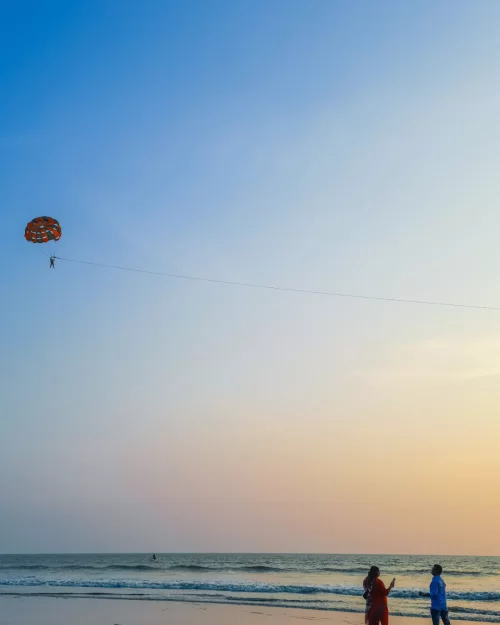
Parasailing may be offered at selected South Goa water sports locations when wind, sea conditions and permissions allow.
The activity involves being lifted above the sea using a canopy attached to a towing boat.
Travellers should confirm the operating location, flight duration and applicable age or weight restrictions.
Indicative budget: Approximately Rs 800 to Rs 2,000 per person.
Selected operators may offer banana boat and bumper boat rides as individual experiences or as part of water sports packages.
These inflatable rides can involve sudden movements and possible falls into the water.
Participants should wear properly fitted life jackets and follow the operator's eligibility requirements.
Indicative budget: Approximately Rs 300 to Rs 800 per person for a short ride.
Palolem is one of South Goa's better-known locations for recreational kayaking when conditions are suitable.
Visitors may be able to paddle in designated coastal areas or join guided experiences through suitable operators.
Kayaking should only be undertaken in safe conditions, with appropriate flotation equipment and supervision for beginners.
South Goa's rivers and sheltered waterways may provide opportunities for guided kayaking experiences.
Depending on the operator and location, excursions may involve quiet paddling through river scenery or suitable backwater environments.
Travellers should confirm tidal conditions, route difficulty, permissions and guide arrangements.
Indicative budget: Approximately Rs 700 to Rs 2,000 or more per person for selected guided experiences.
Organised boat excursions around Palolem may offer opportunities to enjoy the surrounding coastline from the water.
Some operators advertise dolphin-watching or visits to nearby coastal locations. However, routes and access depend on weather, sea conditions and permissions.
Dolphin sightings are never guaranteed. Choose operators who avoid chasing or disturbing marine wildlife.
Butterfly Beach is a small scenic cove in South Goa, often associated with boat excursions from the Palolem region.
Access by boat depends on safe landing conditions, and visitors should not assume that every excursion includes permission or the ability to land.
Some land routes are steep or difficult, so inexperienced travellers should avoid attempting them without suitable guidance.
Selected operators may offer late-afternoon boat trips along suitable coastal or river routes.
These experiences can be appealing to couples and families interested in scenery rather than high-speed adventure.
Confirm the departure point, duration, return time and safety equipment before booking.
Dolphin-watching trips may be offered from selected South Goa locations. These excursions provide opportunities to observe marine wildlife in its natural environment.
Wildlife sightings depend on animal movement, weather and sea conditions.
Responsible operators should maintain suitable distances and avoid feeding, chasing or surrounding dolphins.
Some South Goa travel operators may arrange diving or snorkelling experiences through specialist providers. However, the actual underwater activity location may be offshore or outside the immediate beach area.
Travellers should confirm the diving site, transfer arrangements, qualifications of the supervising professionals and actual underwater duration.
Underwater visibility and marine life sightings cannot be guaranteed.
Travel recommendation: Palolem is a practical starting point for travellers interested in kayaking and scenic boat trips. Visitors seeking motorised activities can check authorised operators at Colva or other designated South Goa beaches. Always confirm current availability rather than assuming every activity operates daily.
South Goa has a rich historical and cultural landscape shaped by local communities, religious traditions and Portuguese colonial rule. Travellers can explore coastal forts, historic churches, temples, traditional houses and heritage villages. Cabo de Rama Fort is one of the region's most recognisable historical attractions, while Chandor, Loutolim and Margao provide opportunities to discover Goa's architectural and cultural heritage.
Cabo de Rama Fort is located on a coastal headland in South Goa. The site has a history associated with earlier regional rulers and later Portuguese occupation.
The fort is known for its defensive remains, old chapel and views of the Arabian Sea.
Visitors should explore only accessible sections and avoid approaching unstable walls or unprotected cliff edges.
Best for: History, coastal photography and scenic sightseeing.
Betul Fort is a small historical site near the mouth of the Sal River. It is associated with Portuguese-era coastal defence.
The surrounding area offers river and coastal scenery, although the fort is much less developed as a tourist attraction than Cabo de Rama.
Travellers should confirm access conditions and avoid entering unstable or restricted sections.
Best for: History enthusiasts and travellers exploring quieter coastal areas.
Our Lady of Grace Church is a prominent religious landmark in Margao. It forms part of the town's historical and cultural landscape.
Visitors interested in architecture and local heritage can include the church during a Margao sightseeing outing.
Respect religious services, dress appropriately and follow photography restrictions.
Best for: Religious heritage and cultural sightseeing.
Holy Spirit Church is one of Margao's important historical churches. It is known for its distinctive architecture and long association with the town's religious life.
The surrounding area also offers opportunities to explore older streets and local heritage.
Entry to religious buildings may be restricted during services or special events.
Best for: Architecture, history and heritage photography.
Chandor is known for its historic houses and association with Goa's earlier political and cultural history.
The village offers opportunities to appreciate traditional architecture and the quieter atmosphere of inland South Goa.
Some heritage houses may be visited through prior arrangements, while others remain private residences.
Best for: Heritage enthusiasts, architecture and cultural experiences.
Braganza House in Chandor is a well-known heritage residence associated with traditional Goan architecture and historic interiors.
Visitor access depends on arrangements with the property and its custodians.
Travellers should confirm current visiting arrangements before travelling and respect photography restrictions.
Best for: Architectural heritage and guided historical experiences.
Loutolim is known for its old houses, village surroundings and cultural heritage. It is a rewarding destination for travellers interested in Goa beyond beaches.
Visitors can explore publicly accessible village areas and selected heritage attractions where entry is permitted.
Best for: Traditional architecture, village scenery and local culture.
Big Foot, also known as Ancestral Goa, is a cultural attraction in Loutolim associated with displays of traditional Goan village life, customs and heritage.
It can be particularly interesting for families and visitors seeking an introduction to regional traditions.
Confirm current operating hours, entry charges and available exhibits before visiting.
Best for: Families, cultural learning and heritage experiences.
Shree Mallikarjun Temple is an important Hindu religious site in the Canacona region of South Goa.
The temple is associated with local religious traditions and is known for its architectural and cultural significance.
Visitors should follow temple rules, dress respectfully and avoid disturbing worshippers.
Best for: Religious sightseeing and local cultural heritage.
Shree Damodar Temple at Zambaulim is an important religious destination in South Goa.
The temple attracts devotees and visitors interested in the region's Hindu traditions.
Access arrangements may change during festivals and religious events, so travellers should confirm visiting conditions in advance.
Best for: Pilgrimage and religious heritage.
Tambdi Surla Mahadev Temple is a historic stone temple situated in the forested interior of Goa, within the broader Bhagwan Mahavir wildlife landscape.
It is known for its distinctive architecture and peaceful natural surroundings.
Although it is not part of the main South Goa beach circuit, it can be included as a separate inland excursion from some South Goa locations.
Travellers should allow sufficient driving time and check current access conditions.
Best for: Temple architecture, history and nature-focused sightseeing.
Travel recommendation: Combine Cabo de Rama Fort with nearby coastal sightseeing, while Margao, Chandor and Loutolim are better explored as a separate heritage circuit. Travellers interested in temples can plan an additional inland outing according to their accommodation location.
South Goa offers opportunities to explore forest landscapes, waterfalls, wildlife habitats and scenic rivers beyond its coastline. Cotigao Wildlife Sanctuary is one of the region's important nature attractions, while Netravali Wildlife Sanctuary protects forest ecosystems in the inland part of South Goa. Travellers can also consider waterfall excursions, birdwatching and guided nature experiences. Access to forests and waterfalls depends on permissions, weather, road conditions and seasonal safety restrictions.
Cotigao Wildlife Sanctuary is located in the Canacona region of South Goa. It protects forest habitats and supports a variety of birds and other wildlife.
The sanctuary is suitable for travellers interested in nature walks, forest scenery and birdwatching.
Wildlife sightings are unpredictable, and visitors should not expect to see particular animals during every visit.
Best for: Nature lovers, birdwatchers and forest sightseeing.
Netravali Wildlife Sanctuary lies in the forested interior of South Goa and forms part of the state's important Western Ghats landscape.
The sanctuary supports diverse habitats and provides opportunities for authorised nature experiences.
Some routes and attractions may require permission or local guidance. Travellers should check current access arrangements before visiting.
Best for: Forest landscapes, nature photography and guided exploration.
The Netravali region is associated with scenic waterfalls and forested landscapes. Selected waterfall destinations may be accessible through permitted routes, depending on the season and local restrictions.
Waterfall access can become dangerous during heavy rainfall because of slippery trails, strong water flow and sudden changes in conditions.
Travellers should use authorised access routes and avoid swimming in waterfall pools.
Savari Waterfall is associated with the Netravali region and is visited by travellers interested in forest scenery and waterfalls.
Access arrangements and trail conditions may vary. Some approaches can involve walking over uneven or slippery ground.
Visitors should confirm current permissions and use suitable local guidance where required.
Best for: Nature enthusiasts and experienced walkers when access is permitted.
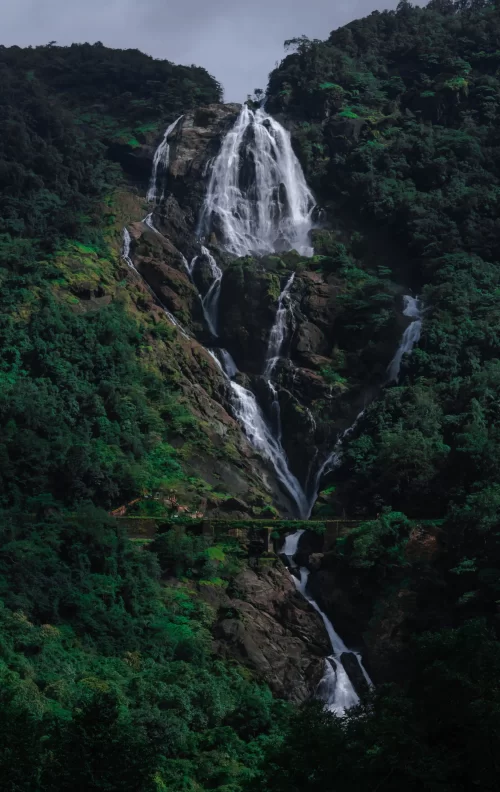
Dudhsagar Waterfalls is one of Goa's most famous natural attractions. It is located in the forested interior near the Goa-Karnataka border, within the Bhagwan Mahavir protected landscape.
The waterfall is known for its impressive height and surrounding greenery. Travellers staying in South Goa may plan it as a separate full-day excursion.
Access is regulated, and authorised transport arrangements may be required. Operations can be suspended because of heavy rainfall, unsafe routes or conservation restrictions.
Walking on railway tracks to reach the waterfall is unsafe and should not be attempted.
Bhagwan Mahavir Wildlife Sanctuary protects a large forested area in eastern Goa and is associated with important natural and historical attractions.
It can be visited as a separate inland excursion by travellers interested in forests, wildlife habitats and regional biodiversity.
Visitors should check permitted routes and use authorised guides or transport where required.
Galgibaga is an important coastal environment associated with sea turtle nesting. Its relatively quiet surroundings appeal to nature lovers.
Visitors should follow conservation rules and avoid disturbing protected nesting areas.
Do not use bright lights near nesting sites or attempt to approach turtles.
The Talpona River flows through southern Goa and meets the Arabian Sea near Talpona Beach.
The surrounding landscape offers opportunities for peaceful sightseeing and photography from suitable public areas.
Currents near the river mouth can be hazardous, so visitors should avoid unsupervised swimming or boating.
The Sal River is an important waterway in South Goa, flowing through the region before reaching the sea near Betul.
Selected riverside locations offer scenic views and opportunities to observe local landscapes.
Boat experiences may be available through suitable operators, subject to permissions and conditions.
South Goa's forests, wetlands, rivers and coastal habitats support different bird species. Nature enthusiasts may enjoy birdwatching in suitable public or authorised areas.
Early morning can be a convenient time for birdwatching, although sightings depend on the season, habitat and weather.
Maintain a respectful distance from wildlife and avoid disturbing nesting areas.
Travel recommendation: Cotigao Wildlife Sanctuary is a practical nature-focused excursion for travellers staying around Canacona. Netravali and Dudhsagar are better planned as separate inland trips because of travel distances, access restrictions and the time required for sightseeing.
South Goa's cultural attractions provide opportunities to explore local markets, traditional houses, village architecture, regional cuisine and everyday Goan life. Margao is one of the region's main commercial centres, while villages such as Chandor and Loutolim are known for their heritage. Travellers can also explore traditional bakeries, religious landmarks and selected cultural museums. These experiences are particularly suitable for visitors who want to understand Goa beyond its beaches.
Margao Municipal Market is an important shopping destination in South Goa. Visitors can explore local produce, spices, clothing, household products and regional food ingredients.
The market serves local residents as well as visitors, offering an opportunity to observe everyday commercial life.
Travellers should keep valuables secure and avoid obstructing busy stalls.
Margao is one of South Goa's important urban centres and offers a combination of markets, churches, restaurants and older streets.
Visitors can combine shopping with heritage sightseeing and a meal at a restaurant serving traditional Goan cuisine.
Traffic and parking can be challenging in busy commercial areas, so travellers should plan accordingly.
Chandor is known for its traditional houses and historical associations. The village is particularly interesting for travellers who appreciate old architecture and cultural heritage.
Selected heritage properties may offer visits by prior arrangement.
Visitors should respect residential privacy and avoid entering private compounds without permission.
Loutolim offers a quieter cultural experience with old houses, village roads and heritage attractions.
It is suitable for travellers interested in Goa's traditional settlement patterns and architecture.
Public areas can be explored respectfully, while private properties require permission.
Big Foot in Loutolim is a cultural attraction associated with displays of traditional Goan village life and customs.
It can provide an introduction to regional occupations, heritage and cultural traditions.
Families and first-time visitors may find the exhibits useful for understanding local history and everyday life.
Traditional bakeries are an important part of Goa's food culture. Local breads such as poi are commonly associated with everyday meals.
Travellers can purchase fresh bread from established bakeries and learn about regional food traditions when staff are available to explain them.
Not every bakery offers demonstrations or guided visits.
Goan fish curry with rice is one of the region's most recognisable meals. Recipes commonly use coconut, spices and souring ingredients, although preparations differ between households and restaurants.
Travellers can try the dish at established local restaurants around Margao and coastal towns.
Ask about the fish variety, spice level and preparation method before ordering.
Xacuti is a traditional Goan curry associated with roasted spices and coconut. Cafreal is another well-known preparation using a green spice marinade.
Both dishes are available at selected restaurants, although recipes and ingredients vary.
Vegetarian travellers can look for suitable regional vegetable preparations and confirm ingredients before ordering.
Bebinca and dodol are among Goa's well-known traditional sweets. Bebinca is a layered dessert, while dodol is commonly prepared using coconut milk, jaggery and rice flour.
Visitors can try these desserts at selected bakeries, restaurants and sweet shops.
Check ingredients if you have dietary restrictions or allergies.
South Goa's villages and towns contain churches and temples associated with local religious traditions.
Visitors interested in cultural heritage can include selected religious landmarks during village sightseeing.
Dress respectfully, follow site rules and avoid disturbing ceremonies or worshippers.
Goa hosts religious festivals, community celebrations and cultural performances throughout the year.
Travellers may be able to experience local music, traditional celebrations or community events depending on their travel dates.
Event schedules and public access arrangements vary, so visitors should confirm details before planning around a particular occasion.
Travel recommendation: Margao, Chandor and Loutolim can form a rewarding cultural sightseeing circuit. Travellers interested in local food should combine market visits with a traditional Goan meal and a stop at an established bakery.
South Goa is particularly popular with travellers who prefer peaceful evenings, scenic sunsets and relaxed dining rather than crowded nightlife. Beaches such as Benaulim, Cavelossim, Palolem, Agonda and Patnem offer attractive settings for coastal walks and meals at suitable restaurants. Visitors can also enjoy quiet resort experiences, selected cultural programmes and organised boat excursions when available. Evening activities should be planned with attention to transport, weather and beach safety.
Palolem's curved shoreline and surrounding greenery make it a popular destination for sunset photography.
Visitors can enjoy a late-afternoon walk and choose a suitable restaurant for dinner.
The beach can become busy during the main tourist season, particularly near popular dining areas.
Agonda is known for its relatively peaceful atmosphere and scenic coastal surroundings.
It is suitable for couples and travellers who enjoy quiet beach walks and relaxed dining.
Visitors should avoid isolated sections after dark and respect any turtle conservation restrictions.
Benaulim offers a relaxed setting for late-afternoon beach walks and coastal photography.
Visitors can combine sunset sightseeing with dinner at a nearby restaurant.
Sea conditions and sunset visibility vary, so travellers should follow local safety warnings.
Cavelossim is associated with resort holidays, restaurants and scenic coastal surroundings.
Travellers can enjoy a relaxed meal at suitable establishments, depending on seasonal availability.
Some restaurants may require reservations during busy holiday periods.
Colva has a range of restaurants and dining establishments suitable for families and groups.
Visitors can explore local Goan dishes, seafood preparations and other cuisine options.
Confirm seafood prices before ordering, especially when dishes are priced by weight.
Patnem offers a comparatively relaxed coastal setting near Palolem.
Selected seasonal restaurants provide opportunities for casual evening dining.
Travellers should check operating hours and arrange return transport if staying elsewhere.
The Sal River region around Cavelossim and Betul offers attractive riverside landscapes.
Selected restaurants and hospitality establishments may provide scenic dining experiences, depending on location and operating arrangements.
Visitors should confirm reservations and transport before travelling to less accessible riverside locations.
The coastal landscape around Cabo de Rama Fort offers impressive viewpoints and opportunities for late-afternoon photography.
However, the fort's exposed headland and uneven surfaces require caution.
Visitors should avoid cliff edges and allow enough time to return before darkness. Sunset views depend on the weather and access arrangements.
South Goa has numerous resorts and accommodation properties offering quiet environments for evening relaxation.
Depending on the property, guests may enjoy dining, wellness facilities or organised entertainment.
Check whether activities are included in the room tariff or charged separately.
Selected South Goa restaurants, resorts and event venues may host live music or cultural performances.
Entertainment schedules vary by season and day, and not every establishment offers regular programmes.
Travellers should confirm performance timings and any additional charges before visiting.
Selected operators may provide late-afternoon boat excursions on suitable coastal or river routes.
These experiences can offer scenic views and a different perspective of South Goa's landscape.
Choose authorised operators with suitable safety equipment and confirm the return time before departure.
Travel recommendation: Palolem and Agonda are particularly appealing for scenic evenings, while Benaulim and Cavelossim suit travellers seeking relaxed dining. Choose a beach close to your accommodation to avoid unnecessary late-night travel.
South Goa is best explored through a carefully planned itinerary because its beaches, forts, villages and nature attractions are spread across different areas. Travellers staying around Colva or Benaulim will find central South Goa attractions convenient, while those staying near Palolem or Agonda can more easily explore the southern coastline. A two-day itinerary covers several major highlights, while three days provide time for heritage sightseeing, peaceful beaches and selected nature experiences.
A one-day itinerary is suitable for travellers who want to explore a limited selection of South Goa's attractions. It is better to focus on one coastal region rather than attempting to cover every major beach.
Travellers staying around Palolem may prefer a separate route covering Palolem, Patnem and Agonda rather than travelling to central South Goa.
Two days allow travellers to combine famous beaches with historical attractions and scenic coastal experiences.
This route can involve considerable driving from central South Goa, so travellers should allow sufficient travel time.
Three days provide a better balance between beaches, historical sightseeing and local culture.
Travellers interested in wildlife can replace one beach day with a dedicated Cotigao or Netravali excursion, subject to access arrangements.
November to February is generally the most comfortable period for beach sightseeing, outdoor dining, historical attractions and selected water activities.
October and March can also be suitable, although humidity, temperatures and seasonal operations vary.
From June to September, the southwest monsoon brings heavy rainfall and rough seas. Many sea-based water sports are suspended or heavily restricted, while forest and waterfall access may be affected by safety conditions.
The following figures are broad budgeting estimates and should not be treated as verified current rates.
Confirm rental terms, fuel policies, insurance and additional charges before accepting a vehicle.
For first-time visitors, Colva, Benaulim, Palolem, Agonda and Cabo de Rama Fort provide a rewarding introduction to South Goa. Travellers interested in local culture can include Margao, Chandor and Loutolim, while nature lovers may prefer Cotigao Wildlife Sanctuary, Netravali and quieter southern coastal areas.
A two-day itinerary is suitable for covering major beaches and historical attractions, while three days allow a more relaxed combination of sightseeing, cultural experiences and selected adventure activities.
South Goa is best enjoyed at a comfortable pace. Choose attractions according to your accommodation location, confirm seasonal availability and prioritise safe, responsible travel throughout the journey.
South Goa is famous for its long sandy beaches, scenic coastal landscapes and relatively relaxed atmosphere. The region includes established tourist beaches with restaurants and accommodation, as well as quieter stretches with fewer commercial facilities. Colva and Benaulim are convenient for visitors staying around Margao, while Palolem and Agonda are popular destinations farther south. Other attractive beaches include Cavelossim, Varca, Patnem, Galgibaga and Talpona.
Colva is one of South Goa's best-known beaches. Its broad sandy shoreline, nearby accommodation and restaurants make it a convenient destination for first-time visitors.
Visitors can enjoy beach walks, coastal photography and selected water sports through authorised operators when conditions permit.
The main access areas can become crowded during weekends and holidays.
Best for: Families, beach sightseeing and visitors staying near Margao.
Benaulim is a popular choice for travellers seeking a relatively relaxed beach environment. It is known for its sandy shoreline, restaurants and quieter surroundings compared with some busier tourist beaches.
Visitors can enjoy morning walks, sunset photography and relaxed dining.
Best for: Couples, families and peaceful holidays.
Palolem is among South Goa's most photographed beaches. Its curved shoreline, surrounding greenery and beachside establishments create an attractive coastal setting.
Visitors can enjoy kayaking or organised boat excursions when conditions allow, along with beach walks and relaxed dining.
Palolem can become busy during the main tourist season, particularly near popular cafés and accommodation areas.
Best for: Couples, first-time visitors, photography and selected boat activities.
Agonda is known for its comparatively peaceful atmosphere and long sandy shoreline. It is suitable for travellers who prefer relaxed beach holidays.
The surrounding area offers selected accommodation and restaurants, particularly during the main tourist season.
Agonda is associated with turtle conservation, and visitors must respect any protected nesting areas.
Best for: Couples, nature lovers and quiet beach experiences.
Cavelossim is a popular South Goa beach associated with resort accommodation and scenic coastal surroundings. The nearby Sal River region adds to the area's landscape.
Visitors can enjoy beach walks, dining and selected organised excursions when available.
Best for: Resort stays, couples and relaxed coastal sightseeing.
Varca is known for its relatively broad, sandy beach and resort-oriented surroundings. Some sections can feel quieter than the more established tourist beaches.
It is suitable for long walks, photography and relaxed holidays.
Best for: Families, couples and peaceful resort stays.
Patnem lies close to Palolem and offers a comparatively relaxed coastal atmosphere. It has seasonal cafés and accommodation options.
Visitors can enjoy beach walks and dining without necessarily travelling far from the Palolem area.
Best for: Couples, relaxed dining and quieter beach holidays.
Galgibaga is a quieter beach in southern Goa and is associated with sea turtle nesting habitats.
Its relatively undeveloped environment appeals to nature lovers and travellers interested in peaceful coastal scenery.
Visitors should respect conservation restrictions, avoid bright lights near nesting areas and never disturb wildlife.
Best for: Nature observation, photography and quiet coastal sightseeing.
Talpona is a relatively secluded beach near the Talpona River. It is suitable for travellers seeking a quieter coastal environment.
Facilities may be limited, and currents near river mouths can be dangerous.
Visitors should avoid unsupervised swimming and plan their return transport in advance.
Best for: Peaceful sightseeing and nature photography.
Cola Beach is known for its attractive coastal scenery and freshwater lagoon area. It is a popular destination for travellers seeking a more secluded experience.
Access can involve narrow or uneven roads, and facilities may be limited.
Visitors should confirm road conditions and avoid entering the sea or lagoon when conditions are unsafe.
Best for: Couples, scenic photography and quieter coastal experiences.
Suggested beach route: Colva, Benaulim, Varca and Cavelossim form a practical central South Goa circuit. Palolem, Patnem, Agonda and Galgibaga are better explored as a separate southern coastal outing.


Get customized Delhi tour planning designed around traffic flow, seasonal weather comfort, heritage site exploration time, and realistic city pacing. Whether you are visiting for historical monuments, cultural experiences, food walks, shopping districts,
⚡ Quick Response | 💰 Free consultation | 🕒 24×7 expert support

