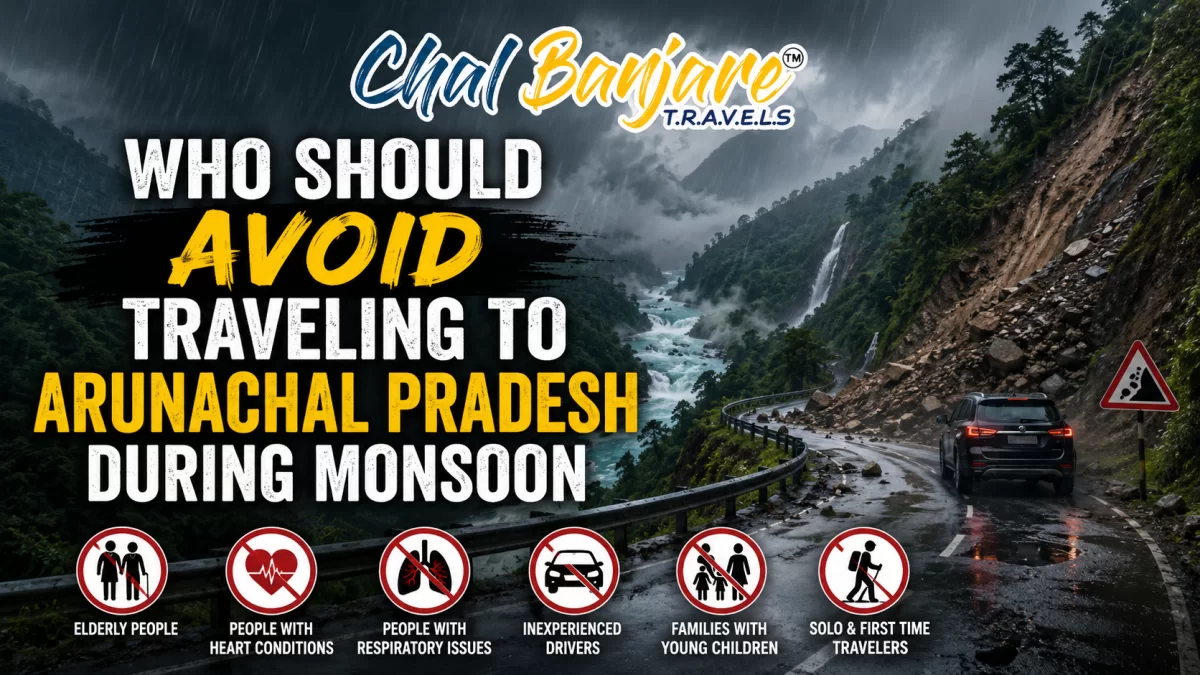
Homepage Banner

Who Should Avoid Traveling to Arunachal Pradesh During Monsoon

Arunachal Pradesh becomes extremely green and beautiful during monsoon season, but heavy rainfall, landslides, remote roads, and unpredictable weather can make travel difficult for certain travelers.

Travel Guide


08 Jun, 2026 By: Pema Khandu

Travelers Uncomfortable with Difficult Mountain Roads

Understanding monsoon road conditions across Arunachal Pradesh

Arunachal Pradesh experiences highly dynamic monsoon conditions where heavy rainfall directly impacts mountain road stability and visibility. The terrain is already steep and winding in many regions, and continuous rain makes already challenging routes significantly more difficult to navigate. Roads passing through valleys and forested slopes often become slow-moving due to water accumulation and reduced traction.

Travel during this period requires a strong understanding of how quickly weather can change in Himalayan regions. What starts as a clear drive can shift into mist, rain, or low visibility conditions within a short time, especially in elevated zones and forest corridors.

It is one of the most weather-sensitive mountain regions in Northeast India.

  • Heavy rainfall impacts road stability.
  • Rapid weather changes in hills.
  • Reduced visibility during drives.
  • Slow-moving traffic in wet conditions.
  • Mountain terrain becomes more unpredictable.

Monsoon travel in Arunachal requires careful driving awareness and patience.

Driving challenges caused by landslides and slippery roads

One of the major challenges during monsoon in Arunachal Pradesh is the increased risk of landslides, particularly in steep and forested areas. Continuous rainfall loosens soil and rock formations, occasionally blocking key routes and causing temporary delays in travel plans.

Slippery road surfaces further increase driving difficulty, especially on narrow mountain stretches where sharp turns and limited visibility are already common. These conditions require experienced driving and careful speed management throughout the journey.

It is one of the most terrain-sensitive road networks in the Himalayas.

  • Landslide-prone mountain areas.
  • Slippery road conditions.
  • Occasional route blockages.
  • Narrow winding highways.
  • Increased driving difficulty.

Monsoon roads demand caution, patience, and flexible timing.

Why flexible travel plans are important during the rainy season

Flexible travel planning becomes essential during the monsoon season in Arunachal Pradesh due to the unpredictable nature of weather and road conditions. Fixed itineraries can easily be disrupted by landslides, delays, or temporary road closures in remote areas.

Allowing buffer days and adjusting routes based on real-time conditions helps ensure safer travel and reduces stress during long journeys across the region’s mountainous terrain.

It is a key requirement for safe monsoon travel in the Himalayas.

  • Unpredictable travel disruptions.
  • Road closures possible.
  • Need for buffer days.
  • Real-time route adjustments.
  • Safer flexible planning approach.

Flexibility is essential for safe monsoon travel in Arunachal Pradesh.

Families Traveling with Infants and Very Young Children

Long travel hours during frequent weather disruptions

Traveling with infants and very young children in Arunachal Pradesh during monsoon can become challenging due to extended travel durations caused by weather disruptions. Rainfall and road conditions often slow down movement between destinations, making journeys longer than expected.

Frequent stops, traffic delays, and reduced driving speeds are common in mountainous terrain during this season, which can make travel tiring for young families who require stable and predictable schedules.

It is one of the most logistically demanding travel seasons for family groups.

  • Extended travel durations.
  • Frequent road delays.
  • Unpredictable travel timing.
  • Limited schedule stability.
  • Increased journey fatigue.

Monsoon travel requires extra patience for families with young children.

Challenges of remote routes in heavy rainfall

Many routes in Arunachal Pradesh pass through remote and sparsely populated regions where facilities are limited. During heavy rainfall, these stretches can become difficult to navigate due to reduced visibility, waterlogging, and occasional road blockages.

For families with infants, the lack of nearby rest stops or medical facilities along certain routes can increase travel discomfort, especially when journeys extend for several hours between towns.

It is one of the most remote travel networks in Northeast India.

  • Remote highway stretches.
  • Limited roadside facilities.
  • Heavy rainfall disruptions.
  • Long gaps between towns.
  • Reduced travel comfort.

Remote routes require careful planning for family safety and comfort.

Planning comfortable alternatives for family travel

Families traveling during the monsoon season are encouraged to plan more comfortable and flexible itineraries that focus on easily accessible destinations and shorter travel distances. Choosing locations with better road connectivity and reliable accommodation can significantly improve the overall travel experience.

Prioritizing rest breaks, avoiding long continuous drives, and staying updated with local weather conditions helps ensure smoother travel for families with young children.

It is essential for safe and stress-free family travel during monsoon months.

  • Shorter travel routes preferred.
  • Better-connected destinations.
  • Frequent rest breaks.
  • Weather-aware planning.
  • Comfort-focused itinerary design.

Smart planning improves safety and comfort for family monsoon travel.

Elderly Travelers with Mobility and Health Concerns

Wet weather making sightseeing and walking more difficult

During the monsoon season in Arunachal Pradesh, continuous rainfall often makes outdoor movement more difficult for elderly travelers, especially in areas with uneven terrain, steps, or unpaved paths. Many sightseeing points require short walks or gentle climbs, which become more challenging when surfaces are wet or slippery.

Humidity combined with rain can also reduce overall comfort levels during outdoor visits, making it harder to spend extended time at viewpoints or open areas. This affects the overall pace of travel and may limit how many sites can be comfortably covered in a day.

It is one of the most physically sensitive travel conditions for senior visitors.

  • Slippery walking paths.
  • Uneven terrain challenges.
  • Reduced outdoor comfort.
  • Limited extended sightseeing.
  • Weather-dependent mobility.

Monsoon conditions require slower and more careful movement for elderly travelers.

Mountain road delays increasing overall travel fatigue

Elderly travelers often experience increased fatigue during monsoon travel due to longer road durations caused by weather-related delays. Arunachal’s mountainous highways already involve extended driving hours, and rainfall can further slow down movement significantly.

Frequent stops due to road conditions, reduced visibility, and occasional diversions can make journeys feel longer and more tiring, especially for those sensitive to continuous travel or motion discomfort.

It is one of the most time-variable travel environments in the Himalayas.

  • Extended driving durations.
  • Frequent road delays.
  • Increased travel fatigue.
  • Unpredictable journey timing.
  • Reduced travel comfort.

Monsoon road conditions significantly impact travel ease for seniors.

Choosing safer itineraries during the monsoon season

For elderly travelers, selecting safer and more accessible itineraries during the monsoon season is essential in Arunachal Pradesh. Prioritizing destinations with better road connectivity, shorter travel distances, and reliable accommodation can help reduce strain and improve overall travel comfort.

It is advisable to avoid overly remote regions during heavy rainfall periods and instead focus on more established towns where medical assistance and transport options are more readily available if needed.

It is a key factor for safe senior travel in monsoon conditions.

  • Prefer well-connected towns.
  • Avoid remote routes.
  • Shorter travel distances.
  • Reliable accommodation access.
  • Medical facility proximity.

Safer planning ensures more comfortable monsoon travel for seniors.

Travelers Prone to Severe Motion Sickness

Continuous mountain curves during rainy season drives

Arunachal Pradesh’s mountainous roads involve continuous curves, elevation changes, and winding stretches that can become more intense during the monsoon season due to reduced visibility and slower driving speeds. These conditions often increase the sensation of motion for sensitive travelers.

Rainy weather adds an additional layer of discomfort as vehicles move cautiously through sharp bends and narrow roads, extending the duration of exposure to curving routes and uneven terrain.

It is one of the most curve-intensive road networks in the Himalayas.

  • Frequent sharp bends.
  • Continuous elevation changes.
  • Reduced visibility conditions.
  • Slow-moving traffic flow.
  • Extended curved routes.

Monsoon driving increases motion sensitivity for travelers prone to discomfort.

Slow road conditions extending travel durations

During monsoon, road conditions in Arunachal Pradesh often require slower driving speeds due to slippery surfaces and unpredictable weather. This increases overall travel time, which can be particularly challenging for travelers prone to motion sickness.

Longer exposure to winding roads combined with extended travel durations can intensify discomfort, especially on routes connecting remote valleys and high-altitude regions.

It is one of the most time-extended mountain travel systems in India.

  • Reduced driving speeds.
  • Longer travel durations.
  • Extended road exposure.
  • Variable terrain conditions.
  • Increased motion discomfort.

Slower journeys can intensify motion sensitivity during monsoon travel.

Understanding challenging hill road journeys in monsoon

Monsoon travel in Arunachal Pradesh involves navigating challenging hill roads that require careful driving through rain-affected terrain. For travelers prone to motion sickness, this combination of curves, elevation changes, and extended travel times can make the journey more demanding.

Understanding these conditions in advance helps in planning breaks, choosing seating positions, and adjusting travel schedules to reduce discomfort during long drives across the region.

It is a key consideration for sensitive travelers in mountain regions.

  • Challenging hill road conditions.
  • Monsoon-affected terrain.
  • Extended curved driving.
  • Need for travel breaks.
  • Advance planning required.

Awareness and planning help reduce motion sickness impact during monsoon travel.

Travelers Expecting Luxury-Style Vacations

Weather disruptions affecting outdoor sightseeing plans

Arunachal Pradesh during the monsoon season does not align well with expectations of luxury-style vacations focused on uninterrupted outdoor sightseeing. Heavy rainfall, mist, and occasional landslides can disrupt planned visits to viewpoints, monasteries, and valley attractions, making schedules less predictable.

Even well-planned itineraries may require sudden adjustments due to changing weather conditions, which can reduce the sense of controlled comfort that luxury travelers typically expect from their trips.

It is one of the most weather-dependent luxury travel environments in the Himalayas.

  • Frequent weather disruptions.
  • Unpredictable sightseeing schedules.
  • Limited outdoor consistency.
  • Sudden plan adjustments.
  • Reduced itinerary control.

Monsoon conditions reduce reliability for luxury-focused itineraries.

Limited luxury options in remote mountain destinations

While Arunachal Pradesh offers beautiful and immersive experiences, luxury accommodation and high-end infrastructure remain limited, especially in remote valleys and offbeat regions. Most stays are homestays or small hotels rather than premium resorts or luxury chains.

This creates a travel environment that prioritizes authenticity and local experience over comfort-driven luxury services, which may not align with expectations of high-end vacation standards.

It is one of the most rustic tourism networks in Northeast India.

  • Limited luxury hotels.
  • Homestay-dominant stays.
  • Basic infrastructure in remote areas.
  • Low premium service availability.
  • Authenticity-focused tourism.

Arunachal focuses more on experience than luxury comfort.

Understanding realistic travel conditions during monsoon

For travelers expecting luxury-style vacations, it is important to understand that monsoon travel in Arunachal Pradesh is defined by natural conditions rather than controlled environments. Roads, weather, and accommodation availability all operate within a dynamic system influenced by rainfall and terrain.

Adjusting expectations toward flexible, experience-driven travel rather than fixed luxury schedules helps ensure a more enjoyable and realistic journey through the region.

It is a destination where nature defines the travel experience.

  • Nature-driven travel conditions.
  • Limited luxury infrastructure.
  • Weather-influenced schedules.
  • Flexible travel expectations needed.
  • Experience-focused tourism.

Arunachal monsoon travel is immersive, not luxury-controlled.

Adventure Travelers Planning Remote Mountain Routes

Increased risk of landslides on isolated roads

For adventure travelers, monsoon season in Arunachal Pradesh adds a higher level of unpredictability due to increased landslide risks on remote mountain routes. Many of these roads pass through steep slopes and forested terrain where heavy rainfall can loosen soil and rocks.

These conditions can lead to temporary blockages or diversions, especially in isolated regions where alternative routes may be limited, making travel planning more complex during peak rainfall periods.

It is one of the most terrain-sensitive adventure regions in India.

  • Landslide-prone routes.
  • Remote mountain highways.
  • Unstable slope conditions.
  • Possible route diversions.
  • Isolated travel stretches.

Monsoon increases uncertainty in remote adventure routes.

Temporary closures affecting remote valleys and passes

During heavy monsoon periods, certain remote valleys, mountain passes, and connecting roads in Arunachal Pradesh may experience temporary closures due to safety concerns. These closures are often precautionary, aimed at preventing travel during unsafe weather conditions.

Such interruptions can affect planned adventure itineraries, especially for travelers aiming to explore offbeat destinations that rely on single-route access through mountain terrain.

It is one of the most weather-sensitive travel networks in the Himalayas.

  • Temporary route closures.
  • Weather-based restrictions.
  • Limited alternate routes.
  • Remote valley access issues.
  • Unpredictable travel plans.

Adventure plans require flexibility during monsoon months.

Choosing safer adventure plans during the rainy months

Adventure travelers visiting Arunachal Pradesh during monsoon are advised to focus on safer and more accessible routes rather than extremely remote expeditions. Prioritizing well-connected valleys and towns helps reduce exposure to landslide-prone areas and unpredictable closures.

Planning flexible itineraries and staying updated with local road conditions ensures that adventure travel remains enjoyable while minimizing unnecessary risks during heavy rainfall seasons.

It is a key strategy for safe monsoon exploration in the Himalayas.

  • Prefer accessible routes.
  • Avoid extreme remote zones.
  • Monitor weather updates.
  • Plan flexible itineraries.
  • Focus on safer adventures.

Smart planning ensures safer adventure travel in monsoon conditions.

Travelers Uncomfortable with Cold Wet Weather

Frequent rainfall creating damp mountain conditions

Monsoon season in Arunachal Pradesh brings continuous rainfall that keeps the entire mountain environment consistently damp, especially in forested and valley regions. The combination of rain, mist, and cloud cover often results in persistently wet surroundings that can feel uncomfortable for travelers who prefer dry climates.

Clothing and footwear can remain wet for extended periods due to limited drying conditions in high humidity zones, and this affects overall comfort during movement between destinations.

It is one of the most moisture-heavy travel environments in the Himalayas.

  • Continuous rainfall periods.
  • High humidity levels.
  • Damp travel conditions.
  • Slow drying of clothes.
  • Wet outdoor environments.

Monsoon travel often feels consistently damp and humid in Arunachal Pradesh.

Cloud-covered landscapes reducing long-distance views

One of the key effects of monsoon weather in Arunachal Pradesh is persistent cloud cover that can significantly reduce visibility across valleys and mountain ranges. While this creates a mystical atmosphere, it also limits long-distance scenic views that many travelers expect from Himalayan destinations.

Frequent fog and mist can obscure viewpoints, especially in elevated regions, reducing the clarity of landscapes and altering travel expectations for those seeking open panoramic visibility.

It is one of the most visibility-sensitive regions during monsoon season.

  • Frequent cloud cover.
  • Reduced mountain visibility.
  • Misty valley conditions.
  • Limited panoramic views.
  • Weather-dependent scenery.

Monsoon reduces long-distance visibility across Himalayan landscapes.

Preparing for changing temperatures throughout the journey

Temperatures in Arunachal Pradesh during monsoon can fluctuate due to altitude changes and shifting weather systems. Travelers often move between warmer valley regions and cooler high-altitude zones, requiring adaptable clothing and preparation for sudden changes in conditions.

This variability can feel challenging for those who prefer stable, predictable climates, as the combination of rain, wind, and elevation creates constantly changing thermal conditions.

It is one of the most variable climate zones in Northeast India.

  • Temperature fluctuations.
  • Altitude-based changes.
  • Wind and rain variations.
  • Unpredictable weather shifts.
  • Layer-based clothing needs.

Monsoon travel requires adaptability to changing temperatures.

People Planning Short and Tightly Scheduled Itineraries

Unexpected road closures affecting travel schedules

Arunachal Pradesh during monsoon can present challenges for travelers with tightly scheduled itineraries due to sudden road closures caused by landslides, heavy rainfall, or maintenance work. These closures can disrupt planned movement between destinations without prior notice.

Since many routes pass through remote terrain with limited alternate pathways, even short disruptions can lead to significant changes in daily travel plans, affecting overall itinerary structure.

It is one of the most unpredictable road networks in the Himalayas.

  • Sudden road closures.
  • Landslide-related disruptions.
  • Limited alternate routes.
  • Unpredictable scheduling.
  • Remote connectivity issues.

Fixed itineraries often struggle during monsoon travel in Arunachal Pradesh.

Weather delays making fixed itineraries difficult to follow

Monsoon weather patterns in Arunachal Pradesh are highly variable, and rainfall can cause delays that extend travel time significantly. These delays are especially challenging for travelers who follow strict schedules with limited buffer time between destinations.

Even short routes can take longer due to reduced visibility and cautious driving conditions, making it difficult to maintain a rigid travel plan throughout the journey.

It is one of the most time-variable travel environments in India.

  • Rain-related travel delays.
  • Extended journey durations.
  • Reduced schedule reliability.
  • Time buffer requirements.
  • Weather-dependent routing.

Strict schedules are difficult to maintain in monsoon conditions.

Allowing buffer days for a smoother journey

For travelers planning short and tightly scheduled itineraries, including buffer days is essential when visiting Arunachal Pradesh during monsoon. These additional days help accommodate unexpected delays caused by weather, road conditions, or temporary closures.

Buffer time allows flexibility in adjusting routes or extending stays in certain destinations, ensuring the overall travel experience remains smooth despite natural disruptions.

It is a key planning strategy for monsoon travel in the Himalayas.

  • Include buffer days.
  • Plan flexible schedules.
  • Account for delays.
  • Adjust routes as needed.
  • Improve travel stability.

Buffer planning ensures smoother monsoon travel experiences.

Travelers Visiting Highly Remote Villages and Valleys

Limited road access during periods of heavy rainfall

Highly remote villages and valleys in Arunachal Pradesh become significantly harder to access during monsoon due to continuous rainfall and unstable road conditions. Many of these areas are connected by narrow mountain roads that can be affected by landslides, waterlogging, or temporary blockages.

As a result, travel to offbeat destinations may take longer than expected or require detours, especially in regions where infrastructure is limited and alternate routes are not always available.

It is one of the most access-sensitive regions during monsoon months.

  • Narrow mountain road access.
  • Rain-affected connectivity.
  • Possible route blockages.
  • Limited alternate paths.
  • Delayed travel times.

Remote access becomes unpredictable during heavy rainfall conditions.

Remote destinations becoming harder to reach safely

Destinations such as deep valleys and isolated villages require careful travel planning during monsoon, as road conditions can deteriorate quickly due to persistent rain. These regions often lack immediate support infrastructure, making safe access more challenging in adverse weather.

Travelers may need to adjust plans based on real-time conditions, prioritizing safety over fixed schedules when routes become risky or temporarily impassable.

It is one of the most remote travel networks in Northeast India.

  • Isolated village routes.
  • Limited infrastructure support.
  • Weather-dependent access.
  • Safety-first travel decisions.
  • Unpredictable road conditions.

Remote destinations require flexible and cautious monsoon travel planning.

Planning visits according to current road conditions

For travelers intending to visit highly remote areas in Arunachal Pradesh during monsoon, checking current road conditions becomes essential before every journey segment. Local updates, weather forecasts, and community guidance often play a key role in determining whether routes are safe for travel.

Adjusting plans dynamically based on real-time information helps ensure safety and improves the chances of successfully reaching remote destinations without unnecessary risk.

It is a critical part of monsoon travel in the Himalayas.

  • Check real-time road updates.
  • Follow local guidance.
  • Avoid unsafe routes.
  • Adjust plans dynamically.
  • Prioritize travel safety.

Real-time planning is essential for safe remote travel.

Trekking and Camping Travelers During Heavy Rainfall

Slippery trails reducing trekking safety

Trekking routes in Arunachal Pradesh become significantly more challenging during monsoon due to persistent rainfall that makes trails slippery and unstable. Forest paths, hill tracks, and mountain routes often accumulate water, increasing the risk of slips and reduced footing stability.

These conditions can make even short treks more demanding, especially in areas with dense vegetation or steep gradients where visibility and grip are reduced.

It is one of the most weather-sensitive trekking environments in the Himalayas.

  • Slippery forest trails.
  • Reduced footing stability.
  • Rain-soaked pathways.
  • Steep gradient challenges.
  • Lower trekking safety.

Monsoon trekking requires extra caution and preparation.

Camping challenges caused by continuous rain and wet ground

Camping in Arunachal Pradesh during monsoon is affected by continuous rainfall, which can lead to wet ground conditions, damp equipment, and difficulty in maintaining dry shelter spaces. Persistent moisture can also reduce overall comfort levels during overnight stays in open environments.

Setting up camps becomes more complex in areas without proper drainage or flat ground, making weather-resistant gear and careful site selection essential for safety and comfort.

It is one of the most challenging camping conditions in Northeast India.

  • Wet ground conditions.
  • Damp camping gear.
  • Continuous rainfall impact.
  • Limited dry shelter space.
  • Setup difficulties.

Monsoon camping requires strong preparation and weather protection.

Choosing suitable seasons for outdoor adventures

For trekking and camping enthusiasts, selecting the right season is crucial when planning an Arunachal Pradesh trip. While monsoon offers lush landscapes, it is not always ideal for outdoor adventures due to safety concerns and weather instability.

Post-monsoon and spring seasons generally provide more stable conditions, clearer trails, and safer camping environments, making them more suitable for trekking-focused travel experiences.

It is one of the most season-sensitive adventure regions in India.

  • Seasonal trekking planning.
  • Post-monsoon preference.
  • Safer trail conditions.
  • Better camping environment.
  • Weather-aware scheduling.

Choosing the right season ensures safer and better outdoor experiences.

Who Can Still Enjoy Arunachal Pradesh Safely During Monsoon

Travelers with flexible schedules and realistic expectations

Arunachal Pradesh during monsoon can still be enjoyable for travelers who maintain flexible schedules and realistic expectations about weather and road conditions. The key factor is adaptability, as journeys may take longer than planned and sightseeing may shift depending on rainfall intensity and local conditions.

Travelers who are not bound by strict itineraries often find the monsoon experience rewarding, as the landscape becomes lush, misty, and highly atmospheric, offering a different perspective of the Himalayas compared to peak-season travel.

It is one of the most mood-driven travel experiences in Northeast India.

  • Flexible travel planning.
  • Adjustable itineraries.
  • Weather-aware mindset.
  • Slower travel pace acceptance.
  • Nature-focused experience.

Flexibility is key to enjoying Arunachal during monsoon.

Visitors focusing on accessible destinations and shorter drives

Travelers who focus on accessible destinations with shorter driving distances can still enjoy Arunachal Pradesh safely during monsoon. Staying within better-connected towns and avoiding extremely remote routes reduces exposure to landslide-prone areas and unpredictable road closures.

Destinations with stable infrastructure, such as major hill towns and well-connected valleys, provide a more comfortable experience even during heavy rainfall periods.

It is one of the safer ways to explore Arunachal in monsoon.

  • Short travel distances preferred.
  • Accessible destinations focus.
  • Better road connectivity areas.
  • Reduced remote travel risk.
  • Stable infrastructure zones.

Sticking to accessible routes improves monsoon travel safety.

Planning with weather updates and local travel advice

One of the most important aspects of safe monsoon travel in Arunachal Pradesh is staying updated with local weather conditions and travel advisories. Conditions can change rapidly, and real-time information from local sources helps travelers adjust plans accordingly.

Relying on local guidance for road status, route safety, and weather forecasts ensures better decision-making and reduces the risk of encountering unexpected disruptions during travel.

It is essential for safe and informed Himalayan travel.

  • Follow weather updates.
  • Check local advisories.
  • Adjust plans in real time.
  • Monitor road conditions.
  • Prioritize safety decisions.

Local guidance significantly improves monsoon travel safety.

Final Arunachal Pradesh Monsoon Travel Planning Guide

Choosing the right destinations for monsoon travel

Selecting the right destinations within Arunachal Pradesh is crucial during monsoon season, as not all regions experience the same level of accessibility or weather impact. Well-connected hill towns and valleys are generally more suitable, while extremely remote areas may face frequent disruptions due to rainfall.

Focusing on destinations with stable road connectivity and established accommodation helps ensure a more reliable travel experience even during heavy monsoon conditions.

It is one of the most planning-sensitive Himalayan regions.

  • Choose accessible destinations.
  • Avoid extreme remote routes.
  • Prefer stable road networks.
  • Select reliable accommodation zones.
  • Match travel scope to weather.

Smart destination selection improves monsoon travel success.

Preparing for weather-related changes during the journey

Monsoon travel in Arunachal Pradesh requires preparation for sudden weather changes, including rainfall, fog, and occasional landslides that can affect travel timing and route selection. Packing appropriate clothing, waterproof gear, and allowing buffer time in itineraries can significantly improve comfort and safety.

Understanding that plans may shift during the journey helps reduce stress and ensures a smoother overall experience despite natural uncertainties.

It is one of the most dynamic travel environments in the Himalayas.

  • Prepare for sudden rain.
  • Pack weather-appropriate gear.
  • Include buffer time.
  • Expect plan adjustments.
  • Stay flexible throughout.

Preparation is essential for a smooth monsoon journey.

Essential tips for a safe Arunachal Pradesh trip during the rainy season

A safe monsoon trip to Arunachal Pradesh depends on careful planning, flexible scheduling, and continuous awareness of weather and road conditions. Travelers should prioritize safety over strict itineraries and remain open to adjusting routes when required.

Using local guidance, avoiding unnecessary remote travel during heavy rainfall, and maintaining realistic expectations ensures a more enjoyable and secure experience throughout the journey.

It is a journey where caution directly enhances travel quality.

  • Prioritize safety over schedule.
  • Use local travel guidance.
  • Avoid risky remote routes.
  • Stay flexible with plans.
  • Monitor conditions regularly.

Careful planning ensures a safe and meaningful monsoon experience in Arunachal Pradesh.

Frequently Asked Questions About Who Should Avoid Traveling to Arunachal Pradesh During Monsoon

Travelers uncomfortable with unpredictable weather difficult mountain roads and flexible schedules may find monsoon travel challenging in Arunachal Pradesh. Heavy rainfall can affect transportation sightseeing and travel plans across many regions making the journey less suitable for people seeking smooth and predictable vacations.
Heavy rainfall can cause landslides muddy road conditions falling rocks and temporary road disruptions across mountain routes. Travelers should be prepared for slower driving conditions traffic delays and occasional route changes while exploring different parts of Arunachal Pradesh during the rainy season.
Road trips during monsoon can become challenging because of slippery roads poor visibility fog and weather related disruptions. Travelers should expect longer travel durations and changing road conditions especially while visiting remote mountain destinations and valleys across Arunachal Pradesh.
Families traveling with infants and very young children may experience discomfort from long road journeys weather delays and continuous rain. Sightseeing schedules can also become unpredictable making monsoon travel less convenient compared to more stable weather seasons.
Elderly travelers with mobility concerns may find wet pathways uneven terrain and long travel hours physically demanding during monsoon. Cold damp weather and remote travel conditions can also increase overall fatigue during sightseeing and transportation between destinations.
Travelers prone to motion sickness may face additional discomfort due to sharp mountain bends rough road sections foggy conditions and longer driving hours. Slow moving traffic and weather related delays can further increase travel fatigue across mountain routes.
Travelers expecting highly comfortable vacations may find monsoon conditions challenging. Rainfall can affect sightseeing plans while many remote destinations offer simpler tourism facilities and fewer premium experiences during difficult weather periods.
Remote destinations such as Tawang and Mechuka may experience difficult road conditions weather disruptions and travel delays during monsoon. Travelers should be prepared for changing weather patterns and possible transportation challenges on mountain routes.
Continuous rainfall can reduce visibility affect outdoor exploration and create delays in reaching attractions. Fog cloud cover and wet conditions may limit sightseeing opportunities at viewpoints valleys monasteries and mountain destinations during monsoon months.
Travelers uncomfortable with cold wet weather may find monsoon travel less enjoyable. Continuous rainfall damp conditions and reduced visibility are common across many regions making preparation with suitable clothing and footwear important.
Short itineraries can become difficult because weather delays and road disruptions may affect transportation schedules. Travelers with limited vacation time may struggle to cover planned destinations without keeping extra buffer days in their schedule.
Buffer days help travelers manage unexpected delays caused by road closures landslides traffic disruptions and changing weather. Flexible scheduling improves travel comfort and reduces pressure when transportation conditions become unpredictable during the rainy season.
Remote villages and valleys may become harder to access because smaller roads can be affected by mudslides landslides and heavy rainfall. Transportation challenges and limited connectivity are more common in isolated mountain regions during monsoon.
Trekking can become more difficult because trails often turn slippery muddy and unstable during heavy rainfall. Reduced visibility and challenging terrain may increase risks for hikers exploring mountain routes and outdoor locations.
Camping and outdoor activities may become challenging due to continuous rain wet ground conditions and changing weather. River crossings and remote exploration can also become more complicated during periods of heavy monsoon rainfall.
Slow travelers who enjoy greenery waterfalls misty valleys and peaceful landscapes can still enjoy Arunachal Pradesh during monsoon. Flexible travel plans and realistic expectations help create a more comfortable and rewarding experience.
Travelers comfortable with changing weather flexible itineraries and slower road journeys are generally better suited for monsoon travel. Choosing accessible destinations and preparing for delays helps improve overall travel experiences.
Travelers should review weather forecasts road conditions transportation updates and accommodation availability before departure. Proper planning helps reduce travel disruptions and improves safety while exploring Arunachal Pradesh during the rainy season.

Explore Arunachal Pradesh Tour Packages

Explore All Packages

Latest Travel Blogs

View all Blogs β†’

Loved this place ? Let’s Plan Your Arunachal Pradesh Trip

Get customized Arunachal Pradesh tour planning designed around mountain road distances, permit requirements, seasonal weather windows, and realistic travel pacing. Whether you are visiting for monasteries, high-altitude passes, river valleys, tribal cultu

⚑ Quick Response | πŸ’° Free consultation | πŸ•’ 24Γ—7 expert support

×

Plan Your Trip