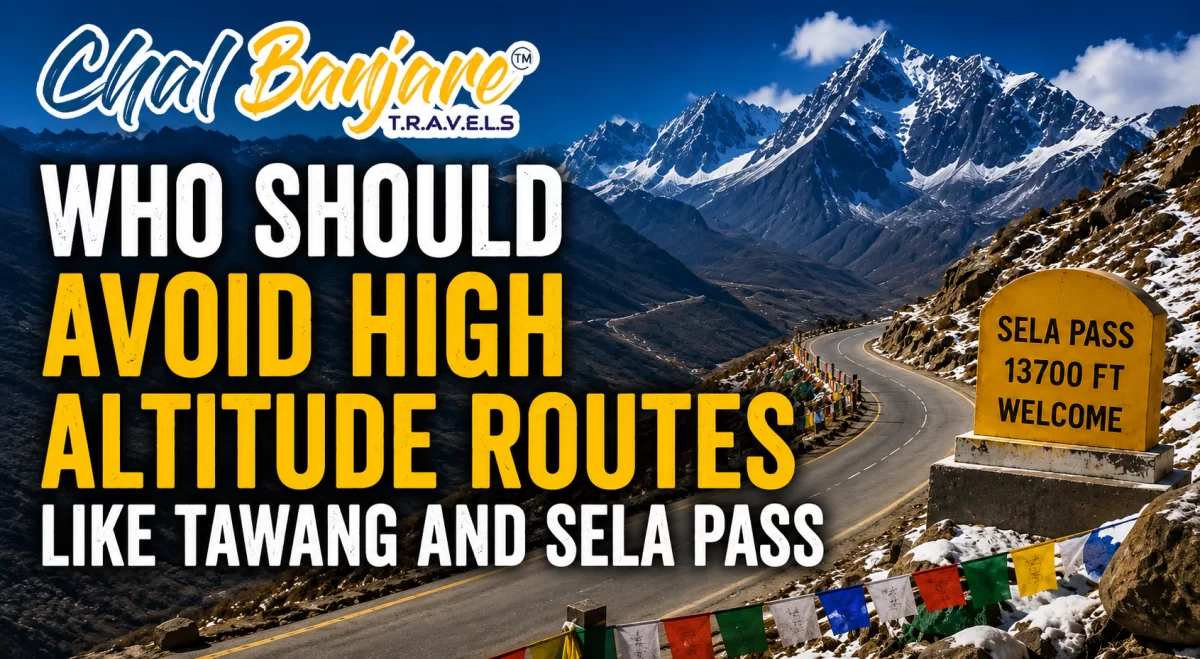
Homepage Banner

Who Should Avoid High Altitude Routes Like Tawang and Sela Pass

Tawang and Sela Pass offer some of the most spectacular Himalayan landscapes in Northeast India, but high altitude, extreme weather, and long mountain journeys can make these routes unsuitable for certain travelers.

Travel Guide


05 May, 2026 By: Pema Khandu

Travelers with Serious Heart and Respiratory Conditions

Understanding the effects of high altitude on heart and lung health

Tawang and Sela Pass are high-altitude destinations where reduced oxygen levels can place additional stress on the heart and respiratory system. Travelers with pre-existing cardiac or lung conditions may experience increased strain during physical activity or even while resting at higher elevations.

The combination of cold temperatures and lower oxygen availability can make breathing more difficult, especially during long road journeys or while adjusting to sudden altitude changes.

It is one of the most altitude-sensitive travel environments in the Himalayas.

  • Reduced oxygen pressure.
  • Increased heart strain risk.
  • Breathing difficulty possibility.
  • Cold weather impact.
  • High-altitude sensitivity.

Altitude conditions require careful consideration for heart and lung patients.

Recognizing the challenges of reduced oxygen levels

As altitude increases in regions like Tawang and Sela Pass, oxygen levels naturally decrease, which can lead to fatigue, dizziness, or shortness of breath for sensitive individuals. These effects may become more noticeable during physical movement or long uphill travel.

Travelers with respiratory concerns may find it harder to adapt quickly, making gradual ascent and rest stops essential for safety and comfort during the journey.

It is one of the most important physiological challenges of high-altitude travel.

  • Lower oxygen availability.
  • Fatigue and dizziness risk.
  • Breathing discomfort possible.
  • Physical strain increase.
  • Gradual adaptation needed.

Understanding oxygen reduction helps in safer travel planning.

Seeking medical advice before planning the journey

For individuals with heart or respiratory conditions, consulting a medical professional before planning a trip to Tawang is strongly recommended. A doctor can assess fitness levels for high-altitude travel and suggest precautions or limitations if necessary.

This step ensures that travelers are better prepared for altitude exposure and can make informed decisions about whether to proceed or modify their itinerary.

It is one of the most important safety steps before Himalayan travel.

  • Medical consultation essential.
  • Fitness evaluation required.
  • Risk assessment important.
  • Travel suitability check.
  • Preventive safety planning.

Medical advice ensures safer decision-making before high-altitude travel.

Elderly Travelers with Limited Stamina and Mobility

Understanding the physical demands of high-altitude travel

Traveling to Tawang involves long hours of driving through mountainous terrain, steep gradients, and winding roads, which can be physically demanding for elderly travelers with limited stamina. The combination of altitude and continuous motion may increase fatigue levels.

Even short sightseeing activities may require extra effort due to reduced oxygen levels and colder temperatures, making energy management an important part of the journey.

It is one of the most physically demanding travel regions in Northeast India.

  • Long driving durations.
  • Mountain terrain strain.
  • Altitude fatigue risk.
  • Reduced stamina impact.
  • Cold weather challenge.

Physical demands should be carefully considered for elderly travel.

Preparing for long mountain drives and changing weather

Elderly travelers should be prepared for long mountain drives that include frequent stops, elevation changes, and varying road conditions. These journeys can take significantly more time than expected due to terrain and weather influences.

Sudden changes in temperature and weather conditions may also affect comfort levels, requiring appropriate clothing and rest breaks during travel.

It is one of the most variable travel experiences in the Himalayas.

  • Extended travel time.
  • Changing weather conditions.
  • Frequent rest needs.
  • Temperature fluctuations.
  • Comfort-focused planning.

Proper preparation helps manage long and variable mountain journeys.

Choosing lower-altitude alternatives for a comfortable trip

For elderly travelers who may find high-altitude travel challenging, exploring lower-altitude destinations in Arunachal Pradesh can be a more comfortable option. Places with moderate elevation offer easier mobility and reduced health risks.

Selecting such alternatives ensures that travel remains enjoyable without excessive physical strain or altitude-related discomfort.

It is one of the most practical approaches for senior-friendly travel planning.

  • Lower altitude destinations preferred.
  • Reduced physical strain.
  • Better comfort levels.
  • Safer travel conditions.
  • Flexible itinerary options.

Choosing suitable elevations ensures a more comfortable travel experience.

Families Traveling with Infants and Very Young Children

Understanding how altitude can affect young children

Traveling to Tawang with infants and very young children requires careful consideration because high-altitude conditions can affect oxygen levels and overall comfort more quickly than in adults. Young bodies are more sensitive to temperature changes and reduced oxygen availability, which may lead to fatigue or irritability during long journeys.

Extended road travel through winding mountain routes can also make children uncomfortable, especially when combined with cold weather and frequent altitude changes along the way.

It is one of the most sensitive family travel situations in the Himalayas.

  • High altitude sensitivity in children.
  • Oxygen level adjustment challenges.
  • Long road journey discomfort.
  • Temperature sensitivity.
  • Fatigue and rest needs.

Understanding altitude effects is essential for infant travel safety.

Preparing for limited facilities in high-altitude regions

High-altitude regions like Tawang may have limited access to specialized baby care facilities, medical support, or infant-friendly services. Parents should be prepared with essential supplies such as baby food, medicines, warm clothing, and hygiene items before starting the journey.

Availability of stores and pharmacies can be limited in remote stretches, making advance preparation critical for ensuring comfort and safety throughout the trip.

It is one of the most important logistical considerations for family travel.

  • Limited baby care facilities.
  • Remote pharmacy access.
  • Essential supplies needed.
  • Advance preparation required.
  • Self-sufficiency important.

Proper preparation ensures smoother travel with infants in remote regions.

Planning safer family-friendly travel routes

When traveling with infants, selecting safer and more gradual routes is important for reducing travel strain. The recommended approach is to use stopovers like Bomdila and Dirang, which allow gradual altitude gain and provide better rest opportunities for both children and parents.

Avoiding rushed itineraries and limiting daily travel distances helps ensure a more comfortable journey with fewer disruptions and better adaptability to mountain conditions.

It is one of the most effective strategies for safe family road trips.

  • Gradual route planning.
  • Bomdila and Dirang stops.
  • Reduced daily travel load.
  • Safer altitude gain.
  • Family comfort priority.

Careful route planning improves safety and comfort for families with infants.

Travelers Sensitive to Altitude Sickness

Recognizing early symptoms of altitude-related discomfort

Altitude sickness can affect travelers visiting high-elevation regions like Tawang and Sela Pass. Early symptoms may include headache, dizziness, nausea, and unusual fatigue, especially during the initial days of ascent.

Recognizing these signs early is important so that travelers can slow down, rest, or adjust their itinerary before symptoms become more severe during continued ascent.

It is one of the most important health considerations in Himalayan travel.

  • Headache and dizziness risk.
  • Nausea and fatigue symptoms.
  • Early detection important.
  • Altitude sensitivity variation.
  • Rest requirement needed.

Early symptom awareness helps ensure safer travel decisions.

Understanding the importance of gradual acclimatization

Gradual acclimatization is essential for reducing the risk of altitude sickness in Tawang. Instead of traveling directly to high-altitude areas, stopping at intermediate locations like Dirang and Bomdila allows the body to adjust to lower oxygen levels step by step.

This slow ascent helps improve tolerance and reduces physical stress, making the journey more comfortable and safer for sensitive travelers.

It is one of the most effective prevention methods in high-altitude travel.

  • Stepwise altitude gain.
  • Intermediate stopovers.
  • Better oxygen adjustment.
  • Reduced health risks.
  • Improved travel comfort.

Gradual acclimatization significantly reduces altitude sickness risk.

Avoiding rapid ascent to higher elevations

Rapid ascent to high-altitude destinations increases the likelihood of altitude sickness, especially in regions like Tawang and Sela Pass. Sudden exposure does not allow the body enough time to adjust to lower oxygen levels.

Slowing down the journey, adding rest days, and avoiding direct travel to the highest points in a single day are essential strategies for maintaining health and comfort.

It is one of the most critical safety practices in mountain travel.

  • Avoid rapid altitude gain.
  • Allow adaptation time.
  • Include rest days.
  • Slow travel pace needed.
  • Health risk reduction.

Slow ascent is key to preventing altitude-related issues.

People Uncomfortable with Long Mountain Road Trips

Preparing for extended journeys through winding mountain roads

Travel to Tawang involves long hours of driving through winding mountain roads, sharp curves, and changing elevations. These extended journeys can feel physically and mentally tiring for travelers who are not accustomed to continuous hill driving.

Even when distances appear manageable on a map, actual travel time is much longer due to terrain conditions, making patience and endurance essential parts of the experience.

It is one of the most demanding road journeys in Northeast India.

  • Long driving durations.
  • Winding mountain roads.
  • Frequent sharp turns.
  • Slow travel pace.
  • High endurance requirement.

Mountain driving requires comfort with long and slow journeys.

Understanding travel fatigue on high-altitude routes

Travel fatigue is common on high-altitude routes like Tawang due to continuous driving, elevation changes, and reduced oxygen levels. These factors can make even experienced travelers feel more tired than usual during the journey.

Taking regular breaks, staying hydrated, and pacing the journey properly are important to manage fatigue and maintain comfort throughout the trip.

It is one of the most physically demanding aspects of Himalayan travel.

  • Altitude-related fatigue.
  • Continuous driving strain.
  • Reduced oxygen impact.
  • Frequent rest requirement.
  • Energy management needed.

Managing fatigue is essential for a comfortable mountain journey.

Choosing shorter and less demanding itineraries

Travelers who are uncomfortable with long mountain drives should consider shorter and more relaxed itineraries that limit daily travel distances. Focusing on fewer destinations helps reduce driving stress and improves overall travel comfort.

Including stopovers and avoiding back-to-back long driving days ensures a more balanced and enjoyable experience in high-altitude regions like Tawang.

It is one of the most effective planning strategies for comfort-focused travel.

  • Shorter travel plans.
  • Reduced driving distance.
  • Fewer destinations daily.
  • Balanced itinerary design.
  • Comfort-oriented approach.

Short itineraries make mountain travel more manageable and enjoyable.

Travelers Prone to Severe Motion Sickness

Understanding the impact of continuous hairpin bends

The road to Tawang includes continuous hairpin bends and winding mountain stretches that can trigger motion sickness in sensitive travelers. These curves are unavoidable due to the natural terrain and elevation changes throughout the route.

Frequent turning and altitude variation can increase discomfort for those prone to motion sickness, especially during long driving hours without sufficient breaks.

It is one of the most curve-intensive road routes in the Himalayas.

  • Continuous hairpin bends.
  • Sharp mountain curves.
  • Motion sickness triggers.
  • Long winding routes.
  • Terrain-driven roads.

Mountain curves can significantly affect motion-sensitive travelers.

Preparing for long drives across mountain terrain

Long drives across Arunachal Pradesh increase the chances of motion sickness due to continuous movement through curved and uneven roads. Preparation can include choosing appropriate seating positions and taking necessary precautions before starting the journey.

Frequent stops and open-air breaks during travel help reduce discomfort and improve overall travel experience in mountainous terrain.

It is one of the most travel-intensive road environments in India.

  • Extended driving duration.
  • Curved road exposure.
  • Motion sickness prevention.
  • Frequent break importance.
  • Comfort-focused adjustments.

Proper preparation helps manage motion sickness effectively.

Planning regular breaks during the journey

Regular breaks are essential for travelers prone to motion sickness while traveling to Tawang. Stopping at intervals helps the body recover from continuous motion and reduces discomfort caused by winding roads.

Breaks also provide opportunities to hydrate, rest, and stabilize before continuing the journey, making long drives more manageable and comfortable.

It is one of the most effective ways to manage motion-related discomfort.

  • Frequent rest stops needed.
  • Motion relief breaks.
  • Hydration support.
  • Reduced travel discomfort.
  • Better journey tolerance.

Breaks significantly improve comfort during mountain travel.

People Expecting Luxury-Style Tourism Experiences

Understanding the remote nature of high-altitude destinations

Tawang and surrounding high-altitude regions are remote mountain destinations where tourism infrastructure is still developing. Unlike major metropolitan or resort-based destinations, the focus here is on natural landscapes, monasteries, and cultural experiences rather than luxury hospitality.

Travelers should expect basic facilities in many areas, especially outside the main town, where comfort is secondary to accessibility and terrain limitations.

It is one of the most naturally focused travel regions in the Himalayas.

  • Remote mountain setting.
  • Limited luxury infrastructure.
  • Nature-focused travel.
  • Basic facility availability.
  • Rural tourism environment.

Understanding the destination helps set realistic travel expectations.

Preparing for basic facilities beyond major towns

Outside major towns like Tawang, travelers may encounter limited access to high-end accommodation, room service, or advanced amenities. Facilities such as heating, hot water, or reliable electricity may vary depending on location and weather conditions.

This requires travelers to prioritize practicality and adaptability over luxury expectations when exploring remote valleys and high-altitude areas.

It is one of the most essential adjustments for Himalayan travel.

  • Limited premium facilities.
  • Basic accommodation types.
  • Variable utilities access.
  • Rural infrastructure limits.
  • Practical travel mindset needed.

Adaptability ensures a better experience in remote regions.

Setting realistic expectations before the trip

Setting realistic expectations is essential when traveling to Tawang, as the region prioritizes natural beauty, cultural heritage, and high-altitude landscapes over luxury tourism. Understanding this helps travelers appreciate the journey rather than focusing on missing amenities.

A mindset focused on exploration and experience leads to greater satisfaction, even when services are simple or limited compared to urban destinations.

It is one of the most important mental preparations for Himalayan travel.

  • Expectation management key.
  • Experience-focused travel.
  • Nature and culture priority.
  • Limited luxury awareness.
  • Positive mindset needed.

Realistic expectations enhance overall travel enjoyment.

Travelers Uncomfortable with Cold and Unpredictable Weather

Preparing for sudden weather changes in the mountains

Weather in Tawang and Sela Pass can change rapidly, shifting from clear skies to fog, rain, or snowfall within a short period. These sudden changes are common in high-altitude mountain environments and can affect visibility and travel comfort.

Travelers must be prepared for fluctuating conditions throughout the day, especially when moving between different elevations.

It is one of the most unpredictable weather zones in the Himalayas.

  • Rapid weather shifts.
  • Fog and rain possibility.
  • Sudden temperature drops.
  • High-altitude instability.
  • Visibility changes frequent.

Weather unpredictability is a constant factor in Tawang travel.

Understanding snowfall, fog, and strong winds at higher elevations

At higher elevations such as Sela Pass, travelers may encounter snowfall, dense fog, and strong winds, particularly during winter and transitional seasons. These conditions can significantly reduce visibility and make travel slower and more cautious.

Such weather conditions are part of the region’s natural environment and require preparedness in terms of clothing and travel planning.

It is one of the most extreme weather environments in Northeast India.

  • Snowfall in high zones.
  • Dense fog occurrence.
  • Strong wind exposure.
  • Reduced visibility risk.
  • Cold climate intensity.

High-altitude weather requires careful preparation and awareness.

Packing appropriate clothing for all conditions

Packing suitable clothing is essential for handling unpredictable weather in Tawang. Layered clothing allows travelers to adjust to changing temperatures throughout the day, from warm afternoons to freezing nights in higher regions.

Warm jackets, gloves, thermals, and windproof outer layers are particularly important for maintaining comfort and safety during sudden weather changes.

It is one of the most practical requirements for mountain travel.

  • Layered clothing essential.
  • Warm gear required.
  • Windproof protection useful.
  • Temperature adaptability needed.
  • Season-based packing important.

Proper clothing ensures comfort in all weather conditions.

Travelers with Very Short Itineraries

Understanding why high-altitude travel requires extra time

Tawang and Sela Pass require more travel time than typical destinations because of long mountain roads, elevation changes, and unpredictable weather conditions. Even short distances can take several hours, making rushed itineraries impractical.

High-altitude travel also demands slower pacing for acclimatization, which further increases the need for extended stay durations to comfortably experience the region.

It is one of the most time-intensive Himalayan travel routes.

  • Long travel durations.
  • Altitude adjustment needed.
  • Slow travel pace required.
  • Road condition delays.
  • Extended itinerary necessity.

Short trips are not suitable for high-altitude destinations like Tawang.

Allowing buffer days for weather and road conditions

Buffer days are essential when planning a Tawang trip due to frequent weather changes, road closures, and landslide risks. These unpredictable factors can disrupt tightly scheduled itineraries, especially during monsoon or winter seasons.

Extra days in the itinerary provide flexibility to adjust travel plans without missing key attractions or rushing through the journey.

It is one of the most important planning strategies for the region.

  • Weather-related delays.
  • Road closure risks.
  • Buffer time essential.
  • Flexible itinerary needed.
  • Reduced travel stress.

Buffer days ensure a smoother and stress-free travel experience.

Avoiding rushed schedules across mountain regions

Rushed schedules are not suitable for Tawang due to long travel distances and limited road speeds in mountainous terrain. Attempting to cover too many destinations in a short time reduces comfort and increases fatigue.

A slower, more relaxed itinerary allows travelers to enjoy landscapes, monasteries, and cultural experiences without unnecessary pressure.

It is one of the most important principles of Himalayan travel planning.

  • Avoid tight schedules.
  • Reduce daily travel load.
  • Improve travel comfort.
  • Better sightseeing experience.
  • Balanced itinerary approach.

Slow travel creates a more meaningful Tawang experience.

First Time Mountain Travelers Without Preparation

Learning about mountain driving and altitude conditions beforehand

First-time travelers to Tawang should understand that mountain driving is significantly different from plain-road travel. Sharp curves, steep ascents, and changing weather conditions require awareness and patience throughout the journey.

Altitude conditions can also affect breathing and energy levels, making prior knowledge essential for a safe and comfortable experience.

It is one of the most challenging beginner-friendly mountain routes in India.

  • Mountain driving awareness needed.
  • Steep road challenges.
  • Altitude impact understanding.
  • Slow driving requirement.
  • Safety-focused preparation.

Preparation helps first-time travelers handle mountain conditions better.

Planning gradual travel through lower-altitude stopovers

A gradual travel approach is highly recommended for first-time visitors, involving stopovers at lower-altitude towns like Bomdila and Dirang before reaching Tawang. This allows the body to adjust slowly to changing oxygen levels.

Such staged travel also reduces fatigue and improves comfort during long road journeys through mountainous terrain.

It is one of the most effective acclimatization strategies.

  • Gradual altitude gain.
  • Stopover planning important.
  • Better oxygen adjustment.
  • Reduced travel fatigue.
  • Safer journey structure.

Step-by-step travel ensures safer mountain acclimatization.

Preparing properly for remote Himalayan journeys

Proper preparation for remote Himalayan travel includes carrying essential supplies, planning fuel stops, and ensuring reliable accommodation bookings. Connectivity can be limited in many regions, making offline navigation and backup plans important.

Understanding these challenges before starting the trip helps first-time travelers avoid common mistakes and ensures a smoother journey.

It is one of the most essential preparation phases for Tawang travel.

  • Essential supplies required.
  • Fuel planning necessary.
  • Offline navigation important.
  • Limited connectivity awareness.
  • Backup planning needed.

Good preparation makes remote travel safer and more manageable.

Who Can Enjoy Tawang and Sela Pass Safely

Travelers with realistic itineraries and proper preparation

Tawang and Sela Pass are best suited for travelers who plan realistic itineraries that account for long travel times, winding roads, and altitude changes. When the journey is paced properly, the experience becomes comfortable and deeply rewarding.

Proper preparation such as vehicle readiness, advance bookings, and awareness of weather conditions significantly improves safety and enjoyment throughout the trip.

It is one of the most rewarding yet planning-dependent Himalayan journeys.

  • Realistic itinerary planning.
  • Prepared travel mindset.
  • Vehicle and route readiness.
  • Weather awareness needed.
  • Comfort-focused approach.

Good planning makes Tawang travel safe and enjoyable for most travelers.

Visitors allowing sufficient time for acclimatization

Travelers who allocate enough time for acclimatization are better suited for visiting high-altitude destinations like Tawang. Gradual ascent through stopovers such as Dirang and Bomdila allows the body to adjust naturally to lower oxygen levels.

This approach reduces fatigue and helps prevent altitude-related discomfort, making the journey more comfortable and safer for a wider range of travelers.

It is one of the most important health practices in Himalayan travel.

  • Gradual altitude gain.
  • Acclimatization time needed.
  • Reduced health risks.
  • Stopover-based travel.
  • Improved comfort levels.

Proper acclimatization ensures safer high-altitude travel.

Choosing the right season for a comfortable journey

Season selection plays a key role in determining comfort levels in Tawang and Sela Pass. Spring and autumn are generally the most favorable periods due to stable weather, better road conditions, and clearer visibility.

Choosing the right season helps avoid extreme cold, heavy snowfall, or monsoon-related disruptions, making the journey smoother and more enjoyable overall.

It is one of the most important planning decisions for the region.

  • Spring and autumn ideal.
  • Stable weather conditions.
  • Better road access.
  • Clear visibility periods.
  • Reduced travel risks.

Right season choice ensures a safer and more pleasant trip.

Final Tawang and Sela Pass Travel Planning Guide

Understanding whether high-altitude travel suits your travel style

Before planning a trip to Tawang and Sela Pass, it is important to assess whether high-altitude travel aligns with your comfort level and travel preferences. These destinations involve long road journeys, cold weather, and reduced oxygen conditions.

Travelers who enjoy slow-paced journeys, natural landscapes, and mountain experiences are more likely to appreciate this region compared to those expecting quick or luxury-oriented vacations.

It is one of the most experience-driven destinations in Northeast India.

  • High-altitude travel assessment.
  • Slow travel preference.
  • Cold climate awareness.
  • Nature-focused experience.
  • Comfort suitability check.

Matching travel style ensures a more satisfying Tawang experience.

Planning a safe itinerary based on weather and fitness levels

A safe itinerary for Tawang should consider both weather conditions and individual fitness levels. Travelers should avoid overpacked schedules and instead allow sufficient time for rest, acclimatization, and flexible movement between destinations.

Adjusting plans according to seasonal changes and personal comfort ensures a smoother and safer journey across high-altitude routes.

It is one of the most important aspects of Himalayan trip planning.

  • Weather-based planning.
  • Fitness-aware itinerary.
  • Flexible scheduling needed.
  • Rest and acclimatization time.
  • Safe travel approach.

Balanced planning ensures a safer and more comfortable journey.

Essential checklist before visiting Tawang and Sela Pass

Before starting the journey, travelers should ensure all essential preparations are complete, including permits, vehicle checks, accommodation bookings, and weather verification. These steps reduce uncertainty and improve overall travel safety.

Carrying warm clothing, cash, medicines, and offline navigation tools is also important due to limited infrastructure and connectivity in remote mountain regions.

It is one of the most important preparation stages for Himalayan travel.

  • Permit and ID readiness.
  • Vehicle inspection complete.
  • Advance bookings secured.
  • Weather updates checked.
  • Cash and essentials packed.

A complete checklist ensures a smooth and safe Tawang journey.

Frequently Asked Questions About Who Should Avoid High Altitude Routes Like Tawang and Sela Pass

Travelers with serious heart conditions respiratory concerns or known altitude related health issues should carefully evaluate whether these routes are suitable. The combination of altitude cold weather and long journeys may create additional challenges making medical advice important before planning the trip.
Higher elevations have lower oxygen levels which may place additional stress on the cardiovascular system. Travelers with existing heart conditions may find physical activity and mountain travel more demanding. Consulting a medical professional before visiting high altitude destinations is generally recommended.
Some elderly travelers may find the long driving hours steep terrain cold weather and altitude physically demanding. Those with limited stamina or mobility should consider their comfort levels carefully and may prefer destinations that involve less strenuous travel conditions.
Infants and very young children may find cold temperatures high altitude conditions and extended road journeys uncomfortable. Families should plan carefully with realistic schedules and understand that mountain travel can be more challenging than standard sightseeing vacations.
Travelers who are sensitive to altitude may experience headaches fatigue nausea or discomfort during rapid elevation gain. High mountain passes can increase the likelihood of such symptoms making gradual acclimatization and proper preparation important before undertaking the journey.
Rapid altitude gain may reduce comfort and increase the possibility of altitude related symptoms. Travelers who ascend too quickly without adequate adjustment time can experience physical discomfort that may affect their overall travel experience across the region.
Tawang journeys involve many hours of driving through remote mountain terrain. Travelers who dislike extended road travel may find the experience tiring because much of the trip involves winding roads changing weather and significant travel distances.
Mountain roads often include sharp bends steep climbs and changing conditions. Travelers unfamiliar with such terrain may find the journey physically tiring especially when combined with long driving hours and varying weather conditions.
Yes travelers who are prone to severe motion sickness may experience discomfort because of winding mountain roads and continuous driving. Planning rest breaks and carrying appropriate medicines can help improve comfort during the trip.
Travelers expecting extensive luxury facilities nightlife or urban conveniences may find these destinations different from their expectations. The region focuses more on natural landscapes monasteries and mountain experiences than high end tourism infrastructure.
Weather conditions can change quickly and temperatures may drop significantly especially during winter and evenings. Snowfall fog and strong winds can affect travel comfort making proper clothing and preparation important throughout the journey.
Cold temperatures combined with wind and altitude may reduce comfort for travelers who are not accustomed to Himalayan conditions. Appropriate clothing preparation and realistic expectations can help improve the overall experience.
Long driving hours and possible weather disruptions can reduce sightseeing opportunities on short schedules. Travelers with limited time may feel rushed because mountain travel often takes longer than expected across Arunachal Pradesh.
Including buffer days provides flexibility for weather delays changing road conditions and unexpected disruptions. Additional time often helps create a more relaxed and comfortable experience while exploring remote Himalayan destinations.
High altitude routes require more planning than standard hill station trips. Travelers should understand road conditions weather changes fuel availability and connectivity limitations before starting the journey to avoid unnecessary difficulties.
Yes some remote regions may have fewer fuel stations weaker mobile networks and limited services compared with urban destinations. Travelers should plan accordingly and keep essential travel information accessible throughout the trip.
Prepared travelers who are comfortable with mountain journeys altitude conditions and long drives often enjoy these routes. Nature lovers and adventure focused visitors generally appreciate the dramatic scenery monasteries and Himalayan landscapes.
Travelers should review health considerations permits weather forecasts accommodation arrangements medicines and road conditions before departure. Careful preparation helps improve safety comfort and overall enjoyment during a high altitude Arunachal Pradesh journey.

Explore Arunachal Pradesh Tour Packages

Explore All Packages

Latest Travel Blogs

View all Blogs β†’

Loved this place ? Let’s Plan Your Arunachal Pradesh Trip

Get customized Arunachal Pradesh tour planning designed around mountain road distances, permit requirements, seasonal weather windows, and realistic travel pacing. Whether you are visiting for monasteries, high-altitude passes, river valleys, tribal cultu

⚑ Quick Response | πŸ’° Free consultation | πŸ•’ 24Γ—7 expert support

×

Plan Your Trip