Homepage Banner

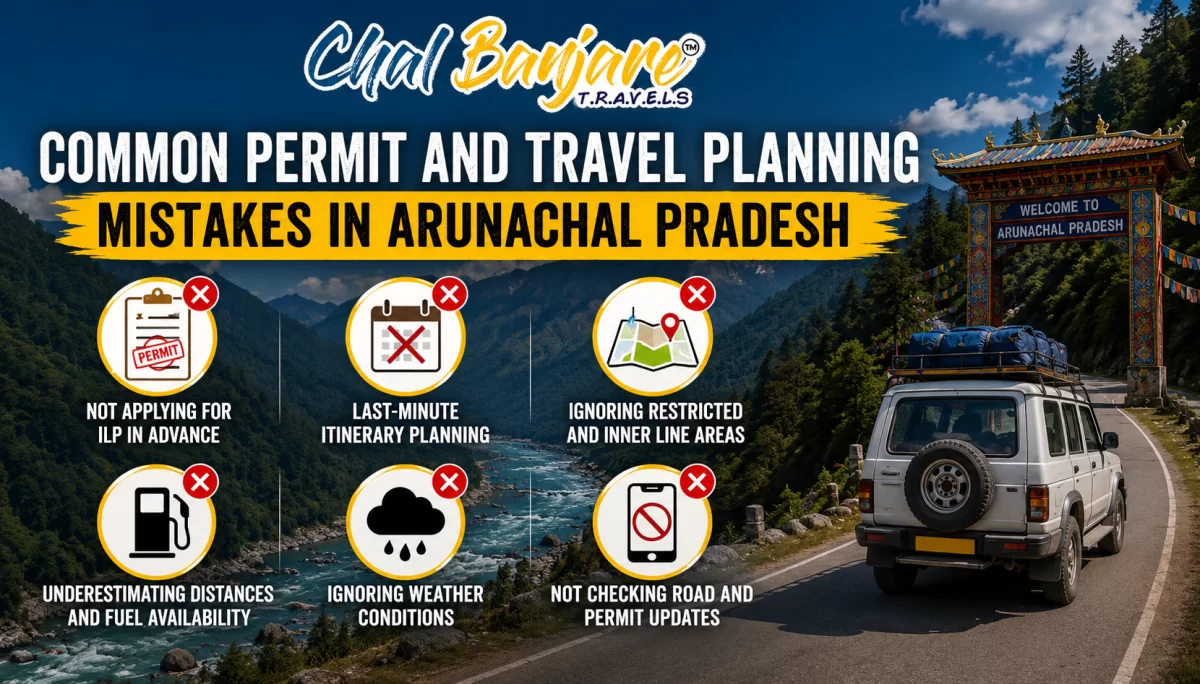
Common Permit and Travel Planning Mistakes in Arunachal Pradesh

Arunachal Pradesh requires careful trip planning because of permits remote mountain roads weather changes and limited tourism infrastructure, but many first time travelers make avoidable mistakes before starting their journey.

Travel Guide


22 May, 2026 By: Pema Khandu

Ignoring Inner Line Permit Requirements Before Travel

Understanding permit rules before entering Arunachal Pradesh

One of the most critical mistakes travelers make is not fully understanding the Inner Line Permit (ILP) system before planning a trip to Arunachal Pradesh. The state operates under regulated entry rules, and permits are mandatory for Indian citizens visiting most tourist regions.

Without proper awareness of these rules, travelers may face delays at entry points or may even be denied access to certain routes, especially in restricted or sensitive areas.

It is one of the most strictly regulated travel systems in Northeast India.

  • Mandatory ILP requirement.
  • Regulated state entry system.
  • Restricted region access rules.
  • Checkpoint verification process.
  • Pre-travel compliance essential.

Understanding permit rules is the foundation of a smooth Arunachal trip.

Applying for permits well before the travel date

Applying for permits at the last minute can create unnecessary stress and may disrupt travel plans. Processing times can vary depending on the season and application volume, especially during peak tourist months when demand is higher.

Early application ensures that travelers receive approvals on time and can proceed with their itinerary without delays or last-minute complications.

It is one of the most important pre-travel steps for Arunachal Pradesh.

  • Early application recommended.
  • Seasonal processing delays.
  • Peak season demand impact.
  • Avoid last-minute stress.
  • Timely approval needed.

Advance permit planning ensures a smooth start to the journey.

Verifying destination eligibility before finalizing the itinerary

Not all destinations in Arunachal Pradesh are accessible under the same permit category. Some remote or border regions require additional permissions or specific approvals, making it essential to verify eligibility before finalizing travel plans.

Failing to check this in advance may lead to itinerary changes, restricted access, or delays during the trip, especially in sensitive or high-altitude areas.

It is one of the most overlooked aspects of permit planning.

  • Destination-specific permit rules.
  • Restricted area access.
  • Additional permissions required.
  • Itinerary verification needed.
  • Pre-planning essential step.

Checking eligibility ensures a hassle-free travel experience.

Carrying Insufficient Permit Copies During the Journey

Keeping multiple printed copies for different checkpoints

During travel in Arunachal Pradesh, permits are frequently checked at multiple entry points and local checkpoints. Carrying only a single copy can be inconvenient if it gets misplaced or required at different locations simultaneously.

Having multiple printed copies ensures smooth verification at every stage of the journey and helps avoid unnecessary delays during transit through different regions.

It is one of the most practical travel documentation practices in the state.

  • Multiple copies recommended.
  • Frequent checkpoint checks.
  • Easy verification process.
  • Risk-free documentation handling.
  • Travel delay prevention.

Extra copies help ensure uninterrupted travel across checkpoints.

Carrying valid identification along with travel permits

Travel permits alone are not sufficient; valid identification documents must be carried throughout the journey. Authorities may request ID verification along with permits at various checkpoints to confirm traveler details.

Keeping ID and permits together ensures faster processing and avoids complications during routine inspections along the route.

It is one of the most essential compliance requirements for Arunachal travel.

  • ID proof required with permits.
  • Checkpoint verification common.
  • Faster document processing.
  • Reduced inspection delays.
  • Essential compliance practice.

Proper identification ensures smooth checkpoint clearance.

Organizing travel documents for smoother verification

Well-organized travel documents help streamline verification processes during the journey. Keeping permits, IDs, and booking confirmations in an easily accessible folder reduces confusion at checkpoints.

This organization becomes especially important in remote areas where multiple inspections may occur and quick access to documents can save time and avoid inconvenience.

It is one of the most effective travel preparation habits.

  • Document organization important.
  • Easy accessibility needed.
  • Quick verification process.
  • Reduced checkpoint delays.
  • Efficient travel management.

Organized documents make travel smoother and more efficient.

Applying for Incorrect Travel Circuits and Destinations

Selecting the correct destinations while applying for permits

One of the common permit-related mistakes in Arunachal Pradesh is selecting incorrect destinations while applying for travel circuits. The Inner Line Permit is issued based on specific regions, and entering unlisted areas may not be allowed without prior authorization.

Travelers must carefully match their itinerary with the exact destinations they plan to visit, ensuring that all locations are correctly mentioned during the application process to avoid entry issues later.

It is one of the most important accuracy requirements in Arunachal travel planning.

  • Correct destination selection required.
  • Permit tied to travel circuits.
  • Entry restrictions apply.
  • Itinerary accuracy essential.
  • Pre-approval matching needed.

Accurate destination selection ensures smooth travel without permit issues.

Checking whether remote regions require additional permissions

Some remote regions in Arunachal Pradesh may require additional permissions beyond the standard Inner Line Permit. These areas are often sensitive or located near border zones, where extra clearance may be necessary for entry.

Failing to verify these requirements in advance can result in restricted access or last-minute changes to travel plans, especially in offbeat destinations.

It is one of the most overlooked permit conditions in the region.

  • Additional permissions possible.
  • Border-sensitive regions.
  • Restricted access zones.
  • Extra clearance required.
  • Pre-check essential step.

Checking remote area rules avoids unexpected travel restrictions.

Reviewing travel plans before permit approval

Before finalizing permit applications, reviewing the complete travel plan is essential to ensure all destinations are correctly included. Once approved, making changes can be time-consuming and may require reapplication or modification of documents.

A careful review helps align permits with actual travel routes, reducing complications during checkpoints and ensuring smooth movement across different regions.

It is one of the most critical final steps in permit preparation.

  • Final itinerary review needed.
  • Permit correction difficulty.
  • Route alignment essential.
  • Document accuracy important.
  • Pre-approval verification step.

Careful review prevents permit-related travel disruptions.

Planning Unrealistic Travel Itineraries Across Remote Regions

Avoiding long driving days across multiple destinations

A frequent mistake in Arunachal Pradesh travel planning is creating itineraries with excessively long driving days across multiple destinations. Mountain roads naturally require more time, and attempting to cover too many locations in a single day can lead to fatigue and reduced travel enjoyment.

Such rushed schedules often limit the time available to experience each destination properly and increase stress during travel through challenging terrain.

It is one of the most common planning issues in Himalayan road trips.

  • Overpacked daily schedules.
  • Long driving fatigue risk.
  • Reduced sightseeing time.
  • Mountain road delays.
  • Stressful travel experience.

Balanced itineraries improve comfort and travel quality.

Including overnight stops between distant locations

Including overnight stops is essential when traveling across Arunachal Pradesh due to long distances between major destinations. Stopover towns like Dirang and Bomdila help break journeys into manageable segments and provide necessary rest.

These stops also support acclimatization and reduce the physical strain of continuous driving through winding mountain roads and varying altitudes.

It is one of the most practical strategies for safe travel.

  • Essential stopover planning.
  • Reduced driving fatigue.
  • Better altitude adjustment.
  • Segmented travel approach.
  • Improved journey comfort.

Stopovers make long journeys safer and more manageable.

Allowing extra time for weather and road delays

Weather and road conditions in Arunachal Pradesh can change unexpectedly, making it important to include buffer time in any itinerary. Landslides, fog, or temporary closures can delay travel significantly, especially in remote regions.

Adding extra time in the schedule ensures flexibility, allowing travelers to adjust plans without missing key destinations or rushing through difficult conditions.

It is one of the most essential planning practices in the Himalayas.

  • Weather-related delays.
  • Road closure risks.
  • Buffer time essential.
  • Flexible itinerary planning.
  • Reduced travel pressure.

Extra time ensures smoother and stress-free travel experiences.

Ignoring Seasonal Weather and Road Conditions

Understanding how monsoon affects mountain travel

Monsoon season significantly impacts travel across Arunachal Pradesh due to heavy rainfall, slippery roads, and increased chances of landslides in hilly terrain. These conditions can slow down travel and make certain routes temporarily difficult or unsafe to use.

Ignoring monsoon effects while planning a trip can lead to delays, route changes, or reduced accessibility to remote destinations, especially in forested and high-altitude regions.

It is one of the most weather-sensitive travel seasons in the Himalayas.

  • Heavy rainfall impact.
  • Slippery road conditions.
  • Landslide risk increase.
  • Route disruptions possible.
  • Reduced accessibility zones.

Monsoon awareness is essential for safe travel planning.

Checking weather forecasts before each travel day

Weather conditions in Arunachal Pradesh can change rapidly, making it important to check forecasts before starting each travel day. This helps travelers prepare for rain, fog, or other sudden changes that may affect visibility and road safety.

Daily weather updates also allow adjustments in departure time or route selection, improving safety and reducing unexpected disruptions during the journey.

It is one of the most important daily travel habits in the region.

  • Daily weather monitoring.
  • Sudden change preparedness.
  • Improved travel safety.
  • Route adjustment flexibility.
  • Better planning decisions.

Weather checks ensure safer and smoother daily travel.

Planning routes according to seasonal accessibility

Different seasons affect road accessibility in Arunachal Pradesh, especially in high-altitude and remote areas. Some routes may become difficult or temporarily closed during monsoon or winter due to weather-related conditions.

Planning routes according to seasonal accessibility ensures smoother travel and reduces the risk of unexpected detours or delays during the journey.

It is one of the most important factors in Himalayan travel planning.

  • Season-based route planning.
  • Access variability awareness.
  • Monsoon and winter impact.
  • Reduced disruption risk.
  • Flexible travel design.

Seasonal planning improves overall road trip reliability.

Underestimating Travel Distances Between Destinations

Understanding that mountain roads increase travel time

A common mistake in Arunachal Pradesh travel planning is underestimating how mountain roads affect travel time. Even short distances on the map can take several hours due to winding routes, elevation changes, and varying road conditions.

This difference between map distance and actual travel time often leads to unrealistic schedules and rushed itineraries across multiple destinations.

It is one of the most misunderstood aspects of Himalayan road travel.

  • Map vs actual time gap.
  • Winding road delays.
  • Elevation impact on speed.
  • Longer journey duration.
  • Unrealistic planning risk.

Mountain terrain significantly increases travel time.

Planning realistic driving hours each day

Realistic driving hour planning is essential in Arunachal Pradesh, where continuous long-distance travel can be physically exhausting. Limiting daily driving hours helps maintain energy levels and improves overall travel comfort.

It also allows time for sightseeing, rest stops, and unexpected delays caused by road or weather conditions in mountainous terrain.

It is one of the most important comfort strategies for road trips.

  • Daily driving limits.
  • Fatigue management.
  • Time for sightseeing.
  • Rest stop planning.
  • Flexible scheduling needed.

Balanced driving hours improve safety and travel enjoyment.

Avoiding rushed sightseeing schedules across the state

Rushed sightseeing schedules reduce the quality of travel experience in Arunachal Pradesh, where destinations are spread across vast mountainous regions. Attempting to cover too many places in limited time often leads to fatigue and missed experiences.

A slower travel pace allows better exploration of landscapes, culture, and natural attractions without the pressure of tight timelines.

It is one of the most important planning principles for the region.

  • Avoid rushed itineraries.
  • Improve travel experience.
  • Better destination exploration.
  • Reduced fatigue levels.
  • Balanced travel planning.

Slow travel leads to a more meaningful Arunachal experience.

Not Preparing Properly for High-Altitude Travel

Planning gradual altitude gain before visiting higher regions

One of the most overlooked mistakes in Arunachal Pradesh travel is failing to plan a gradual ascent into high-altitude regions. Areas like Tawang and Sela Pass sit at significant elevations, and sudden exposure without acclimatization can cause discomfort for many travelers.

A step-by-step elevation approach through intermediate stops such as Dirang and Bomdila helps the body adjust naturally and reduces the risk of altitude-related issues during the journey.

It is one of the most important health-focused travel strategies in the Himalayas.

  • Gradual altitude increase needed.
  • High-altitude sensitivity risk.
  • Intermediate stop importance.
  • Better oxygen adjustment.
  • Safer travel progression.

Gradual ascent ensures safer high-altitude travel experiences.

Carrying suitable clothing for changing mountain weather

High-altitude regions in Arunachal Pradesh experience frequent and sudden temperature changes, making proper clothing essential for comfort and safety. Layered clothing helps travelers adapt to warm daytime conditions and cold evenings effectively.

Warm jackets, windproof outer layers, and thermal wear are especially important when traveling to higher elevations where weather conditions can shift rapidly.

It is one of the most practical preparations for mountain travel.

  • Layered clothing recommended.
  • Temperature fluctuation expected.
  • Warm jackets essential.
  • Windproof protection useful.
  • Season-based packing needed.

Proper clothing ensures comfort across changing altitudes.

Allowing time for rest during high-altitude journeys

Rest is an essential part of high-altitude travel in Arunachal Pradesh, especially for families and elderly travelers. Continuous movement without breaks can increase fatigue and reduce overall travel comfort in elevated regions.

Taking regular breaks allows the body to adjust gradually to altitude changes and helps maintain energy levels throughout the journey.

It is one of the most important practices for safe Himalayan travel.

  • Regular rest breaks needed.
  • Fatigue management important.
  • Altitude adjustment support.
  • Energy level maintenance.
  • Comfort-focused travel.

Rest improves safety and comfort in high-altitude travel.

Expecting Luxury Tourism Facilities in Remote Regions

Understanding accommodation options outside major destinations

One of the common mistakes in Arunachal Pradesh travel is expecting luxury-style tourism facilities in every region. While towns like Itanagar or certain parts of Tawang may offer decent hotels, many remote destinations operate with limited infrastructure and basic accommodation options.

Travelers should understand that comfort levels vary significantly depending on location, and remote valleys often focus more on functionality than luxury amenities.

It is one of the most infrastructure-limited travel regions in the Himalayas.

  • Limited luxury availability.
  • Basic accommodation in remote areas.
  • Location-based comfort variation.
  • Functional stay facilities.
  • Urban vs rural difference.

Expecting realistic accommodation helps avoid disappointment during travel.

Preparing for limited services in remote valleys and villages

Many remote villages in Arunachal Pradesh have limited access to services such as room heating, 24-hour electricity, or room service facilities. These limitations are common in high-altitude and offbeat regions where infrastructure development is still evolving.

Travelers should prepare mentally and practically for simpler living conditions while focusing on the natural and cultural experience rather than luxury comfort.

It is one of the most authentic rural travel environments in India.

  • Limited service availability.
  • Basic rural infrastructure.
  • Power and heating limitations.
  • Offbeat destination realities.
  • Experience-focused travel.

Remote travel focuses more on experience than luxury comfort.

Setting realistic expectations before the journey

Setting realistic expectations is essential when traveling across Arunachal Pradesh. Understanding that the region prioritizes natural beauty, cultural richness, and remote landscapes over luxury infrastructure helps travelers better appreciate the journey.

This mindset allows for a more satisfying experience, even when facilities are simple or limited compared to urban destinations.

It is one of the most important mental preparations for Himalayan travel.

  • Realistic expectation setting.
  • Nature-focused travel experience.
  • Limited luxury awareness.
  • Mindset adjustment important.
  • Better travel satisfaction.

Realistic expectations improve overall travel enjoyment.

Ignoring Fuel Cash and Network Limitations

Refueling before entering remote travel stretches

A major travel mistake in Arunachal Pradesh is not refueling before entering remote stretches where fuel stations are limited or widely spaced. Long mountain routes often pass through areas where refueling options may not be available for several hours of driving.

Planning fuel stops in advance ensures uninterrupted travel and reduces the risk of running low in isolated regions where assistance may be difficult to access.

It is one of the most critical logistical planning factors in the Himalayas.

  • Limited fuel station access.
  • Long-distance gaps.
  • Remote route planning needed.
  • Pre-refueling essential.
  • Risk prevention strategy.

Proper fuel planning ensures safe and uninterrupted journeys.

Carrying sufficient cash for rural destinations

Digital payment systems are not always reliable in remote parts of Arunachal Pradesh due to inconsistent network connectivity. Many rural areas still depend heavily on cash transactions for accommodation, food, and transportation services.

Carrying sufficient cash ensures smooth transactions and avoids inconvenience in places where digital payments may not work consistently.

It is one of the most practical travel requirements in remote regions.

  • Cash-based economy common.
  • Digital payment limitations.
  • Remote village dependency.
  • Transaction reliability issues.
  • Backup payment essential.

Cash ensures smooth travel in areas with limited digital access.

Preparing for limited mobile network connectivity

Mobile network connectivity in Arunachal Pradesh varies widely, with strong signals in towns and weak or no coverage in remote valleys and mountain passes. This can affect navigation, communication, and access to real-time updates during travel.

Travelers should rely on offline maps and pre-planned routes instead of depending entirely on mobile networks, especially in remote or high-altitude regions.

It is one of the most connectivity-challenged regions in Northeast India.

  • Inconsistent network coverage.
  • Remote signal gaps.
  • Navigation limitations.
  • Offline tools needed.
  • Communication disruptions.

Offline preparation ensures safer and smoother travel.

Ignoring Local Travel Updates and Road Advisories

Following official road condition updates before departure

One of the most important aspects of traveling in Arunachal Pradesh is staying updated with official road condition reports before starting each journey. Mountain routes are highly dynamic, and conditions can change quickly due to weather, maintenance, or landslides.

Checking verified updates from local authorities or accommodation providers helps travelers avoid unexpected route closures and ensures safer movement across remote regions.

It is one of the most important safety practices in Himalayan road travel.

  • Official updates essential.
  • Road condition monitoring.
  • Weather-based advisories.
  • Safety-focused planning.
  • Reduced travel uncertainty.

Staying informed improves overall travel safety and planning.

Checking for temporary closures and route changes

Temporary road closures are common in Arunachal Pradesh, especially during monsoon or winter seasons when landslides, snowfall, or maintenance work can disrupt travel routes. Ignoring these updates may lead to delays or forced detours.

Being aware of such changes allows travelers to adjust their itinerary in real time and choose alternative routes when necessary.

It is one of the most unpredictable elements of mountain travel.

  • Temporary road closures possible.
  • Route diversion risks.
  • Weather disruption impact.
  • Real-time adjustments needed.
  • Flexible travel planning.

Route awareness helps avoid unnecessary travel delays.

Staying flexible with travel plans during unexpected disruptions

Flexibility is essential when traveling in Arunachal Pradesh due to unpredictable weather and road conditions. Fixed itineraries may not always be practical, especially when unexpected disruptions occur in remote or high-altitude regions.

Allowing buffer time and being open to itinerary adjustments ensures a smoother travel experience even when conditions change suddenly.

It is one of the most important planning strategies for the Himalayas.

  • Flexible itinerary required.
  • Unexpected disruptions common.
  • Buffer time important.
  • Adaptive travel approach.
  • Reduced stress planning.

Flexibility ensures safer and more comfortable travel.

Final Arunachal Pradesh Permit and Travel Planning Guide

Avoiding common permit and planning mistakes before travel

A successful Arunachal Pradesh trip begins with avoiding key permit and planning mistakes such as incorrect destination selection, last-minute applications, and missing documentation. Since the Inner Line Permit system is mandatory, accuracy in planning is essential.

Ensuring that all destinations, travel dates, and identification details are correctly prepared helps prevent delays and ensures smooth entry into the state.

It is one of the most critical entry requirements in Northeast India.

  • Correct permit application needed.
  • Accurate destination selection.
  • Advance planning essential.
  • Documentation readiness required.
  • Entry compliance important.

Proper permit planning ensures a hassle-free start to the journey.

Preparing a practical itinerary for a smoother journey

A practical itinerary in Arunachal Pradesh focuses on realistic travel distances, proper rest stops, and seasonal awareness. Overloading the schedule can lead to fatigue and reduce the quality of the travel experience across mountainous terrain.

Balanced planning with fewer destinations per day allows better exploration and smoother transitions between regions, improving both safety and enjoyment.

It is one of the most important aspects of Himalayan travel planning.

  • Realistic itinerary design.
  • Balanced travel schedule.
  • Reduced fatigue approach.
  • Better sightseeing quality.
  • Season-aware planning.

A well-balanced itinerary ensures a more enjoyable Arunachal trip.

Essential checklist before exploring Arunachal Pradesh

Before starting a journey to Arunachal Pradesh, travelers should complete a final checklist that includes permits, vehicle readiness, accommodation bookings, and awareness of weather and road conditions. These preparations reduce uncertainty and improve travel confidence.

Carrying cash, planning fuel stops, and preparing offline navigation tools are equally important due to limited connectivity in remote regions.

It is one of the most essential preparation stages for Himalayan travel.

  • Permit and ID readiness.
  • Vehicle condition check.
  • Advance hotel bookings.
  • Fuel and cash planning.
  • Offline navigation setup.

A complete checklist ensures a safe and smooth Arunachal Pradesh journey.

Frequently Asked Questions About Common Permit and Travel Planning Mistakes in Arunachal Pradesh

An Inner Line Permit is a mandatory travel document required for domestic travelers entering Arunachal Pradesh. It allows access through designated entry points and should be obtained before the journey. Applying early helps avoid last minute problems and unnecessary travel delays.
Applying for permits before departure reduces the risk of delays caused by incomplete applications or missing documents. Early approval allows travelers to focus on route planning accommodation bookings and transport arrangements without worrying about permit related complications during the trip.
Yes missing identification documents or incomplete application details can slow permit processing. Travelers should verify all required information before submission. Proper preparation helps avoid approval delays and ensures smoother travel planning for destinations across Arunachal Pradesh.
Travelers should carry multiple printed permit copies along with digital backups. Various checkpoints may request permit verification during the journey. Having both formats readily available helps reduce delays and avoids difficulties when mobile connectivity becomes unreliable.
Printed permit copies are useful because checkpoints across mountain routes may request physical verification. Depending only on digital documents can create inconvenience when networks fail or device issues occur during travel through remote Himalayan regions.
Not always. Some travel circuits require destination specific details during the permit application process. Travelers should carefully review planned destinations and ensure all intended regions are included before permit approval to prevent access related issues later.
Selecting incorrect destinations or incomplete itineraries may result in permits that do not cover planned travel regions. This can create complications during the journey. Reviewing permit details carefully before approval helps avoid such problems.
Travelers frequently underestimate mountain driving conditions and travel durations. Distances that appear short on maps can require many hours because of terrain and road conditions. Flexible planning helps create a more comfortable and realistic journey.
Yes overpacked schedules often increase fatigue and reduce sightseeing enjoyment. Arunachal Pradesh is better explored at a slower pace with adequate rest and travel time. Comfortable itineraries improve both safety and overall travel experiences.
Monsoon rainfall can increase landslide risks and make mountain roads more challenging. Travelers visiting during the rainy season should keep flexible schedules and monitor conditions regularly because weather related disruptions may affect travel plans.
Winter snowfall can affect accessibility across high altitude routes and mountain passes. Road conditions may change quickly during colder months. Checking seasonal conditions before departure helps travelers prepare for possible route restrictions and delays.
Mountain terrain often makes travel slower than expected. Routes that appear short geographically may require an entire day of driving. Understanding realistic travel times helps travelers create practical itineraries and avoid unnecessary scheduling pressure.
Buffer days provide flexibility when weather delays road conditions or unexpected disruptions occur. Including extra time in the itinerary helps travelers maintain a relaxed schedule and reduces the impact of unforeseen travel interruptions.
Destinations such as Tawang and Sela Pass involve significant altitude gain. Travelers who are unprepared may experience fatigue headaches or discomfort. Proper hydration rest and gradual acclimatization help improve comfort during high altitude journeys.
Remote regions of Arunachal Pradesh often provide simpler accommodations and fewer urban conveniences. Travelers should understand that the experience focuses more on nature culture and mountain landscapes rather than extensive tourism infrastructure or nightlife.
Digital payment systems may not work consistently in remote destinations because of connectivity limitations. Carrying sufficient cash helps travelers manage purchases transportation and basic expenses when electronic payment options are unavailable.
Mobile network coverage can become weak in isolated mountain regions. Travelers should keep offline maps important contacts and essential travel information accessible. Planning for limited connectivity helps avoid difficulties during remote journeys.
Weather changes landslides and road closures can affect travel conditions without much notice. Monitoring local advisories before daily travel helps travelers make informed decisions reduce delays and improve overall safety during their journey.

Explore Arunachal Pradesh Tour Packages

Explore All Packages

Latest Travel Blogs

View all Blogs β†’

Loved this place ? Let’s Plan Your Arunachal Pradesh Trip

Get customized Arunachal Pradesh tour planning designed around mountain road distances, permit requirements, seasonal weather windows, and realistic travel pacing. Whether you are visiting for monasteries, high-altitude passes, river valleys, tribal cultu

⚑ Quick Response | πŸ’° Free consultation | πŸ•’ 24Γ—7 expert support

×

Plan Your Trip