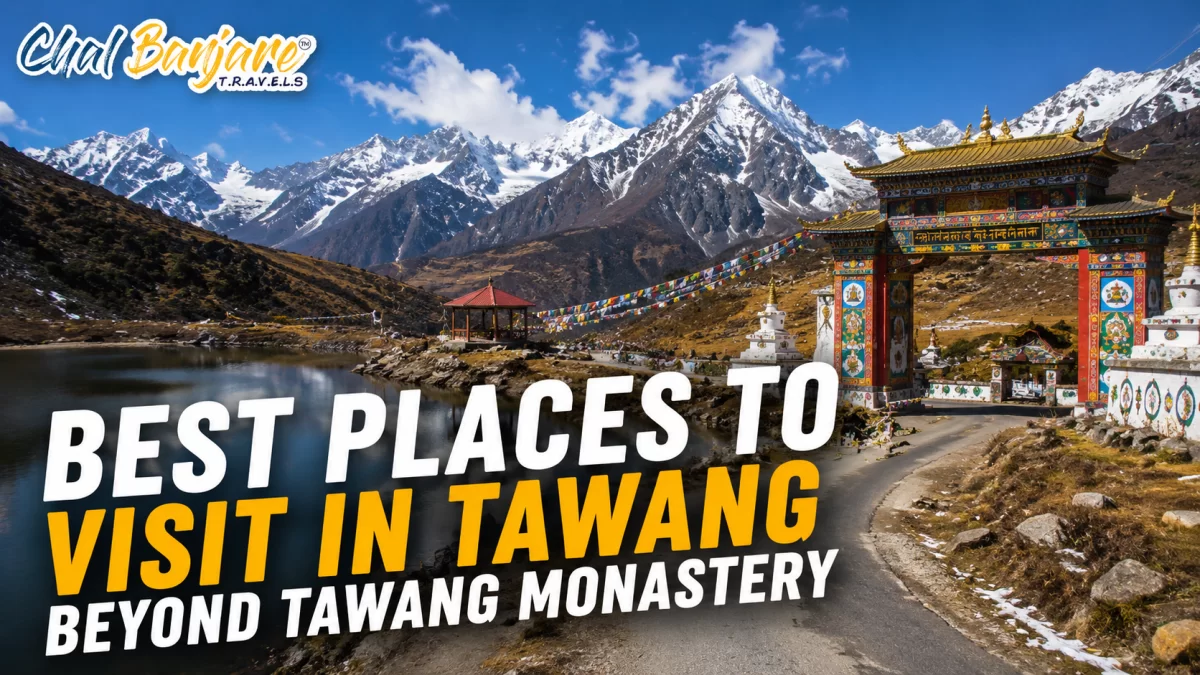
Homepage Banner

Best Places to Visit in Tawang Beyond Tawang Monastery

While Tawang Monastery is the region’s most famous attraction, Tawang offers stunning high-altitude lakes, snow-covered mountain passes, war memorials, border viewpoints, and breathtaking Himalayan landscapes.

Places to Visit


16 May, 2026 By: Pema Khandu

Best high-altitude lakes around Tawang

Exploring Madhuri Lake Pangateng Tso and scenic alpine lakes

The Tawang region is home to some of the most stunning high-altitude lakes in the eastern Himalayas, each surrounded by dramatic mountain landscapes and pristine natural beauty. Madhuri Lake, also known as Sangestar Tso, is one of the most famous, formed by a past landslide and now known for its crystal-clear waters and striking tree formations rising from the lake.

Pangateng Tso is another beautiful alpine lake located at a high elevation, offering a quieter and less crowded experience. Surrounded by snow-covered peaks and open Himalayan terrain, these lakes reflect the raw and untouched beauty of the region.

  • Madhuri Lake (Sangestar Tso) iconic attraction.
  • Pangateng Tso alpine lake experience.
  • High-altitude Himalayan surroundings.
  • Crystal-clear mountain waters.
  • Less crowded natural landscapes.

Tawang’s lakes offer a rare combination of serenity and dramatic Himalayan scenery.

Experiencing peaceful lakes surrounded by Himalayan mountains

The high-altitude lakes near Tawang are surrounded by towering Himalayan peaks, creating a peaceful and almost surreal environment. The stillness of the water, combined with snow-covered mountains and open skies, offers a sense of deep calm that is rare in most travel destinations.

These lakes are ideal for quiet reflection, photography, and slow travel experiences. The changing light throughout the day transforms the scenery, making each visit unique and visually striking.

  • Surrounded by snow-capped peaks.
  • Calm and peaceful lake environment.
  • Ideal for reflection and relaxation.
  • Changing light and scenery.
  • Perfect for landscape photography.

Tawang’s alpine lakes provide some of the most peaceful Himalayan experiences.

Understanding the best season to visit Tawang's high-altitude lakes

The best time to visit Tawang’s high-altitude lakes is generally during the post-monsoon and summer months when roads are more accessible and weather conditions are relatively stable. During this period, lakes remain clear and surrounding landscapes are fully visible, offering ideal conditions for sightseeing and photography.

Winter transforms these lakes into frozen or partially frozen landscapes, which can be visually stunning but more difficult to access due to heavy snowfall and road restrictions. Monsoon season is less ideal due to rainfall and limited visibility.

Season Condition Travel Suitability
Summer Clear access and mild weather Best time
Post-Monsoon Stable roads and clear views Highly recommended
Winter Snow-covered, restricted access Challenging but scenic
Monsoon Rain and low visibility Not ideal

Seasonal planning is essential to fully enjoy Tawang’s high-altitude lakes.

Best mountain passes near Tawang

Driving across the spectacular Sela Pass route

Sela Pass is one of the most breathtaking mountain passes in India, connecting Dirang with Tawang at an altitude of over 13,000 feet. The route passes through snow-covered landscapes, frozen lakes, and winding mountain roads that offer some of the most dramatic driving experiences in the eastern Himalayas.

The pass remains snowbound for much of the year, and the journey is filled with changing scenery, from dense forests and valleys to barren high-altitude terrain. It is a defining highlight of any Tawang road trip.

  • High-altitude Sela Pass route.
  • Snow-covered mountain roads.
  • Frozen lake viewpoints.
  • Scenic Dirang–Tawang connection.
  • Dramatic Himalayan landscapes.

Sela Pass is the most iconic and scenic route on the Tawang circuit.

Exploring Bum La Pass near the India China border

Bum La Pass is a high-altitude border pass located near the Indo-China boundary, offering a rare and regulated travel experience in one of the most sensitive regions of Arunachal Pradesh. The journey to Bum La involves passing through rugged terrain, military-controlled zones, and snow-covered landscapes.

Access to Bum La is restricted and requires special permits along with local coordination. Despite its restrictions, it remains one of the most memorable and unique experiences near Tawang due to its geopolitical significance and extreme altitude environment.

  • Indo-China border proximity.
  • Military-regulated access zone.
  • High-altitude mountain terrain.
  • Special permit requirement.
  • Unique strategic location experience.

Bum La Pass offers a rare glimpse into India’s eastern frontier region.

Experiencing panoramic Himalayan landscapes along mountain roads

The mountain roads around Tawang, including routes through Sela Pass and nearby valleys, offer continuous panoramic views of the Eastern Himalayas. Snow-capped peaks, deep valleys, and forested slopes create a constantly changing landscape throughout the journey.

These roads are not just transportation routes but full travel experiences in themselves, where every turn reveals new perspectives of the Himalayan terrain. Photography stops are frequent due to the sheer visual beauty of the surroundings.

Route Section Landscape Type Experience
Sela Pass Road Snow and alpine terrain Iconic mountain drive
Dirang Stretch Valleys and forests Scenic transition route
Tawang Approach High-altitude landscapes Dramatic Himalayan views
Bum La Route Border terrain Restricted adventure drive

Tawang’s mountain roads offer some of the most visually powerful journeys in the Himalayas.

Best historical attractions in Tawang

Visiting Tawang War Memorial and learning regional history

The Tawang War Memorial is one of the most important historical landmarks in the region, dedicated to the soldiers of the 1962 Indo-China war. Built in a traditional stupa-style structure, it stands as a tribute to bravery and sacrifice, surrounded by the dramatic backdrop of the Eastern Himalayas. The site includes names of martyrs engraved on plaques, creating a deeply emotional and respectful atmosphere.

Visitors often experience a strong sense of history and patriotism here, as the memorial narrates the story of one of India’s most significant border conflicts. The location also offers a panoramic view of the valley, adding natural beauty to its historical importance.

  • Dedicated to 1962 Indo-China war heroes.
  • Stupa-style memorial architecture.
  • Engraved names of martyrs.
  • Strong historical significance.
  • Valley view from memorial site.

The Tawang War Memorial blends history, emotion, and Himalayan scenery in one powerful site.

Exploring historical sites connected to the Himalayan frontier

Beyond the main war memorial, the Tawang region is dotted with sites that reflect its long-standing importance as a Himalayan frontier. These include old trade routes, military posts, and cultural landmarks that have shaped the region’s strategic and historical identity over centuries.

The area has historically served as a bridge between India and Tibet, influencing both cultural exchange and geopolitical significance. Many of these sites are now integrated into travel routes, allowing visitors to experience history alongside natural landscapes.

  • Historic Himalayan trade routes.
  • Old military and strategic posts.
  • India-Tibet cultural connection.
  • Frontier region significance.
  • Integrated travel heritage sites.

Tawang’s history is deeply tied to its role as a Himalayan frontier region.

Understanding Tawang's military and cultural heritage

Tawang’s heritage is shaped by both its military significance and rich cultural traditions. As a border district, it has played an important role in India’s defense history, especially due to its proximity to the Indo-China border. At the same time, it remains a strong center of Tibetan Buddhist culture, creating a unique blend of spirituality and strategic importance.

This dual identity is visible throughout the region—from monasteries and prayer flags to army installations and memorials. Together, they reflect a landscape where culture and history coexist closely.

Aspect Description Significance
Military History 1962 war region Strategic importance
Cultural Heritage Tibetan Buddhist influence Spiritual identity
Border Location Indo-China frontier Geopolitical relevance
Memorials War remembrance sites Historical tribute

Tawang’s heritage reflects a rare blend of history, spirituality, and frontier identity.

Best viewpoints around Tawang

Discovering panoramic viewpoints overlooking valleys and mountains

Tawang is surrounded by some of the most stunning panoramic viewpoints in the Eastern Himalayas, offering sweeping views of deep valleys, snow-covered peaks, and winding mountain roads. These viewpoints are often located along travel routes, making them easily accessible during road journeys between major attractions.

Each viewpoint provides a different perspective of the Himalayan landscape, with changing light conditions throughout the day enhancing the visual experience. Early mornings and late afternoons are especially rewarding for capturing the region’s natural beauty.

  • Wide Himalayan valley views.
  • Snow-capped mountain panoramas.
  • Roadside scenic viewpoints.
  • Dynamic lighting conditions.
  • Easy access during travel routes.

Tawang’s viewpoints offer uninterrupted Himalayan scenery at every turn.

Enjoying sunrise and sunset across the Eastern Himalayas

Sunrise and sunset in Tawang are among the most breathtaking natural experiences in Arunachal Pradesh. As the sun rises, golden light spreads across snow-covered peaks and valleys, creating soft reflections and long shadows that enhance the dramatic terrain. Similarly, sunset paints the mountains in warm hues, gradually fading into cool twilight tones.

These moments are best experienced from elevated viewpoints or open valleys where the horizon is clearly visible. The changing colors of the sky and mountains make every sunrise and sunset unique.

  • Golden Himalayan sunrise views.
  • Colorful sunset mountain scenes.
  • Clear horizon viewpoints.
  • Soft light photography conditions.
  • Peaceful natural atmosphere.

Sunrise and sunset in Tawang create unforgettable Himalayan visual experiences.

Finding peaceful locations for scenic mountain views

Beyond popular viewpoints, Tawang also has several quiet and less crowded spots where travelers can enjoy uninterrupted mountain scenery. These peaceful locations are often found along lesser-used roads, near monasteries, or on the edges of valleys where nature remains undisturbed.

Such locations are ideal for reflection, photography, and slow travel experiences. The absence of crowds allows visitors to fully immerse themselves in the natural beauty of the Eastern Himalayas.

Viewpoint Type Experience Best Time
Roadside Points Quick scenic stops Any time
Hill Edges Wide valley views Sunrise/Sunset
Monastery Areas Peaceful landscapes Morning
Hidden Spots Undisturbed nature Flexible

Tawang’s peaceful viewpoints allow a deep connection with Himalayan landscapes.

Best nature attractions near Tawang

Visiting Nuranang Waterfall and surrounding natural landscapes

Nuranang Waterfall, also known as Jung Waterfall, is one of the most stunning natural attractions near Tawang. Cascading from a great height through rocky cliffs and dense greenery, the waterfall creates a powerful and refreshing natural spectacle. The surrounding landscape is equally beautiful, with pine forests, misty hills, and winding roads adding to the scenic appeal.

The waterfall is especially striking during the post-monsoon season when water flow is strong and the surroundings are lush green. It is easily accessible by road and serves as a popular stop for travelers moving between Tawang and other nearby regions.

  • Nuranang (Jung) Waterfall scenic site.
  • High-altitude cascading waterfall.
  • Surrounded by forests and hills.
  • Best viewed post-monsoon season.
  • Easy roadside accessibility.

Nuranang Waterfall offers one of the most powerful natural scenery experiences in Tawang.

Exploring forests rivers and alpine meadows near Tawang

The natural surroundings of Tawang include dense forests, flowing rivers, and alpine meadows that together create a diverse ecological landscape. Pine and coniferous forests dominate many slopes, while rivers and streams cut through valleys, adding movement and sound to the scenery.

During warmer months, alpine meadows bloom with seasonal vegetation, creating vibrant green patches across the mountains. These natural spaces are ideal for slow exploration, photography, and peaceful walks.

  • Dense pine and conifer forests.
  • Flowing mountain rivers.
  • Alpine meadow landscapes.
  • Rich Himalayan biodiversity.
  • Peaceful nature exploration zones.

Tawang’s natural environment combines forests, rivers, and meadows into a single Himalayan experience.

Experiencing the untouched beauty of western Arunachal Pradesh

Western Arunachal Pradesh, where Tawang is located, is known for its untouched and dramatic Himalayan landscapes. The region remains relatively less urbanized, allowing nature to dominate the scenery. Snow-covered peaks, deep valleys, and remote settlements define the area’s raw beauty.

Traveling through this region offers a sense of isolation and tranquility that is rare in modern travel destinations. The combination of natural and cultural elements creates a deeply immersive experience for visitors.

Natural Feature Description Experience
Waterfalls High-altitude cascades Scenic beauty
Forests Pine and conifer zones Nature walks
Meadows Seasonal green fields Peaceful exploration
Valleys Deep Himalayan terrain Panoramic views

Tawang’s natural attractions reflect the raw and untouched beauty of the Eastern Himalayas.

Best border region experiences

Exploring the scenic route toward Bum La Pass

The road to Bum La Pass is one of the most scenic and strategically significant routes near Tawang. It passes through high-altitude terrain, snow-covered stretches, and remote military zones, offering travelers a rare glimpse into India’s eastern frontier. The journey itself is filled with dramatic Himalayan landscapes and changing weather conditions.

As the road ascends, the environment becomes more rugged and isolated, with fewer settlements and increasingly raw natural surroundings. The route is carefully regulated due to its proximity to the international border.

  • Scenic high-altitude border road.
  • Snow-covered terrain sections.
  • Military-regulated travel route.
  • Remote Himalayan landscapes.
  • Strategic frontier access area.

The Bum La route combines adventure, scenery, and strategic importance.

Understanding the significance of India's eastern border region

The eastern border region near Tawang holds immense strategic and historical importance for India due to its proximity to China. This area has been central to geopolitical discussions and historical events, especially the 1962 Indo-China conflict. The landscape itself is rugged, high-altitude, and sparsely populated.

Beyond its strategic value, the region also represents cultural intersections between Tibetan and Indian influences, shaping the identity of local communities living in these remote areas.

  • Strategic Indo-China border zone.
  • Historical 1962 conflict region.
  • High-altitude remote terrain.
  • Tibetan cultural influence.
  • Low population density area.

The eastern border region reflects both strategic importance and cultural depth.

Experiencing remote Himalayan landscapes near the frontier

Traveling near the frontier areas of Tawang offers some of the most remote and untouched Himalayan landscapes in India. Snow-covered peaks, barren high-altitude stretches, and isolated valleys create a dramatic environment that feels far removed from urban life.

These regions require special permits and controlled access, but they reward travelers with unique views and a sense of standing at the edge of the nation’s eastern frontier.

Border Feature Description Experience
Bum La Pass High-altitude border point Restricted visit
Military Zones Controlled access areas Guided travel only
Frontier Roads Remote mountain routes Scenic adventure
Valley Borders Natural boundary regions Unique landscapes

The border regions near Tawang offer a rare and powerful Himalayan travel experience.

Best photography locations in Tawang

Capturing snow-covered peaks lakes and mountain passes

Tawang offers some of the most dramatic photography landscapes in the Eastern Himalayas, where snow-covered peaks, alpine lakes, and high mountain passes create constantly changing compositions. Locations like Sela Pass, Madhuri Lake, and surrounding viewpoints provide wide-angle Himalayan scenes that shift beautifully with weather and light conditions.

The region is especially photogenic during early mornings and late afternoons when soft sunlight enhances the textures of snow, water, and rugged terrain. Even misty or cloudy conditions add depth and mood to landscape photography here.

  • Snow-covered Himalayan peaks.
  • Sela Pass dramatic landscapes.
  • Madhuri Lake reflections.
  • High-altitude mountain views.
  • Golden hour photography conditions.

Tawang provides ever-changing Himalayan frames ideal for landscape photography.

Photographing waterfalls valleys and dramatic Himalayan scenery

Waterfalls like Nuranang, along with deep valleys and forested slopes, create diverse photography opportunities across Tawang. The combination of flowing water, steep cliffs, and dense greenery results in powerful compositions that reflect the raw beauty of the region.

Valleys open up wide scenic frames, especially when clouds move through them, creating layers of mist and light that enhance the visual depth of photographs. This makes the region suitable for both nature and travel photography styles.

  • Nuranang Waterfall captures.
  • Deep valley compositions.
  • Misty Himalayan scenery.
  • Forest and cliff contrasts.
  • Dramatic natural lighting.

Tawang’s terrain creates powerful contrasts perfect for cinematic landscape photography.

Finding the best viewpoints for landscape photography

The best photography viewpoints in Tawang are spread across mountain roads, monastery hills, and high-altitude passes. These locations offer panoramic views of valleys, rivers, and snow-capped peaks that stretch across the horizon, allowing wide-frame compositions.

Because weather changes quickly, each viewpoint can offer multiple moods within a single day—from clear blue skies to dramatic cloud formations—making timing an important factor in photography planning.

Location Type Main Subject Best Time
Sela Pass Snow landscapes Morning
Madhuri Lake Reflections Midday
Monastery Hills Valley views Sunrise/Sunset
Road Viewpoints Panoramic Himalayas Any clear weather

Tawang’s photography spots offer unmatched Himalayan visual diversity.

Best road trip experiences around Tawang

Driving scenic mountain roads through Sela Pass and nearby valleys

The road journey through Sela Pass is the centerpiece of any Tawang road trip, offering one of the most scenic drives in India. The route passes through snowfields, frozen lakes, and winding mountain roads that connect Dirang and Tawang, creating a continuous visual experience of the Eastern Himalayas.

As the road moves through different altitude zones, travelers experience changing landscapes—from dense forests to barren high-altitude terrain. Each section of the drive presents a new visual perspective of Arunachal Pradesh’s rugged beauty.

  • Sela Pass scenic mountain drive.
  • Snow-covered road stretches.
  • Frozen lake viewpoints.
  • Valley-to-peak transitions.
  • Iconic Himalayan highway route.

Sela Pass makes the journey to Tawang as memorable as the destination itself.

Exploring unforgettable Himalayan routes around Tawang

Beyond Sela Pass, the entire Tawang circuit includes unforgettable Himalayan routes that pass through Bomdila, Dirang, and remote mountain stretches. These roads are characterized by sharp curves, river crossings, and panoramic viewpoints that make travel slow but visually rewarding.

The combination of altitude, terrain, and weather ensures that every journey feels unique, with constantly changing scenery and light conditions throughout the drive.

  • Bomdila–Dirang–Tawang circuit.
  • Mountain curves and passes.
  • River valley road sections.
  • Scenic roadside viewpoints.
  • Dynamic Himalayan terrain.

Tawang’s road network offers one of India’s most scenic Himalayan driving experiences.

Planning rewarding day trips from Tawang town

Tawang serves as a base for several rewarding day trips that cover lakes, passes, waterfalls, and cultural sites. These short excursions allow travelers to explore high-altitude landscapes without long overnight travel, making them ideal for flexible itineraries.

Proper planning is important due to weather and permit restrictions in certain areas like Bum La Pass. Early starts and well-planned routes help maximize daylight and improve overall travel experience.

Day Trip Experience Travel Type
Bum La Pass Border region visit Permitted guided trip
Madhuri Lake Alpine lake scenery Scenic drive
Nuranang Waterfall Nature exploration Short excursion
Sela Pass High-altitude drive Transit experience

Day trips from Tawang combine adventure, scenery, and cultural exploration in one circuit.

Best local and cultural experiences

Discovering Monpa villages and traditional mountain lifestyles

The Tawang region is home to the Monpa community, one of the prominent tribal groups of Arunachal Pradesh, known for their deep connection with Tibetan Buddhist culture. Monpa villages are scattered across valleys and hills, featuring traditional wooden houses, prayer flags, and small farmlands that blend naturally into the Himalayan landscape.

Daily life in these villages is closely linked with agriculture, animal husbandry, and monastic traditions. Visitors get a rare opportunity to observe a lifestyle that has remained largely unchanged for generations, deeply rooted in simplicity and cultural continuity.

  • Monpa tribal community heritage.
  • Traditional wooden village homes.
  • Prayer flags and Buddhist influence.
  • Agriculture-based lifestyle.
  • Peaceful mountain settlements.

Monpa villages offer an authentic glimpse into Himalayan cultural traditions.

Exploring local markets handicrafts and regional cuisine

Local markets in Tawang showcase a variety of traditional handicrafts including woolen clothing, handwoven textiles, prayer items, and bamboo products. These markets reflect the craftsmanship of the Monpa people and serve as important cultural and economic centers in the region.

Regional cuisine in Tawang is simple yet flavorful, often influenced by Tibetan culinary traditions. Dishes are typically warm, hearty, and suited to the cold climate, offering travelers a comforting local food experience.

  • Traditional woolen handicrafts.
  • Handwoven textile products.
  • Bamboo and prayer items.
  • Monpa regional cuisine.
  • Local market experiences.

Tawang’s markets connect visitors directly with its living cultural traditions.

Experiencing festivals customs and everyday life in Tawang

Festivals in Tawang are deeply connected to Tibetan Buddhist traditions and agricultural cycles. Celebrations often include masked dances, prayers, rituals, and community gatherings held in monasteries and villages. These festivals highlight the spiritual and cultural richness of the region.

Everyday life in Tawang reflects a calm and community-oriented lifestyle, where traditions are preserved alongside modern influences. Visitors can observe monks, villagers, and artisans continuing practices that define the cultural identity of the region.

  • Buddhist festivals and rituals.
  • Masked cultural dances.
  • Monastic celebrations.
  • Community-based traditions.
  • Blended modern-traditional lifestyle.

Tawang’s cultural life reflects a deep harmony between spirituality and tradition.

Final Tawang sightseeing planning guide

Choosing attractions based on your travel style and available time

Tawang offers a wide range of attractions that can be tailored according to different travel styles and time availability. Short trips typically focus on key highlights like Tawang Monastery, Sela Pass, and nearby waterfalls, while longer itineraries allow deeper exploration of lakes, passes, and remote border regions.

Adventure travelers may prioritize high-altitude routes like Bum La Pass, while cultural travelers focus more on monasteries and Monpa villages. Nature lovers can explore lakes, valleys, and scenic viewpoints spread across the region.

  • Flexible itinerary options.
  • Short and long trip planning.
  • Cultural vs adventure choices.
  • High-altitude experiences.
  • Nature and photography routes.

Tawang allows every traveler to build a personalized Himalayan experience.

Planning a balanced itinerary beyond Tawang Monastery

While Tawang Monastery is the centerpiece of the region, a balanced itinerary should also include lakes, passes, waterfalls, and cultural villages to fully experience the diversity of the area. Combining spiritual, natural, and historical sites ensures a complete understanding of Tawang’s identity.

Travel time and altitude changes should always be considered while planning, as distances can be long and weather conditions unpredictable. A well-paced itinerary helps avoid rush and enhances overall travel enjoyment.

Category Must Include Sites Experience Type
Spiritual Tawang Monastery Cultural & religious
Nature Madhuri Lake, Nuranang Falls Scenic exploration
Adventure Sela Pass, Bum La Pass High-altitude travel
Cultural Monpa villages Heritage immersion

A balanced itinerary ensures Tawang is experienced in its full cultural and natural depth.

Final checklist before exploring Tawang

Before traveling to Tawang, proper preparation is essential due to its high altitude, remote location, and changing weather conditions. Travelers should ensure all required permits are arranged in advance and carry necessary documents for restricted areas like Bum La Pass.

Warm clothing, layered outfits, and basic medicines are important due to cold temperatures at higher elevations. It is also advisable to keep buffer days in the itinerary to account for weather-related delays or road conditions.

  • Valid Inner Line Permit required.
  • Special permits for Bum La Pass.
  • Warm layered clothing essential.
  • Carry basic medicines and supplies.
  • Allow buffer days in itinerary.
  • Check weather and road conditions.
  • Book accommodation in advance.
  • Respect local Buddhist culture.

With proper planning, Tawang becomes one of the most rewarding Himalayan travel experiences in India.

Frequently Asked Questions About Best Places to Visit in Tawang Beyond Tawang Monastery

Popular places beyond Tawang Monastery include Sela Pass Madhuri Lake Bum La Pass Nuranang Falls Jaswant Garh and scenic Himalayan viewpoints.
Madhuri Lake is famous for high altitude Himalayan scenery calm waters mountain reflections and the unique landscape formed after natural geological changes.
Sela Pass is known for snow covered landscapes frozen lakes dramatic mountain roads and one of the most scenic high altitude drives in Northeast India.
Bum La Pass offers frontier landscapes Indo China border experiences military history and breathtaking Himalayan mountain scenery near Tawang.
Nuranang Falls features a powerful waterfall surrounded by forest covered mountains making it one of Arunachal Pradesh most beautiful natural attractions.
Jaswant Garh War Memorial honors Rifleman Jaswant Singh Rawat and showcases military history connected to the 1962 Indo China conflict.
Madhuri Lake Pankang Teng Tso and Sangetsar Lake are among the most scenic lakes around Tawang for photography and mountain views.
High altitude roads around Sela Pass Bum La and nearby ridgelines provide panoramic Himalayan valley and mountain viewpoints.
Sela Pass Madhuri Lake Bum La route and Nuranang Falls are considered excellent photography locations in the Tawang region.
The drives toward Sela Pass Bum La Pass Jang Valley and Madhuri Lake offer spectacular Himalayan road trip scenery and mountain landscapes.
Sangetsar Lake is known for tree trunks emerging from the water creating dramatic landscapes surrounded by rugged Himalayan mountains.
Travelers can explore Monpa villages local traditions handicrafts mountain lifestyles and regional Himalayan cuisine beyond monastery visits.
March to June and September to November are usually considered the best seasons for sightseeing road trips and mountain views around Tawang.
Visitors need special local permits arranged through authorities in Tawang before traveling to Bum La Pass near the international border.
Most travelers spend four to six days exploring Tawang Monastery lakes waterfalls mountain passes and nearby sightseeing destinations comfortably.
Nature lovers usually visit Nuranang Falls Madhuri Lake Jang Valley alpine meadows and high altitude lakes near Tawang.
Tawang is highly suitable for first time Arunachal travelers interested in monasteries snow landscapes mountain roads and Himalayan experiences.
Travelers should carry warm clothes medicines identity documents cash sturdy footwear and essential supplies for high altitude travel conditions.
Visitors should acclimatize properly respect military restrictions carry permits avoid late evening drives and prepare for sudden weather changes.
Travelers should not miss Sela Pass Madhuri Lake Bum La Pass Nuranang Falls Jaswant Garh and scenic Himalayan viewpoints near Tawang.

Explore Arunachal Pradesh Tour Packages

Explore All Packages

Latest Travel Blogs

View all Blogs β†’

Loved this place ? Let’s Plan Your Arunachal Pradesh Trip

Get customized Arunachal Pradesh tour planning designed around mountain road distances, permit requirements, seasonal weather windows, and realistic travel pacing. Whether you are visiting for monasteries, high-altitude passes, river valleys, tribal cultu

⚑ Quick Response | πŸ’° Free consultation | πŸ•’ 24Γ—7 expert support

×

Plan Your Trip