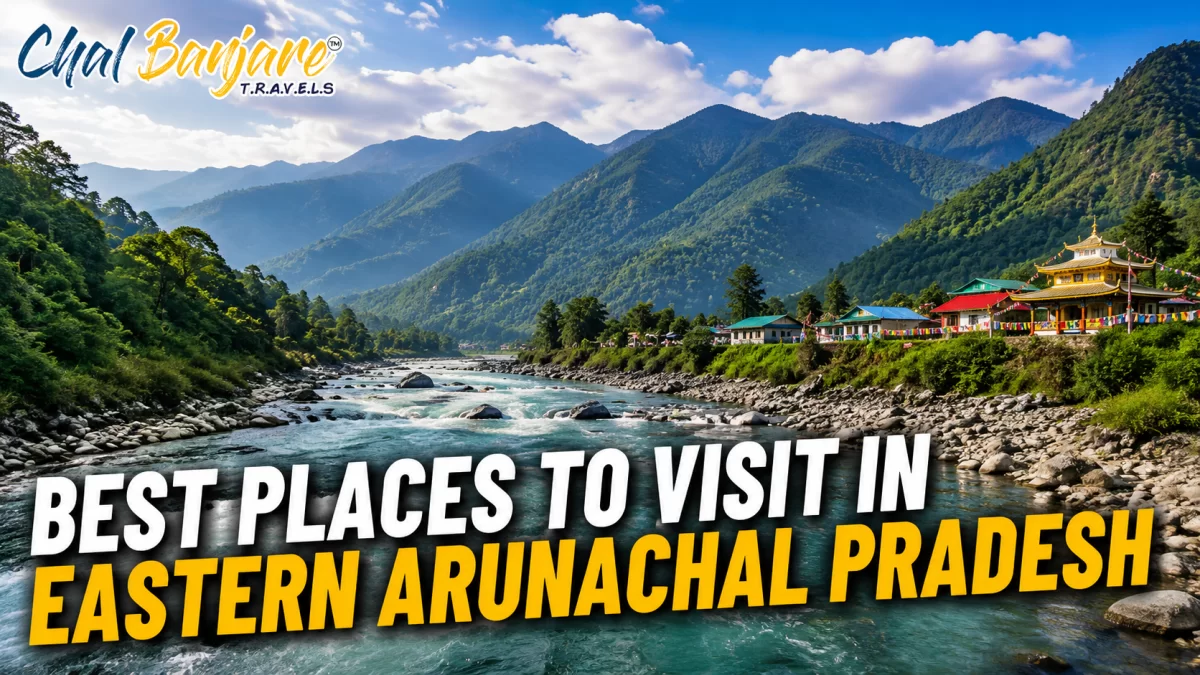
Homepage Banner

Best Places to Visit in Eastern Arunachal Pradesh

Eastern Arunachal Pradesh is one of India’s most remote and least-explored regions, offering pristine river valleys, tribal cultures, border landscapes, dense forests, and spectacular Himalayan wilderness.

Places to Visit


02 Jul, 2026 By: Pema Khandu

Best places to visit in Pasighat

Exploring Daying Ering Wildlife Sanctuary and river islands

Daying Ering Wildlife Sanctuary is one of the most unique ecological zones near Pasighat, spread across riverine islands formed by the shifting channels of the Siang River. The landscape constantly changes with water flow, creating a mosaic of wetlands, grasslands, and seasonal floodplains.

The sanctuary is especially important for birdlife, attracting migratory species during winter months, while the surrounding river islands support grazing grounds and natural vegetation throughout the year. The interaction between water and land here feels fluid and ever-changing.

Visitors experience a rare combination of river ecology and wildlife habitat that reflects the dynamic nature of the Siang basin.

  • River island ecosystem.
  • Wetland biodiversity zone.
  • Migratory bird habitat.
  • Siang floodplain landscapes.
  • Seasonal terrain changes.

Daying Ering represents one of the most dynamic river ecosystems in Arunachal Pradesh.

Visiting the Siang River waterfront and scenic viewpoints

The Siang River waterfront in Pasighat offers wide open views of one of the most powerful river systems in Northeast India. The river flows with immense energy, especially during monsoon, carving a strong visual presence through the landscape.

Several natural viewpoints along the banks allow visitors to observe the river’s scale, movement, and surrounding hills. The combination of flowing water, open skies, and distant greenery creates a constantly shifting visual environment.

Sunrise and sunset add further depth, casting golden reflections across the river surface and highlighting the vastness of the valley.

  • Major Siang River frontage.
  • Wide valley viewpoints.
  • Powerful river flow visuals.
  • Sunrise and sunset reflections.
  • Open river landscapes.

The Siang waterfront defines Pasighat’s identity as a river town.

Discovering local markets and Adi cultural experiences

Pasighat’s local markets offer an authentic introduction to Adi tribal culture, where daily life, trade, and tradition come together in a vibrant setting. Fresh produce, handmade crafts, and local textiles reflect the community’s deep connection with agriculture and forest resources.

Cultural expressions are visible in clothing, food habits, and social interactions, giving travelers a direct glimpse into everyday Adi life rather than staged experiences.

These markets act as social hubs where tradition and modern needs coexist within a river valley town setting.

  • Adi tribal cultural hub.
  • Traditional local markets.
  • Handicrafts and textiles.
  • River town lifestyle.
  • Authentic daily interactions.

Pasighat markets reflect the living culture of the Adi community.

Best places to visit in Mechuka

Exploring Mechuka Valley and Siyom River landscapes

Mechuka Valley is one of the most remote and visually striking landscapes in Arunachal Pradesh, where the Siyom River flows through wide grasslands surrounded by snow-draped mountains. The valley feels open yet enclosed by towering Himalayan ridges.

The combination of river plains, alpine forests, and traditional Memba settlements creates a balanced environment where nature and culture exist in close harmony. Every stretch of the valley reveals a different layer of terrain and lifestyle.

Its remoteness ensures that Mechuka remains largely untouched, preserving its raw Himalayan character.

  • Remote Himalayan valley.
  • Siyom River corridor.
  • Alpine grassland plains.
  • Memba cultural region.
  • Untouched natural landscape.

Mechuka Valley offers one of the most serene river landscapes in Arunachal Pradesh.

Visiting Samten Yongcha Monastery and nearby villages

Samten Yongcha Monastery sits on a hillside overlooking Mechuka Valley, offering panoramic views of rivers, forests, and surrounding mountain ranges. The monastery is an important spiritual center for the local Memba community and reflects Tibetan Buddhist traditions.

Nearby villages are closely connected to monastic life, where daily routines, rituals, and cultural practices are influenced by Buddhist teachings and local customs.

The combination of spirituality and landscape makes this region deeply immersive for travelers seeking cultural depth.

  • Hilltop monastery location.
  • Buddhist spiritual center.
  • Panoramic valley views.
  • Memba cultural influence.
  • Village-monastery connection.

Samten Yongcha connects Mechuka’s spiritual and natural worlds.

Discovering scenic mountain viewpoints and grasslands

Mechuka is surrounded by wide grasslands and elevated viewpoints that offer sweeping views of the valley floor and surrounding Himalayan peaks. These open landscapes shift in color and texture throughout the year depending on season and weather.

From golden grass in winter to lush green meadows in summer, the region constantly transforms, offering new perspectives with every visit.

These viewpoints are often accessible via short walks or drives, making them ideal for immersive landscape experiences.

  • Wide alpine grasslands.
  • Seasonal color shifts.
  • Himalayan viewpoints.
  • Open valley panoramas.
  • Accessible scenic spots.

Mechuka’s viewpoints reveal the valley’s ever-changing natural beauty.

Best places to visit in Anini and Dibang Valley

Exploring untouched valleys and alpine mountain scenery

Anini and the broader Dibang Valley region represent some of the most untouched Himalayan landscapes in India, where steep mountains, dense forests, and deep river gorges create a vast wilderness ecosystem. The terrain is rugged, remote, and largely inaccessible, which has preserved its raw natural character.

Alpine zones transition into thick subtropical forests, creating dramatic ecological variation within short distances. Rivers cut through valleys with powerful force, shaping the geography over centuries and forming isolated pockets of human settlement.

Travel here feels like entering a completely different natural world where human presence is minimal and nature dominates every horizon.

  • Extreme Himalayan wilderness.
  • Deep valley ecosystems.
  • Alpine forest transitions.
  • Rugged mountain terrain.
  • Low human footprint region.

Dibang Valley is one of India’s last true wilderness frontiers.

Visiting remote villages surrounded by pristine forests

The villages of Dibang Valley are scattered across forested slopes and riverbanks, often separated by long distances and challenging terrain. These settlements belong primarily to the Idu Mishmi community, whose lifestyle is closely connected to forests, rivers, and traditional knowledge systems.

Houses are built using locally sourced materials, blending naturally into the environment. Daily life revolves around agriculture, hunting traditions, and forest-based practices that have been passed down through generations.

The isolation of these villages helps preserve cultural identity and ecological balance.

  • Idu Mishmi tribal settlements.
  • Forest-integrated villages.
  • Remote habitation zones.
  • Traditional lifestyle systems.
  • High ecological preservation.

Dibang villages reflect one of India’s most isolated cultural landscapes.

Discovering one of Arunachal Pradesh's most isolated regions

The isolation of Anini and Dibang Valley is not just geographical but also cultural and infrastructural. Limited road connectivity, sparse population, and strict ecological conditions make it one of the least accessible regions in Arunachal Pradesh.

This isolation, however, has helped preserve its biodiversity and cultural authenticity, making it a unique destination for deeply immersive and responsible travel experiences.

  • Extreme geographic isolation.
  • Limited road connectivity.
  • Protected biodiversity zones.
  • Low population density.
  • Undisturbed natural systems.

Anini represents one of the most remote travel experiences in India.

Best places to visit in Roing

Visiting Mayudia Pass for mountain landscapes and snowfall

Mayudia Pass near Roing is one of the most accessible snowfall destinations in eastern Arunachal Pradesh, known for its winter snow cover, misty forests, and sweeping mountain views. The pass sits at a high elevation where temperatures drop significantly during winter months.

The landscape transforms dramatically with seasons—lush greenery in summer and thick snow blankets during winter, making it a year-round scenic stop for travelers passing through the Lower Dibang region.

The drive to Mayudia itself is scenic, passing through forested roads and gradual elevation changes.

  • Popular snowfall destination.
  • High-altitude mountain pass.
  • Seasonal landscape changes.
  • Forest-covered road access.
  • Winter tourism hotspot.

Mayudia Pass is the winter gateway of Roing’s mountain scenery.

Exploring Mehao Lake and surrounding forests

Mehao Lake lies within dense forested terrain inside the Mehao Wildlife Sanctuary, creating a calm and secluded natural environment. The lake is surrounded by thick vegetation and rolling hills that enhance its sense of isolation and ecological importance.

Access to the lake requires traveling through forest routes, adding to the sense of adventure and discovery. The surrounding ecosystem supports rich biodiversity, including rare flora and fauna typical of the eastern Himalayan region.

The lake remains one of Roing’s most peaceful natural attractions.

  • Forest-surrounded lake.
  • Mehao Wildlife Sanctuary.
  • Rich biodiversity zone.
  • Secluded natural setting.
  • Eco-sensitive environment.

Mehao Lake offers deep forest tranquility in Roing.

Discovering Bhismaknagar Fort and historical attractions

Bhismaknagar Fort is one of the most significant historical sites in Arunachal Pradesh, believed to date back to ancient times and associated with early regional kingdoms. The fort ruins sit on elevated terrain overlooking the surrounding plains and river systems.

The architecture, though largely in ruins, reflects historical construction techniques and offers insight into the region’s early cultural and political history.

The site combines historical importance with scenic surroundings, making it both a cultural and visual attraction.

  • Ancient fort ruins.
  • Historical heritage site.
  • Elevated viewpoint location.
  • Archaeological significance.
  • River valley backdrop.

Bhismaknagar connects Roing with its ancient historical roots.

Best places to visit in Walong

Exploring Dong Village near India's easternmost sunrise point

Dong Village, located near Walong in the extreme eastern corner of Arunachal Pradesh, is famously known as one of the first places in India to witness sunrise. The journey to Dong itself is remote and challenging, passing through winding mountain roads, river valleys, and isolated stretches where human presence becomes increasingly sparse.

The village sits in a dramatic landscape where steep green mountains descend into deep valleys carved by the Lohit River. Morning light here arrives early, painting the hills in soft golden hues while mist slowly rises from the river below.

Beyond its geographical significance, Dong represents a quiet tribal settlement where life remains deeply connected to nature, traditional practices, and the rhythm of the surrounding mountains.

  • India’s first sunrise village.
  • Remote eastern frontier location.
  • Lohit River valley surroundings.
  • Steep Himalayan terrain.
  • Tribal rural settlement.

Dong offers a rare blend of geography, solitude, and early light experience.

Visiting the Lohit River valley and mountain viewpoints

The Lohit River Valley near Walong stretches across rugged terrain where the river cuts through steep cliffs, dense forests, and wide gravel beds. The water flows with strong energy, shaped by continuous mountain runoff and seasonal rainfall.

Several natural viewpoints along the valley provide expansive views of the river’s movement through deep gorges and layered hills. These spots often remain quiet due to the region’s remoteness, allowing uninterrupted immersion in nature.

The combination of river force and surrounding silence creates a powerful contrast that defines the eastern edge of Arunachal Pradesh.

  • Powerful river gorge system.
  • Remote valley viewpoints.
  • Dense forest surroundings.
  • High-energy river flow.
  • Untouched natural corridors.

The Lohit Valley reveals the raw energy of eastern Arunachal’s landscapes.

Discovering historical sites from the 1962 Indo China War

Walong holds deep historical significance due to its role in the 1962 Indo-China conflict. The region witnessed intense military activity, and several memorials and preserved sites today stand as reminders of the challenging wartime conditions in this remote frontier.

These sites are located in rugged mountain terrain, often surrounded by dense forests and river valleys, adding a solemn and reflective atmosphere to the journey. They highlight both strategic importance and human resilience in extreme conditions.

Visiting these locations provides a deeper understanding of the region’s historical and geopolitical importance beyond its natural beauty.

  • 1962 war historical sites.
  • Frontier military significance.
  • Remote memorial locations.
  • Mountain warfare history.
  • Strategic border region.

Walong combines natural isolation with powerful historical depth.

Best nature attractions in Eastern Arunachal

Exploring Dibang Valley's untouched wilderness

Dibang Valley represents one of the most untouched wilderness regions in India, where dense forests, steep mountains, and deep river systems create a vast and largely unexplored ecological zone. The region remains minimally disturbed due to its extreme remoteness and difficult terrain.

The forests here are thick and layered, ranging from subtropical vegetation at lower altitudes to alpine ecosystems higher up, supporting a rich diversity of flora and fauna rarely seen elsewhere.

The sense of isolation is overwhelming, with vast stretches of land where human presence is minimal, allowing nature to dominate every visual and sensory experience.

  • Extremely remote wilderness zone.
  • Dense multi-layer forests.
  • High biodiversity region.
  • Steep mountain ecosystems.
  • Minimal human intervention.

Dibang Valley stands as one of India’s last untouched natural frontiers.

Visiting Mehao Wildlife Sanctuary and forest landscapes

Mehao Wildlife Sanctuary near Roing and the broader Dibang region is a dense ecological zone filled with evergreen forests, freshwater streams, and hidden valleys. The sanctuary protects a wide range of wildlife species and supports a fragile but rich Himalayan ecosystem.

The forest landscape is thick and humid, with tall trees forming a continuous canopy that filters sunlight into soft green layers across the forest floor. Streams and waterfalls appear intermittently, adding movement and sound to the otherwise silent environment.

The sanctuary is also important for conservation, making it one of the key ecological zones in eastern Arunachal Pradesh.

  • Protected wildlife sanctuary.
  • Dense evergreen forests.
  • Freshwater stream systems.
  • Rich biodiversity habitat.
  • Conservation importance zone.

Mehao represents the ecological richness of eastern Arunachal forests.

Discovering waterfalls rivers and alpine valleys across the region

Eastern Arunachal Pradesh is filled with hidden waterfalls, fast-flowing rivers, and high-altitude valleys that remain largely unexplored due to limited accessibility. These natural features are shaped by monsoon rainfall, snowmelt, and continuous geological activity.

Waterfalls often emerge along forested slopes, while rivers carve deep channels through valleys, creating layered landscapes that shift dramatically with seasons. Alpine valleys add another dimension, offering open grasslands surrounded by rugged mountain peaks.

Together, these elements form a diverse natural system that defines the eastern Himalayan ecosystem.

  • Hidden waterfall networks.
  • River-carved valley systems.
  • Seasonal water flow changes.
  • Alpine meadow landscapes.
  • Dynamic Himalayan ecology.

Eastern Arunachal remains one of India’s richest natural treasure zones.

Best river valley experiences

Exploring the Siang River through Pasighat landscapes

The Siang River near Pasighat flows with immense strength and scale, carving one of the most dramatic river valleys in Arunachal Pradesh. As the river descends from the upper Himalayas, it spreads across wide floodplains, rocky channels, and dense green banks that define the character of eastern Arunachal’s geography.

This stretch of the Siang is deeply dynamic—during monsoon, it becomes powerful and fast-moving, while in winter it calms down to reveal expansive sandbanks and river islands. The surrounding landscape constantly shifts with water levels, making every visit visually different.

Pasighat’s connection with the Siang is not just geographical but cultural, as the river supports agriculture, fishing, and traditional livelihoods of the Adi community living along its banks.

  • Major Himalayan river system.
  • Wide floodplain landscapes.
  • Seasonal river transformation.
  • Adi tribal river dependency.
  • Dynamic river ecosystem.

The Siang River defines both the land and life of Pasighat.

Discovering the Lohit River valley around Walong

The Lohit River Valley near Walong presents one of the most remote and rugged river landscapes in eastern Arunachal Pradesh. The river cuts through steep cliffs, narrow gorges, and deep forest corridors before entering wider valley zones.

The terrain here is extremely isolated, with limited infrastructure and minimal human settlement, allowing the river to flow in a largely undisturbed natural state. The sound of rushing water echoes through the mountains, creating a constant natural rhythm.

This valley is also historically significant due to its proximity to the eastern border and its role in shaping the region’s strategic geography.

  • Remote river gorge system.
  • Steep mountain valleys.
  • Low human settlement density.
  • High-altitude river flow.
  • Strategic border region.

The Lohit Valley represents raw and untouched river wilderness.

Experiencing the Dibang River and remote Himalayan scenery

The Dibang River flows through one of the most remote and least explored regions in India, shaping deep valleys surrounded by dense forests and steep Himalayan ridges. Its waters are fast-moving, fed by glaciers and rainfall from high-altitude zones.

The river system supports the ecological balance of Dibang Valley, creating habitats for rare wildlife and sustaining isolated tribal settlements scattered across the region.

Travel along the Dibang River reveals a landscape dominated entirely by nature, where human presence is minimal and wilderness remains untouched.

  • Remote Himalayan river system.
  • Dense forest surroundings.
  • Fast-flowing glacial water.
  • Minimal human interference.
  • High biodiversity corridor.

The Dibang River is among the purest river ecosystems in Arunachal Pradesh.

Best tribal and cultural destinations

Experiencing Adi culture around Pasighat villages

The Adi tribal culture around Pasighat is deeply rooted in river-based living, forest traditions, and community-driven social systems. Villages along the Siang River reflect a lifestyle where agriculture, fishing, and traditional knowledge shape everyday life.

Adi houses are typically built using bamboo and wood, designed to suit the humid river valley climate. Community spaces play an important role in social interaction, storytelling, and cultural gatherings.

Festivals and rituals reflect a strong connection with nature, seasonal cycles, and ancestral traditions passed down through generations.

  • Adi tribal community system.
  • River-based lifestyle culture.
  • Bamboo architecture tradition.
  • Seasonal cultural festivals.
  • Strong oral traditions.

Pasighat preserves one of the strongest river-valley tribal cultures in Arunachal Pradesh.

Exploring Idu Mishmi traditions in Dibang Valley

The Idu Mishmi community of Dibang Valley follows a unique cultural system shaped by extreme geography, forest dependency, and isolation. Their traditions are closely connected to nature, wildlife, and spiritual beliefs rooted in animism and ancestral worship.

Villages are small and widely scattered, with lifestyles adapted to steep terrain and dense forest environments. Hunting traditions, herbal knowledge, and oral storytelling remain central to their identity.

This cultural system reflects one of the most distinct indigenous identities in Northeast India.

  • Idu Mishmi tribal culture.
  • Forest-dependent lifestyle.
  • Traditional ecological knowledge.
  • Isolated mountain settlements.
  • Strong ancestral traditions.

Dibang Valley preserves one of India’s most unique tribal cultures.

Discovering Memba culture in Mechuka region

The Memba community of Mechuka follows Tibetan-influenced Buddhist traditions combined with high-altitude mountain living. Their culture is deeply connected to monasteries, agriculture, and pastoral practices adapted to cold climates.

Villages in Mechuka are closely linked to spiritual centers like Samten Yongcha Monastery, where religious practices influence daily life and seasonal rituals.

The combination of spirituality and remote geography gives Memba culture a deeply peaceful and reflective character.

  • Memba tribal identity.
  • Buddhist cultural influence.
  • Monastery-linked lifestyle.
  • High-altitude adaptation culture.
  • Traditional rural practices.

Mechuka blends spirituality and mountain culture into one living tradition.

Best road trip experiences in Eastern Arunachal

Driving from Pasighat to Roing through river valleys

The road journey from Pasighat to Roing is one of the most visually diverse drives in eastern Arunachal Pradesh, following the natural course of rivers, shifting valley floors, and forest-covered hills. The route moves through a continuously changing landscape where the Siang River region gradually transitions into the Dibang river system.

What makes this drive particularly memorable is the constant interaction between water and land. At times, the road runs parallel to wide riverbanks where sandbars stretch across the horizon, while at other moments it climbs into forested slopes offering elevated views of the valley below.

Small settlements appear intermittently, often surrounded by agricultural fields and dense greenery. These villages add cultural depth to the journey, reminding travelers that this is not just a scenic route but also a living corridor of tribal life and river-based communities.

  • Interconnected river valley drive.
  • Siang to Dibang transition zone.
  • Forest and river landscape mix.
  • Riverside tribal settlements.
  • Long scenic road experience.

This route feels like a slow unfolding of eastern Arunachal’s geography.

Exploring the Anini and Dibang Valley mountain route

The road to Anini in Dibang Valley is considered one of the most remote and challenging routes in Arunachal Pradesh. It passes through deep forests, steep mountain climbs, narrow ridges, and river crossings that feel completely detached from urban infrastructure.

The journey is long and demanding, but every stretch reveals untouched wilderness—thick canopies of forest, mist-covered valleys, and occasional glimpses of distant snow peaks. The sense of isolation grows stronger as one moves deeper into Dibang Valley.

This route is not just about reaching a destination but about experiencing one of India’s most raw and unexplored mountain corridors.

  • Extreme remote mountain route.
  • Dense forest road sections.
  • Steep valley terrain.
  • River crossing pathways.
  • High isolation travel experience.

The Anini route represents one of India’s most isolated road journeys.

Road trip from Tezu to Walong through Lohit landscapes

The road from Tezu to Walong follows the dramatic Lohit River Valley, where the river cuts through rugged mountains and deep forest corridors. This journey moves gradually toward the eastern frontier, where settlements become sparse and landscapes more intense.

As the road winds along cliffs and river bends, travelers encounter a constantly shifting environment of waterfalls, rocky slopes, and dense greenery. The sense of remoteness increases with every kilometer, especially as one approaches Walong.

This route is historically significant as well, with reminders of past conflicts and frontier geography adding depth to the natural beauty.

  • Lohit river valley drive.
  • Cliffside mountain roads.
  • Remote eastern frontier route.
  • Waterfalls and forest zones.
  • Historical border region.

The Tezu–Walong route blends natural intensity with historical depth.

Final Eastern Arunachal Pradesh planning guide

Choosing destinations based on nature culture and road conditions

Eastern Arunachal Pradesh offers a wide spectrum of travel experiences, from river valleys like Pasighat and Roing to extremely remote regions like Anini and Walong. Choosing destinations depends heavily on travel comfort, time availability, and interest in either cultural immersion or wilderness exploration.

Some areas are relatively accessible with basic infrastructure, while others require long travel hours through difficult terrain and limited connectivity. This makes planning an essential part of the experience rather than just a logistical step.

Balancing nature, culture, and accessibility ensures that the journey remains both rewarding and manageable, especially for first-time travelers to the region.

  • Nature vs culture balance.
  • Accessibility-based planning.
  • Remote travel considerations.
  • Time and comfort factors.
  • Flexible destination selection.

Smart destination selection defines the quality of your Arunachal experience.

Planning the ideal Eastern Arunachal road trip itinerary

A well-structured Eastern Arunachal road trip usually combines river valleys, tribal villages, and remote mountain regions in a single circuit. Starting from accessible hubs like Pasighat or Roing, the journey can gradually extend toward Mechuka, Anini, or Walong depending on time and conditions.

Due to long distances and challenging terrain, buffer days are essential. Travel speed is often slow, not because of distance alone, but because of changing weather, road conditions, and the desire to explore multiple viewpoints along the way.

A flexible itinerary allows travelers to absorb the region’s natural and cultural depth without rushing through its diverse landscapes.

  • Multi-region itinerary planning.
  • Buffer day importance.
  • Slow travel approach.
  • Flexible route adjustments.
  • Valley-to-valley progression.

Eastern Arunachal rewards slow and flexible travel planning.

Essential travel tips before exploring Eastern Arunachal Pradesh

Traveling through Eastern Arunachal Pradesh requires preparation due to its remote geography, limited communication networks, and variable road conditions. Weather can change quickly, especially in forested and river valley regions, affecting accessibility and travel timing.

Permits are mandatory for most areas, and travelers should ensure documentation is arranged in advance. Carrying essentials such as warm clothing, basic medicines, and emergency supplies is highly recommended due to the lack of commercial infrastructure in many regions.

Respect for local tribal communities and ecological sensitivity is also crucial, as many areas remain culturally preserved and environmentally fragile.

  • Permit requirement awareness.
  • Remote infrastructure limitations.
  • Weather variability planning.
  • Essential travel packing.
  • Cultural respect importance.

Proper preparation ensures a safe and meaningful journey across Eastern Arunachal Pradesh.

Frequently Asked Questions About Best Places to Visit in Eastern Arunachal Pradesh

The best places to visit in Eastern Arunachal Pradesh include Pasighat Mechuka Anini Dibang Valley Roing Walong Namdapha National Park Mehao Lake Mayudia Pass and tribal villages across Siang Dibang Lohit and Mechuka regions. These places offer rivers forests culture wilderness and remote road trips.
First time Eastern Arunachal travelers should prioritize Pasighat Roing Mechuka Namdapha National Park and Dibang Valley. This combination gives a balanced introduction to river landscapes tribal culture wildlife remote valleys and scenic road journeys without focusing only on extremely remote border areas.
Pasighat is worth visiting for Siang River landscapes riverside walks panoramic viewpoints boating opportunities Adi tribal culture local markets and gateway access to Eastern Arunachal Pradesh. It is one of the best starting points for exploring the Siang Valley region.
Travelers can enjoy riverside walks photography boating opportunities scenic viewpoints and views of the broad Siang River channels. The river defines Pasighat landscape and gives visitors one of the most impressive river valley experiences in Northeast India.
Daying Ering Wildlife Sanctuary is worth visiting for wetlands grasslands migratory birds biodiversity wildlife observation and nature photography. It adds an important wildlife and birdwatching experience to Pasighat and is especially useful for travelers interested in nature beyond regular sightseeing.
Mechuka Valley is famous for snow capped Himalayan peaks wide open landscapes alpine meadows traditional settlements Samten Yongcha Monastery and the Siyom River. It is one of Arunachal Pradesh most scenic remote destinations for culture nature and peaceful mountain experiences.
Samten Yongcha Monastery is a major cultural and spiritual attraction in Mechuka. Its hillside location offers views of the surrounding mountains and river valley while giving travelers insight into Buddhist heritage and traditional life in the region.
Anini and Dibang Valley are special for untouched mountain scenery deep valleys dense forests Dibang River landscapes and Idu Mishmi tribal culture. The region is remote and best suited for travelers seeking wilderness fewer crowds and dramatic Himalayan landscapes.
Dibang Valley is highly suitable for offbeat travelers because it offers remote villages rugged mountain terrain forested valleys river landscapes and limited tourist crowds. Travelers should plan carefully because long distances weather changes and basic facilities can affect the journey.
The best places to visit in Roing include Mehao Lake Mayudia Pass Bhismaknagar Fort and nearby forest and mountain landscapes. Roing combines nature history seasonal snowfall wildlife areas and access to the wider Lower Dibang Valley region.
Mehao Lake is popular because of its peaceful highland setting surrounded by forests and mountains. It is suitable for travelers looking for nature photography calm scenery and a quieter experience away from crowded sightseeing locations.
Mayudia Pass is known for mist covered landscapes cool weather winding roads dense forests panoramic Himalayan views and seasonal snowfall. It is one of the most scenic mountain routes near Roing and attracts travelers interested in nature and photography.
Bhismaknagar Fort is important because it is one of Arunachal Pradesh key archaeological sites. The fort gives travelers insight into the region ancient history cultural evolution and heritage beyond the state better known nature and mountain destinations.
The best places to visit in Walong include Walong Valley Kibithoo historic battle sites memorial areas frontier landscapes and nearby river valleys. The region is suited for travelers interested in remote scenery border experiences and history connected to the 1962 conflict.
Kibithoo is famous as one of India easternmost inhabited and road accessible regions. It offers frontier landscapes mountain views border region experiences and a rare opportunity to explore the remote eastern edge of Arunachal Pradesh.
Namdapha National Park Dibang Valley Mehao Wildlife Sanctuary Mehao Lake Mayudia Pass and the Siang Dibang and Lohit river valleys are among the best nature attractions. They offer forests rainforests biodiversity rivers waterfalls mountain scenery and wilderness experiences.
Nature lovers should visit Namdapha National Park for rainforest ecosystems rare wildlife biodiversity and pristine wilderness. It is one of the most important natural attractions in Eastern Arunachal Pradesh and suits travelers interested in forests wildlife and remote nature experiences.
The best river valley experiences include the Siang River near Pasighat Dibang River landscapes and the Lohit River valley. These regions feature powerful rivers forest covered mountains traditional settlements dramatic viewpoints and scenic road journeys.
Tourists can experience Adi culture around Pasighat and Siang Valley Idu Mishmi traditions in Dibang Valley and Memba communities in Mechuka. These cultural experiences include village life traditional architecture food festivals folklore and local lifestyles shaped by river and mountain environments.
Travelers should carry valid permits cash identification documents medicines weather appropriate clothing and enough time for remote road journeys. Eastern Arunachal involves long driving distances changing weather limited facilities and remote routes so flexible planning is very important.

Explore Arunachal Pradesh Tour Packages

Explore All Packages

Latest Travel Blogs

View all Blogs →

Loved this place ? Let’s Plan Your Arunachal Pradesh Trip

Get customized Arunachal Pradesh tour planning designed around mountain road distances, permit requirements, seasonal weather windows, and realistic travel pacing. Whether you are visiting for monasteries, high-altitude passes, river valleys, tribal cultu

⚡ Quick Response | 💰 Free consultation | 🕒 24×7 expert support

×

Plan Your Trip