Homepage Banner

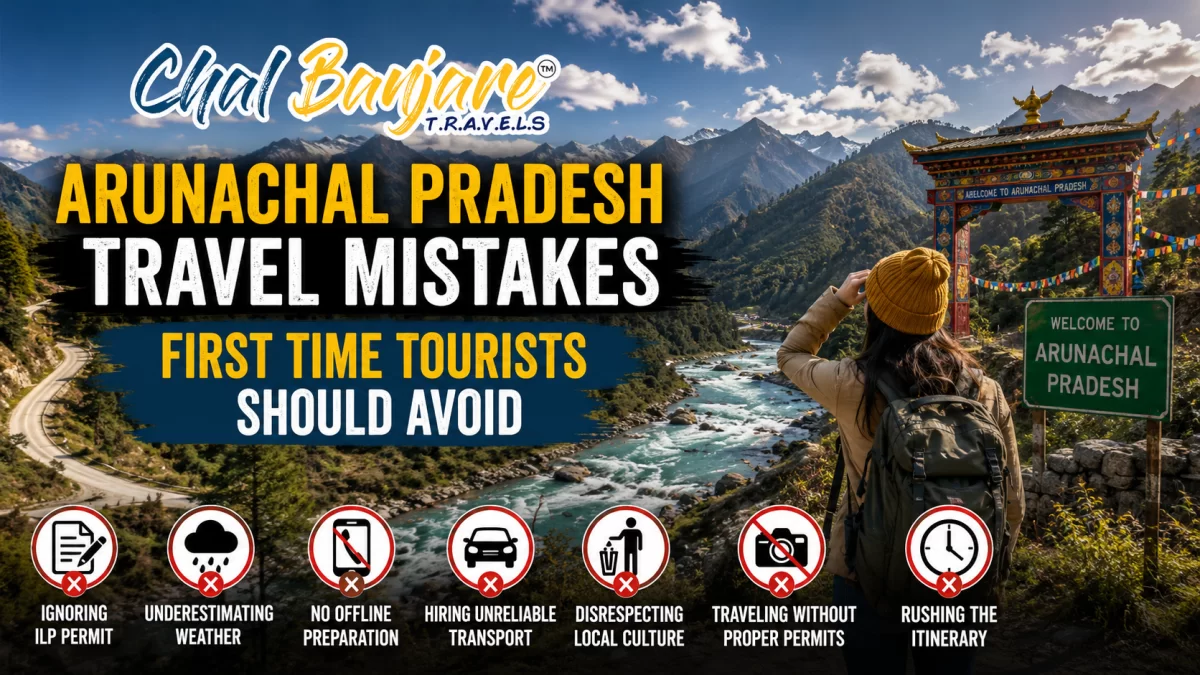
Arunachal Pradesh Travel Mistakes First Time Tourists Should Avoid

Arunachal Pradesh offers breathtaking Himalayan landscapes and offbeat mountain experiences, but first time travelers often make avoidable mistakes related to permits road journeys weather planning and remote travel conditions.

Travel Guide


24 May, 2026 By: Pema Khandu

Underestimating Travel Distances and Mountain Road Conditions

Assuming short distances mean quick travel times

One of the most common mistakes in Arunachal Pradesh is assuming that short distances on the map translate into quick travel times. In reality, the mountainous terrain significantly affects movement, where even a 50–100 km stretch can take several hours due to curves, elevation changes, and road conditions.

Travelers often miscalculate timing and end up with rushed or exhausting schedules because they underestimate how geography impacts road travel in the Himalayas.

It is one of the most frequently misunderstood aspects of Himalayan travel.

  • Map distance misinterpretation.
  • Slow mountain travel speeds.
  • Long travel durations.
  • Terrain-based delays.
  • Rushed itinerary risk.

Distance planning must consider terrain, not just kilometers.

Ignoring winding mountain roads and frequent travel delays

Arunachal Pradesh has extensive winding mountain roads that naturally slow down travel due to sharp bends, narrow stretches, and varying elevation levels. These conditions often lead to unpredictable delays, especially during monsoon or foggy weather.

Ignoring these factors can result in unrealistic schedules and increased travel fatigue, particularly when moving between remote destinations.

It is one of the most curve-heavy road networks in Northeast India.

  • Winding mountain highways.
  • Sharp bend sections.
  • Unpredictable delays.
  • Reduced travel speeds.
  • Fatigue due to long drives.

Mountain roads require patience and realistic timing.

Planning realistic daily driving schedules across Arunachal Pradesh

A realistic daily driving schedule is essential when traveling across Arunachal Pradesh. Instead of attempting to cover large distances in a single day, travelers should plan shorter segments with adequate rest stops in between.

This approach not only improves safety but also enhances the travel experience by allowing time to appreciate landscapes and avoid fatigue from continuous long-distance driving.

It is one of the most important planning strategies for Himalayan road trips.

  • Short daily travel segments.
  • Planned rest stops.
  • Reduced driving fatigue.
  • Safer road experience.
  • Better itinerary flow.

Realistic planning ensures safer and more enjoyable travel.

Ignoring Inner Line Permit and Travel Documentation Requirements

Understanding permit requirements before starting the journey

A common oversight among first-time travelers is not fully understanding the Inner Line Permit (ILP) requirements for entering Arunachal Pradesh. Indian citizens must obtain this permit before arrival, and it is checked at multiple entry points throughout the state.

Failing to secure permits in advance can lead to entry denial or delays at checkpoints, disrupting travel plans at the very beginning of the journey.

It is one of the most strictly regulated entry systems in Northeast India.

  • Mandatory ILP requirement.
  • Entry checkpoint verification.
  • Pre-travel approval needed.
  • Risk of entry denial.
  • Advance planning essential.

Permits must be arranged before entering Arunachal Pradesh.

Keeping identity documents readily available during travel

Throughout Arunachal Pradesh, travelers may encounter multiple checkpoints where identity and permit verification is required. Keeping physical copies and digital backups of important documents ensures smooth passage during these checks.

Failure to present proper documentation can result in unnecessary delays, especially in remote areas where verification processes may take additional time.

It is one of the most document-sensitive travel regions in the Himalayas.

  • Frequent checkpoint checks.
  • Document verification required.
  • Carry physical copies.
  • Digital backup recommended.
  • Avoid travel delays.

Proper documentation ensures uninterrupted travel flow.

Planning permits well before the travel date

Permits for Arunachal Pradesh should be arranged well in advance of the planned travel date to avoid last-minute complications. Processing time, especially during peak seasons, may vary depending on application volume and administrative procedures.

Early planning ensures smoother entry into the state and allows travelers to focus on itinerary design rather than logistical delays.

It is a critical step in responsible travel preparation.

  • Early permit application.
  • Avoid last-minute issues.
  • Peak season delays possible.
  • Smooth entry process.
  • Better travel planning.

Advance permit planning ensures a stress-free start to the journey.

Trying to Cover Too Many Destinations in One Trip

Rushing through Tawang Ziro and Mechuka in one itinerary

One of the most common planning mistakes in Arunachal Pradesh is attempting to include multiple major destinations like Tawang, Ziro, and Mechuka in a single short itinerary. While these places are all part of the same state, they are geographically distant and connected through long, winding mountain routes that require significant travel time.

Trying to combine them without realistic scheduling leads to rushed journeys where most of the time is spent on the road rather than experiencing each destination properly.

It is one of the most underestimated travel planning errors in the Himalayas.

  • Long inter-destination distances.
  • Geographically spread regions.
  • Heavy road travel time.
  • Rushed sightseeing schedules.
  • Limited experience depth.

Overpacking itineraries reduces travel quality significantly.

Missing local experiences because of tight schedules

When itineraries are overly packed, travelers often miss the slower, more meaningful local experiences that Arunachal Pradesh offers. Time spent rushing between destinations leaves little room for interacting with local communities, exploring villages, or appreciating natural surroundings.

This reduces the overall depth of the journey and limits exposure to the cultural richness and scenic diversity of the region.

It is one of the most overlooked aspects of fast travel in the Northeast.

  • Limited cultural interaction time.
  • Reduced village exploration.
  • Fast-paced travel stress.
  • Missed local experiences.
  • Low travel immersion.

Slow travel allows deeper connection with Arunachal Pradesh.

Allowing enough time for each destination

Proper planning in Arunachal Pradesh involves allocating sufficient time for each destination rather than attempting to cover too many places in a single trip. Each region has unique landscapes, cultural elements, and travel conditions that deserve time for exploration and rest.

By reducing the number of destinations and extending stays, travelers can experience the region more meaningfully while avoiding unnecessary travel fatigue.

It is one of the most effective strategies for quality travel in the Himalayas.

  • Balanced itinerary planning.
  • Extended destination stays.
  • Reduced travel fatigue.
  • Better cultural immersion.
  • Improved travel experience.

Fewer destinations lead to richer and more enjoyable travel experiences.

Choosing the Wrong Season for Your Travel Expectations

Expecting snowfall outside the winter season

A frequent misconception among travelers is expecting snowfall in Arunachal Pradesh throughout the year. In reality, snowfall is largely limited to specific high-altitude regions such as Sela Pass and Tawang during peak winter months, and not a year-round phenomenon.

Visiting during other seasons with the expectation of snow often leads to disappointment, as weather conditions vary significantly across months and elevations.

It is one of the most misunderstood seasonal expectations in Himalayan travel.

  • Snow limited to winter months.
  • High-altitude specific snowfall.
  • Seasonal variation significant.
  • Expectation mismatch risk.
  • Weather-dependent visibility.

Snow experiences depend entirely on correct seasonal planning.

Overlooking monsoon travel challenges and road disruptions

Monsoon in Arunachal Pradesh brings heavy rainfall that significantly affects travel conditions. Roads can become slippery, visibility can reduce due to fog, and occasional landslides may disrupt connectivity between destinations.

Travelers who ignore these seasonal challenges often face delays, itinerary changes, and reduced sightseeing opportunities during their trip.

It is one of the most weather-sensitive travel periods in the region.

  • Heavy rainfall impact.
  • Slippery mountain roads.
  • Reduced visibility conditions.
  • Possible landslides.
  • Travel delays common.

Monsoon travel requires realistic expectations and flexibility.

Matching travel plans with seasonal conditions

Choosing the right season is essential for a successful Arunachal Pradesh trip. Each season offers a different experience—winter brings snow in higher regions, monsoon enhances greenery but adds travel challenges, and summer provides more stable conditions for exploration.

Aligning travel goals with seasonal realities helps ensure that expectations match actual on-ground experiences across the state.

It is one of the most important planning decisions for Himalayan travel.

  • Season-specific experiences.
  • Weather-based planning.
  • Winter snow zones.
  • Monsoon greenery vs risk.
  • Better expectation alignment.

Seasonal alignment ensures a more satisfying travel experience.

Ignoring Weather and Road Condition Updates

Traveling without checking daily weather forecasts

One of the major mistakes in Arunachal Pradesh travel is starting journeys without reviewing daily weather forecasts. The region experiences rapid weather changes, especially in mountainous zones where clear skies can quickly turn into fog or heavy rain within hours.

Ignoring weather updates can lead to unexpected delays, reduced visibility, and uncomfortable driving conditions, particularly on long inter-destination routes.

It is one of the most weather-sensitive travel environments in Northeast India.

  • Rapid weather changes.
  • Reduced visibility risk.
  • Unplanned travel delays.
  • Mountain weather variability.
  • Safety-related concerns.

Weather awareness is essential before every travel day.

Overlooking temporary road closures and landslide alerts

Temporary road closures due to landslides or maintenance work are not uncommon in Arunachal Pradesh, especially during monsoon and winter seasons. Ignoring these updates can lead to blocked routes and forced itinerary changes mid-journey.

Staying informed through local sources helps travelers avoid unnecessary delays and choose safer alternative routes when required.

It is one of the most unpredictable road networks in the Himalayas.

  • Landslide-related closures.
  • Maintenance disruptions.
  • Unplanned route changes.
  • Local alert importance.
  • Travel unpredictability.

Ignoring alerts increases travel uncertainty and risk.

Staying flexible with travel plans during changing conditions

Flexibility is essential when traveling in Arunachal Pradesh, as weather and road conditions can shift quickly. Fixed itineraries often become difficult to follow when unexpected delays occur due to rain, fog, or terrain-related issues.

Adapting plans in real time ensures safer travel and allows better decision-making based on actual ground conditions rather than pre-planned schedules.

It is one of the most important travel strategies in the Himalayas.

  • Real-time plan adjustments.
  • Weather-based flexibility.
  • Safer decision-making.
  • Reduced itinerary stress.
  • Adaptive travel approach.

Flexibility ensures safer and smoother travel experiences.

Carrying Unsuitable Clothing for Mountain Weather

Packing only light clothing for high-altitude regions

A common mistake in Arunachal Pradesh travel is packing only light clothing without considering high-altitude temperature drops. Regions such as Tawang, Sela Pass, and other elevated areas can experience cold conditions even when lower valleys remain relatively mild.

Without adequate warm layers, travelers may feel uncomfortable during early mornings, evenings, or sudden weather shifts that are common in mountainous terrain.

It is one of the most frequent packing errors in Himalayan travel.

  • Underestimating cold temperatures.
  • High-altitude weather changes.
  • Insufficient warm clothing.
  • Evening temperature drops.
  • Layering importance ignored.

Proper layering is essential for mountain comfort and safety.

Forgetting rain protection during the monsoon season

During monsoon, forgetting waterproof clothing and rain protection can significantly affect travel comfort in Arunachal Pradesh. Continuous rainfall in many regions makes it essential to carry raincoats, waterproof shoes, and protective covers for belongings.

Without proper rain gear, travelers may struggle with wet conditions during sightseeing, walking, and long road journeys through forested and valley regions.

It is one of the most overlooked essentials during rainy season travel.

  • Heavy rainfall exposure.
  • Wet clothing discomfort.
  • Waterproof gear necessity.
  • Protection for belongings.
  • Monsoon travel essentials.

Rain protection is critical for monsoon travel comfort.

Dressing in layers for changing mountain temperatures

Arunachal Pradesh experiences frequent temperature variations due to altitude changes and shifting weather conditions. Dressing in layers helps travelers adapt to warm daytime temperatures in valleys and colder conditions in higher elevations.

Layered clothing allows flexibility, making it easier to adjust comfort levels throughout the day without being affected by sudden weather changes.

It is one of the most practical clothing strategies for mountain travel.

  • Temperature fluctuation adaptation.
  • Layer-based dressing system.
  • Comfort across altitudes.
  • Easy clothing adjustment.
  • Weather flexibility support.

Layered clothing ensures comfort in changing mountain conditions.

Ignoring Altitude and Physical Preparation for Higher Regions

Traveling too quickly to high-altitude destinations like Tawang

One of the most common mistakes in Arunachal Pradesh is ascending too quickly to high-altitude destinations such as Tawang without allowing the body sufficient time to adjust. Rapid elevation gain can make travelers feel uncomfortable, especially when moving directly from lowland areas to higher mountain zones.

Gradual ascent through stopovers like Dirang and Bomdila is important, as it helps the body adapt to changing oxygen levels and reduces the likelihood of fatigue during travel.

It is one of the most important acclimatization considerations in the Himalayas.

  • Rapid altitude gain risk.
  • Low oxygen adjustment needed.
  • Fatigue during ascent.
  • Stopover importance.
  • Gradual travel recommended.

Slow altitude gain improves travel comfort and safety.

Underestimating physical fatigue during mountain journeys

Traveling in Arunachal Pradesh often involves long hours on winding mountain roads, which can lead to physical fatigue even for experienced travelers. Continuous movement through curves, elevation changes, and varying road conditions can be more tiring than expected.

Underestimating this fatigue can reduce overall travel enjoyment and affect the ability to explore destinations comfortably upon arrival.

It is one of the most physically demanding travel environments in Northeast India.

  • Long road journey fatigue.
  • Continuous mountain driving.
  • Energy drain during travel.
  • Reduced sightseeing stamina.
  • Physical strain factors.

Mountain travel requires better physical preparation and pacing.

Taking adequate rest before exploring higher elevations

Adequate rest is essential before moving to higher elevations in Arunachal Pradesh, as fatigue from continuous travel can make altitude adjustment more difficult. Stopover towns provide an opportunity to recover and prepare for further ascent.

Proper rest improves overall comfort and reduces the chances of altitude-related discomfort, making the journey smoother and more enjoyable.

It is one of the most effective acclimatization practices in mountain travel.

  • Rest before ascent.
  • Fatigue recovery needed.
  • Better altitude adjustment.
  • Stopover planning essential.
  • Improved travel comfort.

Rest and acclimatization are key for safe high-altitude travel.

Expecting Luxury Tourism Facilities in Remote Destinations

Assuming every destination offers premium accommodation

A common misconception among travelers is expecting uniform luxury accommodation across Arunachal Pradesh. While some towns offer comfortable hotels, many regions—especially remote valleys and high-altitude areas—primarily feature basic hotels and homestays rather than premium resorts.

This difference in infrastructure often surprises visitors who expect standardized luxury services similar to mainstream tourist destinations in India.

It is one of the most unevenly developed tourism networks in the Himalayas.

  • Limited luxury properties.
  • Homestay-dominant stays.
  • Variable comfort levels.
  • Remote infrastructure gaps.
  • No standardized luxury network.

Accommodation varies widely across regions in Arunachal Pradesh.

Overlooking basic facilities in remote villages and valleys

In remote villages and valleys, travelers may encounter basic infrastructure conditions where amenities such as heating, hot water, or high-speed connectivity may not always be consistently available. These limitations are part of the region’s geography and development stage.

Understanding these conditions in advance helps travelers adjust expectations and prepare accordingly for a more comfortable and realistic experience.

It is one of the most authentic rural travel environments in Northeast India.

  • Basic rural infrastructure.
  • Limited modern amenities.
  • Variable connectivity.
  • Heating/water availability issues.
  • Authentic village conditions.

Remote travel requires realistic expectations about facilities.

Planning expectations according to the destination

A key aspect of successful travel in Arunachal Pradesh is aligning expectations with the type of destination being visited. Well-connected towns may offer better comfort, while remote areas prioritize natural immersion and cultural authenticity over luxury facilities.

Understanding this variation helps travelers choose suitable destinations and prepare appropriately for the level of comfort available during their journey.

It is one of the most important mindset adjustments for Himalayan travel.

  • Destination-based expectations.
  • Comfort varies by region.
  • Luxury not uniform.
  • Nature-focused experiences.
  • Mindset alignment needed.

Matching expectations to reality ensures a better travel experience.

Ignoring Fuel Cash and Network Connectivity Limitations

Driving long routes without planning fuel stops

One of the most critical mistakes in Arunachal Pradesh travel is not planning fuel stops in advance. Many routes pass through long stretches of mountains and valleys where fuel stations are sparse, and distances between towns can be significant.

Running low on fuel in remote areas can create serious challenges, especially when alternative stations are not immediately available within a short driving distance.

It is one of the most logistically sensitive aspects of Himalayan road travel.

  • Long fuel station gaps.
  • Remote highway stretches.
  • Limited refueling options.
  • High dependency on planning.
  • Risk of fuel shortage.

Fuel planning is essential for safe long-distance travel.

Depending entirely on digital payments in remote areas

Digital payments are widely used in urban areas, but in many parts of Arunachal Pradesh—especially remote villages and smaller towns—cash remains the primary mode of transaction. Depending entirely on online payment methods can lead to inconvenience during travel.

Connectivity issues can also disrupt digital transactions, making it important to carry sufficient cash for accommodation, food, and local transport needs.

It is one of the most practical travel considerations in remote regions.

  • Limited digital payment access.
  • Cash-dependent regions.
  • Connectivity-based issues.
  • Remote transaction gaps.
  • Essential cash planning.

Cash availability ensures smoother travel in remote areas.

Expecting uninterrupted mobile network connectivity everywhere

Mobile network coverage in Arunachal Pradesh varies significantly depending on location. While major towns may have stable connectivity, remote valleys, mountain passes, and forested areas often experience weak or no signal.

This can affect navigation, communication, and access to travel updates, making offline maps and pre-arranged plans essential for safe travel.

It is one of the most connectivity-limited regions in Northeast India.

  • Inconsistent mobile coverage.
  • Signal gaps in valleys.
  • Navigation limitations.
  • Offline tools required.
  • Remote communication issues.

Connectivity limitations require advance preparation.

Driving Carelessly on Arunachal Mountain Roads

Speeding on narrow mountain roads and sharp bends

One of the most dangerous mistakes in Arunachal Pradesh is driving too fast on narrow mountain roads. These routes often include sharp bends, steep slopes, and limited visibility where sudden obstacles can appear without warning.

Speeding reduces reaction time and increases the risk of accidents, especially in areas where road width is limited and guardrails may not always be present across long stretches.

It is one of the most high-risk behaviors in Himalayan road travel.

  • Narrow mountain roads.
  • Sharp curve sections.
  • Limited visibility zones.
  • Reduced reaction time risk.
  • High accident potential.

Controlled driving is essential for safety in mountain terrain.

Driving after dark in unfamiliar hill regions

Driving at night in Arunachal Pradesh is generally not recommended due to limited lighting, unpredictable road conditions, and the presence of sharp turns and uneven terrain. Visibility becomes significantly reduced after sunset, increasing the chances of misjudging curves or obstacles.

Unfamiliar drivers face even higher risks, as navigation becomes more challenging without clear landmarks or reliable network connectivity in remote stretches.

It is one of the most unsafe travel practices in the Himalayas.

  • Low visibility at night.
  • Unlit mountain roads.
  • Increased navigation difficulty.
  • Higher accident risk.
  • Unfamiliar terrain hazards.

Night driving should be avoided in mountain regions.

Following safe driving practices throughout the journey

Safe driving in Arunachal Pradesh requires maintaining moderate speed, staying alert on curves, and respecting road conditions at all times. Drivers should prioritize caution over speed, especially when navigating unfamiliar routes or changing weather conditions.

Taking regular breaks during long journeys and avoiding fatigue-related driving helps ensure safer travel across the state’s challenging terrain.

It is one of the most important safety disciplines for Himalayan road trips.

  • Moderate speed driving.
  • Alertness on curves.
  • Avoid night travel.
  • Regular rest breaks.
  • Safety-first approach.

Safe driving habits are essential for a secure Arunachal journey.

Ignoring Advance Hotel Bookings During Peak Season

Waiting until arrival to search for accommodation

One of the common mistakes in Arunachal Pradesh travel is assuming that accommodation can be easily found upon arrival. While some towns may have multiple options, availability can become limited during peak travel seasons, festivals, and school holidays.

Arriving without prior bookings often leads to time-consuming searches, higher prices, or settling for less suitable accommodation, especially in popular destinations like Tawang and Ziro Valley.

It is one of the most avoidable planning errors in mountain tourism.

  • Last-minute hotel searches.
  • Peak season scarcity.
  • Higher room rates.
  • Limited availability risk.
  • Time loss on arrival.

Advance booking ensures smoother travel experiences.

Facing limited availability during festivals and holidays

During festivals, long weekends, and holiday seasons, tourist influx increases significantly in Arunachal Pradesh’s popular destinations. This leads to reduced hotel availability, especially in well-connected towns where demand exceeds supply.

Travelers who do not book in advance may need to adjust their itinerary or travel further distances to find suitable accommodation.

It is one of the most demand-sensitive travel periods in the region.

  • Festival season crowding.
  • High accommodation demand.
  • Limited room availability.
  • Itinerary adjustments needed.
  • Early booking importance.

Peak seasons require advance planning for stays.

Reserving stays early for a smoother travel experience

Booking accommodation in advance helps ensure a smoother and more organized travel experience in Arunachal Pradesh. Early reservations provide better choices in terms of location, comfort, and pricing, especially in high-demand areas.

It also reduces uncertainty during travel and allows travelers to focus more on exploring destinations rather than searching for last-minute stays.

It is one of the most effective travel planning strategies in the Himalayas.

  • Better accommodation choices.
  • Reduced travel uncertainty.
  • Improved itinerary flow.
  • Location advantage.
  • Smoother travel experience.

Early booking ensures a stress-free travel journey.

Final Arunachal Pradesh Travel Planning Guide for First Time Tourists

Avoiding common mistakes for a smoother mountain journey

A successful first trip to Arunachal Pradesh depends largely on avoiding common planning and travel mistakes that many first-time visitors make. Underestimating distances, ignoring weather conditions, and overpacking itineraries often lead to rushed and tiring experiences instead of a relaxed Himalayan journey.

By understanding how mountain travel works and adjusting expectations accordingly, travelers can enjoy a more meaningful and stress-free experience across valleys, monasteries, and remote landscapes.

It is one of the most planning-sensitive destinations in Northeast India.

  • Avoid rushed itineraries.
  • Respect mountain distances.
  • Follow weather updates.
  • Plan realistic travel time.
  • Focus on fewer destinations.

Avoiding common mistakes greatly improves travel quality in Arunachal Pradesh.

Planning realistic routes based on season and travel time

Route planning in Arunachal Pradesh should always consider seasonal conditions, travel time, and road variability. Monsoon and winter conditions can significantly affect accessibility, while summer and post-monsoon periods generally offer more stable travel conditions.

Designing itineraries that account for these factors ensures smoother transitions between destinations and reduces the likelihood of unexpected delays or disruptions during the trip.

It is one of the most important aspects of Himalayan travel planning.

  • Season-based planning.
  • Realistic travel timing.
  • Weather-aware routing.
  • Flexible itinerary design.
  • Reduced travel disruptions.

Good route planning ensures a smoother and safer journey.

Essential tips for a successful first trip to Arunachal Pradesh

A first trip to Arunachal Pradesh becomes more successful when travelers focus on preparation, flexibility, and respect for local conditions. Carrying permits, booking stays in advance, and staying informed about weather and road updates are key to a smooth experience.

Keeping a relaxed mindset and allowing buffer time in the itinerary helps manage unexpected changes and enhances overall enjoyment of the region’s natural beauty and cultural richness.

It is one of the most rewarding Himalayan journeys when planned properly.

  • Carry all permits and IDs.
  • Book accommodations early.
  • Stay weather-aware.
  • Maintain flexible plans.
  • Allow buffer travel time.

Proper preparation ensures a safe and memorable Arunachal Pradesh experience.

Frequently Asked Questions About Arunachal Pradesh Travel Mistakes First Time Tourists Should Avoid

Many first time visitors underestimate mountain travel distances and road conditions. Journeys often take much longer than expected because of winding roads changing weather and remote terrain. Planning realistic travel times helps create a more comfortable and enjoyable experience.
Mountain highways steep terrain road repairs and weather conditions often slow travel. Destinations that appear close on maps may require several hours of driving. Building extra travel time into the itinerary helps avoid rushed sightseeing and unnecessary fatigue.
Domestic travelers must arrange the required permits before entering restricted regions. Incomplete paperwork or delayed approvals can affect travel plans. Keeping both printed and digital copies available throughout the journey helps avoid complications during checkpoint inspections.
Trying to visit too many destinations in a short period reduces sightseeing time and increases travel fatigue. Arunachal Pradesh is better explored at a slower pace allowing travelers to enjoy landscapes culture and local experiences more comfortably.
Different seasons bring different travel conditions. Winter snowfall may impact accessibility while monsoon can cause landslides and road disruptions. Understanding seasonal conditions before booking helps travelers match expectations with actual travel experiences.
Mountain weather can change rapidly with fog rain and road disruptions affecting daily travel. Monitoring forecasts and local road updates helps travelers make informed decisions and avoid unexpected delays during their trip.
Many travelers pack only for daytime temperatures and overlook cold mornings evenings and higher altitude conditions. Carrying layered clothing rain protection and comfortable footwear improves comfort throughout the journey.
Destinations such as Tawang and Sela Pass involve significant altitude gain. Travelers who do not prepare properly may experience fatigue headaches or discomfort. Staying hydrated resting adequately and traveling gradually helps improve comfort.
Many remote destinations focus more on natural beauty than tourism infrastructure. Smaller towns may offer simpler accommodations and fewer entertainment options. Understanding this beforehand helps set realistic travel expectations.
Network coverage can be limited in several remote regions. Travelers may experience weak signals or temporary connectivity issues. Downloading offline maps and keeping important travel information accessible can be helpful.
Digital payments may not work consistently in isolated mountain regions. Carrying sufficient cash provides flexibility for accommodation fuel food and local transportation where electronic payment systems may be unavailable.
Mountain roads often include narrow sections sharp bends steep climbs and changing weather conditions. Driving cautiously and avoiding unnecessary risks improves safety especially during long road journeys through remote areas.
Night driving can become more challenging because of reduced visibility fog rainfall and mountain road conditions. Travelers generally benefit from completing major road journeys during daylight hours whenever possible.
Popular destinations such as Tawang can experience limited accommodation availability during peak travel periods. Booking accommodations early helps avoid last minute difficulties and improves overall travel planning.
Successful trips usually involve realistic itineraries permit preparation weather monitoring advance bookings and careful road trip planning. Allowing flexibility and understanding mountain travel conditions helps create a more enjoyable experience.
Travelers should confirm permits accommodation bookings transportation arrangements weather forecasts fuel availability cash reserves and important contact details before beginning their Arunachal Pradesh journey.
Slower travel provides more time for sightseeing rest acclimatization and enjoying local experiences. It also reduces travel stress and allows visitors to appreciate the landscapes and culture without rushing between destinations.
Common mistakes include underestimating distances ignoring road conditions skipping weather checks carrying insufficient cash and planning too many destinations. Proper preparation helps reduce travel disruptions and improves the overall experience.

Explore Arunachal Pradesh Tour Packages

Explore All Packages

Latest Travel Blogs

View all Blogs β†’

Loved this place ? Let’s Plan Your Arunachal Pradesh Trip

Get customized Arunachal Pradesh tour planning designed around mountain road distances, permit requirements, seasonal weather windows, and realistic travel pacing. Whether you are visiting for monasteries, high-altitude passes, river valleys, tribal cultu

⚑ Quick Response | πŸ’° Free consultation | πŸ•’ 24Γ—7 expert support

×

Plan Your Trip