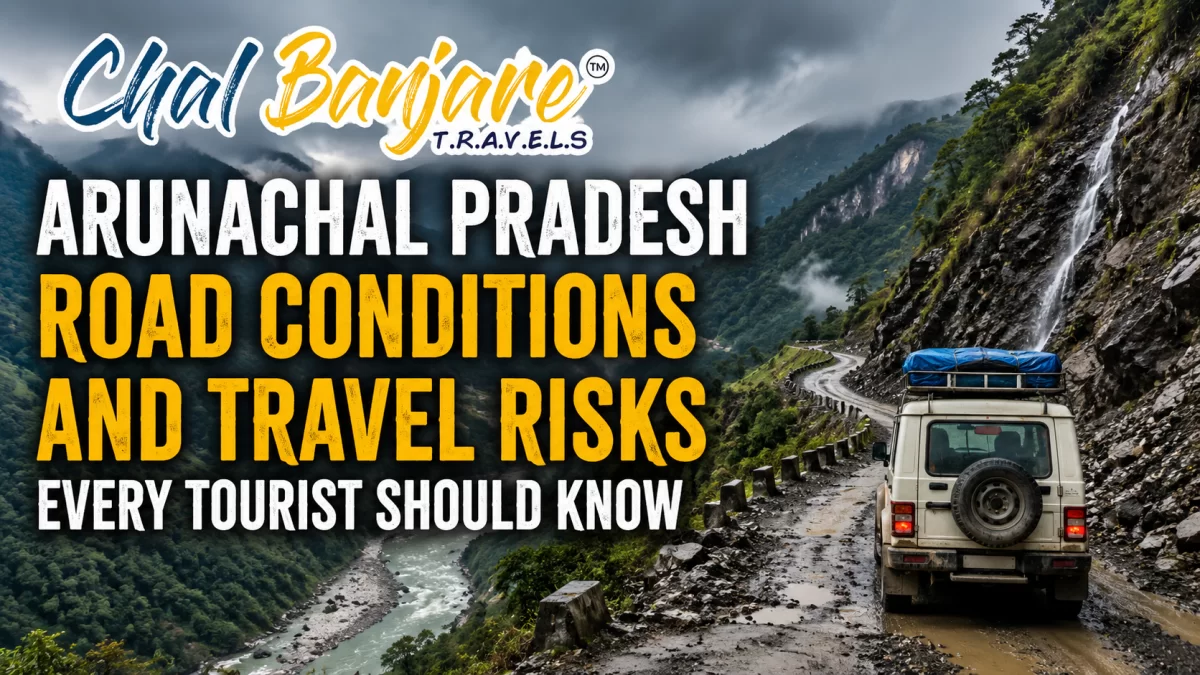
Homepage Banner

Arunachal Pradesh Road Conditions and Travel Risks Every Tourist Should Know

Arunachal Pradesh offers some of India’s most scenic Himalayan road trips, but remote mountain terrain, unpredictable weather, landslides, and long travel distances can create serious travel challenges for tourists.

Travel Guide


29 May, 2026 By: Pema Khandu

Understanding Arunachal Pradesh Road Travel Conditions

Understanding the terrain and driving conditions across the state

Arunachal Pradesh road travel is defined by its highly diverse and challenging terrain, where routes pass through dense forests, river valleys, steep climbs, and high-altitude mountain passes. Unlike plains highways, driving conditions change frequently from one region to another, making adaptability an important part of the journey.

Road surfaces may vary from well-paved highways near major towns to narrow, uneven stretches in remote areas. This variation requires consistent attention and cautious driving, especially when navigating unfamiliar routes across different districts of the state.

It is one of the most terrain-driven road networks in the Himalayas.

  • Mixed terrain driving conditions.
  • Forests, valleys, and mountains.
  • Variable road quality.
  • Frequent route changes.
  • Adaptive driving required.

Understanding terrain differences is essential for safe travel.

Why travel times are longer than expected on mountain roads

Travel times in Arunachal Pradesh are often longer than map estimates due to winding mountain roads, elevation changes, and narrow stretches that limit driving speed. Even short distances can take several hours depending on road conditions and weather.

Frequent curves, slow-moving traffic, and occasional roadworks or natural disruptions further contribute to extended travel durations across the region.

It is one of the most time-intensive travel regions in Northeast India.

  • Winding mountain roads.
  • Elevation-based delays.
  • Reduced driving speed.
  • Longer-than-expected journeys.
  • Terrain impact on timing.

Realistic time planning is essential for mountain travel.

Preparing for remote Himalayan road journeys

Many routes in Arunachal Pradesh pass through remote Himalayan regions where services like fuel stations, repair shops, and network connectivity may be limited. Proper preparation is essential before starting such journeys to ensure safety and convenience.

Travelers should plan fuel stops, carry essential supplies, and ensure their vehicle is well-maintained to handle long distances through isolated terrain without immediate support facilities.

It is one of the most remote road travel experiences in India.

  • Remote route conditions.
  • Limited service availability.
  • Fuel planning required.
  • Vehicle readiness important.
  • Self-sufficiency needed.

Preparation is key for safe remote Himalayan travel.

Road Conditions Vary Across Different Arunachal Regions

Comparing road conditions in Tawang, Ziro, Mechuka, and Dibang Valley

Road conditions in Arunachal Pradesh vary significantly across regions such as Tawang, Ziro, Mechuka, and Dibang Valley due to differences in altitude, terrain, and infrastructure development. Tawang has relatively established tourist routes, while Ziro offers smoother valley roads.

Mechuka and Dibang Valley, on the other hand, involve more remote and less developed roads where travel can be slower and more challenging, especially during adverse weather conditions.

It is one of the most geographically diverse road systems in the Himalayas.

  • Tawang well-established routes.
  • Ziro valley smoother roads.
  • Mechuka remote access roads.
  • Dibang Valley challenging terrain.
  • Infrastructure variation high.

Each region offers different levels of driving comfort.

Understanding highway routes versus remote mountain roads

Arunachal Pradesh features both highway routes connecting major towns and remote mountain roads leading to offbeat destinations. Highway sections are generally more stable and easier to drive on, while remote roads may be narrower, uneven, and less maintained.

Understanding this difference helps travelers mentally prepare for changing road conditions within a single trip and adjust driving expectations accordingly.

It is one of the most mixed road infrastructures in Northeast India.

  • Stable highway segments.
  • Remote narrow roads.
  • Uneven terrain stretches.
  • Maintenance variation.
  • Driving condition shift.

Expect a combination of smooth and rough road conditions.

Planning travel based on regional road accessibility

Planning travel in Arunachal Pradesh should always take regional road accessibility into account, as conditions can change due to weather, maintenance work, or seasonal disruptions. Some areas may become temporarily difficult to access during monsoon or winter.

Checking local updates and adjusting itineraries based on current accessibility helps ensure safer and more efficient travel across different parts of the state.

It is one of the most dynamic road networks in the Himalayas.

  • Weather-dependent access.
  • Seasonal road variation.
  • Route flexibility needed.
  • Local updates important.
  • Adjustable travel plans.

Real-time planning improves travel safety and efficiency.

Landslide Risks During Arunachal Road Trips

Understanding landslide-prone stretches during the rainy season

Landslides are one of the most significant natural risks affecting road travel in Arunachal Pradesh, especially during the monsoon season. Heavy rainfall loosens soil on steep mountain slopes, making certain stretches vulnerable to sudden blockages or partial road damage.

These conditions are more common in forested and high-gradient areas where roads are carved along hillsides, requiring extra caution while planning travel during rainy months.

It is one of the most weather-sensitive regions in the Eastern Himalayas.

  • Monsoon-triggered landslides.
  • Steep slope vulnerability.
  • Forest road exposure.
  • Sudden road blockages.
  • Seasonal risk increase.

Rainy season greatly increases landslide risk across mountain routes.

Preparing for temporary road closures and traffic delays

Due to landslides or ongoing road maintenance, temporary closures and traffic delays are common in Arunachal Pradesh. These disruptions can affect planned itineraries and extend travel times, especially on remote or single-lane mountain roads.

Travelers should always include buffer time in their schedule and remain flexible to route changes or waiting periods during road clearance operations.

It is one of the most unpredictable aspects of Himalayan road travel.

  • Temporary road closures.
  • Traffic delay risks.
  • Route diversions possible.
  • Buffer time required.
  • Unpredictable disruptions.

Flexibility is essential during landslide-prone travel conditions.

Following local travel advisories before driving

Checking local travel advisories before starting each day’s journey is crucial in Arunachal Pradesh, especially during the monsoon season. Authorities and locals often provide updates on road conditions, closures, or safer alternative routes.

Following these advisories helps avoid unnecessary risks and ensures that travelers choose the safest possible path through affected regions.

It is one of the most important safety practices in mountain travel.

  • Daily advisory checks.
  • Local guidance important.
  • Safer route selection.
  • Risk avoidance strategy.
  • Updated travel awareness.

Local updates significantly improve travel safety in landslide zones.

Monsoon Travel Challenges Tourists Should Understand

Heavy rainfall affecting visibility and driving conditions

Monsoon in Arunachal Pradesh brings heavy and continuous rainfall that directly affects driving visibility and road safety. Fog, mist, and rain can reduce the ability to see curves, oncoming vehicles, and road edges clearly, especially on mountain highways.

These conditions require slower driving speeds and increased caution, particularly in forested and high-altitude regions where weather changes can occur quickly.

It is one of the most visibility-challenging seasons in the Himalayas.

  • Heavy rainfall impact.
  • Reduced visibility conditions.
  • Fog and mist formation.
  • Slower driving required.
  • Mountain weather instability.

Monsoon driving requires heightened attention and caution.

Waterlogged roads and slower mountain travel during monsoon

During monsoon, some parts of Arunachal Pradesh experience waterlogging and reduced road quality due to continuous rainfall. This can slow down traffic movement and make certain stretches more difficult to navigate, especially in low-lying or poorly drained areas.

Travel times increase significantly during this season, requiring travelers to adjust their schedules and avoid tight itineraries.

It is one of the most travel-disruptive seasons in the region.

  • Waterlogged road sections.
  • Reduced driving speed.
  • Extended travel duration.
  • Drainage-related issues.
  • Seasonal disruptions common.

Monsoon conditions significantly slow down mountain travel.

Planning flexible itineraries during the rainy season

Flexible itineraries are essential during the monsoon season in Arunachal Pradesh due to unpredictable weather and road conditions. Fixed schedules may not always be practical when rainfall or landslides affect travel routes.

Allowing buffer days and avoiding tightly packed travel plans helps ensure a smoother experience, even when conditions change unexpectedly.

It is one of the most important planning strategies for monsoon travel.

  • Flexible travel schedules.
  • Buffer days recommended.
  • Weather-based adjustments.
  • Avoid tight itineraries.
  • Adaptive planning needed.

Flexibility ensures safer and more comfortable monsoon travel.

High-Altitude Road Conditions Near Tawang and Sela Pass

Driving through steep mountain roads and high-altitude passes

Roads leading to Tawang and Sela Pass involve some of the highest motorable routes in Arunachal Pradesh, where steep climbs, sharp bends, and continuous elevation changes are part of the journey. These stretches demand careful driving and consistent attention throughout the route.

The terrain becomes progressively more challenging as altitude increases, making it essential for travelers to maintain controlled speed and avoid sudden maneuvers on narrow sections.

It is one of the most demanding high-altitude drives in Northeast India.

  • Steep mountain ascents.
  • Sharp curve sections.
  • High-altitude driving.
  • Narrow road stretches.
  • Continuous elevation change.

Careful driving is essential in high-altitude regions like Tawang and Sela Pass.

Understanding weather changes at higher elevations

Weather conditions at higher elevations in Arunachal Pradesh can change rapidly, with clear skies shifting to fog, strong winds, or snowfall within a short time. These changes are more frequent near passes like Sela, where altitude amplifies weather unpredictability.

Travelers must remain prepared for sudden temperature drops and reduced visibility while moving through these regions.

It is one of the most unpredictable mountain climates in the Himalayas.

  • Rapid weather shifts.
  • Fog and snowfall risk.
  • Strong wind conditions.
  • Sudden temperature drops.
  • Visibility changes frequent.

High-altitude weather requires constant awareness and preparation.

Preparing for fog, snow, and reduced visibility

Fog, snow, and reduced visibility are common challenges on high-altitude routes in Arunachal Pradesh, especially during winter and transitional seasons. These conditions can make driving more difficult and require slower speeds and increased caution.

Proper planning, including checking forecasts and carrying appropriate gear, helps travelers manage these conditions safely while passing through mountainous terrain.

It is one of the most visibility-sensitive road environments in the Himalayas.

  • Fog and mist conditions.
  • Snowfall impact zones.
  • Reduced visibility risks.
  • Slower driving needed.
  • Weather preparedness essential.

Preparedness ensures safer travel through high-altitude passes.

Long Travel Durations Between Destinations

Understanding realistic driving times across Arunachal Pradesh

Travel distances in Arunachal Pradesh often require significantly more time than expected due to mountainous terrain and road conditions. Even routes that appear short on a map can take several hours to complete because of winding roads and elevation changes.

This makes it important for travelers to plan journeys based on realistic driving durations rather than distance alone, ensuring smoother and less rushed travel experiences.

It is one of the most time-intensive travel regions in the Himalayas.

  • Map vs actual time difference.
  • Long driving durations.
  • Mountain road delays.
  • Winding route impact.
  • Time-based planning needed.

Accurate timing expectations improve travel planning significantly.

Avoiding overpacked itineraries with excessive daily travel

Overpacked itineraries are a common issue in Arunachal Pradesh travel, where travelers try to cover too many destinations in limited time. This often results in long daily drives that reduce comfort and limit the time available for sightseeing.

A balanced itinerary with fewer destinations allows more meaningful exploration and reduces fatigue caused by continuous travel across mountainous terrain.

It is one of the most important planning adjustments for the region.

  • Avoid rushed schedules.
  • Limit daily destinations.
  • Reduce travel fatigue.
  • Improve sightseeing quality.
  • Balanced planning needed.

Fewer destinations lead to a better travel experience.

Planning comfortable overnight stops between destinations

Overnight stops are essential in Arunachal Pradesh due to long travel distances between major destinations. Towns like Bomdila and Dirang serve as important stopovers that help break long journeys into manageable segments.

These stops not only reduce driving fatigue but also assist with gradual acclimatization, especially when traveling toward higher altitude regions like Tawang.

It is one of the most practical strategies for Himalayan road trips.

  • Strategic stopover planning.
  • Reduced travel fatigue.
  • Better acclimatization.
  • Balanced journey segments.
  • Improved comfort levels.

Well-planned stops make long journeys more comfortable and safe.

Risks of Night Driving in Arunachal Pradesh

Reduced visibility on mountain roads after sunset

Night driving in Arunachal Pradesh is considered risky due to significantly reduced visibility on winding mountain roads. After sunset, curves, slopes, and road edges become harder to judge, especially in areas without proper street lighting.

Fog and mist conditions are also more common at night in higher elevations, further limiting visibility and making safe navigation difficult for unfamiliar drivers.

It is one of the most visibility-sensitive driving conditions in the Himalayas.

  • Low visibility at night.
  • Unlit mountain roads.
  • Fog and mist presence.
  • Sharp curve hazards.
  • Navigation difficulty increased.

Night driving significantly increases risk in mountain regions.

Limited roadside facilities in remote areas during the night

Many remote stretches in Arunachal Pradesh have limited roadside facilities, which become even less accessible during nighttime. Assistance, repair services, or fuel stations may not be available nearby if issues arise during travel.

This lack of support infrastructure makes night journeys more challenging, especially in isolated areas where traffic is minimal and settlements are far apart.

It is one of the most isolated travel networks in Northeast India.

  • Limited roadside assistance.
  • Few night facilities available.
  • Remote isolation risk.
  • Low traffic support.
  • Service accessibility issues.

Lack of facilities makes night travel unsafe in remote regions.

Planning journeys to reach destinations before dark

To ensure safety, it is strongly recommended to plan daily travel in Arunachal Pradesh so that destinations are reached before sunset. Daytime travel offers better visibility, easier navigation, and safer road conditions overall.

Arriving before dark also allows time for rest, accommodation check-in, and preparation for the next day’s journey without unnecessary pressure or risk.

It is one of the most important safety practices in Himalayan road travel.

  • Daylight travel preference.
  • Early arrival planning.
  • Better road visibility.
  • Safer navigation conditions.
  • Reduced travel risk.

Daytime travel ensures safer and more comfortable journeys.

Fuel Stations and Network Connectivity Limitations

Refueling before entering remote travel routes

Fuel stations in Arunachal Pradesh are not evenly distributed, especially in remote mountain regions. Travelers must ensure their vehicles are fully refueled before entering long stretches where petrol pumps may be scarce or widely spaced.

Proper fuel planning is essential to avoid the risk of running out of fuel in isolated areas where assistance may not be immediately available.

It is one of the most important logistical aspects of mountain road travel.

  • Limited fuel station availability.
  • Long distance gaps.
  • Remote route planning needed.
  • Pre-refueling essential.
  • High dependency on planning.

Fuel management is critical for safe remote travel.

Understanding mobile network availability across different regions

Mobile network coverage in Arunachal Pradesh varies significantly by region. While towns and major routes may have reliable connectivity, remote valleys and high-altitude areas often experience weak or no signal.

This can impact navigation, communication, and access to travel updates, making offline maps and pre-planned routes essential for safe travel.

It is one of the most connectivity-limited regions in Northeast India.

  • Variable network coverage.
  • Weak signal zones.
  • Remote communication gaps.
  • Navigation limitations.
  • Offline tools required.

Offline preparation ensures smoother travel in low-network areas.

Carrying cash for areas with limited digital payment options

In many parts of Arunachal Pradesh, especially remote villages and smaller towns, digital payment options may not always be reliable due to connectivity issues. Carrying sufficient cash is essential for accommodation, food, and local transport payments.

Relying solely on digital transactions can create difficulties during travel, making cash an important backup option throughout the journey.

It is one of the most practical travel requirements in remote regions.

  • Cash-based transactions common.
  • Digital payment limitations.
  • Connectivity-dependent systems.
  • Remote village challenges.
  • Essential financial backup.

Cash ensures smooth transactions in remote travel areas.

Weather-Related Travel Disruptions Tourists Should Expect

Sudden fog, rainfall, and mountain weather changes

Weather in Arunachal Pradesh is highly unpredictable, especially in mountainous regions where fog, rainfall, and cloud cover can develop suddenly. Even on clear mornings, conditions can shift within hours, affecting visibility and road safety.

These rapid changes are common in high-altitude zones and forested valleys, where temperature and air pressure variations influence local weather patterns throughout the day.

It is one of the most unstable weather systems in the Eastern Himalayas.

  • Sudden fog formation.
  • Unexpected rainfall.
  • Rapid cloud cover changes.
  • Visibility reduction risks.
  • Mountain climate variability.

Weather awareness is essential for safe daily travel planning.

Temporary roadblocks caused by adverse weather conditions

Adverse weather conditions such as heavy rain, landslides, or snowfall can lead to temporary roadblocks across Arunachal Pradesh. These disruptions may halt traffic for hours or require diversions through alternative routes.

Such situations are more common during monsoon and winter seasons, making flexibility an essential part of travel planning in the region.

It is one of the most unpredictable road networks in India.

  • Weather-triggered roadblocks.
  • Landslide disruptions.
  • Snowfall impact zones.
  • Temporary route closures.
  • Seasonal unpredictability.

Flexible planning helps manage unexpected travel disruptions.

Keeping buffer days for unexpected travel delays

Buffer days are highly recommended when planning a road trip in Arunachal Pradesh due to the possibility of weather-related delays. Sudden road closures or slow travel conditions can disrupt tightly packed itineraries.

Having extra days built into the schedule allows travelers to adjust plans without missing key destinations or rushing through the journey.

It is one of the most important planning strategies for Himalayan travel.

  • Buffer time essential.
  • Delay management support.
  • Flexible itinerary planning.
  • Weather disruption handling.
  • Reduced travel stress.

Buffer days ensure smoother and stress-free travel experiences.

Best Season for Safer Arunachal Pradesh Road Trips

Choosing spring and autumn for stable road conditions

Spring and autumn are generally considered the safest and most comfortable seasons for road trips in Arunachal Pradesh. During these periods, weather conditions are relatively stable, visibility is better, and roads are more accessible compared to monsoon and peak winter months.

These seasons also offer clearer mountain views and smoother travel conditions, making long road journeys more manageable and enjoyable for most travelers.

It is one of the most favorable travel windows in the Himalayas.

  • Stable weather conditions.
  • Better road accessibility.
  • Clear mountain views.
  • Reduced travel disruptions.
  • Ideal driving conditions.

Spring and autumn offer the most reliable road travel conditions.

Understanding seasonal driving challenges throughout the year

Each season in Arunachal Pradesh presents different driving challenges. Monsoon brings heavy rain and landslide risks, winter introduces fog and snowfall in high-altitude areas, while summer offers relatively stable but occasionally wet conditions.

Understanding these seasonal variations helps travelers choose appropriate travel times and prepare accordingly for road conditions and weather changes.

It is one of the most seasonally dynamic travel regions in India.

  • Monsoon rainfall challenges.
  • Winter fog and snow.
  • Summer mixed conditions.
  • Seasonal road variability.
  • Weather-based planning needed.

Seasonal awareness improves travel safety and planning.

Planning the journey according to weather and destination

The safest approach to planning a road trip in Arunachal Pradesh is aligning travel schedules with both weather conditions and destination type. High-altitude regions require stable weather windows, while lower valleys may be accessible for longer periods.

Matching itinerary timing with seasonal conditions ensures safer travel, better road access, and a more comfortable overall experience across different regions of the state.

It is one of the most important planning strategies for Himalayan road travel.

  • Weather-based planning.
  • Destination-specific timing.
  • Safer travel windows.
  • Better road access.
  • Flexible itinerary design.

Good timing ensures a safer and smoother Arunachal road trip.

Final Arunachal Pradesh Road Safety and Travel Planning Guide

Understanding road risks before starting the journey

A road trip in Arunachal Pradesh requires a clear understanding of the natural and logistical risks involved in mountain travel. The combination of steep terrain, variable weather, and remote infrastructure means that driving conditions can change quickly and often without warning.

Being aware of these factors before starting the journey helps travelers make informed decisions about routes, timing, and daily travel limits, reducing unnecessary risk during the trip.

It is one of the most condition-sensitive road travel regions in India.

  • Mountain terrain risks.
  • Weather unpredictability.
  • Remote road conditions.
  • Changing travel situations.
  • Pre-trip awareness essential.

Understanding risks is the first step to safe travel planning.

Planning a safer and more comfortable Arunachal Pradesh road trip

A safer and more comfortable road trip in Arunachal Pradesh depends on balanced planning that includes realistic travel distances, proper rest stops, and seasonal awareness. Avoiding rushed itineraries and allowing flexibility for weather changes greatly improves the overall experience.

Comfort also increases when travelers prioritize well-maintained vehicles, early bookings, and gradual altitude gain through planned stopovers in towns like Bomdila and Dirang.

It is one of the most rewarding but planning-intensive journeys in the Himalayas.

  • Balanced itinerary planning.
  • Flexible travel schedule.
  • Proper stopover selection.
  • Vehicle readiness important.
  • Season-aware planning.

Smart planning ensures a safe and enjoyable Himalayan road journey.

Essential checklist for driving across Arunachal Pradesh

Before beginning a road trip in Arunachal Pradesh, travelers should complete a final checklist that includes permits, vehicle inspection, accommodation bookings, and awareness of weather and road conditions. These preparations reduce uncertainty and improve travel confidence.

Carrying cash, planning fuel stops, and keeping offline navigation tools ready are equally important, especially when traveling through remote areas with limited connectivity and infrastructure.

It is one of the most essential preparation phases for Himalayan travel.

  • Permit and document check.
  • Vehicle condition readiness.
  • Advance hotel bookings.
  • Fuel and cash planning.
  • Offline navigation setup.

A complete checklist ensures a smooth, safe, and well-prepared Arunachal road trip.

Frequently Asked Questions About Arunachal Pradesh Road Conditions and Travel Risks Every Tourist Should Know

Road conditions in Arunachal Pradesh vary significantly between regions. Travelers can encounter mountain highways steep climbs narrow roads and remote terrain. Travel times are often longer than expected due to road conditions weather changes and challenging Himalayan geography.
Even short distances on maps can require many hours of driving. Mountain roads sharp bends altitude changes and slower travel speeds make journeys longer. Travelers should plan realistic schedules and avoid assuming highway travel times common in other regions.
Routes toward remote destinations such as Mechuka and high altitude regions around Tawang often involve more difficult road conditions. Travelers should understand route characteristics before departure and allow additional time for mountain driving and weather related delays.
Landslides can occur during periods of heavy rainfall especially in mountainous areas. Falling rocks blocked roads and temporary disruptions may affect travel plans. Monitoring local conditions and keeping flexible itineraries can help travelers manage unexpected road closures.
Monsoon travel can be more challenging because of rainfall muddy roads reduced visibility and landslide risks. Travelers should expect possible delays and maintain flexible schedules when visiting during the rainy season across mountain regions.
Fog can reduce visibility on mountain roads especially across valleys and high altitude routes. Lower visibility may slow travel and increase driving difficulty. Travelers should plan carefully and avoid unnecessary driving during poor weather conditions.
Roads near Tawang include steep mountain sections high altitude terrain and weather affected stretches. Conditions can become more challenging during snowfall and cold weather. Travelers should be prepared for slower travel and changing road situations.
Snowfall may affect road accessibility around Tawang and Sela Pass during winter. Travel conditions can change quickly due to weather. Checking updates before departure helps travelers understand possible restrictions and route challenges.
Night driving is generally more difficult because of reduced visibility remote terrain and limited roadside support. Many travelers prefer completing journeys during daylight hours for a safer and more comfortable mountain travel experience.
Fuel stations are available in major areas but may be limited in remote regions. Travelers should plan refueling carefully before entering isolated valleys and longer mountain routes where services may be less frequent.
Network coverage may become weaker in remote valleys and mountain areas. Travelers should download offline maps and keep important contact information available because connectivity can be inconsistent during parts of the journey.
Carrying cash is recommended because digital payment systems may not always function reliably in remote locations. Having cash available can help travelers manage expenses when network connectivity or payment systems become unavailable.
Weather can affect travel frequently through rain fog snowfall and changing mountain conditions. These disruptions may create delays or slower travel times. Travelers should monitor forecasts regularly and remain flexible with their plans.
Summer and autumn generally provide more stable weather and easier road accessibility across many regions. These seasons often offer clearer travel conditions compared to monsoon months and winter periods with snowfall.
Including buffer days is strongly recommended because road conditions weather disruptions and long travel durations can affect schedules. Extra days provide flexibility and reduce stress when unexpected delays occur during the journey.
Travelers should review permits weather forecasts accommodation plans fuel availability and road conditions before departure. Proper preparation helps improve safety and ensures a more comfortable experience across remote mountain regions.
Different regions have different road conditions travel speeds and accessibility challenges. Understanding routes in advance helps travelers choose suitable destinations estimate travel times accurately and avoid unnecessary difficulties during the journey.
First time visitors should understand risks related to long driving hours weather disruptions landslides remote terrain limited services and changing road conditions. Careful planning and realistic expectations help create a safer travel experience.

Explore Arunachal Pradesh Tour Packages

Explore All Packages

Latest Travel Blogs

View all Blogs β†’

Loved this place ? Let’s Plan Your Arunachal Pradesh Trip

Get customized Arunachal Pradesh tour planning designed around mountain road distances, permit requirements, seasonal weather windows, and realistic travel pacing. Whether you are visiting for monasteries, high-altitude passes, river valleys, tribal cultu

⚑ Quick Response | πŸ’° Free consultation | πŸ•’ 24Γ—7 expert support

×

Plan Your Trip