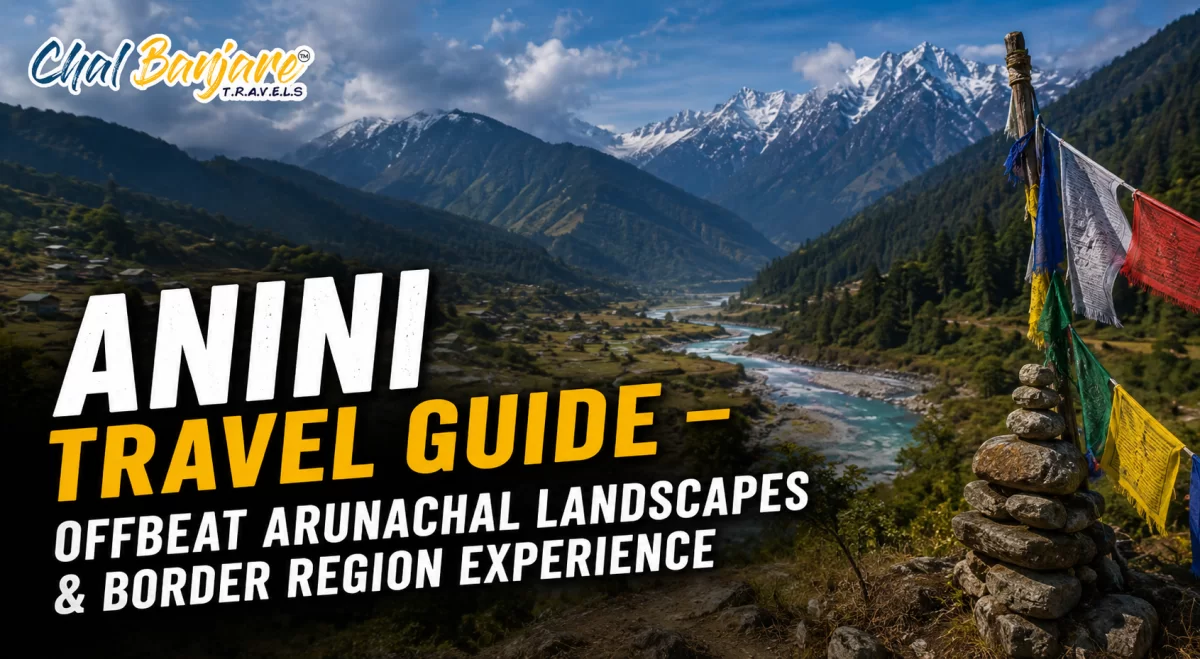
Homepage Banner

Anini Travel Guide – Offbeat Arunachal Landscapes & Border Region Experience

Anini is one of India’s most remote and untouched destinations, offering dramatic mountain landscapes, pristine rivers, high-altitude valleys, tribal culture, and a true frontier experience in Arunachal Pradesh’s Dibang Valley region.

Travel Guide


15 Jun, 2026 By: Pema Khandu

Anini overview and travel planning basics

Understanding what makes Anini unique for remote Himalayan travel

Anini is one of the most remote and least explored destinations in Arunachal Pradesh, located deep inside the Dibang Valley near the Indo-China border. Surrounded by dense forests, snow-fed rivers, rolling mountains, and vast untouched landscapes, it offers an extremely raw Himalayan experience. Unlike more accessible hill stations, Anini feels isolated, quiet, and deeply connected to nature, where human presence is minimal and the environment dominates every view.

What makes Anini unique is its sense of remoteness and purity. The journey itself is long and challenging, passing through narrow mountain roads, river valleys, and forested terrain. Once reached, the valley rewards travelers with vast open scenery, silence, and a feeling of complete disconnection from modern urban life, making it one of India’s most untouched Himalayan destinations.

  • Extremely remote Himalayan destination in Dibang Valley.
  • Surrounded by forests, rivers, and mountains.
  • Very low tourist footfall.
  • Raw and untouched natural environment.
  • Deep sense of isolation and peace.

Anini offers a rare Himalayan experience where nature remains completely dominant and tourism is still minimal.

Why Anini is one of Arunachal Pradesh's least explored destinations

Anini remains one of the least explored destinations in Arunachal Pradesh primarily due to its difficult accessibility and long travel distances. Reaching the region requires multiple days of driving through remote highways, often passing through limited infrastructure zones and sparsely populated areas. This natural isolation has helped preserve its untouched environment and traditional lifestyle.

Unlike popular destinations such as Tawang or Ziro, Anini does not fall on mainstream tourist circuits. The lack of commercial development, combined with challenging weather and road conditions, keeps visitor numbers low, making it an ideal destination for experienced travelers seeking offbeat Himalayan exploration.

  • Long and challenging road access.
  • Not part of mainstream tourist circuits.
  • Limited infrastructure and facilities.
  • Remote border-region location.
  • Preserved natural environment due to isolation.

Anini’s remoteness is what preserves its untouched charm and makes it a true hidden gem of Arunachal Pradesh.

Setting realistic expectations for roads weather and connectivity

Travel to Anini requires strong preparation due to extremely challenging road conditions and unpredictable weather patterns. The journey involves long stretches of narrow mountain roads, river crossings, and areas prone to landslides, especially during monsoon season. Travel times are often longer than expected, and delays are common due to natural conditions.

Connectivity in Anini is very limited, with weak or inconsistent mobile networks and minimal internet access. Weather can shift rapidly, especially in winter and monsoon months, making flexibility essential. Travelers should be fully self-sufficient and prepared for basic living conditions throughout the trip.

Aspect Reality Travel Advice
Roads Rough and long mountain routes Allow extra travel days
Weather Highly unpredictable Carry layered clothing
Connectivity Very weak mobile signal Download offline essentials
Facilities Basic infrastructure only Prepare for remote travel

Understanding these realities is essential for a safe and smooth journey to Anini.

Understanding the Dibang Valley region

Exploring the geography and landscapes of Dibang Valley

Dibang Valley, where Anini is located, is one of the most geographically diverse and least disturbed regions in India. It is characterized by steep mountains, deep valleys, dense forests, and powerful river systems that shape the entire landscape. The Dibang River and its tributaries carve through the region, creating dramatic terrain and fertile valleys that remain largely untouched by human development.

The region’s geography plays a key role in its isolation. High mountain ranges, limited road connectivity, and dense forest cover make access difficult, preserving its natural environment. This creates a rare ecosystem where biodiversity thrives without major human interference, making Dibang Valley scientifically and ecologically significant.

  • Deep river valleys and mountain ranges.
  • Dibang River ecosystem.
  • Dense forest cover and biodiversity.
  • Highly rugged terrain structure.
  • Minimal human disturbance.

Dibang Valley is one of the last truly untouched Himalayan landscapes in India.

Understanding why the region attracts offbeat travelers

Dibang Valley attracts offbeat travelers because it offers something increasingly rare—complete isolation, raw natural beauty, and minimal tourism infrastructure. Unlike mainstream destinations, there are no large resorts or commercial attractions here. Instead, travelers experience nature in its purest form, along with authentic tribal culture and silence that is hard to find elsewhere.

This region appeals particularly to adventure seekers, photographers, and travelers looking for deep immersion rather than comfort-driven tourism. The journey itself becomes part of the experience, with long scenic drives and unpredictable road conditions adding to the sense of exploration and discovery.

  • Ideal for offbeat and adventure travelers.
  • Minimal tourism commercialization.
  • Raw natural and cultural experiences.
  • High sense of isolation and silence.
  • Strong appeal for photographers and explorers.

Dibang Valley is a destination for those who seek untouched Himalayan experiences rather than conventional tourism.

Experiencing one of India's most untouched Himalayan areas

Dibang Valley represents one of the most untouched Himalayan ecosystems in India, where forests, rivers, and mountains exist in their natural state with very little human interference. The region supports rare wildlife, dense vegetation, and traditional tribal settlements that continue to follow age-old ways of life.

For travelers, this translates into an experience that is both visually stunning and deeply peaceful. There are no crowds, no urban noise, and very few modern distractions, allowing full immersion into nature. This untouched character makes Dibang Valley a unique and valuable part of India’s natural heritage.

Element Description Experience
Forests Dense and biodiverse Wild nature experience
Rivers Fast-flowing pristine waters Scenic landscapes
Villages Traditional tribal settlements Cultural immersion
Environment Unspoiled Himalayan ecosystem Pure wilderness travel

Dibang Valley remains one of the last strongholds of untouched Himalayan wilderness in India.

Best places to visit in Anini

Exploring scenic valleys rivers and mountain landscapes

Anini is surrounded by vast, untouched Himalayan scenery where deep valleys, fast-flowing rivers, and forested mountain ranges define the landscape. The Dibang River and its tributaries carve through the region, creating dramatic natural formations and wide open views that feel completely raw and uncommercialized. Every direction in Anini offers a sense of isolation and scale, making it ideal for travelers who appreciate pure wilderness.

The valley landscapes change continuously with altitude and weather conditions. Mist often settles over river bends in the early morning, while clear afternoons reveal long stretches of green hills and distant snow peaks. These natural transitions make even simple drives around Anini visually rewarding and immersive.

  • Dibang River valley landscapes.
  • Dense forest-covered mountain ranges.
  • Wide open Himalayan views.
  • Misty morning river scenery.
  • Remote and untouched natural environment.

Anini’s natural beauty lies in its raw and uninterrupted Himalayan wilderness.

Visiting peaceful villages and remote natural attractions

The villages around Anini are small, remote, and deeply connected to the natural environment. These settlements reflect traditional tribal lifestyles, with wooden homes, simple farming practices, and strong community bonds. Visiting these villages offers a rare opportunity to experience life in one of India’s most isolated regions.

In addition to villages, the surrounding region includes untouched natural attractions such as riverbanks, forest trails, and quiet open spaces. These areas are not developed for tourism, which makes exploration more authentic and closely connected to nature.

  • Remote tribal villages.
  • Traditional wooden houses.
  • Simple agricultural lifestyle.
  • Undisturbed riverbanks and forests.
  • Authentic rural Himalayan experience.

Villages around Anini offer a deeply authentic glimpse into remote Himalayan life.

Choosing places based on available travel time and road conditions

Due to the remote nature of Anini, travel between attractions depends heavily on road conditions and available time. Many routes are long, slow, and affected by weather, so planning fewer destinations with more time spent at each location is the most practical approach. Rushing through the region can reduce the quality of the experience.

Short visits typically focus on nearby river valleys and accessible viewpoints, while longer stays allow deeper exploration of remote villages and forested areas. Flexibility is essential, as travel times can vary significantly in this part of Arunachal Pradesh.

Duration Recommended Coverage Travel Style
2 Days Nearby valleys and rivers Quick exploration
3–4 Days Villages + viewpoints + forests Balanced travel
5+ Days Deep remote exploration Immersive slow travel

Proper planning ensures a comfortable and meaningful experience in Anini’s remote Himalayan environment.

Best nature experiences around Anini

Exploring forests alpine meadows and mountain rivers

Anini is surrounded by dense forests, alpine meadows, and fast-flowing mountain rivers that create one of the most pristine natural environments in Arunachal Pradesh. The forests here are thick and biodiverse, hosting a variety of flora and fauna that thrive in the untouched Himalayan ecosystem. Open meadows appear between forest patches, offering wide green spaces surrounded by towering hills.

The rivers in the region, fed by Himalayan glaciers and rainfall, cut through deep valleys and rocky terrain, forming natural pools and scenic riverbanks. These water systems not only shape the landscape but also provide some of the most peaceful and visually striking natural spots for travelers.

  • Dense Himalayan forest ecosystems.
  • Alpine meadows and green valleys.
  • Glacier-fed mountain rivers.
  • Natural riverbanks and pools.
  • Rich biodiversity and untouched nature.

Anini’s natural environment feels completely raw, offering an immersive wilderness experience.

Discovering untouched Himalayan landscapes across Dibang Valley

The Dibang Valley region around Anini is one of the least disturbed Himalayan landscapes in India. Vast stretches of land remain untouched by large-scale development, allowing mountains, forests, and rivers to exist in their natural state. This creates an environment where nature dominates the scenery without interruption.

Travelers moving through the valley encounter constantly changing landscapes—from deep river gorges to wide open plateaus and forested slopes. The lack of urbanization ensures that every viewpoint feels raw and unfiltered, offering a true sense of Himalayan wilderness.

  • Unspoiled Himalayan terrain.
  • Wide and remote valley landscapes.
  • Minimal human interference.
  • Constantly changing natural scenery.
  • True wilderness experience.

Dibang Valley preserves one of India’s most untouched natural environments.

Enjoying peaceful outdoor experiences away from tourist crowds

One of the most defining features of Anini is its complete absence of tourist crowds, allowing travelers to enjoy nature in absolute silence. Outdoor experiences here are not structured or commercialized but naturally formed by the landscape itself. This includes walking along rivers, exploring forest edges, or simply sitting in open valleys surrounded by mountains.

The silence and isolation create a deep sense of peace that is rare in most travel destinations. Without noise or congestion, travelers can fully immerse themselves in the natural rhythm of the Himalayas, making every outdoor experience more personal and reflective.

  • Zero crowd tourism experience.
  • Natural and unstructured outdoor activities.
  • Peaceful river and valley exploration.
  • Deep silence and isolation.
  • Ideal for reflection and relaxation.

Anini offers outdoor experiences defined by silence, space, and pure Himalayan nature.

Best viewpoints in the Anini region

Discovering panoramic mountain viewpoints across Dibang Valley

Anini and the wider Dibang Valley region offer vast, open viewpoints where mountains, rivers, and forests stretch endlessly into the horizon. These viewpoints are often naturally formed along ridges, river bends, and high road sections rather than developed tourist spots. The sheer scale of the landscape makes every stop feel immersive, with uninterrupted views of untouched Himalayan terrain.

Because the region is so remote, viewpoints here feel raw and authentic. There are no crowds or barriers—just open land, shifting clouds, and deep valleys. This simplicity allows travelers to experience the Himalayas in their purest visual form.

  • Wide, untouched Himalayan panoramas.
  • Natural ridge and roadside viewpoints.
  • Forest and valley combinations.
  • Uncommercialized scenic locations.
  • Expansive Dibang Valley landscapes.

Every viewpoint in Anini feels like a window into untouched Himalayan wilderness.

Enjoying sunrise and sunset over remote Himalayan peaks

Sunrise and sunset in Anini transform the valley into a dramatic play of light and shadow. In the early morning, mist rises from the valleys while golden sunlight slowly touches the mountain peaks, revealing layers of hills and rivers. The silence during these hours enhances the feeling of isolation and natural beauty.

Evenings are equally captivating, as the setting sun paints the sky in warm tones that reflect off rivers and distant slopes. Because of the lack of artificial lighting, the sky remains clear and deeply visible, making these moments ideal for both photography and quiet reflection.

  • Misty sunrise over valleys.
  • Golden light on mountain peaks.
  • Clear, unpolluted evening skies.
  • Reflections on rivers during sunset.
  • Peaceful, silent surroundings.

Sunrise and sunset in Anini offer some of the most peaceful Himalayan viewing experiences in Arunachal Pradesh.

Finding the best locations for valley and river views

The best valley and river viewpoints in Anini are often located along winding roads, riverbanks, and elevated clearings. These natural stops provide sweeping views of the Dibang River cutting through deep valleys, surrounded by dense forests and mountain ranges. Each location offers a slightly different perspective depending on elevation and direction.

Since many viewpoints are unmarked and undiscovered, travelers often find the most beautiful spots through slow exploration. Weather conditions also play a major role, with clouds, mist, and sunlight constantly changing the scenery throughout the day.

Viewpoint Type Main Feature Best Time
Roadside Stops Wide valley views Anytime
Riverbanks Flowing Dibang River scenes Morning
High Ridges Panoramic mountain views Sunrise/Sunset
Forest Edges Misty landscapes Early morning

Anini rewards travelers who explore slowly and observe changing natural conditions at each viewpoint.

Best photography experiences in Anini

Capturing dramatic mountain landscapes and pristine valleys

Anini is one of the most visually powerful photography destinations in Arunachal Pradesh, offering vast, untouched landscapes where mountains, valleys, and rivers come together in dramatic compositions. The scale of the terrain allows for wide-angle shots that capture the raw essence of the Dibang Valley without any urban interruption.

Light plays a major role in shaping the scenery, with shifting clouds and mist creating dynamic conditions throughout the day. Every frame feels natural and unfiltered, making Anini ideal for photographers seeking authentic Himalayan wilderness imagery.

  • Wide-angle Himalayan landscapes.
  • Untouched valley compositions.
  • Dramatic light and shadow play.
  • Misty mountain atmospheres.
  • Pure wilderness photography scenes.

Anini offers photography opportunities that feel completely raw and naturally cinematic.

Photographing rivers forests and traditional villages

The Dibang River and its tributaries provide excellent subjects for nature photography, with flowing water cutting through deep valleys and reflecting surrounding mountains. Forests add texture and depth to compositions, especially when mist settles between trees, creating layered visual effects.

Traditional villages in the region further enhance storytelling opportunities, showcasing wooden homes, agricultural fields, and daily tribal life. These elements allow photographers to combine natural and cultural narratives in a single frame.

  • River-based landscape photography.
  • Misty forest compositions.
  • Traditional village scenes.
  • Natural reflections and textures.
  • Cultural storytelling visuals.

Anini’s combination of nature and culture creates deeply expressive photography opportunities.

Finding the best locations for landscape and nature photography

The best photography locations in Anini are not fixed points but naturally occurring viewpoints along roads, river bends, and open valleys. Because the region is largely undeveloped, photographers must explore actively and respond to changing light and weather conditions to find the most compelling compositions.

Early morning and late afternoon are especially rewarding, as soft light enhances the depth of valleys and highlights textures in forests and rivers. Patience and flexibility are essential for capturing the full beauty of the region.

Location Type Main Subject Best Time
Valley Roads Wide landscape shots Morning
Riverbanks Flowing water scenes Sunrise
Forest Areas Misty nature shots Early morning
Open Slopes Sunset panoramas Evening

Anini rewards photographers who embrace patience, exploration, and natural light changes.

Best tribal and cultural experiences

Discovering the traditions of the Idu Mishmi community

Anini is the heartland of the Idu Mishmi tribe, one of the most unique indigenous communities in Arunachal Pradesh. Their traditions are deeply connected to the forests, rivers, and mountains of the Dibang Valley, shaping a lifestyle that has remained closely tied to nature for generations. The community follows a blend of animistic beliefs and traditional practices that emphasize harmony between humans and the natural world.

Daily life in Idu Mishmi settlements reflects simplicity, self-sufficiency, and strong community bonds. Agriculture, hunting traditions, and forest-based knowledge play an important role in sustaining their way of life, while cultural identity is preserved through oral stories, rituals, and seasonal practices.

  • Indigenous Idu Mishmi tribal community.
  • Deep connection with forests and nature.
  • Traditional animistic cultural beliefs.
  • Strong community-based lifestyle.
  • Oral traditions and ancestral knowledge.

The Idu Mishmi culture offers a rare glimpse into one of India’s most ancient Himalayan traditions.

Exploring local villages handicrafts and regional customs

Villages in and around Anini are small, remote, and built in harmony with the surrounding landscape. Wooden houses raised on stilts, bamboo structures, and simple farming fields reflect the practical adaptation of people to the mountainous environment. These villages are not designed for tourism but remain living cultural spaces.

Handicrafts such as woven items, bamboo tools, and traditional ornaments are an essential part of local culture. These crafts are created using natural materials and passed down through generations. Customs and rituals are closely linked to agricultural cycles, forest resources, and community events.

  • Traditional wooden and bamboo houses.
  • Rural farming-based lifestyle.
  • Handmade tribal crafts and tools.
  • Seasonal cultural rituals.
  • Authentic village environments.

Local villages in Anini preserve a deeply rooted and authentic Himalayan tribal lifestyle.

Experiencing authentic tribal life in remote Arunachal Pradesh

Life in Anini reflects one of the most untouched tribal environments in India, where modern influence is minimal and traditions remain strong. The Idu Mishmi people live in close connection with nature, relying on forests, rivers, and seasonal cycles for their livelihood and cultural practices. This creates a lifestyle that is slow, balanced, and deeply rooted in the natural environment.

Visitors often experience genuine hospitality in homestays or village interactions, where daily routines, meals, and conversations offer insight into local life. Unlike commercial tourist destinations, these experiences are authentic, simple, and deeply immersive.

Cultural Aspect Description Visitor Experience
Tribal Lifestyle Nature-based living system Authentic cultural immersion
Housing Wooden bamboo structures Traditional rural exposure
Crafts Handmade tribal items Cultural craftsmanship insight
Hospitality Simple community welcome Genuine human connection

Anini offers one of the most authentic and unfiltered tribal cultural experiences in the Himalayas.

Best wildlife and biodiversity experiences

Exploring forests rich in Himalayan flora and fauna

Anini and the Dibang Valley region are part of one of the most biodiverse ecosystems in the eastern Himalayas. Dense forests cover large portions of the landscape, hosting a wide variety of plant species, medicinal herbs, and wildlife adapted to high-altitude and subtropical conditions. The combination of altitude variation and minimal human disturbance allows biodiversity to thrive naturally.

Wildlife in the region includes rare Himalayan species that inhabit deep forests and remote valleys. While sightings may not always be frequent due to dense vegetation and vast terrain, the ecological richness of the area makes it a significant habitat for conservation and natural study.

  • Rich Himalayan forest ecosystems.
  • Diverse flora and medicinal plants.
  • Rare and protected wildlife species.
  • Dense and untouched forest cover.
  • High ecological importance region.

Anini’s forests represent one of the most important biodiversity zones in Arunachal Pradesh.

Understanding the ecological importance of Dibang Valley

The Dibang Valley plays a crucial role in maintaining ecological balance in the eastern Himalayas. Its forests act as carbon sinks, regulate river systems, and support a wide range of flora and fauna. The region’s isolation has helped preserve its ecosystems, making it an important area for environmental conservation and scientific research.

Because human activity is limited, natural processes continue largely undisturbed. Rivers remain clean, forests remain dense, and wildlife habitats are intact, contributing to a stable and resilient ecosystem that is increasingly rare in modern times.

  • Important Himalayan ecological zone.
  • Natural carbon sink forests.
  • Undisturbed river ecosystems.
  • Protected biodiversity habitat.
  • High conservation value region.

Dibang Valley is a vital ecological stronghold in the eastern Himalayas.

Experiencing responsible wildlife and nature tourism in the region

Wildlife and nature tourism in Anini requires a responsible and respectful approach due to its fragile ecosystem and cultural sensitivity. Travelers are encouraged to minimize disturbance, avoid littering, and respect local habitats while exploring forests and natural areas. This ensures that the environment remains preserved for future generations.

Because infrastructure is minimal, tourism here is more about observation and appreciation rather than structured wildlife experiences. Visitors should focus on quiet exploration, photography, and learning about the natural environment rather than intrusive activities.

Principle Practice Impact
Respect Nature Avoid disturbing wildlife Protects ecosystem balance
Minimal Waste Carry back all litter Preserves environment
Silent Travel Low-noise exploration Reduces stress on wildlife
Awareness Learn about local ecology Encourages conservation

Responsible travel ensures that Anini’s biodiversity remains intact and thriving for years to come.

Best time to visit Anini

Understanding seasonal weather throughout the year

Anini experiences a remote Himalayan climate that changes significantly across seasons due to its elevation, forest cover, and river valleys. Summers remain relatively mild compared to plains, with comfortable daytime temperatures and cooler nights. Monsoon brings heavy rainfall, dense mist, and lush greenery, while winter introduces cold, crisp air and clearer mountain views on good weather days.

Because of its isolation and terrain, weather patterns can feel more intense and unpredictable than in developed hill stations. Sudden fog, rain, or temperature drops are common, making it important for travelers to prepare for rapidly changing conditions throughout the year.

  • Mild summers with cool nights.
  • Heavy monsoon rainfall and mist.
  • Cold and clear winter conditions.
  • Rapid weather changes possible.
  • Strong seasonal variation in scenery.

Each season in Anini offers a different version of its raw Himalayan landscape.

Choosing the ideal months for road trips and sightseeing

The best time to visit Anini is generally during the post-monsoon and pre-winter months when road conditions are relatively stable and landscapes are at their most visually appealing. During these periods, rivers are full, forests remain green, and mountain visibility improves, offering a balanced travel experience.

Road trips are more manageable when rainfall is minimal, as routes can be challenging in wet conditions. Clear weather also improves visibility for sightseeing, photography, and long-distance travel across the Dibang Valley region.

  • Best travel window: post-monsoon season.
  • Stable road conditions preferred.
  • Clear mountain visibility.
  • Ideal for photography and sightseeing.
  • Balanced temperature and weather.

Choosing the right season ensures a safer and more rewarding journey to Anini.

Planning around monsoon rainfall and winter travel conditions

Monsoon season in Anini brings heavy rainfall that can significantly affect road conditions, causing landslides, slippery routes, and travel delays. While the valley becomes extremely green and beautiful during this time, accessibility becomes more difficult, and travel requires extra caution and flexibility.

Winter, on the other hand, offers clearer skies and stunning mountain views but also brings colder temperatures and occasional road challenges in higher areas. Proper preparation, warm clothing, and flexible scheduling are essential for both seasons to ensure a safe journey.

Season Condition Travel Advice
Monsoon Heavy rain, landslides possible Avoid unless experienced traveler
Post-Monsoon Green landscapes, stable roads Best time to visit
Winter Cold but clear views Carry warm clothing
Summer Mild and pleasant Good for exploration

Understanding seasonal conditions helps ensure a safe and enjoyable travel experience in Anini’s remote environment.

Final Anini travel planning guide

Choosing the ideal itinerary based on your travel style

Anini requires careful itinerary planning due to its remote location and long travel distances. Most travelers need at least 5 to 7 days to comfortably include travel time, stopovers, and exploration within the Dibang Valley. Shorter trips are possible but may feel rushed given the journey’s complexity and duration.

Travel styles vary widely—photographers may prefer longer stays to capture changing light conditions, while adventure travelers focus on the journey itself through remote roads. A slow and flexible approach is ideal to fully experience Anini’s raw Himalayan environment.

  • 5–7 days recommended minimum itinerary.
  • Long travel time requires planning buffer.
  • Ideal for slow and immersive travel.
  • Flexible schedules work best.
  • Photography benefits from longer stays.

A well-paced itinerary ensures a meaningful experience in one of India’s most remote Himalayan regions.

Preparing for permits weather road conditions and essential supplies

Before traveling to Anini, proper preparation is essential due to its border proximity and challenging terrain. Inner Line Permits are required for entry into Arunachal Pradesh, and travelers should ensure documentation is completed in advance. Weather conditions can vary widely, so layered clothing and rain protection are necessary throughout the year.

Facilities in Anini are basic, with limited accommodation, food options, and connectivity. Carrying essential supplies, medicines, and backup resources is highly recommended. Road conditions may change due to rain or landslides, so flexibility in travel plans is important.

Factor Condition Preparation
Permits Mandatory for entry Arrange before travel
Weather Unpredictable mountain climate Carry layered clothing
Roads Remote and challenging Keep buffer travel days
Facilities Very basic infrastructure Pack essentials in advance

Good preparation ensures a safer and more comfortable journey into Anini’s remote Himalayan landscape.

Final checklist before visiting Anini

Before starting your journey to Anini, ensure all essentials are well planned, including permits, transport arrangements, accommodation bookings, and weather checks. Due to the remote nature of the region, access to supplies and services is limited, making preparation crucial for a smooth trip.

Travelers should also maintain a flexible mindset, as delays due to weather or road conditions are common. Respecting local tribal culture, traveling responsibly, and embracing slow exploration will significantly enhance the overall experience in Anini.

  • Carry valid Inner Line Permit and ID.
  • Pack warm and weather-appropriate clothing.
  • Keep medicines and emergency supplies.
  • Ensure vehicle readiness for long routes.
  • Download offline maps and navigation tools.
  • Maintain flexible travel schedule.
  • Respect Idu Mishmi tribal culture.
  • Prepare for limited connectivity and services.

With proper planning, Anini becomes one of the most rewarding and untouched Himalayan travel experiences in India.

Frequently Asked Questions About Anini Travel Guide – Offbeat Arunachal Landscapes & Border Region Experience

Travelers should ideally spend four to five days in Anini and Dibang Valley for exploring remote landscapes tribal villages mountain viewpoints rivers and wilderness experiences without rushing through the region.
Anini is famous for untouched Himalayan landscapes Dibang Valley remote tribal settlements dramatic mountain scenery river valleys and frontier travel experiences in one of Arunachal Pradesh's least explored regions.
Anini remains highly offbeat because of its remote location difficult mountain access sparse population and limited tourism infrastructure making it ideal for travelers seeking isolated Himalayan travel experiences.
Popular places around Anini include Dibang River viewpoints mountain valleys remote tribal villages scenic ridges forest landscapes and surrounding wilderness areas across the spectacular Dibang Valley region.
Dibang Valley is India's least populated district and offers vast forests glacier-fed rivers dramatic mountains remote villages rich biodiversity and some of Northeast India's most untouched natural landscapes.
Travelers can explore alpine valleys forests mountain landscapes rivers waterfalls remote wilderness and scenic viewpoints while experiencing one of Arunachal Pradesh's most pristine Himalayan environments.
Anini is ideal for peaceful travel because it offers isolated landscapes quiet valleys remote villages and slow exploration experiences far away from crowded tourist destinations and commercial tourism.
Photographers can capture dramatic mountain ranges clouds forests rivers tribal villages alpine scenery and changing Himalayan weather conditions throughout the scenic Dibang Valley landscapes.
Visitors can learn about Idu Mishmi tribal traditions village lifestyles local customs mountain living practices and indigenous cultural experiences found in remote Arunachal Pradesh communities.
Popular outdoor experiences include nature exploration mountain drives photography village visits riverside walks wilderness sightseeing and discovering remote Himalayan landscapes across the Dibang Valley region.
Anini suits experienced and adventurous first time Arunachal travelers interested in remote landscapes and cultural exploration although long road journeys and limited facilities require proper preparation.
Travelers can try local tribal cuisine simple Himalayan meals rice-based dishes traditional soups momos and regional food available in homestays guesthouses and local eateries across the valley.
Many travelers combine Anini with Roing Mayudia Pass or other Arunachal Pradesh circuits while planning extended Northeast India road trips focused on mountains culture and remote landscapes.
March to May and post monsoon autumn months are generally considered the best time for visiting Anini because weather conditions remain more suitable for road travel and sightseeing.
Travelers visiting Anini require a valid Arunachal Pradesh Inner Line Permit along with identification documents because the region lies in a sensitive remote border area.
The road journey to Anini passes through mountains forests rivers and remote valleys while offering scenic Himalayan landscapes although travel times may increase because of road conditions and weather.
Travelers often extend their stay because Anini offers peaceful surroundings wilderness exploration remote landscapes tribal culture and a rare slow travel experience in untouched Arunachal Pradesh.
Travelers should carry warm clothes medicines rain protection power banks cash offline maps and emergency supplies because facilities remain limited and weather conditions can change rapidly.
Anini can suit families interested in nature and remote mountain experiences although travelers should prepare for long road journeys basic infrastructure and limited tourist facilities in the region.
Travelers should avoid ignoring permit requirements underestimating travel distances carrying insufficient cash or skipping weather updates while visiting this remote Himalayan border destination.

Explore Arunachal Pradesh Tour Packages

Explore All Packages

Latest Travel Blogs

View all Blogs →

Loved this place ? Let’s Plan Your Arunachal Pradesh Trip

Get customized Arunachal Pradesh tour planning designed around mountain road distances, permit requirements, seasonal weather windows, and realistic travel pacing. Whether you are visiting for monasteries, high-altitude passes, river valleys, tribal cultu

⚡ Quick Response | 💰 Free consultation | 🕒 24×7 expert support

×

Plan Your Trip