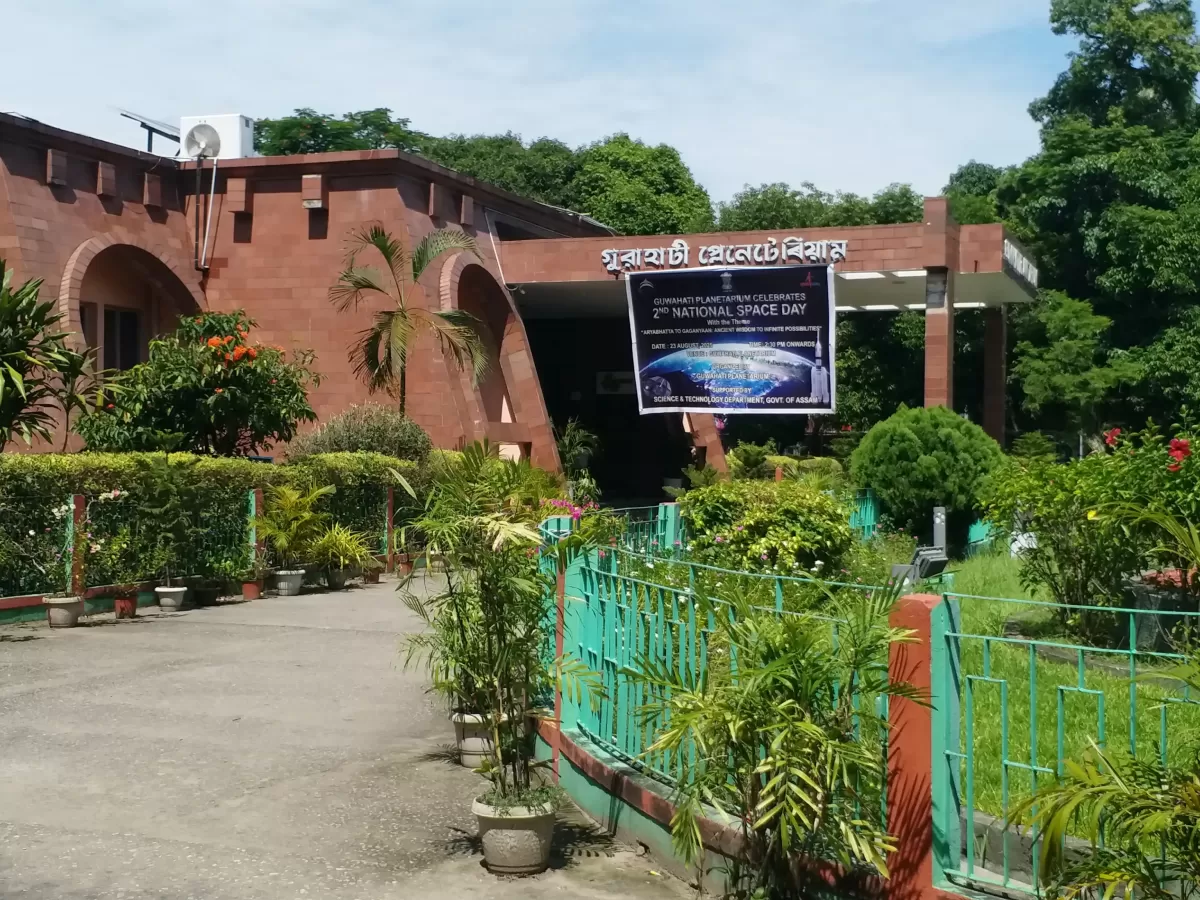
Guwahati Planetarium – Explore the Cosmos in Assam

Guwahati Planetarium , Guwahati
Located in the heart of Guwahati, the planetarium features interactive exhibits, sky shows, and educational programs that introduce visitors to the wonders of the universe. It is an ideal destination for students, families, and science enthusiasts to learn about planets, stars, and galaxies in an immersive environment. The facility combines education and entertainment, making astronomy accessible and enjoyable.

Quick Facts About Guwahati Planetarium

Entry Fee 50
Timings 11:00 - 16:00
Altitude (m) 55
Ideal Visit Duration (hrs) 2
Best Time of Day Morning
Crowd Level Moderate
Distance from Guwahati (km) 4
Walking Difficulty Easy
Parking Available No
Last Mile Access Road
Suitable for Kids Yes
Suitable for Seniors Yes
Wheelchair Friendly No

Why Visit Guwahati Planetarium, Guwahati

Atmosphere at Guwahati Planetarium is educational, engaging, and inspiring, offering visitors a unique opportunity to explore the wonders of astronomy in a calm and structured environment. The facility provides an immersive experience with interactive displays, darkened domes, and captivating presentations that spark curiosity and wonder among all age groups.

What makes Guwahati Planetarium special is its combination of modern technology and educational programming that brings the cosmos closer to the public. Visitors can enjoy sky shows, celestial simulations, and guided presentations about planets, stars, constellations, and space exploration. The planetarium also conducts workshops and events for students and enthusiasts, making it an important hub for science education and astronomical awareness. Seasonal sky observations and themed shows add variety and excitement to each visit.

Beyond its visual and educational appeal, Guwahati Planetarium provides cultural and academic significance by promoting scientific curiosity and knowledge among visitors. It caters to students, families, researchers, and travelers interested in astronomy and space science. The holistic experience ensures that visitors leave with both an enhanced understanding of the universe and a memorable, immersive adventure into the cosmos.

History of Guwahati Planetarium, Guwahati

The Guwahati Planetarium, also known as the Regional Science Centre Planetarium, was established in 1994 to promote astronomy education and scientific awareness in Assam and the Northeast region of India. It serves as a key center for learning, offering interactive shows and exhibits that illustrate celestial phenomena, space exploration, and the fundamentals of astrophysics.

Over the years, the planetarium has played a significant role in inspiring students, researchers, and the general public to explore the universe, complementing formal education with hands-on experiences and demonstrations. Its modern facilities include a star projector, observatory, and educational galleries.

Today, the Guwahati Planetarium stands as both an educational and recreational landmark, providing visitors with an engaging way to understand the cosmos while fostering interest in science and astronomy in the region.

Best Time to Visit Guwahati Planetarium Guwahati

Visiting Guwahati Planetarium is most enjoyable when the weather is comfortable, allowing easy travel and a relaxed experience while exploring its educational exhibits and shows. Seasonal planning can enhance the overall visit.

The months from October to March are ideal for visiting, as the weather is cool, dry, and pleasant. This period is perfect for families, students, and tourists to comfortably enjoy the planetarium’s shows, interactive exhibits, and astronomy demonstrations.

Spring and early summer, from March to June, offer bright and sunny days. Early morning or late afternoon visits are recommended to avoid warmer daytime temperatures while exploring nearby attractions or combining the visit with city sightseeing.

Monsoon season, from July to September, brings heavy rainfall in Guwahati. While the planetarium remains open, commuting may be affected by rain, and outdoor activities around the site could be limited. This season, however, sees fewer crowds, providing a quieter visit for those prepared for wet conditions.
  • October to March for pleasant weather and comfortable planetarium visits
  • March to June for bright sunny days; early mornings or late afternoons recommended
  • July to September for fewer crowds, though commuting and outdoor activities may be affected by rain
  • Plan early mornings for combined sightseeing and planetarium visit
  • Weekdays are generally quieter than weekends for a relaxed experience

How to Reach Guwahati Planetarium, Guwahati

  • By Air: The nearest airport is Lokpriya Gopinath Bordoloi International Airport, about 18 km from the planetarium. Visitors can hire taxis or app-based cabs for a direct and comfortable transfer to the site.
  • By Train: Guwahati Railway Station is well connected to major Indian cities such as Delhi, Kolkata, and Mumbai. From the station, taxis, auto-rickshaws, or app-based cabs provide convenient access to the planetarium.
  • By Road: Guwahati is well connected via NH37 and city roads. Regular buses, private taxis, and self-drive vehicles make it easy to reach the planetarium from various parts of the city and nearby towns.
  • Local Transport: Within Guwahati, taxis, auto-rickshaws, and rideshare services offer easy last-mile connectivity, ensuring visitors can reach the planetarium smoothly.

What to Expect When You Visit Guwahati Planetarium Guwahati

  • Immersive surroundings that reflect the true natural, cultural, or spiritual character of the destination, offering a peaceful and enriching travel experience.
  • Well-maintained visitor pathways and accessible viewing points designed to provide comfortable exploration while preserving the authenticity of the location.
  • Opportunities to engage with local traditions, regional architecture, or natural landscapes, allowing travelers to gain deeper cultural understanding.
  • Scenic photo spots and panoramic viewpoints that highlight the area’s unique beauty throughout different times of the day.
  • Informational boards, guides, or locally available assistance that help visitors learn the historical or environmental importance of the site.
  • Seasonal changes in atmosphere, crowd levels, and visual appeal, ensuring a different yet memorable experience depending on the time of visit.
  • Nearby amenities such as refreshment stalls, rest areas, or small markets offering local flavors and handicrafts.
  • A calm and respectful environment that allows visitors to fully absorb the significance and charm of the destination.

Important Visitor Information and Safety of Guwahati Planetarium Guwahati

  • Crowd & Peak Hours: Expect higher footfall during weekends, school holidays, and evening shows. Early sessions are generally less crowded and ideal for a relaxed visit.
  • Weather Notes: Summers can be warm, while winters are mild and pleasant. Indoor visits are less affected by weather conditions.
  • Dress Code: Wear comfortable casual clothing suitable for indoor visits. Light layers are recommended if the air-conditioning is strong inside the planetarium.
  • Safety Tips: Follow planetarium rules, keep personal belongings secure, supervise children, avoid running inside the halls, and maintain silence for a safe and enjoyable experience.

Photography and Viewpoints at Guwahati Planetarium, Guwahati

  • The modern architecture of the planetarium offers sleek lines and geometric forms ideal for architectural and abstract photography.
  • Nighttime exterior shots, especially when illuminated, create dramatic compositions against the evening sky.
  • Interior exhibits, models of planets, and astronomical displays provide opportunities for close-up photography capturing intricate scientific details.
  • Wide-angle shots inside the dome can capture the scale and immersive experience of the projection hall.
  • Visitors engaged in educational activities offer dynamic human-interest photography opportunities.
  • Seasonal or special astronomy events, like star-gazing programs, provide unique low-light photography opportunities for capturing telescopes and celestial observations.

Near By Attraction

Devotees at Doul Govinda Temple in North Guwahati during clear daytime, featuring temple courtyard, green lawn and walkways, perfect spiritual experience Assam tour package. Temple

Doul Govinda Temple

Doul Govinda Temple is a prominent temple in Guwahati dedicated to Lord Krishna.

Navagraha Temple Guwahati Assam ancient hilltop temple dedicated to nine celestial planets with dome architecture Temple

Navagraha Temple Guwahati

Navagraha Temple in Guwahati is dedicated to the nine celestial deities of Hindu astrology.

main gate at Srimanta Sankardev Kalakshetra Guwahati during sunny day, featuring Assamese motifs wheel dragons trees, perfect cultural experience Assam tour package. Museum

Srimanta Sankardev Kalakshetra Guwahati

Srimanta Sankardev Kalakshetra is a premier cultural institution in Guwahati showcasing Assam’s art, heritage, and traditions.

Frequently Asked Questions About Guwahati Planetarium

Guwahati Planetarium is located on MG Road in Guwahati, Assam, India.
Guwahati Planetarium is known for its astronomy shows, sky projections, and educational programs about space science.
Guwahati Planetarium conducts multiple daily shows in different languages, usually scheduled in the afternoon and early evening.
Yes, Guwahati Planetarium charges a nominal entry fee for attending its scheduled shows.
Visitors can reach Guwahati Planetarium easily by road from different parts of Guwahati, with the railway station and Lokpriya Gopinath Bordoloi Airport serving as main access points.
The best time to visit Guwahati Planetarium is during weekdays to avoid crowds, especially during school holidays in Assam.
Around one to two hours are sufficient to attend a show and explore the exhibits at Guwahati Planetarium.
Shows at Guwahati Planetarium are suitable for children and students as they present space concepts in an easy to understand format.
Photography is generally restricted inside the dome theater of Guwahati Planetarium during shows.
Limited parking space is available near Guwahati Planetarium, so visitors may need to use nearby public parking areas during busy hours.

Loved this place ? Let’s Plan Your Assam Trip

Get customized Assam tour planning designed around seasonal weather patterns, river conditions, wildlife safari timing, and realistic road travel flow. Whether you are visiting for national parks, tea estate stays, cultural experiences, spiritual sites, o

⚡ Quick Response | 💰 Free consultation | 🕒 24×7 expert support

×

Plan Your Trip