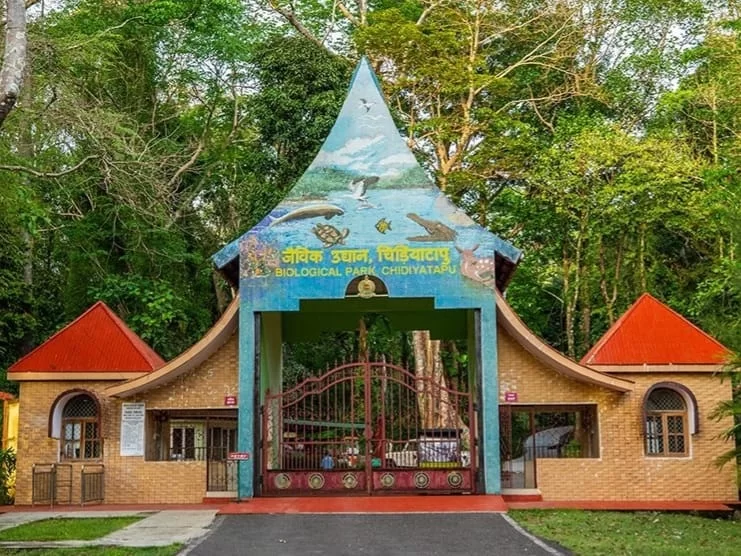
Chidiya Tapu Biological Park Andaman – Wildlife Sanctuary near Port Blair

Chidiya Tapu Biological Park , Port Blair
Located near Chidiya Tapu, this biological park is dedicated to conserving endangered and endemic species of the Andaman and Nicobar Islands. Visitors can observe animals such as the Andaman wild pig, saltwater crocodile, and various native bird species in a natural habitat setting. Surrounded by lush greenery, the park offers an educational and eco-friendly experience for families, students, and wildlife enthusiasts.

Quick Facts About Chidiya Tapu Biological Park

Entry Fee 20
Timings 09:00 - 16:00
Altitude (m) 0
Ideal Visit Duration (hrs) 2
Best Time of Day Morning
Crowd Level Moderate
Distance from Port Blair (km) 25
Walking Difficulty Easy
Parking Available Yes
Last Mile Access Road
Suitable for Kids Yes
Suitable for Seniors Yes
Wheelchair Friendly No

Why Visit Chidiya Tapu Biological Park, Port Blair

Atmosphere at Chidiya Tapu Biological Park is calm, green, and conservation-focused, offering visitors a refreshing experience amidst natural forest surroundings. Located near the scenic Chidiya Tapu area, the park is designed to reflect the natural habitats of the Andaman Islands, creating a peaceful environment where wildlife can be observed in spacious enclosures. The quiet setting and lush vegetation make it ideal for relaxed exploration.

What makes Chidiya Tapu Biological Park special is its emphasis on endemic and native species of the Andaman and Nicobar Islands. The park houses animals such as the Andaman wild pig, saltwater crocodile, Nicobar pigeon, and various species of deer and birds, providing valuable insight into the region’s unique biodiversity. Informational displays and organized pathways enhance the educational aspect, making it a meaningful visit for students, wildlife enthusiasts, and families interested in understanding island ecology.

Beyond recreation, the biological park promotes wildlife conservation and environmental awareness. It serves as a center for preserving species that are rare or specific to the island ecosystem. Visitors leave with a deeper appreciation of the Andaman Islands’ fragile biodiversity and the importance of protecting these natural habitats for future generations.

History of Chidiya Tapu Biological Park

Chidiya Tapu Biological Park, located near Chidiya Tapu in the Andaman and Nicobar Islands, was established in 2006 with the primary objective of conserving and showcasing the endemic wildlife species of the archipelago. The park was developed by the Andaman and Nicobar Forest Department as part of a broader initiative to promote biodiversity conservation, environmental education, and sustainable tourism in the region.

The creation of the biological park was closely linked to conservation efforts following the 2004 Indian Ocean tsunami, which significantly impacted parts of the islands’ ecosystems. The park was designed to provide a protected environment for native fauna such as the Andaman wild pig, Nicobar pigeon, saltwater crocodile, and various endemic bird species, while also raising awareness about the fragile ecological balance of the islands.

Today, Chidiya Tapu Biological Park stands as an important conservation and educational center, reflecting the Andaman administration’s commitment to wildlife protection and ecological research. It represents a transition from traditional forest use practices to structured conservation management in the post-independence era.

Best Time to Visit Chidiya Tapu Biological Park

The best time to visit Chidiya Tapu Biological Park depends on weather comfort and wildlife activity, as the park is located in a forested coastal zone near Port Blair. Seasonal planning helps ensure a pleasant walk through the zoo enclosures and surrounding greenery.

October to April is considered the ideal period to visit. During these months, the weather is relatively pleasant with lower humidity, making it comfortable to explore the park’s open pathways and observe native species of the Andaman Islands.

Summer months from April to June can be warm and humid, particularly during midday. Early morning visits are recommended, as animals tend to be more active and the weather is comparatively cooler.

Monsoon season from May to September brings frequent rainfall, which enhances the lush greenery of the park but may make walking trails slippery. While the park remains scenic, visitors should check weather conditions and carry rain protection during this period.

  • October to April for pleasant weather and comfortable wildlife viewing
  • Early mornings recommended for active animal sightings
  • April to June for visits during cooler hours of the day
  • May to September for vibrant greenery, though trails may be slippery due to rain
  • Weekdays generally offer a quieter and more relaxed experience

How to Reach Chidiya Tapu Biological Park, Port Blair

  • By Air: The nearest airport is Veer Savarkar International Airport, Port Blair, approximately 25 km from Chidiya Tapu Biological Park. Regular flights connect Port Blair with major Indian cities such as Chennai, Kolkata, Delhi, and Bengaluru. Taxis and rental vehicles are available for a comfortable transfer to the park.
  • By Train: There is no railway connectivity to the Andaman Islands. Travelers must reach Port Blair by air or sea and then continue by road to Chidiya Tapu.
  • By Road: The park is accessible via a well-maintained scenic coastal road from Port Blair, about 25 km away. Visitors can hire taxis, rent two-wheelers, or use private vehicles to reach the destination conveniently.
  • Local Transport: Within Port Blair, taxis and rental scooters are the most convenient options for reaching Chidiya Tapu Biological Park. The park is located near Chidiya Tapu Beach, making last-mile travel simple and well-marked.

What to Expect When You Visit Chidiya Tapu Biological Park

  • Immersive surroundings that reflect the true natural, cultural, or spiritual character of the destination, offering a peaceful and enriching travel experience.
  • Well-maintained visitor pathways and accessible viewing points designed to provide comfortable exploration while preserving the authenticity of the location.
  • Opportunities to engage with local traditions, regional architecture, or natural landscapes, allowing travelers to gain deeper cultural understanding.
  • Scenic photo spots and panoramic viewpoints that highlight the area’s unique beauty throughout different times of the day.
  • Informational boards, guides, or locally available assistance that help visitors learn the historical or environmental importance of the site.
  • Seasonal changes in atmosphere, crowd levels, and visual appeal, ensuring a different yet memorable experience depending on the time of visit.
  • Nearby amenities such as refreshment stalls, rest areas, or small markets offering local flavors and handicrafts.
  • A calm and respectful environment that allows visitors to fully absorb the significance and charm of the destination.

Important Visitor Information and Safety of Chidiya Tapu Biological Park

  • Crowd & Peak Hours: Visitor flow increases during weekends, school holidays, and late mornings. Early hours are generally quieter and more suitable for observing animals comfortably.
  • Weather Notes: The tropical climate is warm and humid throughout the year. Sudden rain showers may occur during monsoon months.
  • Dress Code: Wear light, breathable clothing and comfortable walking shoes suitable for exploring animal enclosures and outdoor pathways.
  • Safety Tips: Do not feed or disturb animals, stay on designated paths, follow park regulations, supervise children closely, and keep personal belongings secure for a safe visit.

Photography and Viewpoints at Chidiya Tapu Biological Park

  • The park’s natural forest enclosures provide realistic wildlife photography opportunities featuring endemic species of the Andaman Islands.
  • Close-up shots of birds, reptiles, and small mammals allow detailed captures of textures, plumage, and behavioral moments.
  • Well-laid walking trails offer balanced compositions combining dense tropical vegetation with curated habitat zones.
  • Morning light filtering through forest canopies enhances depth, contrast, and natural color tones in photographs.
  • Seasonal greenery and native flora add vibrant backdrops for both wildlife and landscape photography.
  • Elevated viewing platforms enable wider frames that capture habitat design along with surrounding coastal forest scenery.

Near By Attraction

Jolly Buoy Island, pristine coral island in Mahatma Gandhi Marine National Park, Andaman known for crystal clear waters and vibrant marine life. Island

Jolly Buoy Island

Jolly Buoy Island is a pristine island in the Andaman Islands known for its vibrant coral reefs and clear waters.

Naval Marine Museum Samudrika, informative museum in Port Blair, Andaman showcasing marine life, naval history, and island heritage. Museum

Naval Marine Museum Samudrika

Naval Marine Museum Samudrika is a prominent museum in Port Blair showcasing marine biodiversity and Andaman’s tribal culture.

Wandoor Beach, peaceful beach near Port Blair known for calm waters, scenic sunsets, and gateway to Mahatma Gandhi Marine National Park. Beach

Wandoor Beach

Wandoor Beach is a peaceful coastal stretch in South Andaman known for its scenic beauty and calm atmosphere.

Frequently Asked Questions About Chidiya Tapu Biological Park

The best time to visit Chidiya Tapu Biological Park is from October to April when the weather is pleasant for outdoor walking. Morning hours are ideal as animals are more active and temperatures are comfortable.
Chidiya Tapu Biological Park is generally open during standard daytime hours and remains closed on certain weekly holidays. Visitors should confirm official timings before planning.
Chidiya Tapu Biological Park charges a nominal entry fee for visitors. Separate charges may apply for cameras and video recording.
Chidiya Tapu Biological Park can be reached easily by taxi bus or private vehicle as it is located along a well connected coastal road. The park entrance is clearly marked near the main route.
Most travelers spend one to two hours at Chidiya Tapu Biological Park. The visit includes walking through enclosures and viewing native wildlife species.
Chidiya Tapu Biological Park houses endemic species such as the Andaman wild pig saltwater crocodile and various native birds. Informational boards provide details about each species.
Chidiya Tapu Biological Park is suitable for families due to its organized pathways and educational displays. Visitors should supervise children throughout the visit.
Guided tours may be available at Chidiya Tapu Biological Park depending on staff availability. Visitors can also explore independently using informational signage.
Chidiya Tapu Biological Park can be visited during monsoon but heavy rain may affect walking comfort. Lush greenery during this season enhances the natural setting.
Chidiya Tapu Biological Park can be combined with nearby beaches forest viewpoints and sunset spots. These attractions are usually accessible within short travel distance.

Loved this place ? Let’s Plan Your Andaman and Nicobar Islands Trip

Get customized Andaman and Nicobar Islands tour planning designed around ferry schedules, island connectivity, seasonal sea conditions, and realistic travel flow between islands. Whether you are visiting for beach relaxation, water sports, snorkeling, scu

⚡ Quick Response | 💰 Free consultation | 🕒 24×7 expert support

×

Plan Your Trip