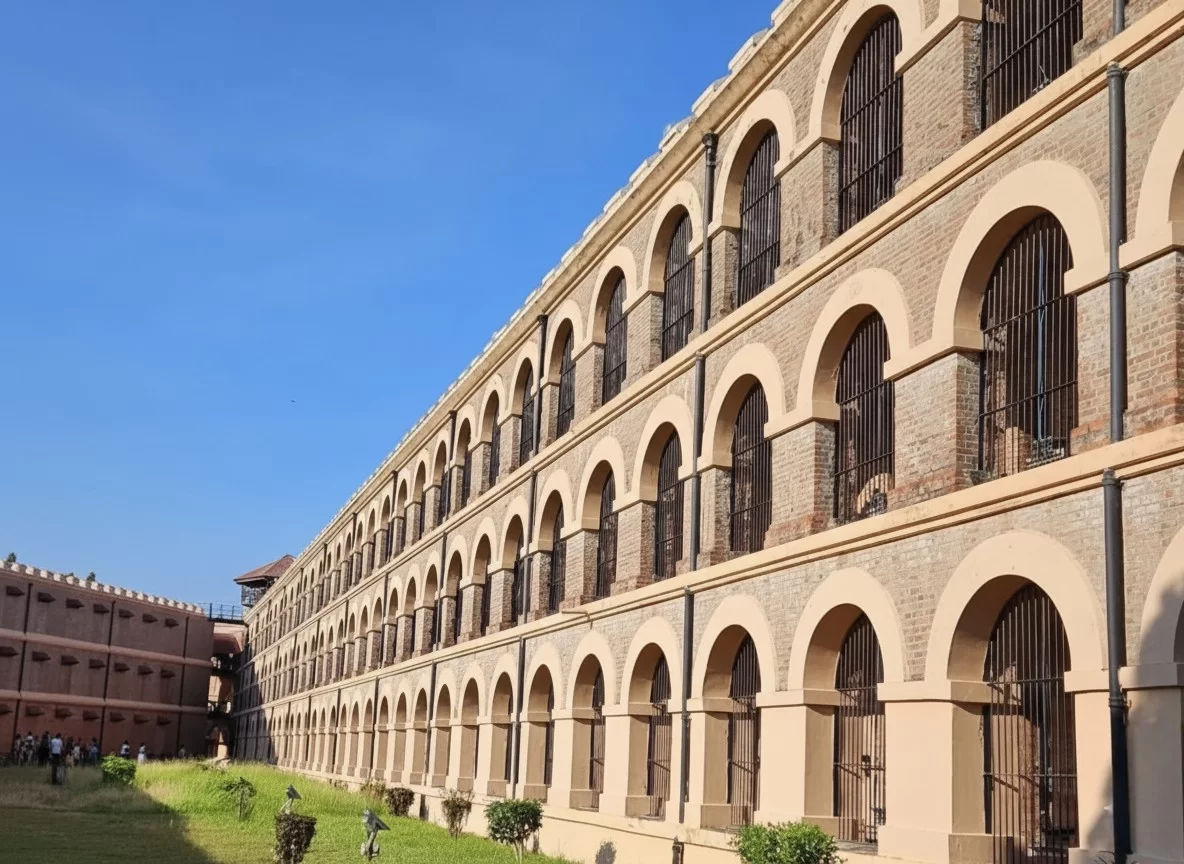
Cellular Jail Port Blair – Historic Freedom Struggle Monument in Andaman

Cellular Jail , Port Blair
Located in Port Blair, Andaman and Nicobar Islands, Cellular Jail was constructed by the British in the late 19th century to exile Indian freedom fighters. Known as “Kala Pani,” the jail stands as a powerful reminder of the hardships endured by revolutionaries. Today, it serves as a national memorial featuring preserved cells, galleries, and a light and sound show that narrates the story of India’s freedom movement.

Quick Facts About Cellular Jail

Entry Fee 30
Timings 09:00 - 17:00
Altitude (m) 15
Ideal Visit Duration (hrs) 3
Best Time of Day Morning
Crowd Level High
Distance from Port Blair (km) 1
Walking Difficulty Moderate
Parking Available Yes
Last Mile Access Road
Suitable for Kids Yes
Suitable for Seniors Yes
Wheelchair Friendly No

Why Visit Cellular Jail, Port Blair

Atmosphere at Cellular Jail is solemn and deeply moving, reflecting the sacrifices made during India’s struggle for independence. The silent corridors, narrow prison cells, and towering brick walls create a powerful emotional environment that allows visitors to connect with the hardships endured by freedom fighters. Walking through the historic structure evokes reflection, respect, and a profound sense of national pride.

What makes Cellular Jail special is its immense historical significance as a colonial-era prison used by the British to exile political prisoners to the Andaman Islands. The unique radial architectural design, the preserved solitary confinement cells, and the stories of revolutionary leaders imprisoned here provide authentic insight into India’s freedom movement. The evening light and sound show further enhances the experience by narrating the jail’s history in a compelling and immersive manner.

Beyond its architectural presence, Cellular Jail stands as a symbol of resilience, sacrifice, and patriotism. It attracts history enthusiasts, students, researchers, and travelers seeking a meaningful understanding of India’s past. The visit offers not just sightseeing but an educational and emotional journey that leaves a lasting impression of courage and national heritage.

History of Cellular Jail

Cellular Jail, located in Port Blair in the Andaman and Nicobar Islands, was constructed between 1896 and 1906 by the British colonial administration. The prison was specifically designed to exile and isolate political prisoners who participated in India’s freedom struggle. Its unique architectural design featured seven wings radiating from a central watchtower, with each cell built for solitary confinement, symbolizing extreme isolation and psychological punishment.

The jail became infamous as “Kala Pani,” a term that represented both the physical remoteness of the islands and the harsh treatment endured by inmates. Many prominent freedom fighters, including Veer Savarkar and Batukeshwar Dutt, were imprisoned here. Prisoners were subjected to rigorous labor, inhumane conditions, and strict surveillance, making the site a powerful symbol of colonial oppression.

After India’s independence, Cellular Jail was declared a National Memorial in 1979 to honor the sacrifices of freedom fighters. Today, it stands as a significant heritage landmark, preserving the memory of India’s struggle for independence and serving as an educational site for visitors from across the country and beyond.

Best Time to Visit Cellular Jail

The best time to visit Cellular Jail depends on weather conditions and overall travel comfort, as the monument is located in Port Blair in the Andaman Islands, where climate remains tropical throughout the year. Planning your visit during the right season ensures a comfortable exploration of this historic site.

October to April is considered the ideal period to visit. During these months, the weather is relatively pleasant with lower humidity and minimal rainfall, making it comfortable to explore the jail complex, museum galleries, and open courtyards. This is also the best time to attend the evening Light and Sound Show.

Summer months from April to June can be warm and humid, but morning and late afternoon visits remain manageable. Visitors are advised to stay hydrated while exploring the expansive premises.

Monsoon season from May to September brings frequent rainfall and higher humidity. While the monument remains open, outdoor exploration may be slightly affected. However, fewer tourists during this period allow for a quieter and more reflective experience.
  • October to April for pleasant weather and comfortable sightseeing
  • Evening visits recommended for the Light and Sound Show experience
  • April to June for manageable visits during cooler hours of the day
  • May to September for fewer crowds, though rain and humidity are higher
  • Weekdays generally offer a less crowded experience

How to Reach Cellular Jail, Port Blair

  • By Air: The nearest airport is Veer Savarkar International Airport, Port Blair, located approximately 4 km from Cellular Jail. Regular flights connect Port Blair with major Indian cities such as Chennai, Kolkata, Delhi, and Bengaluru. Taxis and app-based cabs are readily available from the airport for a quick transfer.
  • By Train: There is no railway connectivity to the Andaman Islands. Travelers must first reach Port Blair by air or sea, and then use local transport to visit Cellular Jail.
  • By Road: Cellular Jail is located in the heart of Port Blair and is easily accessible via well-maintained city roads. Visitors can reach the site by private vehicles, taxis, auto-rickshaws, or local buses.
  • Local Transport: Within Port Blair, taxis, auto-rickshaws, and two-wheelers are commonly used for commuting. Clear signage and central location make last-mile access to Cellular Jail convenient for visitors.

What to Expect When You Visit Cellular Jail

  • Immersive surroundings that reflect the true natural, cultural, or spiritual character of the destination, offering a peaceful and enriching travel experience.
  • Well-maintained visitor pathways and accessible viewing points designed to provide comfortable exploration while preserving the authenticity of the location.
  • Opportunities to engage with local traditions, regional architecture, or natural landscapes, allowing travelers to gain deeper cultural understanding.
  • Scenic photo spots and panoramic viewpoints that highlight the area’s unique beauty throughout different times of the day.
  • Informational boards, guides, or locally available assistance that help visitors learn the historical or environmental importance of the site.
  • Seasonal changes in atmosphere, crowd levels, and visual appeal, ensuring a different yet memorable experience depending on the time of visit.
  • Nearby amenities such as refreshment stalls, rest areas, or small markets offering local flavors and handicrafts.
  • A calm and respectful environment that allows visitors to fully absorb the significance and charm of the destination.

Important Visitor Information and Safety of Cellular Jail

  • Crowd & Peak Hours: Visitor numbers increase during weekends, public holidays, and before the evening light and sound show. Late mornings and show timings are usually the busiest.
  • Weather Notes: The tropical climate can be hot and humid throughout the year. Sudden rain showers are common during monsoon months.
  • Dress Code: Wear light, breathable clothing and comfortable footwear suitable for walking across multiple wings and open courtyards.
  • Safety Tips: Stay within designated visitor areas, avoid leaning over railings, follow staff instructions during shows, and keep personal belongings secure for a safe and respectful visit.

Photography and Viewpoints at Cellular Jail

  • The colonial-era architecture with its radial wing design offers powerful perspectives for heritage and documentary-style photography.
  • Elevated viewpoints from the central watchtower provide a clear view of the symmetrical prison corridors, ideal for wide-angle compositions.
  • Early morning and late afternoon lighting enhances the texture of brick walls, iron bars, and arched corridors, adding dramatic depth to images.
  • Close-up shots of engraved plaques, preserved cells, and historical exhibits capture the emotional and historical significance of the site.
  • The evening light and sound show provides atmospheric low-light photography opportunities, highlighting the structure against the night sky.
  • Contrasting shadows along long corridors create striking lines and patterns, perfect for architectural storytelling photography.

Near By Attraction

Jolly Buoy Island, pristine coral island in Mahatma Gandhi Marine National Park, Andaman known for crystal clear waters and vibrant marine life. Island

Jolly Buoy Island

Jolly Buoy Island is a pristine island in the Andaman Islands known for its vibrant coral reefs and clear waters.

Chidiya Tapu Biological Park Port Blair Andaman with zoo entrance surrounded by tropical forest Wildlife Sanctuary

Chidiya Tapu Biological Park

Chidiya Tapu Biological Park is a wildlife park in South Andaman showcasing native flora and fauna.

Naval Marine Museum Samudrika, informative museum in Port Blair, Andaman showcasing marine life, naval history, and island heritage. Museum

Naval Marine Museum Samudrika

Naval Marine Museum Samudrika is a prominent museum in Port Blair showcasing marine biodiversity and Andaman’s tribal culture.

Frequently Asked Questions About Cellular Jail

The best time to visit Cellular Jail is from October to April when the weather is relatively pleasant for exploring the historic complex. Late afternoon visits also allow visitors to attend the light and sound show.
Cellular Jail is generally open during standard daytime hours with a break in the afternoon and extended hours for the evening show. Visitors should confirm official timings before planning.
Cellular Jail charges an entry fee for visitors. Separate tickets are required for the light and sound show and for camera usage.
Cellular Jail can be reached easily by taxi auto or private vehicle as it is located in a central area of the town. The site is accessible from major roads and nearby accommodations.
Most travelers spend two to three hours at Cellular Jail. The visit includes exploring galleries walking through corridors and attending the evening show.
Cellular Jail features preserved prison cells galleries with photographs and artifacts and a central watchtower offering views of the surroundings. Informational displays explain the historical significance of the site.
Cellular Jail is suitable for families and students due to its educational value and organized layout. Visitors should supervise children while climbing staircases and viewing upper levels.
Photography inside Cellular Jail is allowed in designated areas. Visitors should follow posted guidelines and restrictions in certain galleries.
Cellular Jail can be visited during monsoon as most sections are covered or indoors. Rain may affect outdoor movement but does not prevent exploring the main galleries.
Cellular Jail can be combined with nearby beaches memorials and local museums. These attractions are usually accessible within short travel distance.

Loved this place ? Let’s Plan Your Andaman and Nicobar Islands Trip

Get customized Andaman and Nicobar Islands tour planning designed around ferry schedules, island connectivity, seasonal sea conditions, and realistic travel flow between islands. Whether you are visiting for beach relaxation, water sports, snorkeling, scu

⚡ Quick Response | 💰 Free consultation | 🕒 24×7 expert support

×

Plan Your Trip