Quick Facts About Dali Monastery
| Entry Fee | Free |
| Timings | 09:00 - 18:00 |
| Altitude (m) | 2100 |
| Ideal Visit Duration (hrs) | 1 |
| Best Time of Day | Morning |
| Crowd Level | Moderate |
| Distance from Darjeeling (km) | 7 |
| Walking Difficulty | Easy |
| Parking Available | Yes |
| Last Mile Access | Road |
| Suitable for Kids | Yes |
| Suitable for Seniors | Yes |
| Wheelchair Friendly | No |
Why Visit Dali Monastery
Dali Monastery is a must-visit for travelers seeking peace, spirituality, and authentic Tibetan Buddhist culture near Darjeeling. Perched on a hilltop, the monastery offers a calm atmosphere far removed from the crowded tourist areas, making it ideal for quiet reflection and mindful exploration.
The monastery is home to resident monks and serves as an important center of the Kagyupa sect of Tibetan Buddhism. Visitors can witness daily prayer rituals, hear rhythmic chants, and observe monastic life, which adds a deeply spiritual and enriching experience to the visit.
What makes Dali Monastery special is its combination of spiritual significance and scenic beauty. The monastery complex provides sweeping views of the surrounding hills and distant Himalayan peaks, while colorful murals, prayer flags, and statues create a visually striking and culturally immersive environment.
The peaceful surroundings, disciplined monastic routine, and panoramic location make Dali Monastery an ideal stop for culture enthusiasts, photographers, and travelers looking to connect with the spiritual side of Darjeeling.
History
Dali Monastery, officially known as Druk Sangag Choling Monastery, was established in the early 1970s by Kyabje Thuksey Rinpoche, a prominent lama of the Kagyupa sect of Tibetan Buddhism. It was built as a spiritual and educational center to preserve Tibetan Buddhist teachings and traditions after the Tibetan diaspora in India.
The monastery serves as the headquarters of the Drukpa Kagyud lineage in the Darjeeling region and plays an important role in training young monks in Buddhist philosophy, meditation, rituals, and monastic discipline. Over the years, it has grown into one of the most influential monasteries around Darjeeling.
Dali Monastery also holds importance due to the frequent visits of His Holiness the Dalai Lama, who has stayed here during his visits to Darjeeling. This association has further enhanced the monastery’s spiritual stature and relevance among followers of Tibetan Buddhism.
Best Time to Visit Dali Monastery
Dali Monastery can be visited throughout the year, but the experience varies with the seasons. The most pleasant time to visit is from March to May and from September to November, when the weather is clear, temperatures are comfortable, and mountain views are at their best.
During these months, the monastery surroundings remain calm and green, making it ideal for spiritual visits, photography, and quiet walks around the complex. Clear skies also enhance the scenic views of the surrounding hills.
- March to May: Mild weather with blooming vegetation; ideal for sightseeing and photography.
- June to August: Monsoon season brings mist and rain; fewer visitors but limited views due to clouds.
- September to November: Best overall period with clear skies, cool temperatures, and excellent visibility.
- December to February: Cold weather with occasional fog; suitable for visitors who enjoy quiet and off-season travel.
Morning hours are especially recommended, as prayer sessions often take place and the atmosphere is most peaceful at this time.
How to Reach Dali Monastery
- From Darjeeling Town: Dali Monastery is located about 7 km from Darjeeling Mall Road. It can be reached easily by taxi or shared jeep via Lebong Cart Road, with a drive time of around 25–30 minutes.
- By Taxi: Private taxis are the most convenient option and are readily available from Darjeeling town, hotels, and Mall Road. Taxis can drop visitors directly at the monastery entrance.
- By Shared Jeep: Shared jeeps running towards Lebong or Teesta Bazaar may drop passengers near Dali village, from where a short walk leads to the monastery.
- From NJP Railway Station: New Jalpaiguri Railway Station is about 75 km away. Hire a taxi to Darjeeling, then proceed to Dali Monastery from the town.
- From Bagdogra Airport: Bagdogra Airport is approximately 70 km away. Taxis are available directly to Darjeeling, followed by a short drive to the monastery.
What to Expect When You Visit Dali Monastery
- Peaceful Spiritual Atmosphere: Visitors are welcomed by a calm and disciplined environment, with monks engaged in prayers, study, and daily routines that reflect authentic monastic life.
- Prayer Halls & Rituals: You may witness monks chanting during prayer sessions inside the main prayer hall, offering a deeply immersive spiritual experience.
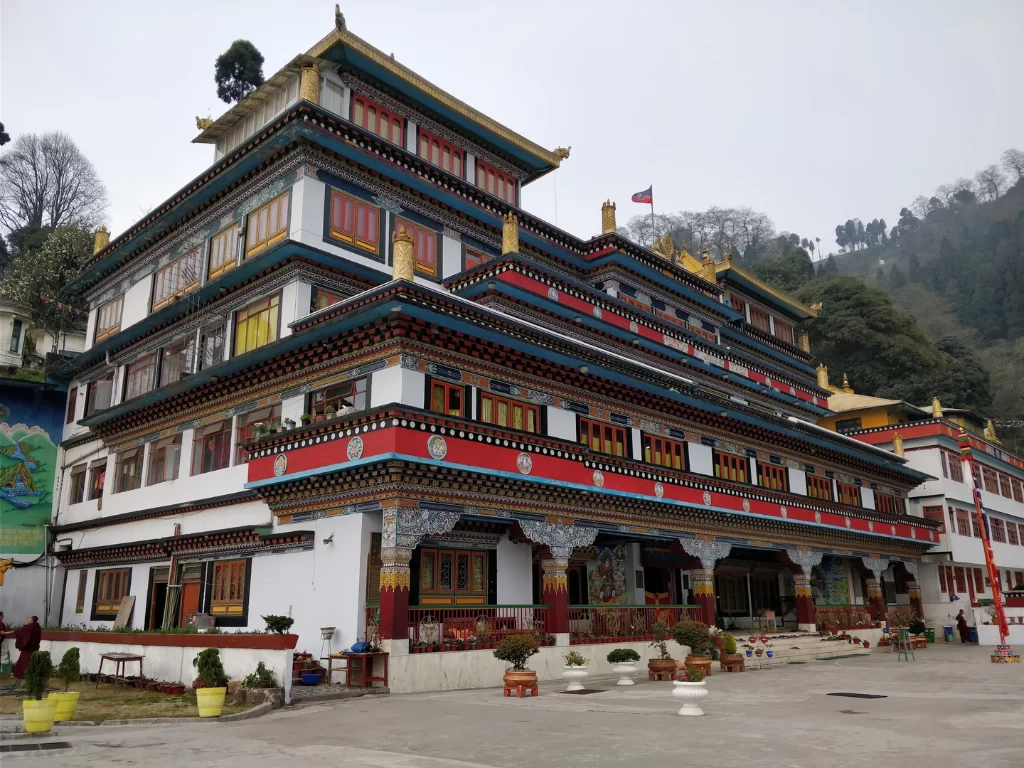
- Traditional Tibetan Architecture: Expect colorful murals, intricate wall paintings, statues of Buddhist deities, prayer wheels, and fluttering prayer flags throughout the monastery complex.
- Scenic Hilltop Views: The monastery’s elevated location provides beautiful views of surrounding hills and valleys, adding a serene natural backdrop to the visit.
- Quiet Walking Areas: The spacious monastery grounds allow visitors to walk calmly, sit in silence, or observe daily monastic activities without disturbance.
- Respectful Environment: Silence and respectful behavior are expected, making the visit more contemplative than a typical sightseeing stop.
Important Visitor Information
- Crowd & Weather Notes: Dali Monastery generally experiences low to moderate visitor traffic. Weather can be cool and windy due to its hilltop location, with mist common during monsoon and winter months.
- Peak / Quiet Hours: Morning hours between 8:00 AM and 11:00 AM are ideal to witness prayer sessions and enjoy a peaceful atmosphere. Afternoons remain quiet, while late evenings are usually calm with fewer visitors.
- Dress Code: Modest clothing is recommended. Visitors should wear covered clothing, avoid shorts or sleeveless tops, and remove shoes before entering prayer halls.
- Safety Notes: The monastery is safe for visitors, but care should be taken on steps and slopes, especially during rainy or foggy conditions. Maintain silence near prayer areas and follow monastery guidelines.
Photography and Viewpoint
- Architectural Photography: Dali Monastery offers excellent opportunities to capture traditional Tibetan architecture, including colorful prayer halls, ornate doorways, murals, and detailed statues that reflect Buddhist symbolism.
- Monastic Life Moments: With respectful distance, visitors may photograph monks during non-restricted hours, especially during routine activities or group prayers, capturing authentic monastic life.
- Scenic Hilltop Views: The monastery’s elevated setting provides wide views of surrounding valleys, pine-covered hills, and distant Himalayan ridges, ideal for landscape photography on clear days.
- Prayer Flags & Details: Close-up shots of fluttering prayer flags, prayer wheels, and ritual objects add depth and cultural context to photography.
- Best Time for Photography: Morning light (8:00 AM – 10:00 AM) offers soft natural lighting, while late afternoon creates warm tones and dramatic shadows across the monastery complex.
- Photography Guidelines: Photography may be restricted inside certain prayer halls; always seek permission and avoid flash to maintain the sanctity of the space.