
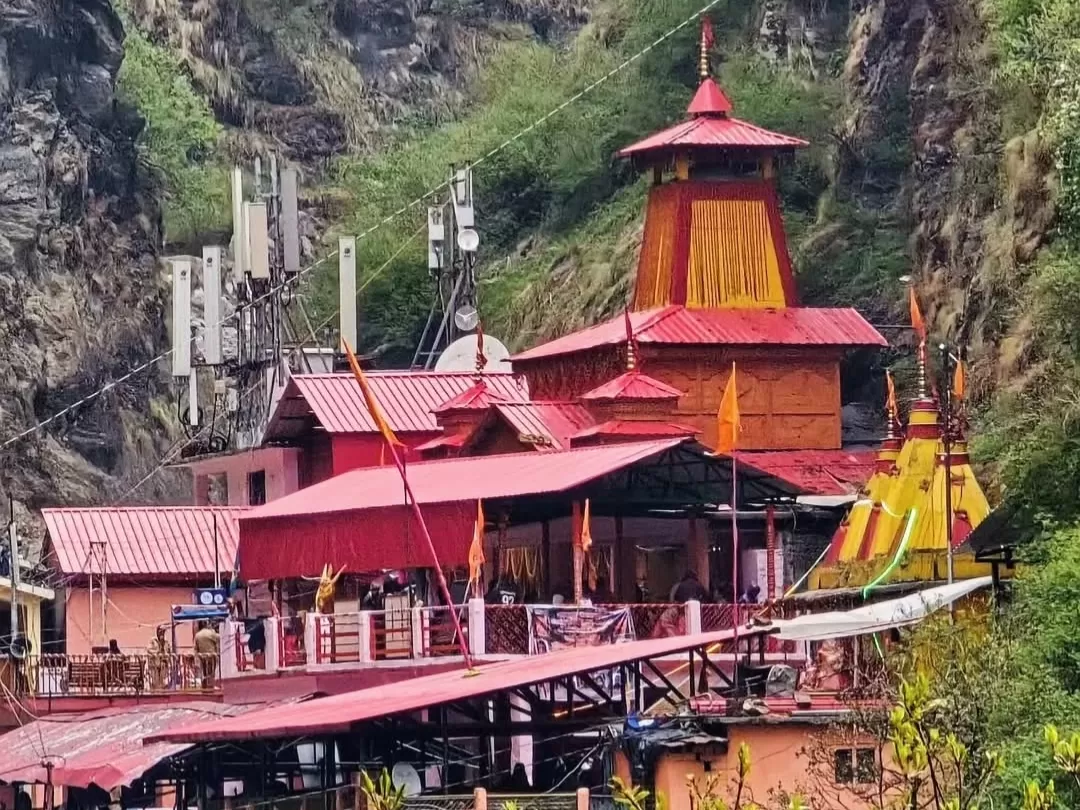
Quick Facts About Yamunotri Dham
| Entry Fee | Free |
| Timings | 05:00 - 19:00 |
| Altitude (m) | 3291 |
| Ideal Visit Duration (hrs) | 5 |
| Best Time of Day | Morning |
| Crowd Level | High |
| Distance from City Centre (km) | 35 |
| Walking Difficulty | Moderate |
| Parking Available | No |
| Last Mile Access | Trek |
| Suitable for Kids | Yes |
| Suitable for Seniors | No |
| Wheelchair Friendly | No |
Why Visit Yamunotri Dham Barkot
Yamunotri Dham is one of the most sacred shrines in the Char Dham pilgrimage, drawing devotees from across India to pay homage to Goddess Yamuna. Visitors come to perform rituals, take a holy dip in the river, and seek spiritual purification and blessings.
The atmosphere at Yamunotri is deeply spiritual and serene, surrounded by snow-capped Himalayan peaks, dense forests, and the flowing waters of the Yamuna River. The sound of the river and the scenic natural setting create a calming, meditative environment for pilgrims and travelers alike.
What makes Yamunotri special is its mythological and religious significance as the origin of the sacred Yamuna River. The hot springs near the temple, the panoramic Himalayan views, and the challenging trek to the temple all add to the unique experience, making it both a spiritual and adventurous destination.
Religious Significance
Yamunotri Dham holds immense religious importance as the source of the sacred Yamuna River, one of the major rivers in Hindu mythology. According to legend, Goddess Yamuna emerged from the Yamunotri glacier, and bathing in its waters is believed to purify the soul and remove sins.
The temple and surrounding area are integral to the Char Dham pilgrimage circuit. Pilgrims perform rituals, offer prayers, and participate in ceremonial worship of the river goddess. The presence of natural hot springs near the temple, used for ritual baths, adds to the spiritual significance, blending natural phenomena with divine reverence.
Best Time to Visit Yamunotri Dham Barkot
The ideal time to visit Yamunotri Dham is during the Char Dham pilgrimage season from May to June and September to October, when the weather is pleasant, paths are accessible, and the surroundings are clear of heavy snow.
Early mornings provide a serene atmosphere for darshan and meditation, while afternoons offer scenic views of the Himalayan peaks and the flowing Yamuna River.
- May to June and September to October for favorable weather and accessible trekking paths
- Early morning (5:00 AM – 8:00 AM) for peaceful darshan and spiritual ambiance
- Late afternoon (4:00 PM – 6:00 PM) for photography and enjoying the scenic Himalayan backdrop
- Winter months (November–March) are harsh due to snow and cold, limiting accessibility
- Monsoon (July–August) may cause slippery trails, landslides, and increased difficulty for trekking
- Festival days and Char Dham season attract higher crowds, adding to the devotional atmosphere
How to Reach Yamunotri Dham Barkot
- By Air: The nearest airport is Jolly Grant Airport in Dehradun, approximately 220 km from Barkot. From the airport, travelers can hire taxis or private cabs to reach Barkot, the base for the Yamunotri trek.
- By Train: The closest railway station is in Rishikesh, around 200 km away. From there, buses, taxis, or shared cabs connect to Barkot.
- By Road: Barkot is well-connected by motorable roads from Dehradun, Rishikesh, and Haridwar. Uttarakhand State Transport buses, taxis, and private vehicles provide regular service to Barkot town.
- Local Access: From Barkot, the Yamunotri Temple is approximately a 6 km uphill trek. Ponies, palanquins, and local guides are available for those unable to trek the entire distance on foot.
- Parking: Limited parking is available at the base of the trek in Barkot. Small vehicles are recommended due to narrow hilly roads.
- Walking Tip: The last mile involves steep stone paths and steps; sturdy shoes and trekking poles are advisable for a safe journey.
What to Expect When You Visit Yamunotri Dham Barkot
- A deeply spiritual experience as pilgrims perform rituals, offer prayers, and take a holy dip in the sacred Yamuna River.
- Breathtaking Himalayan scenery, including snow-capped peaks, dense forests, and river valleys along the trek to the temple.
- Challenging yet rewarding trek of approximately 6 km from Barkot, with options for ponies or palanquins for the uphill stretch.
- Natural hot springs near the temple, where devotees and visitors can soak and perform ritual baths.
- Opportunities for photography, capturing both religious ceremonies and the scenic beauty of the Garhwal Himalayas.
- Moderate to high crowd levels during Char Dham season, with quieter experiences possible during early morning visits or off-season.
- Local stalls offering prasad, souvenirs, and essential items for pilgrims along the trekking route.
- A combination of spiritual devotion, adventure trekking, and serene natural surroundings, making it a holistic pilgrimage and travel experience.
Important Visitor Information
- Crowd & Weather Notes: Yamunotri Dham sees heavy crowds during Char Dham pilgrimage season (May–June, September–October). Weather is pleasant in these months, while winters (November–March) are extremely cold with heavy snowfall. Monsoon (July–August) can make trails slippery and risky.
- Peak Hours: 9:00 AM – 4:00 PM, especially during festivals and pilgrimage season.
- Quiet Hours: Early morning (5:00 AM – 8:00 AM) or late afternoon (4:00 PM – 6:00 PM) offers a peaceful and serene visit.
- Dress Code: Modest clothing is recommended. Layered warm clothes are essential in winter, while raincoats and sturdy shoes are advised during monsoon. Comfortable trekking shoes are necessary for the uphill path.
- Safety Notes: Stick to designated trekking paths, avoid slippery rocks near the river, and supervise children during the trek. Carry water, light snacks, and basic first-aid supplies. Use ponies or palanquins if unable to walk the entire uphill stretch safely.
Photography and Viewpoint
- Scenic Himalayan Views: The trek to Yamunotri offers panoramic vistas of snow-capped peaks, deep valleys, and dense forests, perfect for landscape and nature photography.
- River and Confluence Shots: Capture the sacred Yamuna River flowing from the glacier, especially during early morning when mist rises from the water, adding a mystical touch to photos.
- Golden Hour Photography: Early morning and late afternoon provide soft, warm light, enhancing the beauty of the temple, river, and surrounding mountains.
- Religious and Cultural Scenes: Pilgrims performing rituals, bathing in hot springs, and offering prayers provide vibrant and culturally rich photographic opportunities.
- Trekking Path Views: Stone steps, bridges, and scenic trails along the route offer unique framing for photography.
- Tips for Visitors: Use a wide-angle lens to capture expansive Himalayan landscapes and the temple surroundings. A tripod is useful for low-light shots during early morning or evening.
- Viewpoint Advantage: Elevated areas near the temple provide unobstructed views of the Yamuna River, glacier, and distant peaks, making it ideal for both photography and enjoying the serene environment.
