Tibetan Buddhist Temple Mussoorie, Uttarakhand, India

Tibetan Buddhist Temple , Mussoorie
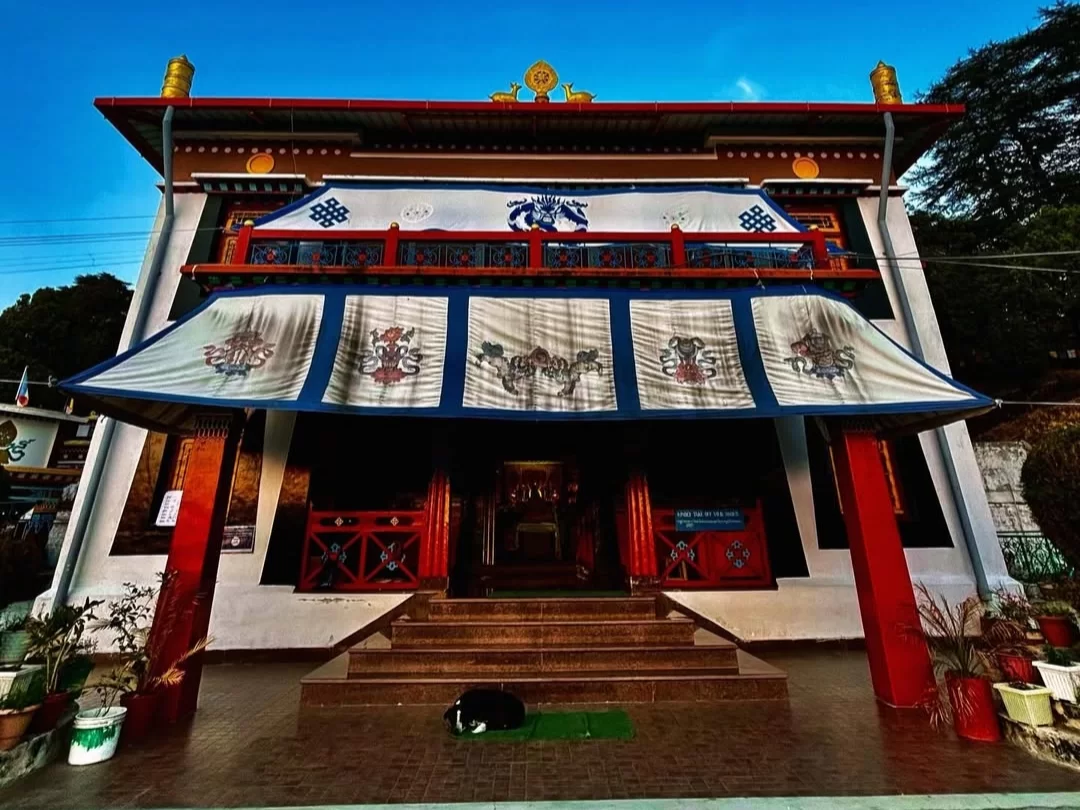
Visitors come to observe Tibetan Buddhist prayer rituals, traditional murals, and large prayer wheels within a quiet monastery setting. The temple serves the local Tibetan community and is situated close to the Tibetan settlement area in Mussoorie.

Quick Facts About Tibetan Buddhist Temple

Entry Fee Free
Timings 09:00 - 18:00
Altitude (m) 2000
Ideal Visit Duration (hrs) 1
Best Time of Day Morning
Crowd Level Moderate
Distance from Mussoorie (km) 2
Walking Difficulty Easy
Parking Available No
Last Mile Access Road
Suitable for Kids Yes
Suitable for Seniors Yes
Wheelchair Friendly No

Why Visit Tibetan Buddhist Temple, Mussoorie

The Tibetan Buddhist Temple in Mussoorie attracts visitors interested in experiencing the town’s Tibetan community presence and quiet spiritual spaces near the Mall Road area. Travelers often stop here to observe prayer rituals, view Buddhist iconography, and spend a few reflective minutes away from the busier commercial stretches.

The atmosphere inside the temple is calm and devotional, with prayer flags, murals, and a central Buddha statue forming the focal point. Compared to nearby shopping areas, the surroundings are quieter, and visitors are expected to maintain silence and remove footwear before entering the main prayer hall.

What makes the Tibetan Buddhist Temple distinct is its cultural representation within a predominantly colonial-era hill station setting. It offers travelers a brief but meaningful cultural stop, combining religious architecture, Tibetan artistic elements, and a peaceful interior space within walking distance of Mussoorie’s central zone.

History of Tibetan Buddhist Temple, Mussoorie

The Tibetan Buddhist Temple in Mussoorie was established in the mid-20th century following the arrival of Tibetan refugees in India after 1959. As Mussoorie became one of the early settlement locations for displaced Tibetan families, the temple emerged as a spiritual and community center for preserving religious traditions in exile.

The temple reflects the continuation of Tibetan Vajrayana Buddhist practices outside Tibet, with prayer wheels, murals, and images of the Buddha forming part of its devotional space. It serves not only as a place of worship but also as a symbol of the Tibetan diaspora’s efforts to sustain cultural and religious identity in the Himalayan region.

Over the decades, the Tibetan Buddhist Temple has remained closely connected to the local Tibetan community in Mussoorie, functioning as both a religious institution and a cultural landmark. Its presence represents a significant chapter in the town’s modern history linked to migration, refuge, and cultural continuity.

Best Time to Visit – Tibetan Buddhist Temple Mussoorie

The Tibetan Buddhist Temple in Mussoorie can be visited year-round, but a quieter and more comfortable experience depends on weather conditions and peak tourist flow along the Mall Road area where the temple is located.
  • Ideal months: March to June and October to November offer pleasant weather and easier movement around town.
  • Weather during the best season: Spring and early summer bring mild temperatures (around 10–25°C) with clear skies, making it comfortable to explore the temple complex and surrounding market area. Post-monsoon autumn offers crisp air and reduced haze, with fewer disruptions from rain.
  • Periods to avoid (and why): July to September sees heavy monsoon rainfall in Mussoorie, which can limit walking comfort and increase congestion in covered market stretches. Late December to early January can be quite cold, and peak holiday crowds may lead to heavier footfall around the temple despite clear weather.

How to Reach Tibetan Buddhist Temple Mussoorie

  • Nearest Airport: Jolly Grant Airport, Dehradun (approximately 55–60 km from Mussoorie). From the airport, taxis to Mussoorie usually take 1.5–2 hours depending on traffic and hill road conditions.
  • Nearest Railway Station: Dehradun Railway Station (around 34 km away) is the nearest major railhead with direct connectivity to Delhi and other North Indian cities. From the station, taxis and shared cabs to Mussoorie are readily available; the uphill drive typically takes 1.5–2 hours.
  • Road Access & Last-Mile Connectivity: The Tibetan Buddhist Temple is located near Happy Valley, about 2–3 km from Library Chowk. Taxis and private vehicles can reach the temple entrance via the Happy Valley Road. The approach road is narrow in sections with limited parking space nearby. From the roadside parking area, visitors may need to walk a short distance to reach the main prayer hall. During peak tourist season, traffic congestion around Library Chowk can increase travel time.

What to Expect When You Visit Tibetan Buddhist Temple Mussoorie

  • Environment and Surroundings: The Tibetan Buddhist Temple in Mussoorie, commonly associated with the Shedup Choepelling Temple near Happy Valley, is located in a quieter part of the hill station in Uttarakhand. The temple complex is set amid sloping terrain with views toward surrounding hills and valleys. The architecture reflects traditional Tibetan design elements, including colorful facades, prayer flags, and a large statue of Lord Buddha inside the main hall. The atmosphere is generally calm compared to the busy Mall Road area.
  • Facilities and Amenities: Facilities within the temple complex are simple. Visitors can access the main prayer hall, courtyard, and surrounding open areas. Seating is limited inside the prayer hall. Small Tibetan shops and eateries operate in the nearby Happy Valley area, but there are no large commercial establishments inside the temple premises. Public toilet facilities may be limited and basic.
  • Accessibility and Movement: The temple is accessible by motorable road from central Mussoorie and is approximately 2–3 km from Library Chowk. Visitors can reach by private vehicle, taxi, or on foot if staying nearby. The complex includes steps and sloped pathways, and movement involves navigating paved but sometimes uneven surfaces. During monsoon (July to September), surfaces can become wet and slippery.
  • Typical Visitor Behavior and Conditions: The temple attracts tourists, Buddhist devotees, and visitors interested in Tibetan culture. Footfall is moderate, with higher numbers during peak tourist seasons (April–June and October). Visitors typically spend 20–45 minutes observing the prayer hall and surrounding views. The environment remains quiet during prayer times, and respectful conduct is expected inside the main hall.

Important Visitor Information – Tibetan Buddhist Temple Mussoorie

  • Crowd & Weather Notes: The Tibetan Buddhist Temple near Happy Valley receives moderate footfall, with increased visitors during peak seasons (April to June and October) and during Buddhist festivals. The temple remains relatively calm compared to Mall Road areas. Monsoon months (July to September) bring mist and light showers, while winters (December to February) are cold but generally clear.
  • Peak / Quiet Hours: Late morning to early afternoon (10:30 AM – 2:00 PM) sees the highest visitor presence. Early mornings and late afternoons on weekdays are quieter and more suitable for peaceful observation.
  • Dress Code: Modest clothing is expected as this is an active place of worship. Visitors should remove footwear before entering prayer halls and avoid wearing revealing attire. Silence and respectful behavior are expected inside.
  • Safety Notes: Photography may be restricted inside certain prayer areas; always observe posted instructions. Maintain silence during prayer sessions and avoid disturbing monks or devotees. Pathways around the temple are stepped and slightly sloped, requiring careful movement, especially during wet weather.

Photography and Viewpoints – Tibetan Buddhist Temple Mussoorie

  • Best viewpoints/angles: The main prayer hall façade with its colorful murals and prayer wheels is best captured from the courtyard entrance for a symmetrical frame; side angles along the prayer wheel corridor highlight repeating patterns and vibrant detailing; interior compositions focusing on the large Buddha statue and thangka paintings work best from the central aisle, where permitted.
  • Lighting & time-of-day: Morning hours provide softer natural light filtering into the courtyard and better color clarity on exterior murals; interiors are moderately lit with a mix of natural and artificial light, so brightness varies by section; overcast conditions enhance color saturation on painted surfaces without harsh shadows.
  • Rules/restrictions: Photography inside the main prayer hall may be restricted, especially during prayer sessions; flash photography is generally discouraged; always follow signage and instructions from monastery authorities and respect worshippers’ privacy.
  • Crowd & access factors: The temple is relatively calm during weekday mornings, allowing clearer courtyard compositions; weekends and tourist seasons increase visitor flow, limiting uninterrupted interior frames; the approach area near Mall Road can be busy, affecting exterior setup space.

Near By Attraction

Gun Hill in Mussoorie, Uttarakhand with red cable car rides ascending the rocky hillside, a popular viewpoint included in Uttarakhand tour packages Viewpoint

Gun Hill

Gun Hill is a prominent hilltop viewpoint located above Mall Road in Mussoorie, Dehradun district, Uttarakhand, India.

George Everest House in Mussoorie, Uttarakhand perched on a scenic hilltop overlooking lush valleys, a historic colonial landmark featured in Uttarakhand tour packages Tourist Attraction

George Everest House

George Everest House is a 19th-century colonial-era residence and survey office located in Park Estate, west of Mussoorie town in Dehradun district, Uttarakhand, India.

Entrance of Atal Udhyan in Mussoorie, Uttarakhand surrounded by greenery and landscaped lawns, a peaceful public park included in Uttarakhand tour packages Tourist Attraction

Atal Udhyan

Atal Udhyan is a public park located along Mall Road in Mussoorie, Dehradun district, Uttarakhand, India.

Frequently Asked Questions About Tibetan Buddhist Temple

Tibetan Buddhist Temple is located in the Happy Valley area of Mussoorie, Uttarakhand, a short distance from the main Mall Road.
Tibetan Buddhist Temple is known for its peaceful atmosphere, colorful prayer flags, and large statue of Lord Buddha in Mussoorie, Uttarakhand.
Tibetan Buddhist Temple is generally open from morning around 9 am until evening around 6 pm, though timings may vary slightly in Mussoorie.
There is no mandatory entry fee to visit Tibetan Buddhist Temple, and visitors can enter the premises freely.
Visitors can reach Tibetan Buddhist Temple by road from Mall Road in Mussoorie using taxis, private vehicles, or a short walk to Happy Valley.
The best time to visit Tibetan Buddhist Temple is between March and June and September to November when the weather in Mussoorie, Uttarakhand is pleasant.
Most travelers spend about 30 minutes to 1 hour at Tibetan Buddhist Temple exploring the prayer hall and surrounding area.
Food stalls are limited near Tibetan Buddhist Temple, but cafes and restroom facilities are available in the nearby Mussoorie market area.
Photography is generally allowed at Tibetan Buddhist Temple, but visitors should remain respectful during prayer times.
Tibetan Buddhist Temple is suitable for family visits as it offers a calm environment and easy access within Mussoorie.

Loved this place ? Let’s Plan Your Uttarakhand Trip

Get customized Uttarakhand tour planning designed around seasonal weather changes, hill road travel timing, pilgrimage flow, and comfort-based pacing. Whether you are visiting for spiritual journeys, Himalayan views, wildlife reserves, river valleys, or p

⚡ Quick Response | 💰 Free consultation | 🕒 24×7 expert support

×

Plan Your Trip