Quick Facts About Devprayag
| Entry Fee | Free |
| Timings | 06:00 - 18:00 |
| Altitude (m) | 830 |
| Ideal Visit Duration (hrs) | 2 |
| Best Time of Day | Morning |
| Crowd Level | Moderate |
| Distance from Rishikesh (km) | 70 |
| Walking Difficulty | Moderate |
| Parking Available | No |
| Last Mile Access | Walk |
| Suitable for Kids | Yes |
| Suitable for Seniors | No |
| Wheelchair Friendly | No |
Why Visit Devprayag, Uttarakhand
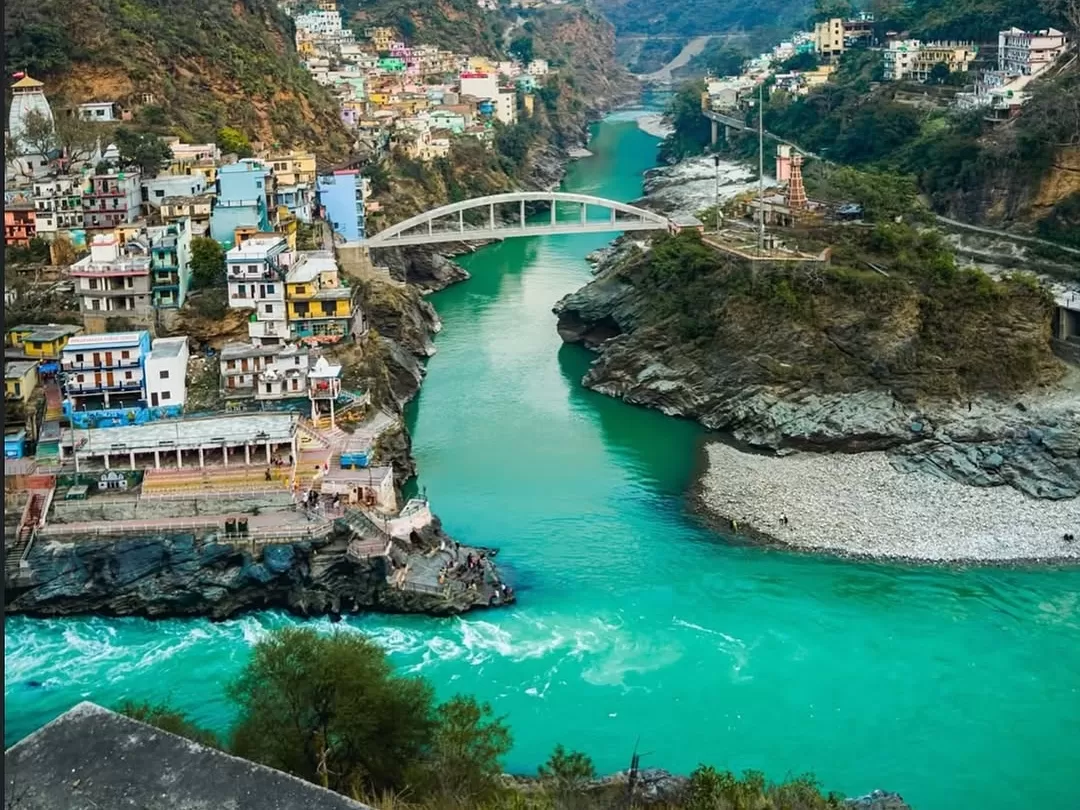
Devprayag attracts visitors as the sacred confluence where the Alaknanda and Bhagirathi rivers meet to officially form the River Ganga. Pilgrims stop here to witness the visible merging of two differently colored river streams, while travelers exploring the Char Dham route include it as a significant spiritual and geographic landmark.
The atmosphere in Devprayag is devotional and traditional, with stepped ghats descending toward the sangam and compact hillside homes overlooking the rivers. Priests conduct rituals along the riverbanks, and the sound of flowing water dominates the setting, especially during monsoon when river volume increases noticeably.
What makes Devprayag distinct is its clear, visible river confluence that marks the formal beginning of the Ganga, setting it apart from other Himalayan towns. Unlike single-river settlements, this town offers a rare opportunity to observe two major Himalayan rivers merging at a sharply defined meeting point within a steep mountain valley.
History of Devprayag
Devprayag, located in Tehri Garhwal district of Uttarakhand, is one of the Panch Prayag (five sacred river confluences) of the Alaknanda River. It holds immense geographical and religious importance as the confluence where the Alaknanda and Bhagirathi rivers merge to officially form the River Ganga. This sacred association has made Devprayag a significant pilgrimage town for centuries.
The town has long been referenced in Hindu religious tradition, with its name derived from sage Dev Sharma, who is believed to have performed penance here according to local belief. Devprayag is also home to the ancient Raghunathji Temple, traditionally dated to the early medieval period, which has been an important Vaishnav pilgrimage center in the Garhwal Himalayas.
Historically, Devprayag formed part of traditional pilgrimage routes leading toward Badrinath and other Himalayan shrines. Its identity has remained closely tied to ritual bathing at the sangam (confluence), religious scholarship, and temple-based worship, making it a living spiritual center rather than a site defined by political or military history.
Best Time to Visit – Devprayag
Devprayag is best visited when river levels are stable and skies are clear, as the confluence of the Alaknanda and Bhagirathi rivers is the main highlight and visibility from the ghats and surrounding viewpoints greatly enhances the experience.
- Ideal months: October to April offers the most comfortable weather and clear views of the sangam.
- Weather during the best season: Post-monsoon and winter months bring mild daytime temperatures (around 10–25°C), clearer skies, and steady river flow after the rains. The distinct green and muddy hues of the two rivers are more visibly defined under clear light, making ghat visits and temple exploration comfortable.
- Periods to avoid (and why): July to September sees heavy monsoon rainfall in the Tehri Garhwal region, often causing high river levels, strong currents, slippery steps at the ghats, and limited visibility due to cloud cover. Late May to June afternoons can be warmer, especially on exposed riverfront steps.
How to Reach Devprayag
- Nearest Airport: Jolly Grant Airport, Dehradun (approximately 90 km from Devprayag). From the airport, taxis to Devprayag take around 3–4 hours depending on traffic and hill road conditions along the Rishikesh–Badrinath highway.
- Nearest Railway Station: Rishikesh Railway Station (around 70 km away) is the closest railhead with limited train services. Haridwar Railway Station (approximately 95 km away) offers broader connectivity to major Indian cities. From either station, taxis and state transport buses to Devprayag are available, with travel time ranging from 2.5–4 hours.
- Road Access & Last-Mile Connectivity: Devprayag lies on National Highway 7 along the Rishikesh–Badrinath route and is accessible by private vehicle, taxi, and Uttarakhand state buses. Vehicles can reach the town center, but access to the river confluence (sangam) and Raghunath Temple involves descending steep stone steps. Roads are narrow with sharp bends, and travel during monsoon season may be affected by landslides or temporary traffic restrictions.
What to Expect When You Visit Devprayag Tehri Garhwal
- Environment and Surroundings: Devprayag is a Himalayan town in Tehri Garhwal district of Uttarakhand, situated at the confluence of the Alaknanda and Bhagirathi rivers, which together form the River Ganga. The town is built along steep mountain slopes above the sangam (confluence), with tiered houses and narrow lanes overlooking the meeting point of the two distinct river streams. The setting is dramatic and rocky, with strong river currents visible below. During monsoon (July to September), water levels rise significantly and the river flow becomes forceful and muddy.
- Facilities and Amenities: Being a small pilgrimage town, facilities are basic but functional. There are local guesthouses, small lodges, tea stalls, and simple eateries near the main road and temple areas. Public toilets are limited and mainly located near temple zones. Seating areas are minimal along the ghats. Commercial infrastructure is modest compared to larger hill towns.
- Accessibility and Movement: Devprayag is located on the Rishikesh–Badrinath highway (NH-7) and is approximately 70–75 km from Rishikesh. The town is accessible by bus, shared jeep, or private vehicle. Roads include hill stretches with sharp bends. To reach the actual confluence, visitors must descend a series of steep stone steps. Climbing back up can be physically demanding, especially for elderly visitors. During rainy weather, steps can become slippery.
- Typical Visitor Behavior and Conditions: Devprayag attracts pilgrims, Char Dham travellers, and visitors interested in river confluences. Footfall increases during the Char Dham Yatra season (typically May–June and September–October). Visitors usually spend 45–90 minutes visiting the sangam and Raghunathji Temple. During peak pilgrimage season, the narrow lanes and stairways can become congested, and parking space along the highway is limited.
Important Visitor Information – Devprayag Tehri Garhwal
- Crowd & Weather Notes: Devprayag sees increased pilgrim and tourist footfall during Char Dham Yatra season (April to June) and on auspicious bathing dates. Summers are warm during midday, while winters (December to February) are cool and relatively quiet. Monsoon (July to September) brings heavy rainfall, strong river currents, and occasional road disruptions due to landslides in the region.
- Peak / Quiet Hours: Late morning to early afternoon (10:00 AM – 2:00 PM) is the busiest period around the Sangam ghats and Raghunath Temple. Early mornings are comparatively peaceful and offer clearer views of the confluence.
- Dress Code: Modest attire is recommended, especially when visiting Raghunath Temple and bathing at the confluence. Footwear must be removed before entering temple premises.
- Safety Notes: The confluence has strong and fast-moving currents; visitors should avoid venturing into deep water and follow local guidance before taking a ritual dip. Steps leading to the ghats are steep and can be slippery. The town is built on a hillside with narrow roads and limited parking, requiring careful movement on foot and cautious driving.
Photography and Viewpoints – Devprayag, Tehri Garhwal
- Best viewpoints/angles: The classic confluence view is best captured from the stepped ghat area above the sangam, where the greenish Alaknanda and darker Bhagirathi visibly merge; elevated roadside viewpoints along the Rishikesh–Badrinath highway provide a top-down perspective of the meeting point; frames from the suspension bridge and upper town lanes allow layered compositions of temple architecture against the river junction.
- Lighting & time-of-day: Early morning offers softer light on the river surface and clearer separation of water tones at the confluence; late afternoon enhances the texture of surrounding hills with side lighting; during monsoon, water levels rise significantly and color distinction may reduce due to sediment flow.
- Rules/restrictions: Photography is allowed at public ghats and viewpoints; avoid obstructing pilgrims performing rituals at the sangam; drone usage may be restricted and can require administrative permission, particularly near religious zones and bridges.
- Crowd & access factors: The sangam steps can become crowded during Char Dham season and auspicious bathing dates, limiting uninterrupted compositions; early weekday mornings provide clearer framing; steep stair access to the ghats requires careful equipment handling, especially during monsoon when stone steps become slippery.