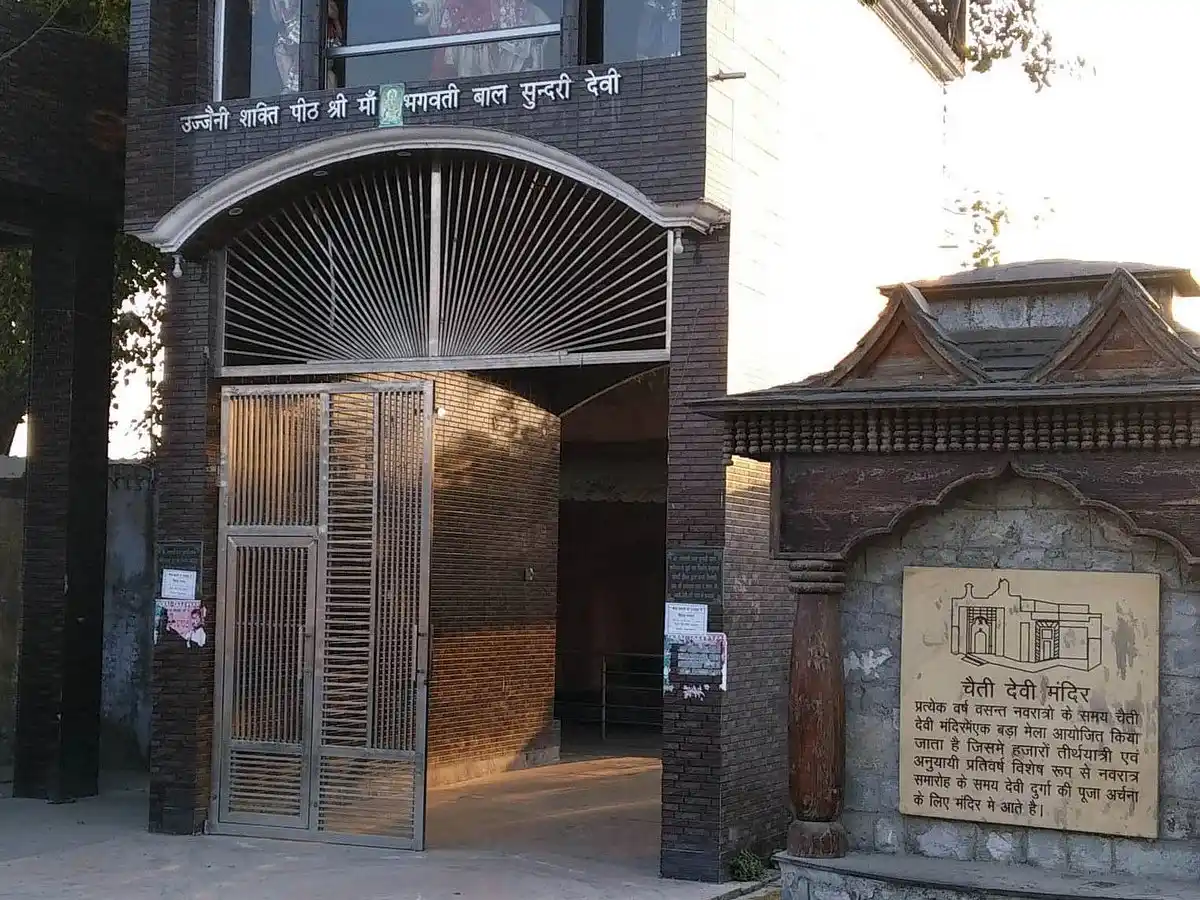
Chaiti Devi Mandir – Hilltop Hindu Temple in Haridwar Region

Chaiti Devi Temple , Kashipur
Tourists visit Chaiti Devi Mandir for its religious importance and its location on Neel Parvat near Haridwar. The temple is accessed by ropeway or trekking route and is associated with Shakti worship traditions in the region. It is often visited along with other Haridwar temples and Ganga ghats.

Quick Facts About Chaiti Devi Temple

Chaiti Devi Mandir, Uttarakhand Quick Facts

Entry Fee No entry fee
Timings Generally open from early morning to evening; timings may vary during Navratri and other festivals
Altitude (m) Approximately 330–350 m above sea level
Ideal Visit Duration 1–2 hours
Best Time of Day Morning or late afternoon for comfortable weather and easier access
Crowd Level Moderate; very high during Chaiti Navratri and major Hindu festivals
Distance from City Centre (km) Approximately 4–5 km from Haridwar city centre
Walking Difficulty Moderate; involves a hill climb with steps from the base approach
Parking Available Yes, limited parking available at the base area
Last Mile Access Accessible by road up to base point followed by stair climb to the temple
Suitable for Kids Yes, with supervision due to stairs
Suitable for Seniors Partially suitable; depends on ability to climb stairs
Wheelchair Friendly No; stair access limits wheelchair entry

Why Visit Chaiti Devi Mandir, Uttarakhand

Visitors come to Chaiti Devi Mandir in Uttarakhand to offer prayers during Chaitra Navratri and other devotional periods when the temple sees increased religious activity. It is visited by devotees from nearby towns as part of local pilgrimage circuits in the region.

The on-ground atmosphere is devotional and seasonal, with peak footfall during festival days, temple rituals, and community gatherings. Outside peak periods, the site remains relatively calm, allowing visitors to spend time in prayer without large crowds.

What makes Chaiti Devi Mandir distinct is its strong association with seasonal worship practices and its role in local religious life rather than large-scale tourism. The experience is shaped by active devotion and the temple’s integration into everyday spiritual traditions of Uttarakhand.

History of Chaiti Devi Mandir, Uttarakhand

Chaiti Devi Mandir is a Hindu temple dedicated to Goddess Chaiti Devi, worshipped as a form of Shakti in the Kumaon region of Uttarakhand. The temple holds long-standing local significance as a place of devotion for surrounding communities.

The shrine is associated with regional traditions of Shakti worship, where the deity is revered for protection and blessings. Devotees visit the temple regularly for prayer and during seasonal religious observances linked to local Hindu practices.

Today, Chaiti Devi Mandir continues to function as an active spiritual site, reflecting the enduring presence of local goddess worship within Uttarakhand’s cultural and religious landscape.

Best Time to Visit Chaiti Devi Mandir, Uttarakhand

Chaiti Devi Mandir in Haridwar is best visited during the cooler pilgrimage-friendly months when temple access is easier and devotees can comfortably experience rituals and hilltop surroundings without heat or heavy monsoon disruption.

  • Ideal Months: October to March is the most suitable period, with peak religious activity around the Chaitra Navratri season (March–April, depending on the Hindu calendar).
  • Weather Conditions: These months generally offer pleasant daytime temperatures, clearer skies over Haridwar, and comfortable conditions for climbing or using the cable route to the temple hilltop.
  • Periods to Avoid: July to September should be avoided due to heavy monsoon rainfall, which can make hillside paths slippery and reduce visibility. Mid-summer afternoons can also be hot and tiring for uphill movement.

How to Reach Chaiti Devi Mandir, Uttarakhand

  • By Air: The nearest airport is Jolly Grant Airport, Dehradun, located approximately 125–135 km from Chaiti Devi Mandir in Almora. It has regular flights connecting major Indian cities. From the airport, onward travel is via road through Rishikesh–Karnaprayag–Almora routes.
  • By Train: The nearest railway stations are Kathgodam (around 85–95 km away) and Haldwani (around 90–100 km away). Both stations are well connected with Delhi and other major cities. From there, taxis and buses are available for Almora via Kathgodam–Bhowali–Almora hill route.
  • By Road: Chaiti Devi Mandir is located in Almora town and is accessible via well-connected hill roads from Kathgodam, Nainital, Ranikhet, and Haldwani. The final approach involves steep uphill stretches within Almora with limited parking near temple access points. During peak tourist seasons and monsoon months, travel time may increase due to winding roads, fog, and occasional landslides in the Kumaon region.

What to Expect When You Visit Chaiti Devi Mandir, Uttarakhand

  • Chaiti Devi Mandir is situated in a hill or semi-hill environment of Uttarakhand, typically surrounded by forest patches, rural settlements, and valley views depending on its specific local approach route.
  • The temple premises are simple and locally maintained, with an atmosphere focused on daily worship and seasonal religious gatherings rather than commercial tourism or large-scale infrastructure.
  • Basic amenities are limited to small shops selling offerings, drinking water points, and occasional resting areas. Visitors should expect minimal tourist-oriented facilities directly at the temple site.
  • Accessibility generally involves travel by road to a nearby base point followed by a short walk or stair ascent. Paths may be uneven, and movement can become slower during peak crowd periods or wet weather conditions.
  • The temple sees primarily local devotees and regional pilgrims, with increased footfall during Chaiti Navratri and other Hindu festivals, when queues and waiting times for darshan are common.
  • Visitor behavior is largely devotional, with people spending time in prayer, offering rituals, and participating in seasonal religious events. The environment remains quiet outside festival days.
  • Weather conditions can influence the visit experience, with monsoon rain making paths slippery and summer heat affecting comfort during uphill movement in open areas.

Important Visitor Information for Chaiti Devi Mandir, Uttarakhand

  • Chaiti Devi Mandir experiences its highest visitor turnout during Chaitra Navratri and other major Hindu festivals, while regular weekdays outside festival periods remain comparatively less crowded.
  • Morning and early evening hours are generally more suitable for darshan, as mid-day periods can become busier during pilgrimage flow and local visitor movement.
  • The region around Haridwar experiences hot summers, humid monsoon conditions, and mild winters, which can influence comfort levels during the climb and temple visit.
  • Modest and respectful attire is recommended within the temple premises, especially during Navratri and other ritual periods when devotional gatherings are larger.
  • Visitors should exercise caution on stairways and sloped temple approach paths, as crowd density during festival days can slow movement and increase slip risk in wet conditions.
  • During peak festival periods, expect queue formation and limited space near the sanctum, requiring additional time for darshan and movement within the temple area.

Photography and Viewpoints at Chaiti Devi Mandir, Uttarakhand

  • The main photography viewpoint is the temple courtyard and entrance steps, where the shrine structure can be framed against the forested hills and river valley setting of the surrounding Garhwal landscape.
  • Elevated sections along the approach path provide wider compositions, capturing the temple complex along with terraced slopes and distant Himalayan foothills where visibility allows.
  • Morning hours offer softer illumination on the temple façade and fewer visitors, making it easier to photograph the sanctum entrance and courtyard details without obstruction.
  • During evening aarti, the temple becomes visually striking with lamps and devotional activity, but crowd density around the main courtyard can limit clear framing positions.
  • Photography inside the sanctum may be restricted during ???? rituals, and visitors are expected to avoid flash and maintain respectful distance from ongoing worship activities.
  • Navratri and local festival days significantly increase footfall, affecting access to the main viewing angles near the shrine and entrance steps.
  • Roadside pull-offs near the temple approach offer limited but useful external viewpoints, especially for capturing the temple within its natural hillside setting.

Near By Attraction

Frequently Asked Questions About Chaiti Devi Temple

Loved this place ? Let’s Plan Your Uttarakhand Trip

Get customized Uttarakhand tour planning designed around seasonal weather changes, hill road travel timing, pilgrimage flow, and comfort-based pacing. Whether you are visiting for spiritual journeys, Himalayan views, wildlife reserves, river valleys, or p

⚡ Quick Response | 💰 Free consultation | 🕒 24×7 expert support

×

Plan Your Trip