Quick Facts About Birthi Waterfall Zero Point
Birthi Waterfall (Zero Point Area), Uttarakhand Quick Facts
| Entry Fee | No official entry fee |
| Timings | Open throughout the day; daylight hours recommended for safe access |
| Altitude (m) | Approximately 2,000 m above sea level |
| Ideal Visit Duration | 1–2 hours |
| Best Time of Day | Morning to early afternoon for clear visibility and safer trekking conditions |
| Crowd Level | Low; may increase during peak tourist season (April–June) |
| Distance from City Centre (km) | Approximately 35 km from Munsiyari town centre |
| Walking Difficulty | Moderate; includes a short downhill trek from the road viewpoint to the waterfall base |
| Parking Available | Limited roadside parking available near the viewpoint area |
| Last Mile Access | Motorable road up to viewpoint followed by a short trekking path |
| Suitable for Kids | Yes, with supervision near slippery areas |
| Suitable for Seniors | Partially suitable; depends on ability to walk short uneven trails |
| Wheelchair Friendly | No; uneven trekking path restricts wheelchair access |
Why Visit Birthi Waterfall Zero Point, Uttarakhand
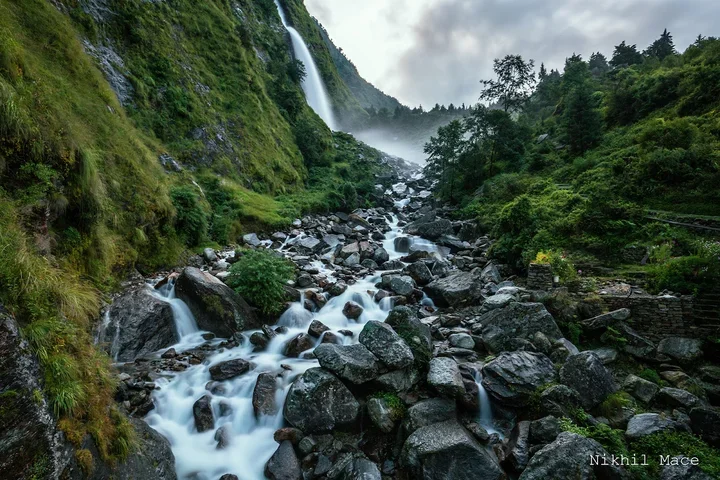
Visitors come to Birthi Waterfall Zero Point near Munsiyari for close-range views of a high-drop Himalayan waterfall surrounded by dense forested slopes. It is a frequent stop for travelers moving along the road toward the higher Kumaon region who want a short nature halt without trekking.
The on-ground atmosphere is fresh and cool, with mist from the waterfall mixing with the mountain air and a steady flow of roadside visitors. Small viewing areas and natural ledges allow people to pause, take photos, and observe the water cascading down the rocky cliff.
What makes Birthi Waterfall Zero Point distinct is its direct roadside accessibility combined with a tall, uninterrupted waterfall set deep within the Himalayan terrain. Its location in
History of Birthi Waterfall Zero Point, Uttarakhand
Birthi Waterfall, located near Munsiyari in the Pithoragarh district of Uttarakhand, is a natural Himalayan waterfall formed by a stream descending from the surrounding mountain slopes. The site has developed as a scenic stop along the road connecting local villages and higher-altitude settlements in the region.
Zero Point near Birthi Waterfall serves as a viewing and stopping area for travelers exploring the Munsiyari–Milam valley route. The area has historically been used as part of local travel and transit routes across the Kumaon Himalayas.
Today, Birthi Waterfall and Zero Point are recognized as key natural viewpoints in the region, reflecting the landscape-driven travel routes and local accessibility patterns of the upper Himalayan belt in Uttarakhand.
Best Time to Visit Birthi Waterfall Zero Point, Uttarakhand
Birthi Waterfall and Zero Point in the Munsiyari region are best visited when road access through the Kumaon hills is stable and the waterfall flow is visible but safe, allowing visitors to experience both the cascade viewpoint and high-altitude Himalayan scenery.
- Ideal Months: March to June and September to November are the most suitable months for visiting both Birthi Waterfall and Zero Point.
- Weather Conditions: These periods generally offer clear mountain views, moderate daytime temperatures, and manageable road conditions along the Thal–Munsiyari route, making sightseeing and short walks more comfortable.
- Periods to Avoid: July to August should be avoided due to heavy monsoon rainfall, which can cause landslides, slippery roads, and reduced visibility. Peak winter months may also bring heavy snowfall near Zero Point, restricting access.
How to Reach Birthi Waterfall Zero Point, Uttarakhand
- By Air: The nearest airport is Pantnagar Airport, located approximately 215–230 km from Birthi Waterfall near Munsiyari (Zero Point region). From the airport, onward travel is via road through Haldwani, Almora, and Thal to Munsiyari.
- By Train: The nearest railway station is Kathgodam, about 200–220 km away. It is well connected to Delhi and other major cities. From Kathgodam, taxis and buses are available toward Munsiyari via Almora and Pithoragarh, followed by local transport to Birthi Waterfall.
- By Road: Birthi Waterfall is located on the Munsiyari–Thal road in the Johar Valley region. It is directly accessible by motorable roads, with a designated viewpoint and parking area near the waterfall. The final access involves a short walk from the roadside viewpoint. Road travel in this region can be affected by narrow mountain stretches, sharp bends, and seasonal disruptions such as landslides, especially during monsoon months. Travel time may also increase due to limited public transport frequency in the higher Himalayan belt.
What to Expect When You Visit Birthi Waterfall Zero Point, Uttarakhand
- Birthi Waterfall Zero Point is located in the Munsiyari region of Pithoragarh district, surrounded by dense Himalayan forests, steep valleys, and rugged mountain terrain typical of the outer Kumaon range.
- The environment is predominantly natural and undeveloped, with the waterfall cascading through rocky cliffs into a narrow gorge. The area remains exposed to weather conditions, and mist or spray is common near the viewing point.
- Facilities are minimal, limited mainly to small roadside stalls and basic resting spots along the access route. There are no structured tourist complexes, and amenities such as washrooms or food options are sparse and basic.
- Access involves travel on winding mountain roads followed by a short walk or descent to the viewpoint area. Pathways can be uneven and slippery, especially during or after rainfall, requiring careful movement.
- Visitor activity is generally low to moderate compared to major tourist hubs, with travelers stopping briefly for photography, viewing the waterfall, and short rest breaks rather than extended stays.
- Weather plays a major role in the experience, with monsoon enhancing water flow but also increasing the risk of slippery paths, while winter brings cold temperatures and reduced water volume.
- The overall condition of the site remains rustic and minimally managed, so visitors should expect limited safety railings, basic infrastructure, and a strong reliance on natural terrain navigation.
Important Visitor Information for Birthi Waterfall Zero Point, Uttarakhand
- Birthi Waterfall Zero Point experiences higher visitor flow during summer months (May–June) and long weekends, while weekdays and early mornings remain comparatively quieter with fewer tour groups.
- The waterfall is at its most powerful during and immediately after monsoon season, though heavy rainfall can reduce visibility and make access routes less stable.
- Early morning visits offer better clarity, softer light for photography, and a more peaceful environment before day visitors arrive from nearby Munsiyari routes.
- There is no specific dress code, but sturdy footwear is essential due to steep, uneven, and often wet terrain near the viewpoint and waterfall approach trail.
- Visitors should exercise caution on slippery rocks and narrow viewing edges, especially during monsoon when water spray and moss increase the risk of slipping.
- Road access involves hilly terrain with bends and altitude changes; slow driving is recommended, particularly in foggy or rainy conditions that reduce visibility.
Photography and Viewpoints at Birthi Waterfall Zero Point, Uttarakhand
- The primary viewpoint is the designated Zero Point platform along the road approach, where the full vertical drop of Birthi Waterfall can be framed against the steep forested cliff face of the Kali Kumaon valley.
- Closer roadside bends before the main viewing area provide partial side-angle compositions, capturing both the waterfall and the surrounding dense rhododendron and oak forest slopes.
- Morning light offers clearer visibility of the waterfall stream with reduced mist interference, while midday conditions intensify water sparkle due to direct sunlight on the falling stream.
- During monsoon months, high water volume creates a stronger cascade but also increases spray and mist, which can limit visibility from lower roadside angles.
- Photography is permitted from public viewpoints, but stepping beyond marked edges is restricted due to steep drop-offs and unstable cliffside terrain.
- Tourist movement increases during peak travel months on the Munsiyari route, which can lead to waiting time for unobstructed shots at the main Zero Point viewing platform.
- Road access determines all photography positions, as there is no trekking requirement, but vehicle stoppage areas are limited and shared with passing mountain traffic.