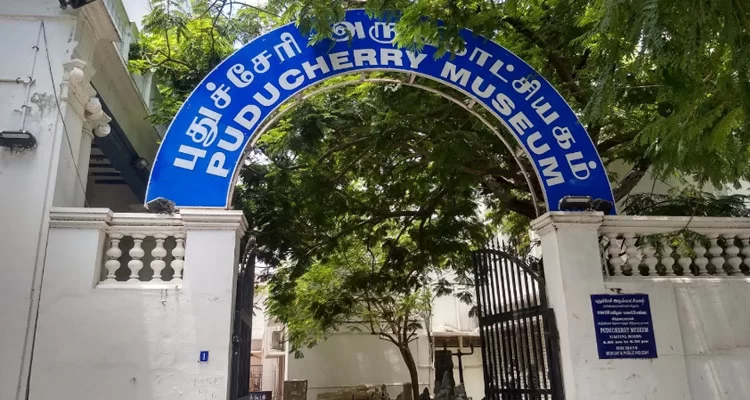
Puducherry Museum, Puducherry, India

Puducherry Museum , Puducherry
It is visited for its collection of artifacts from the Arikamedu archaeological site, as well as French colonial furniture, sculptures, and coins. The museum provides historical context on the region’s cultural and colonial past.

Quick Facts About Puducherry Museum

Puducherry Museum, Puducherry Quick Facts

Entry Fee Nominal entry fee applicable (varies for Indian and foreign visitors)
Timings 9:00 AM – 6:00 PM; closed on Mondays and public holidays
Altitude (m) Approximately 0–10 m above sea level
Ideal Visit Duration 1–2 hours
Best Time of Day Morning hours to avoid crowd and heat
Crowd Level Moderate; higher during weekends and tourist season
Distance from City Centre (km) Approximately 1.5 km from Puducherry city centre
Walking Difficulty Easy
Parking Available Limited parking available near museum premises and surrounding roads
Last Mile Access Direct road access with short walk from parking area
Suitable for Kids Yes
Suitable for Seniors Yes
Wheelchair Friendly Partially accessible; main galleries are accessible but some sections may have steps or narrow passages

Why Visit Puducherry Museum, Puducherry, Tamil Nadu

Visitors come to Puducherry Museum to view archaeological finds, bronze sculptures, Roman artifacts, and colonial-era objects that reflect the region’s layered cultural history. It is a key stop for travelers exploring the heritage district of Puducherry.

The atmosphere inside the museum is quiet and structured, with well-organized galleries and controlled lighting that allow for focused viewing of exhibits. Visitors typically move through sections at a slow pace, spending time with curated collections from different historical periods.

What makes Puducherry Museum distinct is its compact yet diverse collection that includes artifacts from both South Indian dynasties and French colonial influence. Its location near other heritage landmarks makes it an easy cultural stop within the city’s museum circuit.

History of Puducherry Museum, Puducherry, Tamil Nadu

Puducherry Museum was established to preserve and display artifacts representing the region’s historical and cultural development, particularly its French colonial heritage and earlier dynastic influences in the Coromandel Coast region.

The museum’s collections include archaeological finds, sculptures, and objects recovered from Arikamedu, an important ancient Indo-Roman trade site near Puducherry, reflecting the region’s historical role in early maritime trade networks.

Today, Puducherry Museum serves as a key cultural institution, documenting the layered history of the region from ancient settlements to colonial-era influences, making it an important stop for visitors interested in heritage and archaeology.

Best Time to Visit Puducherry Museum, Puducherry, Tamil Nadu

Puducherry Museum is best visited during the cooler months when combining indoor cultural exploration with nearby heritage walks in White Town is more comfortable and less affected by coastal heat and humidity.

  • Ideal Months: October to March is the most suitable period for visiting, offering comfortable conditions for museum visits and surrounding sightseeing.
  • Weather Conditions: This season generally brings pleasant coastal temperatures and manageable humidity, making it easier to explore both indoor galleries and nearby colonial-era streets.
  • Periods to Avoid: April to June can be hot and humid, which may reduce comfort during travel around the city, while monsoon months can bring intermittent rain that affects outdoor movement between attractions.

How to Reach Puducherry Museum, Puducherry

  • By Air: Puducherry Airport is the nearest airport, located about 5 km from Puducherry Museum. However, it has limited flight connectivity. The most convenient option is Chennai International Airport, around 135 km away, which is well connected to major Indian and international cities. From both airports, taxis and buses are available to Puducherry city.
  • By Train: Puducherry Railway Station is the nearest railhead, situated approximately 2 km from the museum. It is connected to Chennai and Villupuram by regular train services. From the station, auto-rickshaws, taxis, and local transport provide easy access to the museum.
  • By Road: Puducherry Museum is located in the White Town area and is well connected via NH 32 and internal city roads. Regular government and private buses operate from Chennai, Villupuram, Bengaluru, and nearby towns. The museum is easily reachable by auto-rickshaw, taxi, or even on foot from most central heritage zones. Traffic may be heavier during weekends and tourist seasons.

What to Expect When You Visit Puducherry Museum, Puducherry, Tamil Nadu

  • is located within a colonial-era building in the White Town area, surrounded by government offices, heritage streets, and urban traffic rather than a standalone cultural campus.
  • The museum environment is indoor-focused, with controlled lighting, display halls, and curated sections showcasing archaeological artifacts, French colonial relics, sculptures, and regional historical objects.
  • Entry is regulated with ticketed access and fixed visiting hours. Movement inside follows a structured route through galleries, and visitors typically spend a limited amount of time per exhibit due to space and flow management.
  • Basic visitor amenities include ticket counters, seating in limited areas, and nearby public facilities outside the museum building. Food and shopping options are not available inside the premises but are easily accessible in surrounding streets.
  • Visitor behavior is generally quiet and observation-focused, with photography restrictions in certain galleries depending on exhibit rules. Groups and school visits are common during daytime hours.
  • Crowd levels are usually moderate, but can increase during weekends and holiday seasons, leading to brief waiting times at entry and closer viewing conditions inside galleries.
  • The experience is educational and heritage-oriented, emphasizing historical preservation rather than interactive or large-scale museum infrastructure, so expectations should align with a compact but curated collection.

Important Visitor Information for Puducherry Museum, Puducherry

  • The museum experiences higher visitor footfall during weekends, public holidays, and Puducherry’s peak tourist season, while weekday mornings generally offer a quieter and more comfortable viewing experience.
  • Early visiting hours after opening provide better access to galleries with minimal crowding, whereas late morning and afternoon hours can see increased group visits and school excursions.
  • The museum visit is largely unaffected by weather as exhibits are indoors, making it suitable year-round, though Puducherry’s humid coastal climate can make outdoor movement between nearby attractions warm.
  • No specific dress code is enforced, but visitors are expected to maintain respectful attire suitable for a cultural and heritage institution.
  • Photography restrictions may apply in select galleries or for certain artifacts, and visitors must follow on-site signage and staff instructions carefully.
  • Care should be taken around delicate exhibits and display cases, and touching artifacts or restricted installations is strictly prohibited to ensure preservation of heritage items.

Photography and Viewpoints at Puducherry Museum, Puducherry, Tamil Nadu

  • The museum’s colonial-era façade provides the best exterior viewpoint, best captured from the front courtyard where architectural symmetry and heritage detailing are clearly visible.
  • Angles from the main entrance pathway allow framing of the museum building against its landscaped surroundings, highlighting its French colonial design elements.
  • Indoor galleries offer limited but structured viewpoints of archaeological artifacts, bronze sculptures, and Chola-period exhibits, subject to gallery-specific photography permissions.
  • Natural light around the entrance area is most favorable during morning hours, while interior lighting varies across galleries and may affect image clarity of displayed objects.
  • Photography inside certain exhibition halls may be restricted or prohibited, especially for rare artifacts, manuscripts, and sensitive heritage collections.
  • Crowd levels are generally moderate on weekdays, allowing clearer shots of display corridors, while weekends and tourist seasons can increase foot traffic inside galleries.
  • Tripods, flash photography, and professional equipment may require prior permission from museum authorities and are typically not allowed in standard visitor access areas.

Near By Attraction

Sri Karaneswar Nataraja Temple Tourist Attraction

Sri Karaneswar Nataraja Temple

Sri Karaneswar Nataraja Temple is a Hindu temple dedicated to Lord Shiva in his Nataraja form, located in Karaikal, an enclave of the Union Territory of Puducherry, India.

Bharathi Park Puducherry Garden

Bharathi Park Puducherry

Bharathi Park is a public park located in the central part of Puducherry, India.

Arulmigu Manakula Vinayagar Devasthanam Temple

Arulmigu Manakula Vinayagar Devasthanam

Arulmigu Manakula Vinayagar Devasthanam is a Hindu temple dedicated to Lord Ganesha located in Puducherry, India.

Frequently Asked Questions About Puducherry Museum

Puducherry Museum showcases archaeological finds, French colonial furniture, sculptures, coins, and artifacts reflecting the cultural history of Puducherry.
It is located in the White Town area of Puducherry, about 1.5 km from the city centre.
The museum is generally open from 9:00 AM to 6:00 PM and remains closed on Mondays and public holidays.
Yes. A nominal entry fee is charged, with different rates for Indian and foreign visitors.
Most visitors spend around one to two hours exploring the galleries.
October to March offers pleasant weather for combining the museum visit with nearby heritage attractions.
Yes. The museum is family friendly and suitable for children interested in history and culture.
Yes. The museum has easy access and is suitable for senior visitors.
Limited parking is available near the museum premises and surrounding roads.
Photography may be restricted in certain galleries, so visitors should follow museum guidelines.
The museum can be reached by taxi, auto rickshaw, local bus, or on foot from many White Town attractions.
Nearby attractions include Bharathi Park, Manakula Vinayagar Temple, and Sri Karaneswar Nataraja Temple.

Loved this place ? Let’s Plan Your Tamil Nadu Trip

Get customized Tamil Nadu tour planning designed around temple visit timing, seasonal weather comfort, road travel distances, and realistic pacing across regions. Whether you are visiting for architectural heritage, spiritual journeys, coastal relaxation,

⚡ Quick Response | 💰 Free consultation | 🕒 24×7 expert support

×

Plan Your Trip