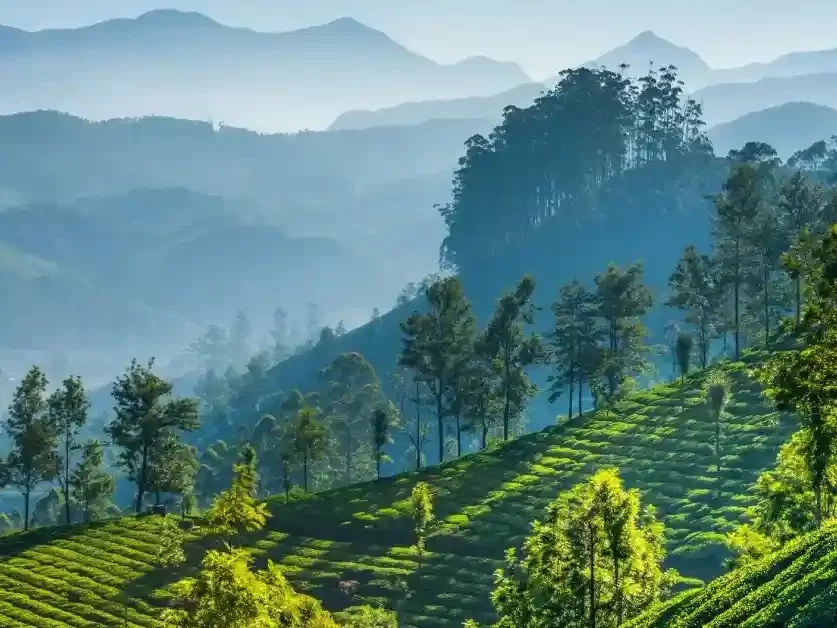
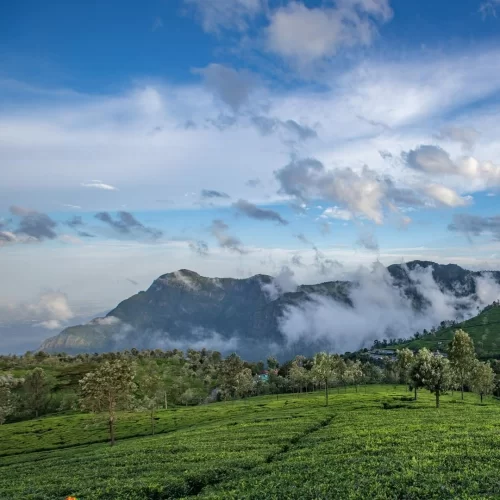
Nilgiris Tea, Nilgiris District (Tamil Nadu, India)

Nilgiris Tea , Coonoor
Tourists visit Nilgiris Tea estates to see tea gardens, learn about tea cultivation and processing, and enjoy scenic drives through plantation landscapes. Many stops include tea factory visits, tasting counters, and short guided walks depending on the estate.

Quick Facts About Nilgiris Tea

Quick Facts About Nilgiris Tea Estates, Nilgiris

Entry Fee Varies by estate (many tea gardens are free to view from roadsides; tea factory visits/tastings may have separate charges)
Timings Tea estates are viewable throughout the day; tea factory visit timings usually follow working hours (commonly 9:00 AM to 5:00 PM, varies by estate)
Altitude (m) Approx. 1,500–2,400 m above sea level (varies across Nilgiri tea-growing regions)
Ideal Visit Duration 45 minutes – 2 hours (depends on whether you visit only viewpoints or include a tea factory tour)
Best Time of Day Morning for clearer views and cooler plantation walks; afternoon for tea factory visits and tastings
Crowd Level Moderate on weekdays; high on weekends and peak season (April–June, October–January), especially at popular tea factory stops
Distance from City Centre (km) Depends on base town (many estates lie within 5–20 km of Ooty and 5–15 km of Coonoor)
Walking Difficulty Easy to moderate (short plantation walks may involve uneven paths and slopes)
Parking Available Yes (available at most tea factories and estate entry points; roadside parking near viewpoints is limited)
Last Mile Access Accessible by car, taxi, and local tour vehicles; some interior estate roads are narrow and may restrict large buses
Suitable for Kids Yes (best suited for short estate walks and factory visits with supervision)
Suitable for Seniors Yes (factory visits and viewpoint stops are easier; plantation walking areas may have slopes)
Wheelchair Friendly Partially (depends on estate infrastructure; factories may have steps and plantation paths are usually uneven)

Why Visit Nilgiris Tea Estates, Nilgiris

Visitors come to Nilgiris Tea estates to experience the tea-growing landscape of the Nilgiri hills, including plantation viewpoints, factory visits, and tasting counters. It is a common stop for travelers staying in Ooty or Coonoor who want to see how tea is grown and processed at high altitude.

The on-ground atmosphere is quiet and green, with long rows of tea bushes covering the slopes and cool air throughout the day. Depending on the estate location, visitors may encounter workers plucking tea leaves, narrow internal roads, and mist moving across the hills, especially in the mornings.

What makes Nilgiris Tea distinct is that the plantations are part of a working agricultural region rather than a single enclosed attraction. Travelers can combine scenic drives, short plantation walks, and factory tours in one route, with views that change continuously across the hill curves and tea-covered valleys.

History of Nilgiris Tea Estates, Nilgiris

Tea cultivation in the Nilgiri hills expanded during the 19th century when the region developed as a British hill station zone and plantation economy. The cool climate, high altitude, and steady rainfall patterns of the Nilgiris made it suitable for large-scale tea farming alongside coffee and other crops.

Over time, Nilgiris Tea became one of the key agricultural identities of the district, with estates spreading across areas around Ooty, Coonoor, Kotagiri, and nearby hill slopes. Many plantations continue to operate as working estates, and tea factories remain active production units rather than only tourist facilities.

Best Time to Visit Nilgiris Tea Estates, Nilgiris

Nilgiris Tea estates can be visited year-round, but the experience depends on visibility and road conditions in the hills. Clear views of tea-covered slopes and comfortable plantation walks are more consistent outside the heavy monsoon period, when mist and rain can limit outdoor movement.
  • Ideal months: October to March for clearer skies and comfortable temperatures; April to early June is also suitable for sightseeing and estate drives.
  • Best-season weather: Cool mornings, mild afternoons, and better long-distance visibility across tea valleys, with fewer rain disruptions for short plantation walks.
  • Periods to avoid: July to September due to frequent monsoon rain, slippery estate roads, and dense fog that can reduce visibility at tea viewpoints.

How to Reach Nilgiris Tea Estates, Nilgiris

  • Nearest airport: Coimbatore International Airport (CJB) is the main airport used for Nilgiris travel, located approx. 85–100 km from Ooty and around 70–80 km from Coonoor. Taxi and private cab travel via Mettupalayam is the most direct route.
  • Nearest railway station: Mettupalayam Railway Station is the closest major railhead for reaching the Nilgiris region. From Mettupalayam, travelers can continue by taxi/bus or use the Nilgiri Mountain Railway (toy train) to reach Coonoor and Ooty.
  • By road: Nilgiris Tea estates are spread across Ooty, Coonoor, Kotagiri, and surrounding hill routes. Roads are well-used but include steep climbs, sharp bends, and narrow plantation stretches.
  • Last-mile connectivity: Most tea viewpoints and factories are reachable by car or taxi, but some interior estate roads may be too narrow for large vehicles. Local sightseeing taxis are the most practical option for covering multiple estates in a single day.
  • Travel conditions to note: Fog is common in early mornings and during monsoon season, and rain can make plantation roads slippery, so daytime travel is generally safer for first-time visitors.

What to Expect When You Visit Nilgiris Tea Estates, Nilgiris

  • Working plantation environment: Expect large stretches of tea bushes covering hill slopes, with estate roads passing through active cultivation areas rather than a single enclosed tourist site.
  • Scenic drive experience: Many tea estate views are enjoyed from roadside curves and viewpoints, where vehicles stop briefly for photos and short walks along plantation edges.
  • Tea factory visits (location-dependent): Some estates allow visitors to enter tea factories for viewing processing units and tasting tea, but access rules and timings vary by estate and may not be available daily.
  • Limited facilities at viewpoints: Basic parking spaces and small tea stalls are available at popular factory stops, but many roadside plantation viewpoints have no toilets or formal seating.
  • Walking conditions: Plantation paths can be uneven, muddy in rainy weather, and sloped due to hill terrain, so walking beyond the roadside requires steady footing.
  • Cool and misty weather: The estates often feel colder than town centres, with strong wind and sudden mist common, especially during early mornings and monsoon months.
  • Visitor crowd pattern: Crowds are usually concentrated near well-known tea factories and tasting counters, while interior plantation roads remain quieter unless part of a guided tour route.
  • Photography stops and traffic: Many visitors stop vehicles on narrow roads for photos, which can cause brief traffic slowdowns, especially on Ooty–Coonoor routes during peak season.

Important Visitor Information for Nilgiris Tea Estates, Nilgiris

  • Crowd and weather notes: Tea estate viewpoints around Ooty and Coonoor get crowded during summer holidays and weekends. Fog and mist are common and can reduce visibility even during peak tourist months.
  • Peak visiting hours: 10:30 AM to 2:00 PM is usually the busiest, especially near tea factories and tasting counters where tourist taxis stop in groups.
  • Quiet visiting hours: Early morning (around 8:00 AM to 10:00 AM) is generally quieter and often offers clearer plantation views before traffic increases.
  • Dress code: No dress code applies, but warm layers are useful due to cold winds, especially in open plantation areas and during winter months.
  • Safety notes: Plantation roads are narrow with sharp bends, and many visitors stop suddenly for photos, so caution is required while walking near roadside tea slopes.
  • Rain and slippery terrain: During monsoon season, tea estate paths and roadside edges can become muddy and slippery, making plantation walking unsafe in certain sections.
  • Factory access limitations: Tea factory entry and tour access depend on estate rules, working schedules, and crowd control, so visitors should expect possible waiting time or restricted access during busy days.

Photography and Viewpoints at Nilgiris Tea Estates, Nilgiris

  • Best plantation viewpoints: The most consistent tea landscape frames are found along the Ooty–Coonoor and Coonoor–Kotagiri routes, where tea slopes stretch across multiple hill layers and road bends.
  • Tea garden slope angles: Side-angle shots from slightly elevated roadside points capture the curved plantation rows clearly, especially when tea bushes form visible patterns on the hillside.
  • Best time for lighting: Morning hours (8:00 AM to 10:30 AM) usually provide clearer visibility and softer light before mist builds up. Late afternoon can give warmer tones but often has thicker cloud cover.
  • Mist and fog conditions: Fog is common in Nilgiri tea regions and can create dramatic frames, but it may also completely block valley depth, so wide landscape photography depends on weather timing.
  • Tea factory photography: Photography rules inside tea factories vary by estate, and some production areas may restrict camera use, especially near processing machines.
  • Crowd and access impact: Popular tea factory stops can be crowded, making clean landscape frames difficult. Roadside viewpoints may also have parked vehicles and visitors standing near the best angles.
  • Safety while shooting: Many tea viewpoints are located along narrow hill roads without wide shoulders, so photography is safest from designated parking areas rather than from sharp bends or moving traffic zones.

Near By Attraction

Tea estates view from Lambs Rock Viewpoint Coorg during sunny day, featuring green fields, distant misty mountains, trees, clouds, perfect panoramic experience Karnataka tour packages. Viewpoint

Lamb's Rock

Lamb's Rock is a well-known viewpoint near Coonoor in the Nilgiris, offering elevated views of the surrounding forests, valleys, and tea estates.
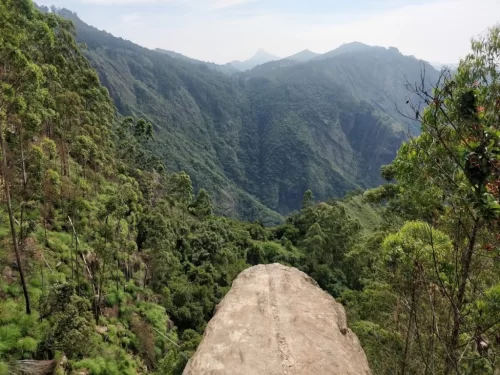
Dolphin's Nose Coonoor viewpoint during sunny day, featuring panoramic Nilgiri valleys and lush green hills, perfect Tamil Nadu tour package. Viewpoint

Dolphin's Nose

Dolphin's Nose is a popular cliff-edge viewpoint near Coonoor in the Nilgiris, known for its distinctive rock formation and valley views.

Sim's Park, botanical garden in Coonoor featuring landscaped lawns, flower beds and scenic Nilgiri hills backdrop Botanical Garden

Sim’s Park

Sim’s Park is a well-known botanical garden in Coonoor featuring a large collection of exotic plants, flowering trees, and landscaped walking paths.

Frequently Asked Questions About Nilgiris Tea

The best time to experience Nilgiris Tea plantations is from October to March when the weather is pleasant and visibility is clear. Early mornings provide scenic views of mist covered hills.
Visitors can see Nilgiris Tea estates spread across hill regions with designated viewpoints and factory premises open to tourists. Access depends on estate management policies.
There is usually no entry fee to view Nilgiris Tea gardens from public viewpoints. Guided factory tours may involve a nominal charge.
Most travelers spend one to two hours exploring Nilgiris Tea gardens and visiting a tea factory. The duration depends on whether a guided session is included.
Guided tours are available at select Nilgiris Tea factories where visitors can observe processing stages. Availability depends on factory schedules and working hours.
Visitors can learn about plucking drying rolling and grading processes involved in Nilgiris Tea production. Informational displays explain quality differences and packaging methods.
Nilgiris Tea estates are suitable for families who enjoy scenic walks and educational experiences. Visitors should follow estate rules and avoid restricted plantation areas.
Nilgiris Tea plantations can be visited during monsoon when the hills appear greener and more vibrant. Rain may affect visibility and walking conditions.
Visitors to Nilgiris Tea plantations should carry water light jackets and comfortable footwear suitable for sloped terrain. Weather in hill regions can change quickly.
Nilgiris Tea estate visits can be combined with nearby hill stations viewpoints botanical gardens and lakes. These attractions are usually accessible within short travel distance.

Loved this place ? Let’s Plan Your Tamil Nadu Trip

Get customized Tamil Nadu tour planning designed around temple visit timing, seasonal weather comfort, road travel distances, and realistic pacing across regions. Whether you are visiting for architectural heritage, spiritual journeys, coastal relaxation,

⚡ Quick Response | 💰 Free consultation | 🕒 24×7 expert support

×

Plan Your Trip