Arulmigu Manakula Vinayagar Devasthanam, Puducherry, India

Arulmigu Manakula Vinayagar Devasthanam , Puducherry
The temple is known for its active daily worship and long-standing local religious importance. Visitors come for darshan of Lord Ganesha and to observe regular temple rituals conducted throughout the day.

Quick Facts About Arulmigu Manakula Vinayagar Devasthanam

Arulmigu Manakula Vinayagar Devasthanam, Puducherry Quick Facts

Entry Fee No entry fee
Timings Daily 5:45 AM – 12:30 PM and 4:00 PM – 9:30 PM (timings may vary on festival days)
Altitude (m) Approximately 0–10 m above sea level
Ideal Visit Duration 45 minutes to 1.5 hours
Best Time of Day Early morning during darshan hours or evening aarti time
Crowd Level Moderate on weekdays; high during weekends, festivals, and special pujas
Distance from City Centre (km) Approximately 1 km from Puducherry city centre (White Town area)
Walking Difficulty Easy
Parking Available Limited parking available on nearby streets and designated areas
Last Mile Access Direct road access with short walk from parking zones
Suitable for Kids Yes
Suitable for Seniors Yes
Wheelchair Friendly Partially accessible; main pathways are accessible but some areas may be crowded or have steps

Why Visit Arulmigu Manakula Vinayagar Devasthanam, Puducherry, Tamil Nadu

Visitors come to Arulmigu Manakula Vinayagar Devasthanam to seek blessings of Lord Ganesha at one of the most visited temples in Puducherry. It is a key spiritual stop for both devotees and travelers exploring the heritage streets near the old town area.

The atmosphere is consistently active, with daily rituals, chanting, and a steady flow of devotees throughout the day. The temple complex feels integrated into the surrounding city life, with vendors and visitors creating a continuous cultural rhythm around the entrance.

What makes this temple distinct is its central location within Puducherry and its long-standing role as a living place of worship amid a tourist-heavy heritage zone. Its accessibility and active devotional practices make it a frequent stop for travelers exploring the coastal city.

History of Arulmigu Manakula Vinayagar Devasthanam, Puducherry, Tamil Nadu

Arulmigu Manakula Vinayagar Devasthanam is an ancient temple dedicated to Lord Ganesha, located in Puducherry. The shrine has been a significant place of worship for centuries and is one of the most prominent Hindu temples in the region.

The temple is closely associated with local devotional traditions centered on Lord Vinayagar, with continuous rituals and offerings forming an important part of its religious identity over time.

Today, it remains a major pilgrimage site in Puducherry, reflecting the enduring cultural and spiritual presence of Ganesha worship in the region.

Best Time to Visit Arulmigu Manakula Vinayagar Devasthanam, Puducherry (Tamil Nadu Region)

Arulmigu Manakula Vinayagar Devasthanam is best visited when Puducherry’s coastal weather is cooler and walking conditions around the temple and heritage streets are comfortable for extended darshan and sightseeing.

  • Ideal Months: October to March is the most suitable period for visiting, especially for smooth temple darshan and exploring nearby heritage areas.
  • Weather Conditions: This season typically offers pleasant coastal temperatures, reduced humidity, and more comfortable conditions for walking through the temple complex and nearby streets of White Town.
  • Periods to Avoid: April to June can be hot and humid, making daytime visits tiring, while heavy monsoon spells between July and September may cause intermittent rain and brief disruptions in outdoor movement.

How to Reach Arulmigu Manakula Vinayagar Devasthanam, Puducherry

  • By Air: Puducherry Airport is the nearest airport, located about 5 km from Arulmigu Manakula Vinayagar Devasthanam. It has limited flight operations, so most travelers prefer Chennai International Airport, around 135 km away, which offers wide domestic and international connectivity. From both airports, taxis and buses are available to reach Puducherry city.
  • By Train: Puducherry Railway Station is the closest railhead, situated approximately 2 km from the temple. It has direct train services from Chennai and Villupuram. Auto-rickshaws, cycle rickshaws, and taxis are easily available for short-distance travel to the temple.
  • By Road: The temple is located in the White Town area of Puducherry and is well connected via NH 32 and nearby state highways. Regular buses operate from Chennai, Bengaluru, Villupuram, and other nearby cities. Local transport such as auto-rickshaws and taxis provide convenient access, and the temple is also walkable from most central tourist areas. Traffic can be heavier during weekends, holidays, and festival seasons.

What to Expect When You Visit Arulmigu Manakula Vinayagar Devasthanam, Puducherry, Tamil Nadu

  • is a well-known urban temple located in the White Town area of Puducherry, surrounded by dense city streets, shops, and heritage buildings rather than a natural or secluded setting.
  • The temple environment is continuously active, with a steady flow of devotees throughout the day. Visitor density increases significantly during weekends, festival days, and special pujas dedicated to Lord Ganesha.
  • Access is simple via city roads, with auto-rickshaws, taxis, and walking routes commonly used. Inside the temple, movement is organized through queue systems, and waiting times near the sanctum can vary depending on crowd levels.
  • Basic visitor facilities include shoe stands, drinking water points, small stalls selling offerings, and nearby parking zones. Larger amenities such as food outlets and ATMs are available within a short walking distance in surrounding streets.
  • Visitors primarily come for darshan, offerings, and short prayer visits. Photography is allowed in some outer areas but restricted near the main sanctum, and queues can become tightly managed during peak hours.
  • The temple maintains standard Hindu worship etiquette, requiring modest clothing, footwear removal in designated areas, and respectful behavior inside prayer spaces.
  • Overall, the experience is city-based and devotional, with limited open space and no scenic landscape elements, making it a structured temple visit within an active urban environment.

Important Visitor Information for Arulmigu Manakula Vinayagar Devasthanam, Puducherry, Tamil Nadu

  • The temple sees its highest visitor turnout during Vinayagar Chaturthi, weekends, and peak Puducherry tourist seasons, while weekday mornings are comparatively less crowded for darshan.
  • Early morning and late evening aarti timings attract steady devotee presence, whereas mid-morning hours typically offer a more comfortable and shorter queue experience.
  • Puducherry’s coastal climate remains warm and humid through most of the year, with monsoon months (October–December) bringing intermittent rainfall that may affect outdoor queue areas.
  • Modest attire is expected inside the temple, with visitors advised to wear clothing that respects traditional Hindu worship customs, covering shoulders and knees appropriately.
  • The temple’s elephant blessing tradition draws consistent attention; visitors should follow staff guidance and maintain respectful distance during interactions for safety.
  • The temple complex can become tightly crowded during festival days and weekends, so careful movement through queue lines and vigilance over personal belongings is advised.

Photography and Viewpoints at Arulmigu Manakula Vinayagar Devasthanam, Puducherry, Tamil Nadu

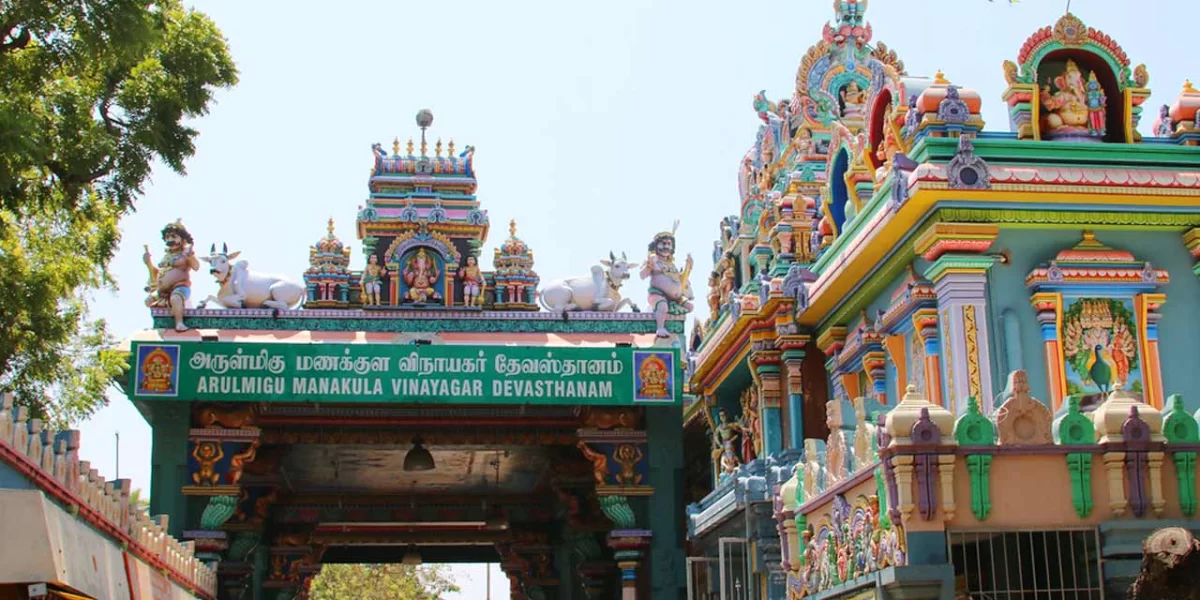
  • The main entrance gopuram facing Rue de la Marine offers the most iconic framing, capturing the brightly painted tower, temple gateway, and constant flow of devotees in a single street-context composition.
  • The inner courtyard near the dhwaja stambham provides clear angles of the sanctum-facing mandapam, with opportunities to capture ritual activity and traditional temple architecture together.
  • The elephant blessing area inside the complex is a notable visual point, where photography captures cultural interactions alongside the temple setting, subject to on-site permissions.
  • Early morning visits provide the best lighting on the gopuram’s detailed sculptures and significantly lower crowd density before darshan queues intensify.
  • Evening aarti periods create a visually rich atmosphere with oil lamps and devotional gatherings, though low light and crowd movement can limit stable framing inside the main courtyard.
  • Photography inside the sanctum sanctorum is restricted, and visitors must follow temple rules regarding camera use and avoid flash during worship activities.
  • Peak congestion occurs during weekends, Navaratri, Ganesh Chaturthi, and public holidays, which can restrict access to central viewpoints and slow movement within the courtyard.

Near By Attraction

Sri Karaneswar Nataraja Temple Tourist Attraction

Sri Karaneswar Nataraja Temple

Sri Karaneswar Nataraja Temple is a Hindu temple dedicated to Lord Shiva in his Nataraja form, located in Karaikal, an enclave of the Union Territory of Puducherry, India.

Puducherry Museum Museum

Puducherry Museum

Puducherry Museum is a government museum located in Puducherry, India, displaying archaeological and colonial-era collections.

Bharathi Park Puducherry Garden

Bharathi Park Puducherry

Bharathi Park is a public park located in the central part of Puducherry, India.

Frequently Asked Questions About Arulmigu Manakula Vinayagar Devasthanam

Arulmigu Manakula Vinayagar Devasthanam is a historic Hindu temple in Puducherry dedicated to Lord Ganesha and known for daily worship and cultural significance.
The temple is located in the White Town area of Puducherry close to major heritage attractions.
No. Visitors can enter the temple free of charge.
The temple generally opens from 5:45 AM to 12:30 PM and 4:00 PM to 9:30 PM, with variations on festival days.
Most visitors spend 45 to 90 minutes for darshan and exploration.
October to March and early morning or evening are the most comfortable times to visit.
Yes. It is suitable for families, children, and senior citizens.
Limited parking is available near the temple.
The main pathways are partially wheelchair accessible though some areas have steps or crowds.
It can be reached by auto rickshaw, taxi, bus, or on foot from central Puducherry.
Nearby attractions include Bharathi Park, Puducherry Museum, and nearby heritage streets.
Visitors should wear modest clothing and remove footwear before entering the temple.

Loved this place ? Let’s Plan Your Tamil Nadu Trip

Get customized Tamil Nadu tour planning designed around temple visit timing, seasonal weather comfort, road travel distances, and realistic pacing across regions. Whether you are visiting for architectural heritage, spiritual journeys, coastal relaxation,

⚑ Quick Response | πŸ’° Free consultation | πŸ•’ 24Γ—7 expert support

×

Plan Your Trip