Why Visit Shree Savitri Mata Mandir: A Spiritual Ascent Above Pushkar
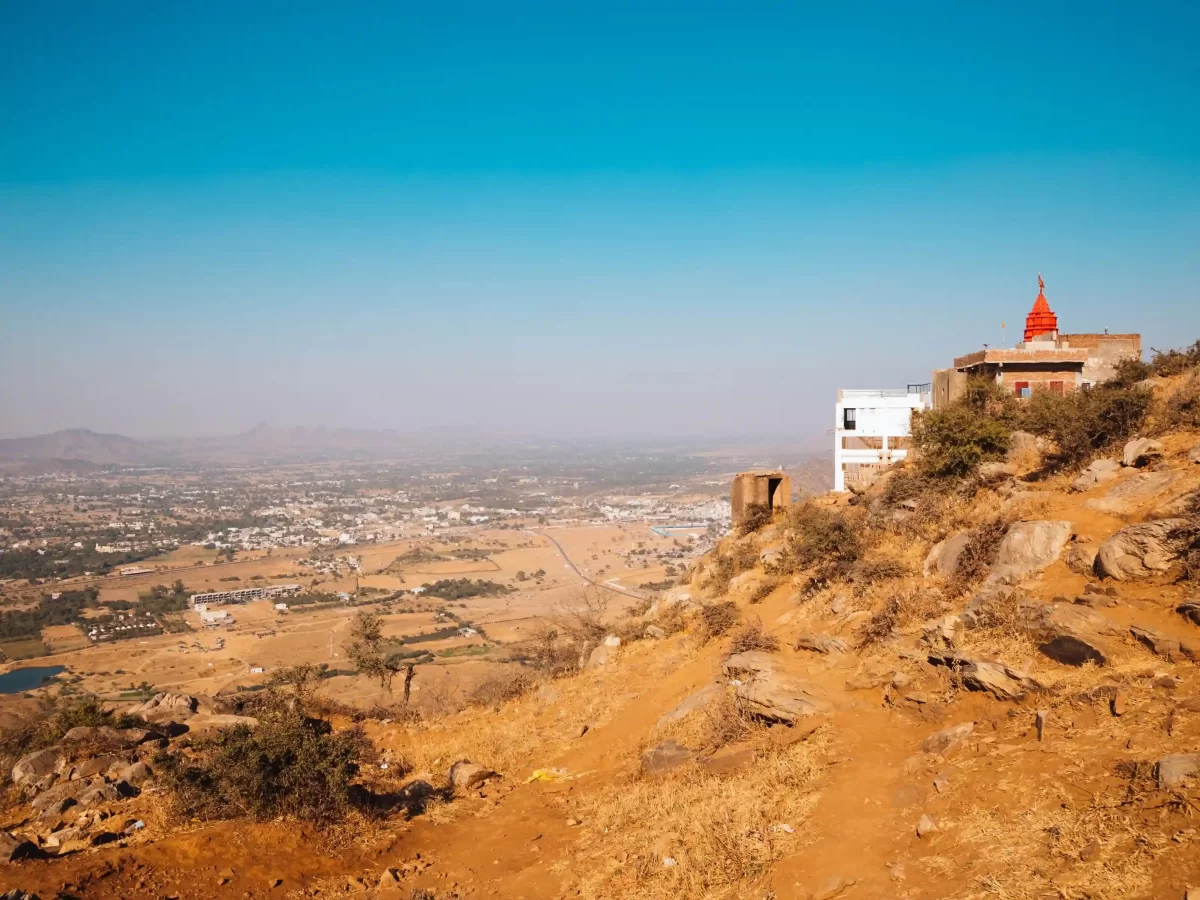
Visitors journey to Shree Savitri Mata Mandir to pay homage at the hilltop sanctuary dedicated to Goddess Savitri, the first wife of Lord Brahma, which holds immense religious significance in the sacred geography of Pushkar. The primary draw for travelers is the opportunity to participate in the early morning 'Aarti' and to witness the legendary 360-degree panoramic view of the holy town, the surrounding Thar Desert, and the concentric circles of the Aravalli mountains from the highest point in the region.
The on-ground atmosphere is defined by a sense of physical and spiritual elevation, where the dense, incense-heavy air of the lakeside ghats is replaced by crisp, high-altitude winds. Whether travelers choose the rigorous 45-minute stone staircase trek or the swift six-minute ropeway ride, the experience culminates in a serene temple courtyard where the sound of temple bells and the presence of resident monkeys create a quiet, meditative environment far removed from the bustling crowds of the main bazaar below.
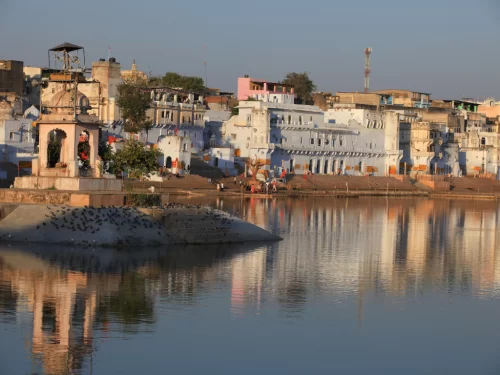
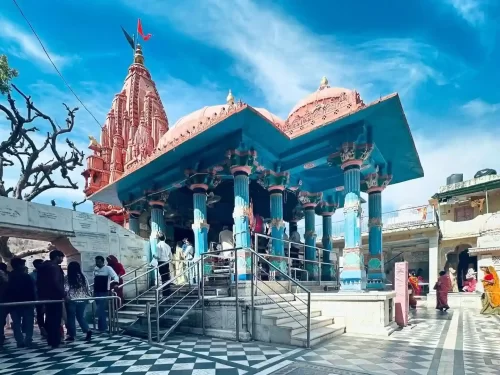
What makes this temple distinct for travelers is its unique vantage point, offering the only aerial perspective of the world’s only Brahma Temple and the semi-circular Pushkar Lake. Unlike other shrines in the town, this site provides a specific visual narrative of the local folklore regarding the rivalry between Savitri and Gayatri, and its position on Ratnagiri Hill makes it the premier location for witnessing the desert sunset, offering a rare combination of mythic history and natural spectacle found nowhere else in Rajasthan.
History and Cultural Significance of Shree Savitri Mata Mandir
Shree Savitri Mata Mandir is a historic Hindu temple situated atop Ratnagiri Hill in Pushkar, dedicated to Savitri, the first wife of Lord Brahma. According to local religious tradition, the temple was built on this elevated site because Savitri sought seclusion here after a dispute during a sacred yagna. The current structure is a primary pilgrimage site that complements the Brahma Temple located in the valley below, forming a critical part of the Pushkar religious circuit.
The temple holds immense cultural significance, especially for women who visit to seek blessings for domestic harmony and the well-being of their families. Architecturally, the site is accessed via a steep stone trekking path or a modern ropeway, providing a vantage point that has served as a spiritual lookout for centuries. The temple houses idols of both Goddess Savitri and Goddess Gayatri, and it remains a central location for observing traditional rituals that define the unique Vedic heritage of the holy city of Pushkar.
The Best Time to Visit Shree Savitri Mata Mandir in Pushkar
To experience the panoramic sunrise over Pushkar and the surrounding Thar Desert, visiting during the winter months is essential for physical safety and visibility. As the temple is situated atop Ratnagiri Hill, the experience is defined by a steep 1.5-kilometer trek or a ropeway ascent, both of which are highly sensitive to the intense desert sun and seasonal wind conditions.
- Ideal Months: October to March provide the most temperate climate for the uphill hike, though visiting in November during the Pushkar Camel Fair offers a unique aerial perspective of the massive festival grounds.
- Weather Conditions: Expect crisp, clear mornings with temperatures between 8°C and 15°C; these conditions provide the sharpest visibility for photography from the summit and ensure the stone steps remain cool for climbers.
- Periods to Avoid: April to June should be avoided due to scorching heat frequently exceeding 42°C, which makes the unshaded trek dangerous and the ropeway cabins uncomfortably hot. Additionally, monsoon season (July to August) can make the rocky path slippery and often brings heavy mist that completely obscures the famous hilltop views.
How to Reach Shree Savitri Mata Mandir: Practical Guide for Tourists
Shree Savitri Mata Mandir is perched on the Ratnagiri Hill, overlooking the holy town of Pushkar. As one of the most prominent spiritual landmarks in the region, it is accessible via a combination of inter-city transport and a final vertical ascent from the base of the hill.
- Nearest Airport: The closest domestic hub is Kishangarh Airport (KQH), approximately 45 km away. For better connectivity, Jaipur International Airport (JAI) is about 150 km (3.5 hours) away. Private taxis and buses are readily available from both airports to Pushkar.
- Nearest Railway Station: Ajmer Junction (AII) is the primary railhead, located 15 km from the temple. It is a major stop for the Vande Bharat and Shatabdi Express. From the station, you can take a 30-minute auto-rickshaw or bus ride to Pushkar.
- Road Access and Last-Mile Connectivity: Pushkar is well-connected via NH48. Once in town, the base of the temple hill is about 2–3 km from the main Pushkar Lake. Local e-rickshaws and auto-rickshaws provide frequent shuttle services to the ropeway station or the trekking starting point.
- Ascent Options:
- Ropeway (Cable Car): A 6-minute ride that covers 720 meters. It is the preferred choice for seniors and those with limited mobility. The service usually operates from 7:30 AM to 8:00 PM.
- Trekking: A stone-step path consisting of approximately 650 to 900 steps (about 1.5 km). The climb takes 30 to 60 minutes depending on fitness levels and is a popular choice for witnessing the sunrise.
- Realistic Travel Conditions: The climb is steep and can be physically taxing during midday heat; early morning or late afternoon visits are strongly advised. The hilltop area is inhabited by a large population of monkeys that can be aggressive; visitors should secure all belongings and avoid carrying visible food items.