Visiting Gayatri Mata Temple in Pushkar, Rajasthan, India

Gayatri Mata Temple , Pushkar
Tourists visit to experience the sunrise or sunset views over the Pushkar Lake and the surrounding Thar Desert after a 30-minute uphill trek. The temple is architecturally simple but holds significant religious importance during the Kartik Purnima festival, serving as a primary spiritual destination alongside the nearby Savitri Temple.

Quick Facts About Gayatri Mata Temple

Quick Facts for Gayatri Mata Temple, Pushkar

Entry Fee Free
Timings 06:00 AM – 07:00 PM
Altitude (m) Approx. 540 m
Ideal Visit Duration 30 to 45 minutes
Best Time of Day 06:30 AM – 08:00 AM or 05:00 PM – 06:30 PM (For sunrise or sunset views)
Crowd Level Low to Moderate
Distance from City Centre (km) 1 km from Pushkar Lake / City Centre
Walking Difficulty Moderate (Involves a short uphill trek on a rocky path and stone steps)
Parking Available No (Limited space at the base of the hill; parking in town is recommended)
Last Mile Access Accessible by foot or auto-rickshaw to the hill base, followed by a climb
Suitable for Kids Yes (Supervision required during the uphill walk)
Suitable for Seniors Moderate (Steep incline and uneven steps may be difficult for those with mobility issues)
Wheelchair Friendly No (Steep hilly terrain and stone stairs lack ramp access)

Why Visit Gayatri Mata Temple Pushkar: The Serene Pap Mochani Hill

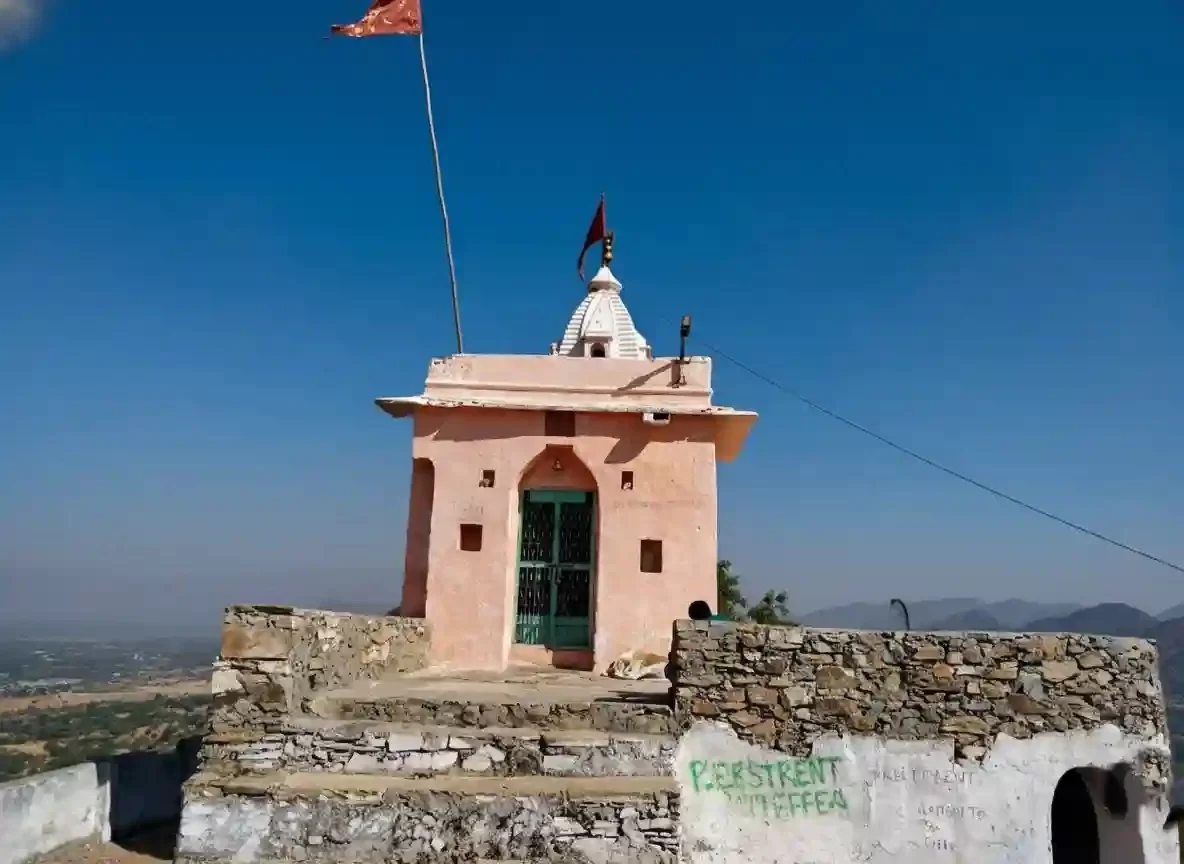
Visitors come to the Gayatri Mata Temple, also known as the Pap Mochani Temple, for its profound spiritual significance and its vantage point overlooking the holy city. Perched atop the Nilgiri Hill, it is dedicated to Goddess Gayatri, the second consort of Lord Brahma. Devotees visit to seek "Pap Mochani" (absolution from sins), while travelers are drawn by the peaceful 20-30 minute hike that leads to one of the most breathtaking panoramic views of Pushkar Lake and the surrounding desert landscape.

The on-ground atmosphere is noticeably more tranquil and secluded than the bustling Brahma Temple or the popular Savitri Temple. Since there is no ropeway, the trail remains uncrowded, offering a meditative experience accompanied by the sound of the wind and the distant echoes of temple bells from the town below. The summit provides a sense of "inner stillness," making it a favored spot for photographers and sunrise seekers who wish to capture the golden light reflecting off the white-washed ghats of the lake.

What makes this temple distinct is its intimate connection to Pushkar’s founding myth—representing the purity and wisdom of the goddess who enabled Brahma’s sacred ritual. For travelers, it stands out as an "off-the-beaten-path" alternative to the more commercialized sites; it offers a raw, authentic Rajasthani temple experience where the reward is not just the spiritual blessing, but the silent, soaring view of the entire Aravalli valley stretching toward the horizon.

History and Cultural Heritage of Gayatri Mata Temple Pushkar

The Gayatri Mata Temple, also known as the Pap Mochani Temple, is a revered hilltop shrine located on the Nilgiri Hill in the northern part of Pushkar. Historically, it is deeply intertwined with the foundational legends of the town, specifically the grand "yagna" (sacrificial ritual) performed by Lord Brahma. According to tradition, when Brahma’s first wife, Savitri, was delayed, he married Gayatri—a local girl purified by a sacred cow—to proceed with the ceremony. This event led to the construction of separate hilltop temples for both consorts, with Gayatri’s temple situated at a lower elevation than Savitri’s, reflecting the complex mythological hierarchy and local folklore of the Mewar region.

Architecturally, the temple is a classic example of the Rajput style, characterized by its solid stone construction and functional simplicity suited for a high-altitude location. The climb to the sanctum involves a 20-to-30-minute trek up a carved stone pathway, rewarding visitors with panoramic views of the Pushkar Lake and the surrounding desert landscape. Beyond its role as a scenic viewpoint, the temple holds significant religious weight as a "Shaktipeeth," believed by some to be the site where Goddess Sati’s wrists fell. Today, it remains a vital pilgrimage stop, particularly for those seeking spiritual cleansing and the blessings of Goddess Gayatri, the "Mother of the Vedas."

Best Time to Visit Gayatri Mata Temple in Pushkar

http://googleusercontent.com/map_location_reference/1 Pushkar ke purvi chor par ek pahadi par sthit [Gayatri Mata Temple](http://googleusercontent.com/map_location_reference/0) tak pahunchne ke liye thodi chadhayi karni padti hai, isliye yahan ki yatra ke liye mausam ka sahi hona behad zaroori hai. Is mandir se Pushkar Lake aur pure shehar ka nazaara behad khoobsurat dikhta hai, jo ki thande aur saaf mausam mein hi sabse behtareen anubhav deta hai.

  • Ideal Months: October se March tak ka samay sabse uttam hai. Kartik Purnima (November) ke samay Pushkar Mela lagta hai, jo yahan aane ka sabse raunak bhara samay hota hai.
  • Weather Conditions: Sardiyon mein tapman 10°C se 25°C ke beech rehta hai. Yeh suhavna mausam pahadi par chadhne aur mandir ke prangan mein baithkar sunset dekhne ke liye bilkul sahi hai.
  • Periods to Avoid: April se June ki garmi (40°C+) se bachein, kyunki nange pair chalna aur khule raste par chadhayi karna thakan bhara ho sakta hai. Monsoon (July-August) mein hariyali acchi hoti hai, lekin pahadi rasta fisalna wala ho sakta hai.

How to Reach Gayatri Mata Temple Pushkar: Complete Access Guide

The Gayatri Mata Temple, also known as the Pap Mochani Temple, is situated on a hillock to the north of Pushkar Lake. Reaching this hilltop shrine involves a short but steep hike that offers panoramic views of the holy town.
  • Nearest Airport: Kishangarh Airport (KQH) is the closest domestic airport, located about 45 km away. However, Jaipur International Airport (JAI), approximately 150 km away, is the preferred choice for many travelers due to better flight frequency. From either airport, you can hire a private taxi for the journey to Pushkar.
  • Nearest Railway Station: Ajmer Junction (AII) is the major railhead, situated roughly 15 km from Pushkar. It is well-connected to cities like Delhi, Mumbai, and Ahmedabad. From the station, you can take a bus, taxi, or auto-rickshaw to Pushkar city via the scenic Pushkar Ghati road.
  • Road Access: Pushkar is easily accessible by road from Ajmer (30 mins) and Jaipur (3 hours). Most intercity buses and private vehicles park at the main Pushkar bus stand or designated parking lots near the lake, as the inner streets are narrow and often pedestrian-only.
  • Last-Mile Connectivity: The temple is reached via a dedicated trekking path starting near the Marwar Bus Stand. The climb consists of approximately 150–200 stone steps and a winding trail. It takes about 20–30 minutes to reach the summit on foot; there is no motorized transport or ropeway service available for this specific hill.
  • Travel Conditions and Limitations: The path is relatively easy but can be exhausting during the afternoon heat. It is best to visit during sunrise or sunset to enjoy the views and cooler temperatures. Sturdy footwear is recommended as some sections of the stone path can be uneven and there are limited facilities along the trail.

What to Expect When You Visit Gayatri Mata Temple, Pushkar

  • http://googleusercontent.com/map_location_reference/1
  • Elevated Terrain and Hike: Situated atop a hill opposite the Savitri Temple, reaching the [Gayatri Mata Temple](http://googleusercontent.com/map_location_reference/0) requires a moderate uphill trek. Expect a series of stone steps and uneven dirt paths that can be physically demanding; there is no ropeway service here, making it a quieter and more strenuous alternative to other hill shrines in Pushkar.
  • Panoramic Sunrise Views: The temple is a premier location for watching the sunrise over the Pushkar Lake and the surrounding desert. Expect a 360-degree vantage point that offers a clear perspective of the town's geography, though you should begin your ascent at least 45 minutes before dawn to secure a spot.
  • Atmospheric Seclusion: Unlike the bustling Brahma Temple in the town center, this site is characterized by its profound silence and isolation. Expect to find a small, humble structure with minimal commercial activity, providing a meditative environment away from the city's ritualistic noise.
  • Ground Conditions and Footwear: The path to the temple is exposed to the elements, and the stone surfaces can become extremely hot by mid-morning. While footwear must be removed to enter the inner sanctum, many visitors choose to wear sturdy hiking sandals for the trek itself to navigate the rocky sections safely.
  • Minimal Facilities: There are no modern amenities, permanent restrooms, or organized food stalls at the summit. Visitors must carry sufficient drinking water and snacks; however, ensure all waste is carried back down, as there is no formal trash collection system on the hillside.
  • Wildlife and Nature: The trail passes through scrub forest where you can expect to encounter peacocks and smaller local birds. Be cautious of the monkey population near the temple entrance; avoid carrying loose food items or plastic bags, as they are known to approach visitors for handouts.

What to Expect When You Visit Gayatri Mata Temple, Pushkar

  • http://googleusercontent.com/map_location_reference/1
  • Elevated Terrain and Hike: Situated atop a hill opposite the Savitri Temple, reaching the [Gayatri Mata Temple](http://googleusercontent.com/map_location_reference/0) requires a moderate uphill trek. Expect a series of stone steps and uneven dirt paths that can be physically demanding; there is no ropeway service here, making it a quieter and more strenuous alternative to other hill shrines in Pushkar.
  • Panoramic Sunrise Views: The temple is a premier location for watching the sunrise over the Pushkar Lake and the surrounding desert. Expect a 360-degree vantage point that offers a clear perspective of the town's geography, though you should begin your ascent at least 45 minutes before dawn to secure a spot.
  • Atmospheric Seclusion: Unlike the bustling Brahma Temple in the town center, this site is characterized by its profound silence and isolation. Expect to find a small, humble structure with minimal commercial activity, providing a meditative environment away from the city's ritualistic noise.
  • Ground Conditions and Footwear: The path to the temple is exposed to the elements, and the stone surfaces can become extremely hot by mid-morning. While footwear must be removed to enter the inner sanctum, many visitors choose to wear sturdy hiking sandals for the trek itself to navigate the rocky sections safely.
  • Minimal Facilities: There are no modern amenities, permanent restrooms, or organized food stalls at the summit. Visitors must carry sufficient drinking water and snacks; however, ensure all waste is carried back down, as there is no formal trash collection system on the hillside.
  • Wildlife and Nature: The trail passes through scrub forest where you can expect to encounter peacocks and smaller local birds. Be cautious of the monkey population near the temple entrance; avoid carrying loose food items or plastic bags, as they are known to approach visitors for handouts.

Capturing Spiritual Heights: Photography Guide for Gayatri Mata Temple, Pushkar

  • Sunrise Panorama of Pushkar Lake: Position yourself on the eastern edge of the temple platform at dawn. This elevation provides an unobstructed view of the sun rising over the Aravalli Range, reflecting off the white-washed ghats and the sacred lake. Use a wide-angle lens to capture the entire town as it transitions from shadow to golden light.
  • Telephoto Details of the Brahma Temple Spire: From this vantage point, you have a unique "top-down" perspective of the town's landmarks. A 70-200mm lens is ideal for isolating the bright red spire of the Brahma Temple against the monochromatic white background of the surrounding residential architecture.
  • Lighting for the Temple Facade: The temple itself is best photographed in the mid-morning (9:00 AM – 10:30 AM). During this time, the sunlight hits the temple's structure directly, highlighting the vibrant colors and the simple yet elegant Rajput-style architecture without the long, distorting shadows seen at first light.
  • Photography Restrictions and Sanctum Etiquette: While outdoor photography of the landscape and temple exterior is generally welcomed, photography inside the inner sanctum (Garbhagriha) is strictly prohibited. Always store your camera or point it away from the deity during active prayers and seek verbal permission from the resident priest before shooting near the entrance.
  • The Pap-Mochani Hill Perspective: Looking across the valley, you can photograph the sister hill of Pap-Mochani. This shot is particularly effective during the monsoon season when the desert landscape turns vibrant green, providing a rare high-contrast backdrop for the white temple structures.
  • Managing the Hike and Equipment: The 30-minute ascent via a steep stone staircase is physically demanding. It is recommended to use a lightweight backpack and avoid carrying heavy tripods unless you are shooting professional time-lapses at sunrise. Arriving early (by 5:45 AM) ensures you secure a spot on the narrow observation ledge before the heat and crowds of devotees increase.

Near By Attraction

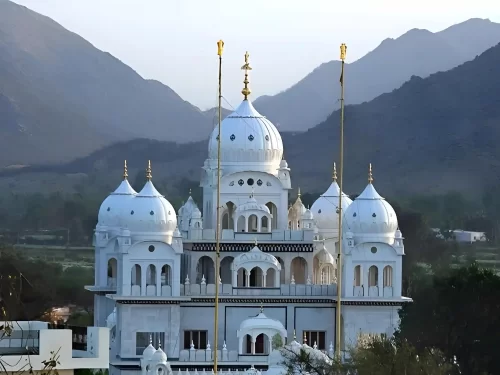
Gurudwara Sahib Pushkar historic white marble Sikh temple dedicated to Guru Nanak Dev Ji and Guru Gobind Singh Ji located near the holy Pushkar Lake in Rajasthan. Gurudwara

Gurudwara Sahib

A Sikh place of worship located near the center of Pushkar town.

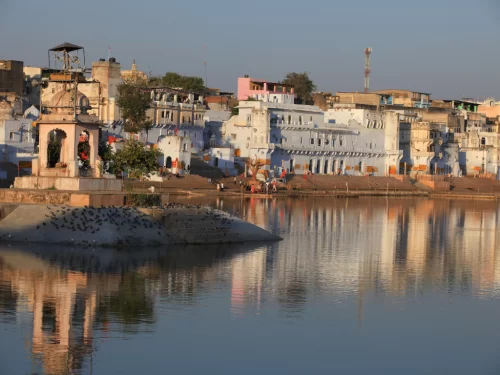
Whitewashed havelis temples and ghats along Pushkar Lake Rajasthan at golden hour with serene reflective waters pigeons and vibrant sky, iconic spiritual cultural Rajasthan tour package destination Lake

Pushkar Lake

A sacred freshwater lake located at the center of Pushkar town.

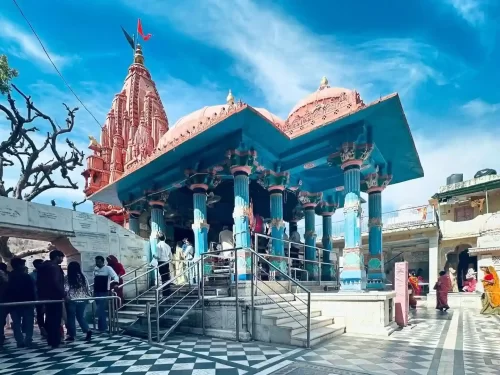
Jagatpita Shri Brahma Temple rare and sacred white marble Hindu shrine featuring a distinctive red spire and bird motifs in the holy town of Pushkar Rajasthan. Temple

Jagatpita Shri Brahma Mandir

A prominent Hindu temple dedicated to Lord Brahma, located in Pushkar.

Frequently Asked Questions About Gayatri Mata Temple

Gayatri Mata Temple is located on a hill near Pushkar and is accessible by road followed by a staircase climb.
Gayatri Mata Temple is generally open from early morning to evening, and visitors should confirm current timings before planning their visit.
There is no entry fee to visit Gayatri Mata Temple, though donations are welcomed inside the temple premises.
The best time to visit Gayatri Mata Temple is between October and March when the weather is pleasant for climbing and sightseeing.
Travelers can reach Gayatri Mata Temple by taxi or private vehicle to the base area followed by a climb to the hilltop shrine.
Most visitors spend around 45 minutes to 1 hour at Gayatri Mata Temple including the climb and darshan.
Gayatri Mata Temple requires visitors to climb a series of steps to reach the temple premises.
Photography is allowed at Gayatri Mata Temple in outdoor areas, though restrictions may apply inside the sanctum.
Gayatri Mata Temple is suitable for family visits, though elderly visitors should take care while climbing the steps.
Gayatri Mata Temple can easily be included in a one day sightseeing itinerary along with Pushkar Lake and nearby temples.

Loved this place ? Let’s Plan Your Rajasthan Trip

Get customized Rajasthan tour planning designed around desert climate comfort, long-distance road travel flow, heritage exploration time, and realistic pacing between regions. Whether you are visiting for fort architecture, palace heritage, cultural exper

⚑ Quick Response | πŸ’° Free consultation | πŸ•’ 24Γ—7 expert support

×

Plan Your Trip