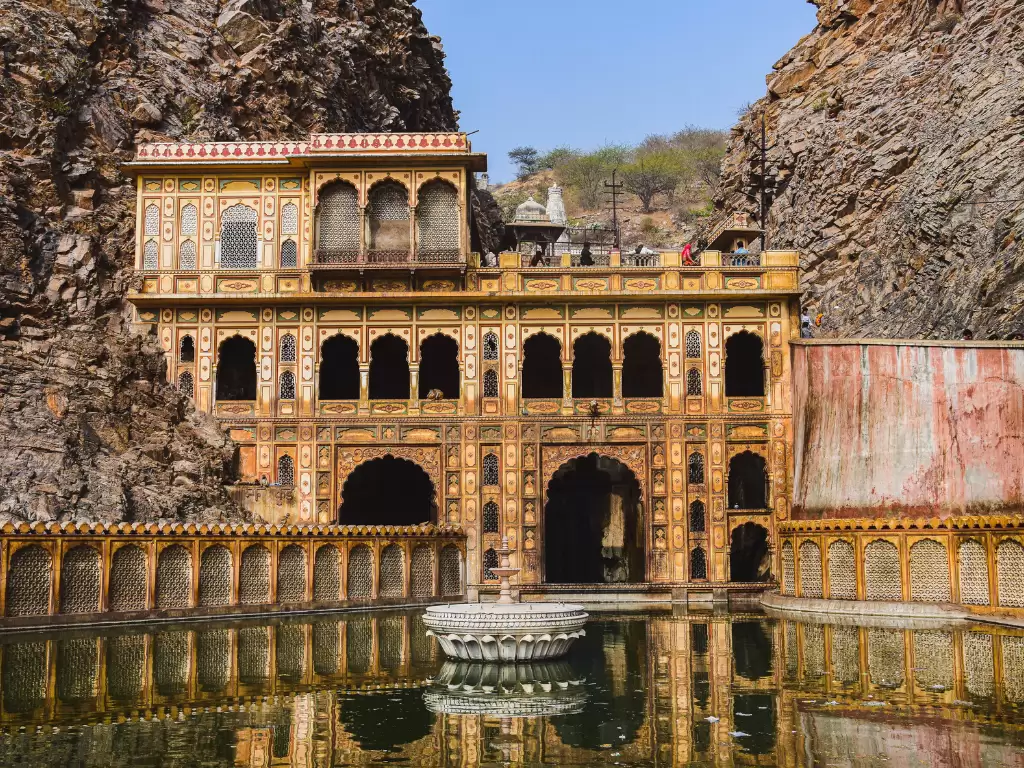
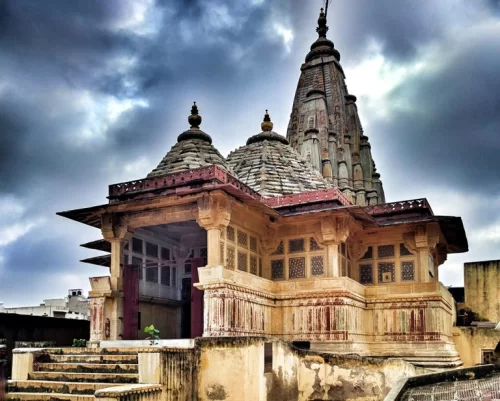
Galtaji Temple Jaipur – Ancient Hilltop Hindu Shrine

Galtaji Temple , Jaipur
Also known as the Monkey Temple, Galtaji Temple is nestled between rugged hills and natural springs. The temple complex includes multiple shrines and sacred water tanks (kunds) that never dry up. It is famous for its religious importance, scenic surroundings, and large population of monkeys, making it a popular spot for pilgrims, tourists, and photographers alike.

Quick Facts About Galtaji Temple

Quick Facts About Galtaji Temple Jaipur

Entry Fee No entry fee to visit the temple complex, small charges may apply for professional camera use
Timings Open daily from 5 00 AM to 9 00 PM for visitors
Altitude (m) Located on the Aravalli hill slopes at approximately 431 meters above sea level
Ideal Visit Duration Two to three hours to explore the temples holy kunds and surrounding hill area
Best Time of Day Early morning or late afternoon for cooler weather and peaceful atmosphere
Crowd Level Moderate crowds with higher numbers during festivals weekends and holidays
Distance from City Centre (km) About 10 kilometers east of Jaipur city centre
Walking Difficulty Moderate walking difficulty with uphill paths steps and uneven stone surfaces
Parking Available Yes parking available near the temple entrance for cars and two wheelers
Last Mile Access Taxi auto rickshaw and private vehicles available to Galtaji Road followed by short walk
Suitable for Kids Yes suitable for children with supervision due to steps and monkeys in the area
Suitable for Seniors Moderate for seniors because of steps and uphill walking but main areas are accessible
Wheelchair Friendly No not wheelchair friendly due to steps slopes and uneven terrain

Why Visit Galtaji Temple, Jaipur

Atmosphere at Galtaji Temple is deeply spiritual and naturally serene, set amidst the rugged Aravalli hills on the outskirts of Jaipur. Flowing water from natural springs, sacred kunds, and the echo of temple bells create a calming and immersive environment that feels far removed from the city’s bustle. The surrounding hills and open sky add to the peaceful, meditative ambiance.

What makes Galtaji Temple special is its rare blend of religious importance and natural setting. Also known as the Monkey Temple, it is famous for its sacred water tanks where devotees perform rituals and for the large population of monkeys that inhabit the complex. Visitors can explore beautifully painted temples, witness traditional worship practices, and enjoy panoramic views of Jaipur from the hilltop paths, making the visit both spiritually and visually rewarding.

Beyond its visual and devotional appeal, Galtaji Temple holds strong cultural and historical significance within Jaipur’s religious landscape. It attracts pilgrims, photographers, and travelers seeking a combination of spirituality, heritage, and scenic beauty. The holistic experience leaves visitors with a sense of peace, cultural insight, and a memorable connection to Jaipur’s sacred traditions.

History of Galtaji Temple, Jaipur

Galtaji Temple, located in the eastern outskirts of Jaipur near the Aravalli hills, is an ancient Hindu pilgrimage site deeply associated with sage Galav, a revered saint known for his penance and spiritual devotion. The temple complex dates back several centuries and has long been considered a sacred retreat for saints, ascetics, and devotees seeking spiritual purification.

The site is renowned for its natural springs and sacred water tanks, known as kunds, which are believed to have never dried up. According to tradition, these springs emerged as a result of Sage Galav’s intense meditation. The main temple is dedicated to Lord Hanuman, along with shrines devoted to Lord Rama, Lord Krishna, and Lord Surya, making it an important center of devotion.

Over time, Galtaji Temple developed into a major religious landmark, especially known for its large population of monkeys, earning it the popular name “Monkey Temple.” Today, it remains a significant spiritual and cultural site, attracting pilgrims and tourists who come to experience its religious atmosphere, historical depth, and serene natural setting.

Best Time to Visit Galtaji Temple Jaipur

Visiting Galtaji Temple in Jaipur is most enjoyable when the weather is comfortable, allowing devotees and travelers to explore the temple complex, natural springs, and surrounding hills without discomfort from heat.

The months from October to March are ideal for visiting, as Jaipur experiences pleasant winter weather with mild days and cool mornings. This period is perfect for temple darshan, sightseeing, and walking around the temple tanks and pathways.

Spring months from March to early April remain suitable, though temperatures gradually begin to rise. Early morning visits are recommended to enjoy the spiritual atmosphere, observe rituals, and avoid daytime heat.

Summer season from May to September brings intense heat, making daytime visits challenging. While the temple remains accessible, early mornings are the most comfortable time to visit, and monsoon months may bring occasional rainfall that can make pathways slippery.
  • October to March for pleasant weather and comfortable temple visits
  • March to early April for peaceful mornings before peak summer heat
  • May to September best avoided during peak heat, though early mornings remain suitable
  • Early mornings offer a calm spiritual atmosphere and cooler temperatures
  • Winter months are ideal for combining temple visits with Jaipur sightseeing

How to Reach Galtaji Temple, Jaipur

  • By Air: The nearest airport is Jaipur International Airport, approximately 18 km from Galtaji Temple. Visitors can hire taxis or app-based cabs for a comfortable and direct transfer to the temple area.
  • By Train: Jaipur Junction Railway Station is well connected with major Indian cities such as Delhi, Mumbai, Kolkata, and Ahmedabad. From the station, taxis, auto-rickshaws, or app-based cabs can take visitors to Galtaji Temple conveniently.
  • By Road: Jaipur is connected via national highways and city roads. Regular buses, private taxis, and self-drive vehicles make it easy to reach the temple from different parts of the city and nearby towns.
  • Local Transport: Within Jaipur, auto-rickshaws, cycle rickshaws, and rideshare services offer smooth last-mile connectivity. Visitors may need to walk a short distance uphill to reach the main temple complex.

What to Expect When You Visit Galtaji Temple Jaipur

  • Immersive surroundings that reflect the true natural, cultural, or spiritual character of the destination, offering a peaceful and enriching travel experience.
  • Well-maintained visitor pathways and accessible viewing points designed to provide comfortable exploration while preserving the authenticity of the location.
  • Opportunities to engage with local traditions, regional architecture, or natural landscapes, allowing travelers to gain deeper cultural understanding.
  • Scenic photo spots and panoramic viewpoints that highlight the area’s unique beauty throughout different times of the day.
  • Informational boards, guides, or locally available assistance that help visitors learn the historical or environmental importance of the site.
  • Seasonal changes in atmosphere, crowd levels, and visual appeal, ensuring a different yet memorable experience depending on the time of visit.
  • Nearby amenities such as refreshment stalls, rest areas, or small markets offering local flavors and handicrafts.
  • A calm and respectful environment that allows visitors to fully absorb the significance and charm of the destination.

Important Visitor Information and Safety of Galtaji Temple Jaipur

  • Crowd & Peak Hours: Expect higher footfall during weekends, religious festivals, and late mornings to afternoons. Early morning visits are generally quieter and ideal for a peaceful darshan.
  • Weather Notes: Summers can be very hot, while winters are mild and pleasant. Monsoon season may make pathways slippery around the kunds.
  • Dress Code: Wear modest clothing suitable for a religious site and comfortable footwear for walking. Light cotton clothes are recommended in warmer months.
  • Safety Tips: Be cautious around monkeys, avoid carrying visible food items, keep personal belongings secure, follow temple guidelines, and supervise children for a safe visit.

Photography and Viewpoints at Galtaji Temple, Jaipur

  • The temple complex set within the Aravalli hills offers scenic compositions combining natural rock formations and historic architecture.
  • The sacred kunds with clear water create reflective surfaces ideal for symmetry and creative photography.
  • Morning light softly illuminates the pink sandstone structures, enhancing textures and architectural details.
  • Monkeys inhabiting the temple area provide lively wildlife and candid photography opportunities.
  • Elevated viewpoints around the complex offer panoramic views of Jaipur city and the surrounding hills.
  • Devotional activities, rituals, and pilgrim interactions add cultural depth and storytelling elements to photographs.

Near By Attraction

Shri Khole Ke Hanuman Ji Temple Jaipur Massive 1960s hillside shrine dedicated to Lord Hanuman featuring white marble architecture and scenic valley views Rajasthan. Temple

Shri Khole Ke Hanuman Ji Temple

Shri Khole Ke Hanuman Ji Temple is a prominent Hindu temple complex situated on a hillside in the Laxman Dungri area.

Moti Doongri Ganeshji Temple Jaipur Ancient Hindu shrine dedicated to Lord Ganesha with a gold seated idol Rajasthan. Temple

Moti Dungri Ganesh Ji Temple jaipur

Moti Dungri Ganesh Ji Temple is an 18th-century Hindu place of worship dedicated to Lord Ganesha, located at the foot of the Moti Dungri hill.

BAPS Shri Swaminarayan Akshardham Mandir aerial view of the intricate stone carvings and domes in Jaipur, Rajasthan. Temple

BAPS Shri Swaminarayan Akshardham Mandir

BAPS Shri Swaminarayan Akshardham is a modern Hindu temple complex dedicated to Bhagwan Swaminarayan, constructed using traditional Vedic architectural principles.

Frequently Asked Questions About Galtaji Temple

Galtaji Temple is located on the outskirts of Jaipur, Rajasthan. It is situated in a narrow valley surrounded by the Aravalli hills.
Galtaji Temple is generally open from early morning to evening for devotees and visitors. Timings may vary slightly during special religious occasions.
There is no entry fee to visit Galtaji Temple. Visitors can explore the temple complex freely during open hours.
Galtaji Temple can be reached by road from Jaipur city. Visitors can hire taxis, use private vehicles or take local transport toward the Galta area.
The best time to visit Galtaji Temple is between October and March when the weather remains pleasant for outdoor exploration in Jaipur.
Around one to two hours are sufficient to explore Galtaji Temple comfortably. Visitors attending rituals may spend additional time.
Limited parking facilities are available near Galtaji Temple. Visitors may need to park at designated areas and walk toward the temple complex.
Galtaji Temple is suitable for families and spiritual travelers. Some walking and stair climbing is required within the temple area.
Galtaji Temple is famous for its natural water kunds, ancient temples and the presence of monkeys in the surrounding area.
Galtaji Temple experiences higher footfall during religious festivals and weekends. Early morning visits usually offer a more peaceful experience.
Visitors should wear modest clothing, remove footwear before entering temples and be cautious of monkeys while visiting Galtaji Temple.
Sisodia Rani Ka Bagh, Amber Fort and City Palace can be combined with a Galtaji Temple visit. These attractions are located within Jaipur in Rajasthan.

Loved this place ? Let’s Plan Your Rajasthan Trip

Get customized Rajasthan tour planning designed around desert climate comfort, long-distance road travel flow, heritage exploration time, and realistic pacing between regions. Whether you are visiting for fort architecture, palace heritage, cultural exper

⚡ Quick Response | 💰 Free consultation | 🕒 24×7 expert support

×

Plan Your Trip