Visiting Eklingji Temple in Udaipur, Rajasthan, India

Eklingji Temple , Udaipur
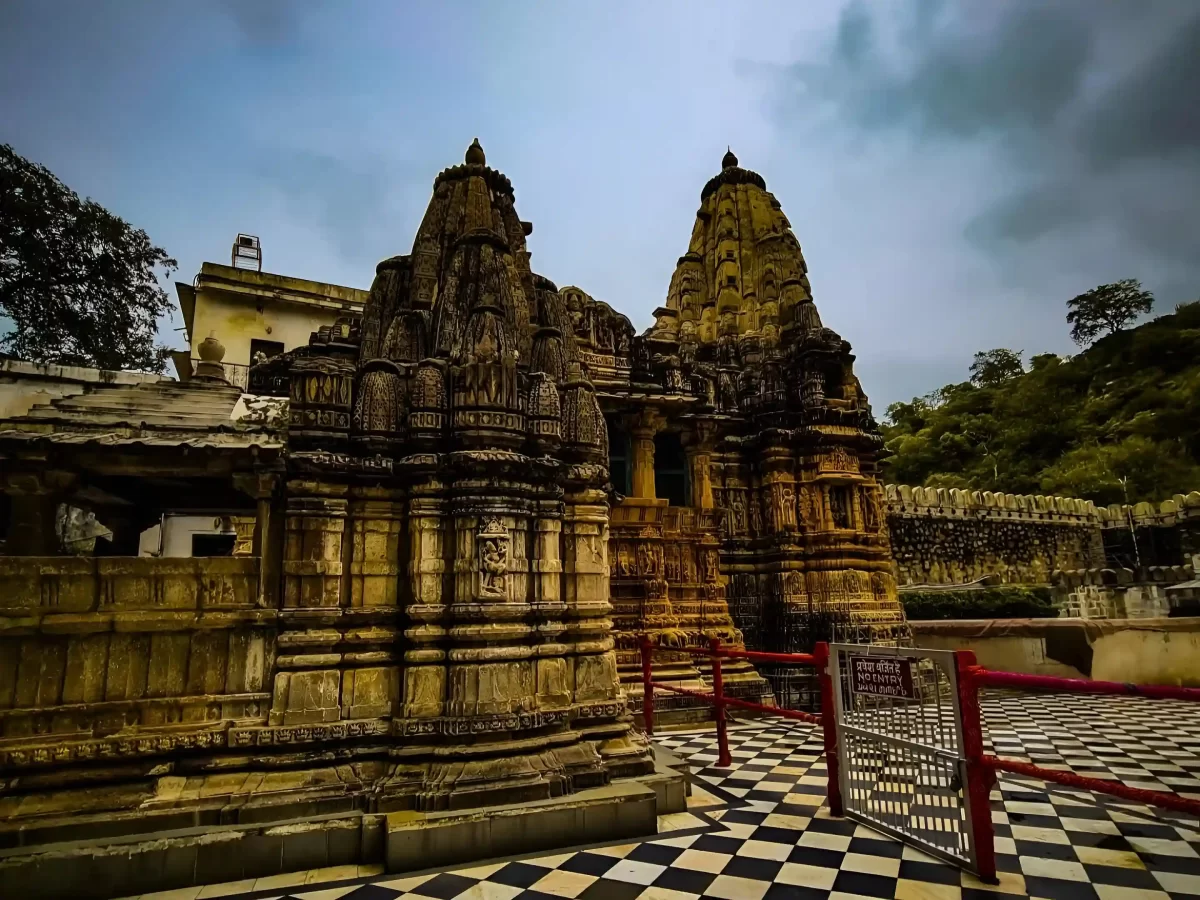
Tourists visit to examine the unique four-faced idol of Lord Shiva carved from black marble and the extensive complex of 108 smaller shrines. The site is a primary example of Maru-Gurjara architecture, featuring intricately carved pyramidal roofs, a silver Nandi statue, and double-storied pillared halls.

Quick Facts About Eklingji Temple

Quick Facts for Eklingji Temple, Udaipur

Entry Fee Free
Timings 04:30 AM – 07:00 AM, 10:30 AM – 01:30 PM, and 05:00 PM – 07:30 PM
Altitude (m) 575 m
Ideal Visit Duration 45 to 60 minutes
Best Time of Day Morning Aarti (10:30 AM slot)
Crowd Level High (Especially on Mondays and during festivals)
Distance from City Centre (km) 22 km from Udaipur City Centre (Kailashpuri)
Walking Difficulty Easy (Short walk from the parking area to the complex)
Parking Available Yes (Designated parking area available near the temple entrance)
Last Mile Access Private taxi, bus, or personal vehicle via NH8
Suitable for Kids Yes
Suitable for Seniors Yes (Minimal steps; benches available for resting)
Wheelchair Friendly Partial (The complex has some uneven stone flooring and small steps at thresholds)

Why Visit Eklingji Temple Udaipur: The Spiritual Heart of Mewar

Visitors travel to this 8th-century complex to witness the spiritual headquarters of the Mewar rulers, who served as the regents for the presiding deity, Eklingji (Lord Shiva). It is a premier destination for those seeking to see the remarkable four-faced black marble idol of Shiva and to explore a sprawling site of 108 interconnected temples, all constructed from pristine white marble and sandstone within a high-walled fortification.

The on-ground atmosphere is intensely devotional and rhythmic, governed by strict traditional rituals that have remained unchanged for centuries. Visitors experience a sensory immersion of chanting, the constant ringing of heavy brass bells, and the fragrance of fresh lotus flowers. The courtyards, characterized by their high pyramidal roofs and silver-plated doors, offer a grand yet intimate environment where the sound of the nearby temple tank water adds to the sacred stillness.

What makes this temple distinct for travelers is its "living heritage" status; it is not a silent museum but a vibrant, functioning center of royal religious life where the current Maharana still visits to offer prayers. Architecturally, it stands out for its unique "Nagara" style shikhara and the presence of a massive silver Nandi bull, providing an authentic look at the intersection of Rajasthani statecraft and religious piety that is rarely found in more commercialized tourist sites.

History and Cultural Heritage of Eklingji Temple Udaipur

The Eklingji Temple is a significant spiritual complex dedicated to Lord Shiva, the ruling deity of the Mewar State. Originally constructed in 734 CE by Bappa Rawal, the founder of the Mewar dynasty, the temple serves as the historical seat of the "Maharana," who ruled as the Dewan (Prime Minister) of Eklingji. While the original structure was destroyed during various invasions, it was extensively rebuilt and expanded in the 15th and 16th centuries by Maharana Kumbha and Maharana Raimal, making it a living record of Rajput architectural evolution and religious resilience.

The temple complex is an architectural marvel of the Nagara style, featuring 108 individual shrines enclosed within high fortified walls. The main temple is a two-story structure with a distinctive pyramidal roof and a sanctum that houses a unique four-faced (Chathurmukhi) idol of Eklingji carved from black marble. The interior is noted for its silver-plated doors and a large brass statue of Nandi, the sacred bull. As a private temple of the Udaipur Royal Family, it continues to host traditional Vedic rituals and remains a primary center for Shaivite pilgrimage in Rajasthan.

Best Time to Visit Eklingji Temple in Udaipur

http://googleusercontent.com/map_location_reference/1 Mewar ke rajaon ke pramukh devta [Eklingji Temple](http://googleusercontent.com/map_location_reference/0) ki yatra ke liye thanda mausam aur dharmik utsavon ka samay sabse uttam hota hai. Udaipur se lagbhag 22 km door Kailashpuri mein sthit is mandir ki vastukala aur iske 108 mandiron ke samuh ka bariki se avlokan karne ke liye winter season sabse sukhad anubhav pradan karta hai.

  • Ideal Months: September se March tak ka samay sabse shresth hai. Mahashivratri (February/March) ke dauran yahan ka mahol atyant bhakti-purna aur raunak wala hota hai, jo darshan ke liye sabse mahatvapurn samay hai.
  • Weather Conditions: Sardiyon mein tapman 10°C se 26°C ke beech rehta hai, jo mandir ke marble prangan aur nakshidar stambhon ko dekhne ke liye anukul hai. Is samay dhoop narm hoti hai, jisse mandir ki line mein khade hone mein pareshani nahi hoti.
  • Periods to Avoid: April se June ki garmi (40°C+) se bachein, kyunki nange pair mandir ke marble floor par chalna behad kathin ho sakta hai. Saath hi, dhyan rakhen ki mandir din mein vishisht samay (4:30-7:00 AM, 10:30 AM-1:30 PM, 5:00-7:30 PM) par hi khulta hai, isliye dophar ke waqt yahan aana vyarth ho sakta hai.

How to Reach Eklingji Temple Udaipur: Detailed Transport and Access Guide

http://googleusercontent.com/map_location_reference/1

The [Eklingji Temple](http://googleusercontent.com/map_location_reference/0) is a magnificent Hindu temple complex located in Kailashpuri, approximately 22 km north of Udaipur city. Dedicated to the patron deity of the Mewar rulers, it is a significant pilgrimage site reachable via a scenic drive through the Aravalli hills.
  • Nearest Airport: Maharana Pratap Airport (UDR) in Udaipur is the closest air link, situated roughly 25 km away. A private taxi from the airport to the temple takes about 45 minutes, bypassing the main city traffic via the Debari-Kailashpuri route.
  • Nearest Railway Station: Udaipur City Railway Station (UDZ) is the primary railhead, located about 22 km from the temple. It is well-connected to major Indian cities like Delhi, Mumbai, and Jaipur. Taxis, auto-rickshaws, and local RSRTC buses are readily available at the station for the 40-minute journey to Kailashpuri.
  • Road Access: The temple is conveniently located on National Highway 48 (NH48), which connects Udaipur to Nathdwara and Ajmer. The road is a well-maintained four-lane highway, making it easily accessible by private car, motorcycle, or intercity bus.
  • Last-Mile Connectivity: Local buses plying the Udaipur-Nathdwara route drop passengers at the Eklingji bus stand, which is just a 5-minute walk from the temple entrance. For a more comfortable experience, hiring a private cab for a half-day trip from Udaipur is the most common choice for tourists.
  • Travel Conditions and Limitations: The temple follows strict split timings (morning, afternoon, and evening slots), so visitors must plan their arrival accordingly. Photography and mobile phones are strictly prohibited inside the temple complex; secure lockers are available at the entrance. Note that heavy crowds are expected on Mondays and during the Mahashivratri festival.

What to Expect When You Visit Eklingji Temple, Udaipur

  • Spiritual Significance and Authority: This 8th-century complex is the family shrine of the Mewar rulers. Expect a highly disciplined and traditional atmosphere where religious protocols are strictly enforced by temple trust officials and priests. It is a living place of worship, not merely a historical monument.
  • Intricate Marble Architecture: The main temple is a magnificent double-storied structure featuring a pyramidal roof and a distinctive four-faced black marble idol of Lord Shiva. Expect to see extraordinary silverwork on the doors and intricate carvings across the 108 smaller shrines within the high-walled complex.
  • Strict Timing and Breaks: The temple follows a specific schedule aligned with ritual timings (Aarti). Expect the doors to close for several hours in the afternoon (typically between 1:00 PM and 4:00 PM). It is essential to check the exact opening windows before traveling, as visitors are not allowed inside during the deity's rest periods.
  • Photography and Electronic Ban: Mobile phones, cameras, and all electronic gadgets are strictly prohibited inside the temple walls. Expect a mandatory frisking process at the entrance; all devices must be deposited at the free, supervised cloakroom before you enter the main courtyard.
  • Dress Code and Ritual Purity: Visitors must dress modestly; shoulders and knees must be covered. Footwear and leather items (belts, wallets) must be removed at the entrance. Because the stone floors are washed frequently for purity, they can be wet and slippery, especially near the main sanctum.
  • Crowd Dynamics: Due to its proximity to Udaipur, the temple sees a massive influx of local devotees on Mondays and during festivals like Maha Shivratri. During these times, expect long, fast-moving queues and a high-energy environment with chanting and bells, which may be overwhelming for those seeking a quiet experience.

Safety and Essential Visitor Information for Eklingji Temple Udaipur

  • Peak vs. Quiet Hours: To avoid the safety hazards of extreme crushing crowds, visit during the early morning session (4:30 AM – 7:00 AM). The temple follows a strict traditional schedule and remains closed to the public between 1:30 PM and 5:00 PM; planning your arrival around these specific windows is critical to avoid being stranded in the unshaded courtyard.
  • Strict Dress Code: As the private temple of the Mewar Royal family, modesty is strictly enforced. Both men and women must cover shoulders and knees. Visitors wearing shorts, sleeveless tops, or revealing clothing will be denied entry at the gate. Professional attire or traditional Indian wear is recommended to ensure seamless entry.
  • Security & Electronic Restrictions: Mobile phones, cameras, and all electronic recording devices are strictly prohibited inside the temple complex. Security is rigorous; you must deposit all electronics and leather items (including belts and wallets) in the cloakroom before entering. There is no exception for "pocketed" devices.
  • Floor Surface Safety: Footwear is prohibited inside the complex. The ancient stone flooring can be exceptionally slippery during the monsoon or early morning dew. During summer afternoons, the stone reaches high temperatures; use the provided mats to navigate the courtyard safely to prevent foot burns or slips.
  • Crowd Dynamics & Touting: During Mondays and religious festivals, the narrow entry corridors can become extremely congested. Be wary of unauthorized individuals offering "VIP Darshan" for a fee; these are often scams. Use only official donation boxes and follow the guided queue lines managed by the temple trust security.

Capturing Spiritual Grandeur: Photography at Eklingji Temple, Udaipur

  • The Ornate Pyramidical Shikhara at Mid-Morning: The temple is renowned for its magnificent silver doors and its pyramidical roof made of hundreds of small spires. Position yourself at the main courtyard entrance around 10:30 AM to capture the high-contrast shadows that define the architectural geometry of the multi-tiered roof.
  • Reflections in the Indrasagar Lake: Located just outside the temple complex, the serene Indrasagar Lake provides a perfect mirror for the temple's white marble walls and spires. The best time for this shot is at sunrise when the water is still and the rising sun illuminates the temple facade without the midday haze.
  • Intricate Sculptures of the Outer Walls: The exterior walls are decorated with carvings of dancers, musicians, and deities. Use a medium telephoto lens to isolate these relief sculptures, particularly on the western wall where the afternoon sun creates a warm glow that enhances the three-dimensional depth of the stone.
  • Strict Prohibition on All Interior Photography: Photography and videography are strictly forbidden inside the temple complex, especially of the four-faced black marble idol of Lord Shiva. All cameras, mobile phones, and electronic devices must be deposited in the cloakroom outside the main gate; security is very strict.
  • Crowd Management and Ritual Timing: As the family deity of the Mewar Maharana, the temple attracts large numbers of local devotees. To avoid the heaviest crowds, visit during the 10:30 AM to 1:30 PM window on weekdays. Avoid Mondays and festival days like Maha Shivratri if you are looking for unobstructed views.
  • Street Photography in Kailashpuri: The village surrounding the temple is a treasure trove for candid street photography. Capture the vibrant flower stalls, traditional sweet shops, and the colorful attire of pilgrims in the narrow lanes leading to the temple, which offer a lively contrast to the solemn white marble.

Near By Attraction

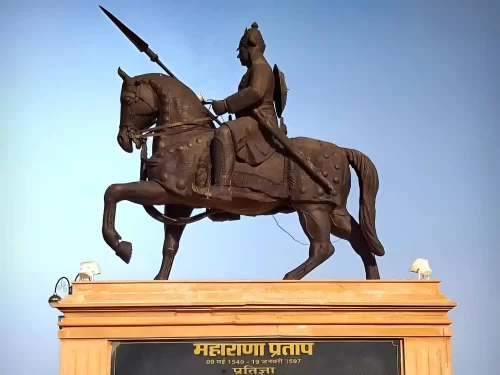
Maharana Pratap Smarak Udaipur Bronze statue on Pearl Hill honoring the legendary Rajput king and his horse Chetak Rajasthan. Mountain

Maharana Pratap Smarak

Maharana Pratap Smarak is a historical memorial and park situated atop Moti Magri hill, dedicated to the 16th-century Rajput ruler Maharana Pratap.

Aerial view of City Palace in Udaipur Rajasthan with lakeside palaces, courtyards, Jag Mandir island and surrounding Aravalli hills under misty sky, perfect Rajasthan tour package. Palace

City Palace

City Palace in Udaipur is a magnificent royal complex showcasing the grandeur of the Mewar dynasty.

Jagdish Temple grand three-story Indo-Aryan style stone structure featuring ornate pillars and a black marble statue of Lord Vishnu in the heart of Udaipur Rajasthan. Temple

Jagdish Temple

Jagdish Temple is a prominent Hindu temple in Udaipur dedicated to Lord Vishnu.

Frequently Asked Questions About Eklingji Temple

Eklingji Temple is located near Udaipur and is easily accessible by road from the main city area.
Eklingji Temple is generally open during specific morning and evening hours, and visitors should confirm updated timings before planning their visit.
There is no entry fee to visit Eklingji Temple, though donations are welcomed inside the temple premises.
The best time to visit Eklingji Temple is between October and March when the weather is pleasant for travel.
Travelers can reach Eklingji Temple by taxi, bus, or private vehicle from nearby transport hubs.
Most visitors spend around 45 minutes to 1 hour at Eklingji Temple depending on crowd levels and prayer participation.
Visitors are expected to dress modestly at Eklingji Temple and remove footwear before entering the temple complex.
Photography inside Eklingji Temple is generally restricted, and visitors should follow on site guidelines.
Eklingji Temple is suitable for family visits, though visitors should be prepared for queues during peak hours.
Eklingji Temple can easily be included in a one day sightseeing itinerary along with other nearby heritage attractions.

Loved this place ? Let’s Plan Your Rajasthan Trip

Get customized Rajasthan tour planning designed around desert climate comfort, long-distance road travel flow, heritage exploration time, and realistic pacing between regions. Whether you are visiting for fort architecture, palace heritage, cultural exper

⚑ Quick Response | πŸ’° Free consultation | πŸ•’ 24Γ—7 expert support

×

Plan Your Trip