Birla Mandir Jaipur – Magnificent Marble Temple in the Pink City

Birla Mandir , Jaipur
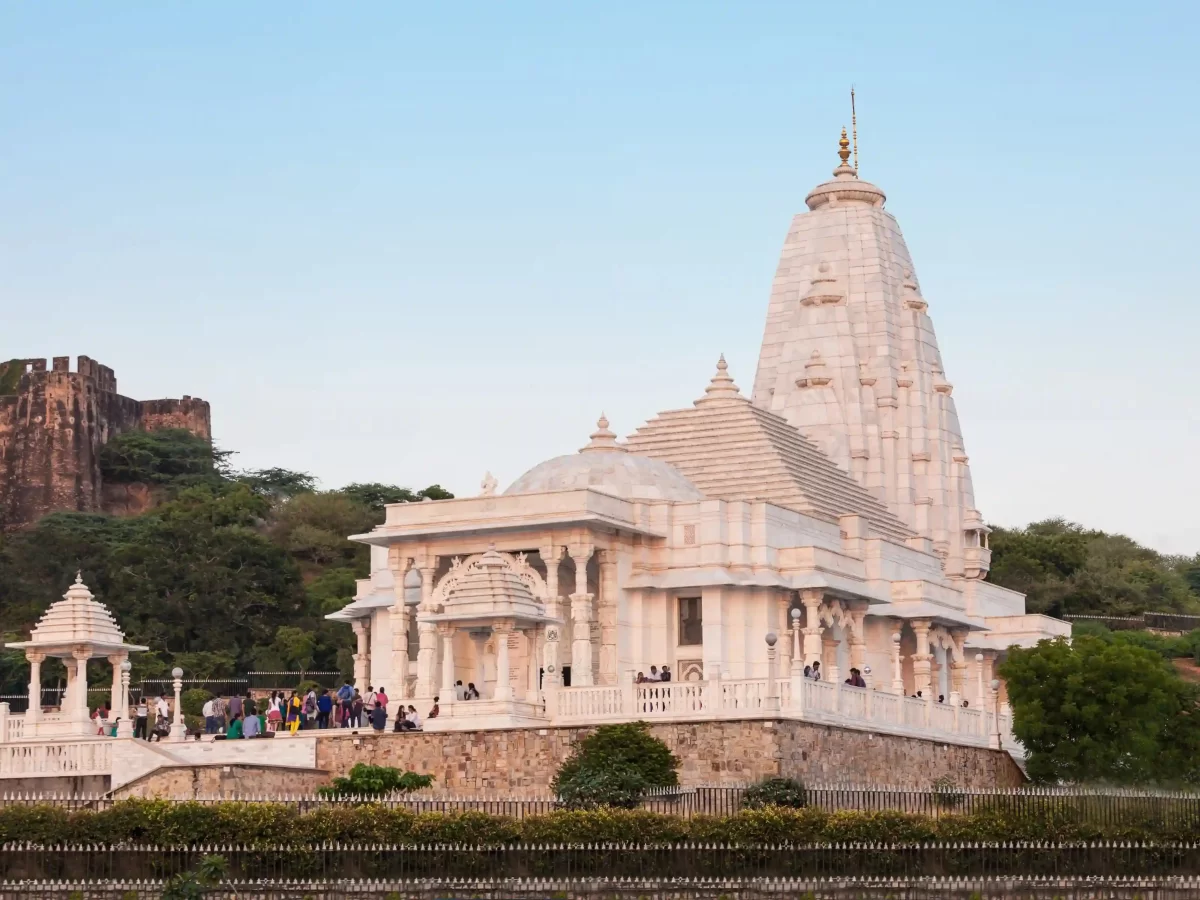
Built by the Birla family and inaugurated in 1988, Birla Mandir is a modern architectural marvel blending traditional Rajasthani and Mughal styles. The temple features intricate carvings, serene surroundings, and beautifully landscaped gardens. It is a major spiritual and tourist attraction in Jaipur, attracting devotees and visitors for its peaceful atmosphere, evening aarti, and panoramic city views.

Quick Facts About Birla Mandir

Quick Facts About Birla Mandir Jaipur

Entry Fee Free entry for all visitors; donations welcome at temple premises.
Timings Typically open daily in two slots: 8:00AM–12:00PM and 4:00PM–9:00PM (may vary slightly on special occasions/festivals).
Altitude (m) Approximately 430m above sea level, located at the base of Moti Dungri Hill.
Ideal Visit Duration About 1–2 hours to explore the temple, gardens, and surroundings.
Best Time of Day Early morning (quiet and peaceful) or evening (pleasant ambience and illuminated temple).
Crowd Level Moderate daily; evenings and festival days see higher crowds.
Distance from City Centre (km) Located centrally in Jaipur; approximately 4–6km from major city hubs like Jaipur Railway Station and central markets.
Walking Difficulty Easy — mostly flat pathways suitable for all age groups.
Parking Available Yes — parking space available near the temple complex; may be limited during peak times.
Last Mile Access Accessible via auto-rickshaw, taxi, cab services, bikes, and local buses.
Suitable for Kids Yes — familyfriendly environment with gardens and peaceful areas.
Suitable for Seniors Yes — easy access, flat paths, and benches make it comfortable for elderly visitors.
Wheelchair Friendly Yes — ramps and accessible pathways are available for differentlyabled visitors.

Why Visit Birla Mandir Jaipur

Birla Mandir Jaipur is a serene spiritual landmark known for its stunning white marble architecture and peaceful atmosphere. It offers visitors a tranquil escape in the heart of the Pink City, making it ideal for meditation, photography, and quiet reflection.

The temple is dedicated to Lord Vishnu (Narayan) and Goddess Lakshmi, combining traditional Indian and Rajasthani architectural styles with modern construction techniques. Its intricate carvings, landscaped gardens, and beautifully illuminated evening views make it a visually captivating site.

Visitors are drawn here not only for spiritual reasons but also for its calm ambience, family-friendly environment, and central location. The temple's serene atmosphere, cultural significance, and architectural beauty make it one of Jaipur’s must-visit attractions.

History of Birla Mandir Jaipur

Birla Mandir Jaipur, also known as Laxmi Narayan Temple, was constructed by the Birla family and inaugurated in 1988. The temple is dedicated to Lord Vishnu (Narayan) and Goddess Lakshmi, serving as a modern center of devotion in the heart of Jaipur.

The temple showcases stunning white marble architecture, blending traditional Indian and Rajasthani design elements with modern construction techniques. Its intricate carvings, ornamental pillars, and expansive gardens reflect meticulous craftsmanship and attention to detail.

Over the years, Birla Mandir has become a prominent spiritual and tourist landmark in Jaipur, attracting devotees, photographers, and travelers seeking peace and architectural beauty. The temple also hosts daily prayers and rituals, offering visitors an authentic experience of devotional practices in a serene setting.

Best Time to Visit Birla Mandir Jaipur

Birla Mandir Jaipur can be visited throughout the year, but certain times enhance the experience of exploring its serene environment, beautiful architecture, and landscaped gardens.
  • October to March: The ideal period to visit Jaipur, with mild temperatures (10°C–25°C) and pleasant weather for sightseeing and photography.
  • April to June: Summers are hot; early morning or late evening visits are recommended to avoid peak heat while enjoying calm surroundings.
  • Monsoon (July to September): Occasional rains add lush greenery to the temple gardens; ensure safe walking as pathways may be slippery.
  • Time of Day: Early morning offers a peaceful experience with fewer visitors, while evenings provide a visually captivating ambiance with lights illuminating the temple.
  • Festivals & Special Occasions: Religious festivals like Diwali or Janmashtami see lively celebrations, enhancing the devotional atmosphere for visitors.

How to Reach Birla Mandir Jaipur

  • By Air: Jaipur International Airport is approximately 13–14 km from Birla Mandir. Visitors can take taxis, app-based cabs, or airport shuttles to reach the temple in 25–30 minutes.
  • By Train: Jaipur Railway Station, around 5–6 km away, connects the city to major Indian cities. Taxis, auto-rickshaws, or local cabs provide convenient last-mile transport to the temple.
  • By Road: Jaipur is well-connected by national highways. Private cars, taxis, and buses can reach the temple directly, with ample parking available near the premises.
  • Local Transport: Auto-rickshaws, cycle-rickshaws, app-based cabs, and rental scooters or bikes are widely available for short-distance travel to the temple.
  • Self-Drive: Visitors driving themselves can easily access Birla Mandir via well-marked city roads. Parking is limited during peak hours, so early arrival is advised.
  • Walking: For those staying nearby, the temple is accessible on foot via safe, flat pathways, making it easy for families and senior visitors.

What to Expect When You Visit Birla Mandir Jaipur

  • Serene Ambience: Visitors can enjoy a peaceful environment ideal for meditation, reflection, and quiet walks within the temple grounds.
  • Architectural Beauty: The temple features intricate white marble carvings, ornate pillars, and a blend of traditional Indian and Rajasthani design elements.
  • Landscaped Gardens: Well-maintained gardens surrounding the temple offer shaded areas, seating, and scenic spots for relaxation and photography.
  • Spiritual Experience: Devotees can participate in daily rituals, aarti ceremonies, and prayer sessions, experiencing the temple’s devotional atmosphere.
  • Photography Opportunities: Both the temple structure and its gardens provide excellent subjects for photography, especially during early morning or evening lighting.
  • Family-Friendly: The temple is suitable for visitors of all ages, with safe walking paths and areas for children to explore under supervision.
  • Accessibility: Flat pathways and ramps make the temple accessible for seniors and differently-abled visitors, though peak times may be crowded.
  • Evening Visit: The temple is beautifully illuminated after sunset, creating a visually captivating experience for visitors and photographers alike.

Important Visitor Information for Birla Mandir Jaipur

  • Crowd & Weather Notes: The temple experiences moderate crowds daily, with higher footfall during evenings, weekends, and religious festivals. Jaipur’s weather is pleasant from October to March, hot during April–June, and rainy during monsoon season (July–September).
  • Peak / Quiet Hours: Peak visiting times are evenings (5:00?PM–8:30?PM) and festival days. Early mornings (8:00?AM–10:00?AM) are quieter, offering a more peaceful experience.
  • Dress Code: Visitors are advised to wear modest, comfortable clothing suitable for a place of worship. Light clothes in summer and warm layers in winter are recommended. Footwear must be removed before entering the temple premises.
  • Safety Notes: Follow temple guidelines, stay on designated pathways, and supervise children in garden areas. Carry water, sun protection, and avoid slippery areas during monsoon. Photography is allowed but respectful behavior is expected inside prayer halls.

Photography and Viewpoints at Birla Mandir Jaipur

  • Architectural Photography: The temple’s white marble facade, ornate pillars, and intricate carvings provide excellent opportunities for capturing detailed shots of modern Rajasthani architecture.
  • Garden & Landscape Views: The landscaped gardens surrounding the temple offer vibrant greenery, fountains, and shaded seating areas ideal for wide-angle photography and nature shots.
  • Morning & Evening Light: Early morning light gives soft, peaceful tones, while evening illumination enhances the temple’s marble surfaces, creating stunning visual contrasts for photography.
  • Panoramic City Views: Elevated areas around the temple provide partial views of Jaipur city, allowing photographers to combine urban scenery with the temple’s heritage backdrop.
  • Family & Devotional Moments: Capture candid moments of devotees during aarti and prayer ceremonies, adding a cultural and spiritual dimension to photography.
  • Guidelines for Photography: Respectful photography is encouraged inside the temple; avoid using flash in prayer halls and always follow temple rules.

Near By Attraction

Shri Khole Ke Hanuman Ji Temple Jaipur Massive 1960s hillside shrine dedicated to Lord Hanuman featuring white marble architecture and scenic valley views Rajasthan. Temple

Shri Khole Ke Hanuman Ji Temple

Shri Khole Ke Hanuman Ji Temple is a prominent Hindu temple complex situated on a hillside in the Laxman Dungri area.

Moti Doongri Ganeshji Temple Jaipur Ancient Hindu shrine dedicated to Lord Ganesha with a gold seated idol Rajasthan. Temple

Moti Dungri Ganesh Ji Temple jaipur

Moti Dungri Ganesh Ji Temple is an 18th-century Hindu place of worship dedicated to Lord Ganesha, located at the foot of the Moti Dungri hill.

BAPS Shri Swaminarayan Akshardham Mandir aerial view of the intricate stone carvings and domes in Jaipur, Rajasthan. Temple

BAPS Shri Swaminarayan Akshardham Mandir

BAPS Shri Swaminarayan Akshardham is a modern Hindu temple complex dedicated to Bhagwan Swaminarayan, constructed using traditional Vedic architectural principles.

Frequently Asked Questions About Birla Mandir

Birla Mandir is located in Jaipur city, Rajasthan. It is situated near Moti Doongri Hill in the central part of the city.
Birla Mandir is generally open from early morning to afternoon and again in the evening. Timings may vary slightly on special religious occasions.
There is no entry fee to visit Birla Mandir. Visitors can enter the temple premises free of cost.
Birla Mandir can be reached easily by taxi, auto or private vehicle within Jaipur city. It is well connected by major roads.
The best time to visit Birla Mandir is between October and March when the weather remains pleasant for sightseeing in Jaipur.
Around 30 to 60 minutes are sufficient to explore Birla Mandir comfortably. Visitors attending prayer sessions may spend additional time.
Parking facilities are available near Birla Mandir for visitors arriving by private vehicles. Availability may vary during peak hours.
Birla Mandir is suitable for families, couples and spiritual visitors. The temple premises are spacious and well maintained.
Visitors can see white marble architecture, intricate carvings and idols of Lord Vishnu and Goddess Lakshmi inside Birla Mandir.
Birla Mandir experiences higher footfall during major Hindu festivals and weekends. Evening aarti hours are usually more crowded.
Visitors are expected to wear modest and respectful clothing at Birla Mandir. Footwear must be removed before entering the temple area.
Moti Doongri Fort, Albert Hall Museum and Central Park can be combined with a Birla Mandir visit. These attractions are located within Jaipur in Rajasthan.

Loved this place ? Let’s Plan Your Rajasthan Trip

Get customized Rajasthan tour planning designed around desert climate comfort, long-distance road travel flow, heritage exploration time, and realistic pacing between regions. Whether you are visiting for fort architecture, palace heritage, cultural exper

⚡ Quick Response | 💰 Free consultation | 🕒 24×7 expert support

×

Plan Your Trip