Quick Facts About Padma Sambhava Maha Vihara Monastery
Padma Sambhava Mahavihara Monastery, Gopalpur, Odisha Quick Facts
| Entry Fee | Free; donations are voluntary. |
|---|---|
| Timings | Generally open daily from 8:00 AM–5:00 PM; timings may vary during Buddhist ceremonies and special events. |
| Altitude (m) | Approximately 10 m |
| Ideal Visit Duration | 45 minutes–1.5 hours |
| Best Time of Day | Morning for a peaceful atmosphere and comfortable weather. |
| Crowd Level | Low; visitor numbers increase during Buddhist festivals and holidays. |
| Distance from City Centre (km) | Approximately 3 km from Gopalpur town centre. |
| Walking Difficulty | Easy; the monastery complex is mostly flat and easy to explore. |
| Parking Available | Yes, limited parking is available within or near the monastery premises. |
| Last Mile Access | Accessible by motorable road, followed by a short walk from the entrance to the monastery buildings. |
| Suitable for Kids | Yes |
| Suitable for Seniors | Yes |
| Wheelchair Friendly | Partially; the main courtyard is accessible, but some prayer halls and upper floors may require using steps. |
Why Visit Padmasambhava Mahavihara Monastery, Gopalpur, Odisha
Visitors come to Padmasambhava Mahavihara Monastery to experience one of eastern India's prominent Tibetan Buddhist monasteries and to admire its colorful Buddhist architecture, prayer halls, and large statues. The monastery attracts Buddhist pilgrims as well as travelers interested in spirituality and culture.
The atmosphere is peaceful and contemplative, with prayer flags, chanting during religious ceremonies, and well-maintained monastery grounds creating a calm environment. Visitors can explore the temple complex, observe Buddhist artwork, and enjoy the quiet surroundings at a leisurely pace.
What makes Padmasambhava Mahavihara Monastery distinct is its Tibetan Buddhist traditions set within the coastal region of Odisha. Its striking architecture, detailed murals, and spiritual ambiance offer a cultural experience that differs from the predominantly Hindu heritage sites found elsewhere in the state.
History of Padmasambhava Mahavihara Monastery, Gopalpur, Odisha
Padmasambhava Mahavihara Monastery is a Tibetan Buddhist monastery located near Gopalpur in Ganjam district, Odisha. Established in the late 20th century, the monastery was built to serve the Tibetan Buddhist community and to promote the teachings and traditions of Vajrayana Buddhism in eastern India.
Named after Guru Padmasambhava, the 8th-century Buddhist master credited with introducing Vajrayana Buddhism to Tibet, the monastery reflects the architectural style and religious practices of the Tibetan Buddhist tradition. It functions as a center for prayer, meditation, monastic education, and Buddhist festivals.
Today, Padmasambhava Mahavihara Monastery is an important spiritual and cultural landmark in the Gopalpur region. Visitors come to experience its peaceful atmosphere, traditional Tibetan architecture, and Buddhist heritage while learning about the monastic way of life.
Best Time to Visit Padma Sambhava Maha Vihara Monastery, Gopalpur, Odisha
The best time to visit Padma Sambhava Maha Vihara Monastery is from October to February, when the weather is pleasant for exploring the monastery grounds and enjoying the peaceful surroundings. The cooler months are ideal for meditation, photography, and combining the visit with nearby attractions around Gopalpur.
- Ideal months: October to February, when comfortable temperatures make it easy to spend time exploring the monastery and its landscaped campus.
- Best season conditions: Mild weather, lower humidity, and clear skies provide a pleasant atmosphere for sightseeing, quiet reflection, and viewing the monastery's Tibetan Buddhist architecture.
- Periods to avoid: June to September due to heavy monsoon rainfall, which can affect road travel and outdoor exploration. April and May are typically hot and humid, making daytime visits less comfortable.
How to Reach Padma Sambhava Maha Vihara Monastery, Gopalpur, Odisha
- Nearest Airport: The nearest airport is Biju Patnaik International Airport, Bhubaneswar, approximately 175 km from Padma Sambhava Maha Vihara Monastery. From the airport, visitors can hire taxis or take buses to Berhampur before continuing to the monastery.
- Nearest Railway Station: Berhampur Railway Station, about 12 km away, is the nearest major railhead. It has regular train connectivity with Bhubaneswar, Visakhapatnam, Chennai, and Kolkata. Taxis and auto-rickshaws are readily available from the station.
- By Road: Padma Sambhava Maha Vihara Monastery is located near Gopalpur in Ganjam district and is easily accessible via NH 16 and local roads from Berhampur and Gopalpur. Private vehicles, taxis, and local buses provide convenient access to the monastery. The final approach is on a paved road, and parking is available nearby. Visitors should maintain silence and dress modestly while visiting this active Buddhist monastery.
What to Expect When You Visit Padma Sambhava Maha Vihara Monastery, Gopalpur, Odisha
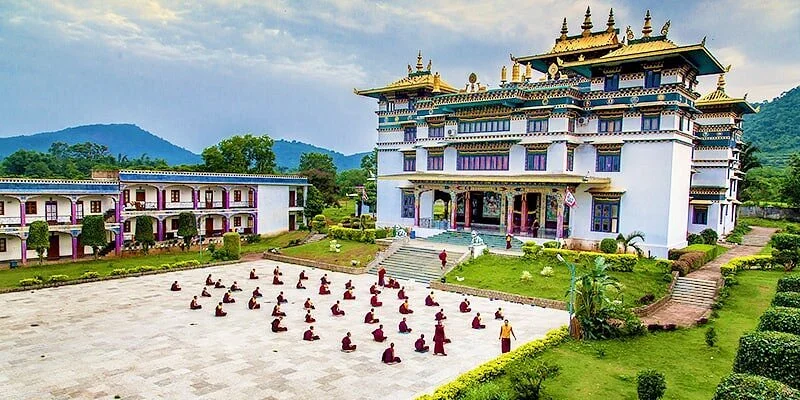
- Padma Sambhava Maha Vihara Monastery is a Tibetan Buddhist monastery set in a peaceful environment near Gopalpur. Visitors can expect landscaped grounds, prayer halls, colorful murals, and traditional Buddhist architecture.
- The monastery is an active place of worship and learning. Monks conduct daily prayers and religious activities, so visitors should maintain silence and respect ongoing ceremonies.
- The complex is easy to explore on foot, with paved pathways connecting the main temple, courtyards, and open spaces. Some buildings may have steps, but movement around the grounds is generally straightforward.
- Basic visitor amenities such as parking and seating are available within or near the monastery premises. Restaurants, accommodation, and other tourist services are easily accessible in Gopalpur.
- Visitors are expected to dress modestly, remove footwear before entering prayer halls where required, and avoid disturbing monks or worshippers during meditation and prayer sessions.
- Photography is generally permitted in the outdoor areas. Restrictions may apply inside prayer halls or during religious ceremonies, so visitors should follow instructions displayed at the monastery.
- The monastery is usually quiet, making it suitable for visitors interested in Buddhist culture, architecture, and meditation. Crowds are generally limited except during Buddhist festivals and special religious events.
- The open grounds can become warm during the afternoon, especially in summer. Carrying drinking water, wearing comfortable footwear, and planning a morning or late afternoon visit can make the experience more comfortable.
Important Visitor Information for Padma Sambhava Maha Vihara Monastery, Gopalpur, Odisha
- Crowd and weather: The monastery generally has a peaceful atmosphere throughout the year, with slightly higher visitor numbers during Buddhist festivals, weekends, and public holidays. The cooler months from October to February are the most comfortable for visiting, while the monsoon brings occasional heavy rainfall.
- Peak and quiet visiting hours: Morning hours are usually the quietest and best for experiencing the monastery's serene surroundings. Visitor numbers tend to increase slightly during the afternoon and on festival days.
- Dress code: As an active Buddhist monastery, visitors should wear modest clothing that covers the shoulders and knees. Footwear should be removed before entering prayer halls or other areas where required, and silence should be maintained during prayers.
- Safety and practical cautions: Respect monastery rules by avoiding loud conversations and seeking permission before photographing monks or religious ceremonies. Stay on designated pathways, follow instructions from monastery staff, and help maintain the cleanliness and peaceful environment of the premises.
Photography and Viewpoints at Padma Sambhava Maha Vihara Monastery, Gopalpur, Odisha
- The best photographs can be taken from the main courtyard, where the monastery's colorful Tibetan-style architecture, prayer hall, and landscaped surroundings can be captured in a single frame.
- Morning and late afternoon provide the most favorable lighting, enhancing the vibrant colors of the monastery, prayer flags, and ornamental details without harsh shadows.
- Photography is generally permitted in the outdoor areas of the monastery. Inside the prayer hall and meditation spaces, visitors should follow the monastery's rules, as photography may be restricted during prayers or religious ceremonies.
- The elevated sections of the monastery complex offer wide views of the surrounding countryside, while the entrance pathway provides a balanced perspective of the main building.
- The monastery remains peaceful on most days, making it easy to photograph the architecture. During Buddhist festivals and special ceremonies, visitor numbers increase and access to certain areas may be limited.