Odisha State Museum, Bhubaneswar, Odisha, India | History & Visitor Guide

Odisha State Museum , Bhubaneswar
Visitors attend this museum to examine the world\'s largest collection of palm-leaf manuscripts and diverse galleries dedicated to epigraphy, numismatics, and natural history. It serves as the primary repository for the state\'s historical heritage, featuring rare Buddhist and Jain sculptures alongside traditional Odia tribal art.

Quick Facts About Odisha State Museum

Entry Fee 20
Timings 10:00 - 17:30
Altitude (m) 33
Ideal Visit Duration (hrs) 2
Best Time of Day Morning
Crowd Level Moderate
Distance from City Centre (km) 1.5
Walking Difficulty Moderate
Parking Available Yes
Last Mile Access Road
Suitable for Kids Yes
Suitable for Seniors Yes
Wheelchair Friendly Yes

Why Visit Odisha State Museum

Visitors come to this institution to view the most comprehensive collection of Orissan heritage in existence, spanning from prehistoric stone tools to medieval sculptures. It is the essential starting point for travelers who want to understand the state's complex history, as it houses a world-renowned collection of palm-leaf manuscripts and rare bronze icons recovered from archaeological sites across the region.

The atmosphere on the ground is one of scholarly quiet, with spacious, high-ceilinged galleries that provide a cool retreat from the outdoor heat of Bhubaneswar. Walking through the themed sections, you experience an organized transition through time, where the smell of aged parchment in the manuscript gallery and the sight of massive stone fragments in the sculpture garden create a serious, reflective environment for cultural discovery.

The museum is distinct for its specialized galleries dedicated to Odishan tribal crafts and the evolution of the Odia script, offering insights not found in general history books. It stands out for its unique display of Patachitra paintings and traditional musical instruments, providing a vital bridge between the ancient temple ruins found throughout the city and the living folk traditions that continue to define the identity of the state today.

Historical and Cultural Context of Odisha State Museum

The Odisha State Museum, established in 1932 and moved to its current location in 1960, serves as the primary repository for the state's archaeological and cultural heritage. Its origins are tied to the research efforts of historians at Ravenshaw College, and today it stands as a vital institution for preserving the transition of Kalingan history from the prehistoric era to the modern age.

The museum is internationally recognized for its Palm Leaf Manuscript Gallery, which houses one of the world's largest collections of ancient manuscripts, including rare texts on art, medicine, and the 12th-century Gita Govinda. These documents provide essential insight into the evolution of the Odia script and the region's literary traditions.

The facility features specialized galleries for archaeology, epigraphy, and numismatics, showcasing a vast array of Buddhist, Jain, and Brahmanical sculptures recovered from sites like Ratnagiri and Lalitgiri. Its ethnological section preserves the diverse cultural identities of Odisha’s indigenous tribes through life-sized dioramas, traditional costumes, and ancestral tools, making it a central hub for understanding the state's complex social fabric.

Best Time to Visit Odisha State Museum

To maximize your time exploring the museum's extensive galleries, including the Rare Palm Leaf Manuscript collection, visiting during the winter months is ideal for maintaining comfort during the transition between the various wings. While the main galleries are housed within a permanent structure, the lack of uniform climate control across all sections means that the external ambient temperature significantly impacts the internal air quality and your overall stamina for a multi-hour visit.
  • Ideal Months: October to March, which align with the peak cultural season in Bhubaneswar and provide the most comfortable temperatures for walking through the sprawling multi-story complex.
  • Weather Conditions: Mild and dry with outdoor temperatures between 15°C and 28°C; these conditions prevent the galleries from feeling stuffy, ensuring a better environment for viewing delicate archaeological finds and folk art.
  • Periods to Avoid: April to June, when the intense external heat and high humidity can make the non-air-conditioned sections of the museum feel oppressive; additionally, be mindful that the museum is closed on Mondays and all government holidays, which can disrupt travel schedules if not planned in advance.

Navigating the City: How to Reach Odisha State Museum

  • By Air: Biju Patnaik International Airport (BBI) is the closest airport, located approximately 4 km away. A taxi or app-based cab (Ola/Uber) from the terminal takes about 10–15 minutes to reach the museum via the Airport Road and Lewis Road.
  • By Rail: Bhubaneswar Railway Station (BBS) is the nearest major rail junction, situated just 1.5 km from the museum. Due to its proximity, a short 5-minute auto-rickshaw or cycle-rickshaw ride is the most convenient way to reach the entrance from the station’s main exit.
  • Road Access: The museum is centrally located at the Kalpana Square intersection in the BJB Nagar area. It is well-connected to major city arteries, including the Cuttack-Puri Road and the NH-16 (via link roads), making it easily accessible by private car or tourist coach.
  • Last-Mile Connectivity: The "Mo Bus" public transit system has frequent stops at Kalpana Square, which is a major transit hub. From the bus stop, the museum entrance is within a 200-meter walking distance.
  • Travel Conditions: The museum is closed on Mondays and all government holidays. While the central location is highly accessible, Kalpana Square is one of the city's busiest intersections; travelers should account for moderate traffic delays during peak office hours (10:00 AM and 5:00 PM).

What to Expect When You Visit Odisha State Museum

  • Environment and Surroundings: The museum is housed in a large, multi-story building with numerous themed galleries. While several key sections like the Paika Gallery and the Evolution of Script gallery are air-conditioned, many corridors and older wings rely on ceiling fans and natural ventilation, which can lead to humid conditions during the summer months. The layout is expansive, and the lighting is kept dim in specific areas to preserve sensitive palm-leaf manuscripts and ancient textiles.
  • Facilities and Amenities: The complex includes a central canteen providing basic snacks and beverages, though options are limited. There is a small souvenir shop near the entrance selling local handicrafts and museum publications. Public restrooms are available on multiple floors, but their maintenance standards can vary. Bag storage lockers are provided at the entrance as large bags and backpacks are not permitted inside the galleries.
  • Accessibility and Movement: The museum is equipped with elevators and ramps, making it largely accessible for wheelchair users and those with limited mobility. However, the sheer size of the collection requires extensive walking; there are limited seating benches within the individual galleries for resting. The transition between different wings can sometimes involve small floor-level thresholds that require careful navigation.
  • Typical Visitor Behavior and Conditions: Expect high volumes of school groups and students during weekday mornings, which can result in elevated noise levels in the main halls. Photography is generally permitted for a separate fee, though the use of flash and tripods is strictly prohibited to protect the artifacts. Visitors are expected to refrain from touching any of the stone sculptures or bronze exhibits, many of which are displayed in open-access settings rather than glass cases.

Important Visitor Information for Odisha State Museum

  • Crowds and Weather: The museum is most comfortable from October to March, as the expansive galleries are only partially air-conditioned and can become humid during the summer and monsoon. Weekends and public holidays see a high volume of student groups and families; visiting on a weekday morning ensures a quieter environment for studying the ancient palm-leaf manuscripts and Buddhist sculptures.
  • Visiting Hours: The museum is open from 10:00 AM to 5:00 PM. It is strictly closed on Mondays and all government holidays. To thoroughly explore the 11 diverse galleries, including the renowned Epigraphy and Numismatics sections, plan for a minimum of 2 to 3 hours.
  • Dress Code: There is no formal dress code, but comfortable walking shoes are essential as the museum layout involves significant walking across multiple wings and floors. Modest casual wear is appropriate for the cultural setting.
  • Safety and Cautions: Photography and videography are strictly prohibited inside most galleries unless a specific permit is purchased at the entrance counter. The museum maintains high security for its archaeological treasures; avoid carrying large bags, which must be deposited at the cloakroom. Be mindful of the low-light conditions in the manuscript gallery, designed to preserve the delicate organic materials.

Photography and Viewpoints at Odisha State Museum

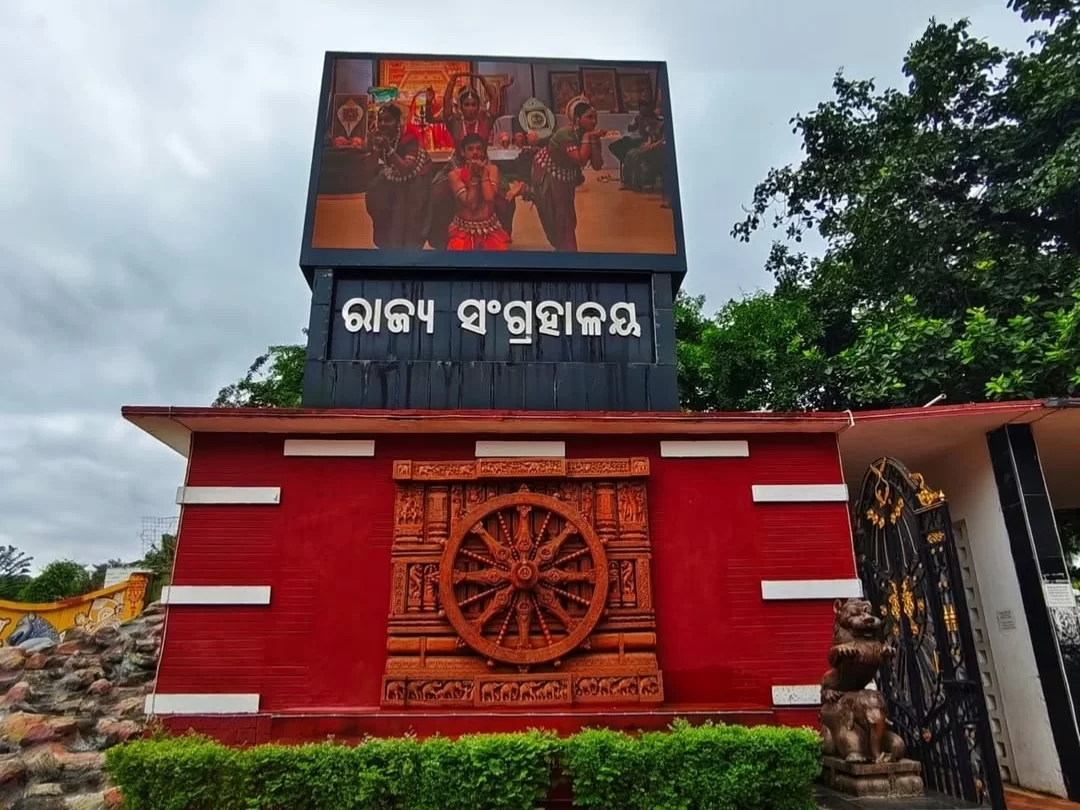
  • External Facade and Entrance: The museum’s exterior features traditional architectural motifs and large-scale sculptures near the main gate. The best lighting for these outdoor subjects is between 10:00 AM and 11:30 AM when the sun illuminates the front of the building without creating the long shadows of late afternoon.
  • The Epigraphy and Patachitra Galleries: For capturing the intricate details of ancient inscriptions and vibrant palm-leaf manuscripts, a macro lens or a high-resolution mid-range zoom is essential. The indoor lighting is controlled to protect the artifacts, so a camera with strong low-light performance (high ISO) is necessary.
  • Sculpture Garden Perspective: The outdoor garden contains numerous stone carvings and Buddhist relics. Use a wide-angle lens to capture these artifacts against the backdrop of the museum’s manicured lawns, which provides a clean, natural contrast to the weathered stone textures.
  • The Armor and Weapons Hall: To photograph the reflective surfaces of medieval swords and shields, position yourself at an angle to the glass display cases to minimize glare. Avoid using a direct flash, as the reflection off the glass will obscure the fine engravings on the metal.
  • Photography Restrictions: Professional photography and the use of DSLR cameras usually require the purchase of a specific "Camera Ticket" at the entrance counter. Videography and the use of tripods or gimbals inside the galleries are generally prohibited to ensure the safety of the artifacts and the flow of visitors.
  • Strict Flash Prohibition: The use of flash is strictly forbidden inside the galleries, especially in the Natural History and Art sections. The intense light can degrade the organic pigments of ancient paintings and taxidermy specimens over time.
  • Crowd Management: The museum is a major destination for school groups and weekend tourists. To capture clear shots of the exhibits without crowds, plan your visit for a Tuesday or Wednesday morning immediately after the museum opens at 10:00 AM.

Near By Attraction

Chausath Yogini Temple Morena Madhya Pradesh Tour Package, Mitaoli hilltop 64 yogini shrines circular open-air Kachchhapaghata 11th century Ekattarso Mahadeva Shiva lingams, ideal Madhya Pradesh heritage tour package. Temple

Chausathi Yogini Temple

Chausathi Yogini Temple is a circular 9th-century stone temple located in Hirapur near Bhubaneswar, Odisha, dedicated to the 64 Yogini deities.

Nandankanan Zoological Park iconic entrance with white tiger and Royal Bengal tiger sculptures amid lush greenery, perfect Odisha wildlife safari tour package.  Zoo

Nandankanan Zoological Park

Nandankanan Zoological Park is a major zoological park and wildlife conservation centre located near Bhubaneswar, known for its large animal enclosures and safari zones.

Lingaraj Temple at Bhubaneswar on clear day, featuring main Kalinga spire with Odisha flag, perfect heritage Bhubaneswar tour package. Temple

Lingaraj Temple

Lingaraj Temple is a major 11th-century Hindu temple in Bhubaneswar dedicated to Lord Shiva, known for its towering Kalinga-style architecture.

Frequently Asked Questions About Odisha State Museum

Odisha State Museum is located in Bhubaneswar in Odisha, India.
Odisha State Museum is known for its collection of archaeological artifacts, palm leaf manuscripts, sculptures, and exhibits on Odishas cultural heritage.
Odisha State Museum generally remains open from morning to late afternoon and stays closed on certain public holidays.
Yes, Odisha State Museum charges a nominal entry fee, with separate charges for camera use if permitted.
Visitors can reach Odisha State Museum easily by road within Bhubaneswar, which has the nearest major airport and railway station in Odisha.
The best time to visit Odisha State Museum is from October to March when the weather in Bhubaneswar is pleasant for sightseeing.
Around two to three hours are sufficient to explore the galleries and exhibits inside Odisha State Museum.
Photography inside Odisha State Museum may be restricted in certain sections and usually requires prior permission.
Official guides may not always be available at Odisha State Museum, but information panels are provided throughout the galleries.
Odisha State Museum is suitable for children and students due to its educational displays and organized layout.
Limited parking space is available near Odisha State Museum, and visitors may need to use nearby public parking during busy hours.
Tourists can find hotels and guesthouses in Bhubaneswar, Odisha, within a short driving distance of Odisha State Museum.

Loved this place ? Let’s Plan Your Odisha Trip

Get customized Odisha tour planning designed around temple visit timing, coastal weather patterns, wildlife seasonality, and realistic travel pacing across regions. Whether you are visiting for spiritual journeys, heritage architecture, beach relaxation,

⚡ Quick Response | 💰 Free consultation | 🕒 24×7 expert support

×

Plan Your Trip