Barabati Fort, Cuttack, Odisha, India

Barabati Fort , Cuttack
Tourists visit Barabati Fort to see the remains of an important medieval fortification and to explore the open heritage grounds near Barabati Stadium. It is a common stop for travelers interested in Cuttack’s historical landmarks and river-side city heritage.

Quick Facts About Barabati Fort

Entry Fee Free
Timings 08:00 - 17:00
Altitude (m) 45
Ideal Visit Duration (hrs) 1.5
Best Time of Day Morning / Evening
Crowd Level Moderate
Distance from City Centre (km) 4
Walking Difficulty Easy
Parking Available Yes
Last Mile Access Road
Suitable for Kids Yes
Suitable for Seniors Yes
Wheelchair Friendly No

Why Visit Barabati Fort, Cuttack

Visitors come to Barabati Fort to see one of Cuttack’s main historic landmarks, known for its surviving stone gateway and visible fort ruins. It is commonly visited by tourists exploring Cuttack’s heritage sites and nearby river-side areas.

The on-ground atmosphere is open and relaxed, with large grassy grounds around the fort remains and regular local visitors using the area for walking and casual outings. The site feels less like a structured monument and more like an accessible heritage space near the stadium zone.

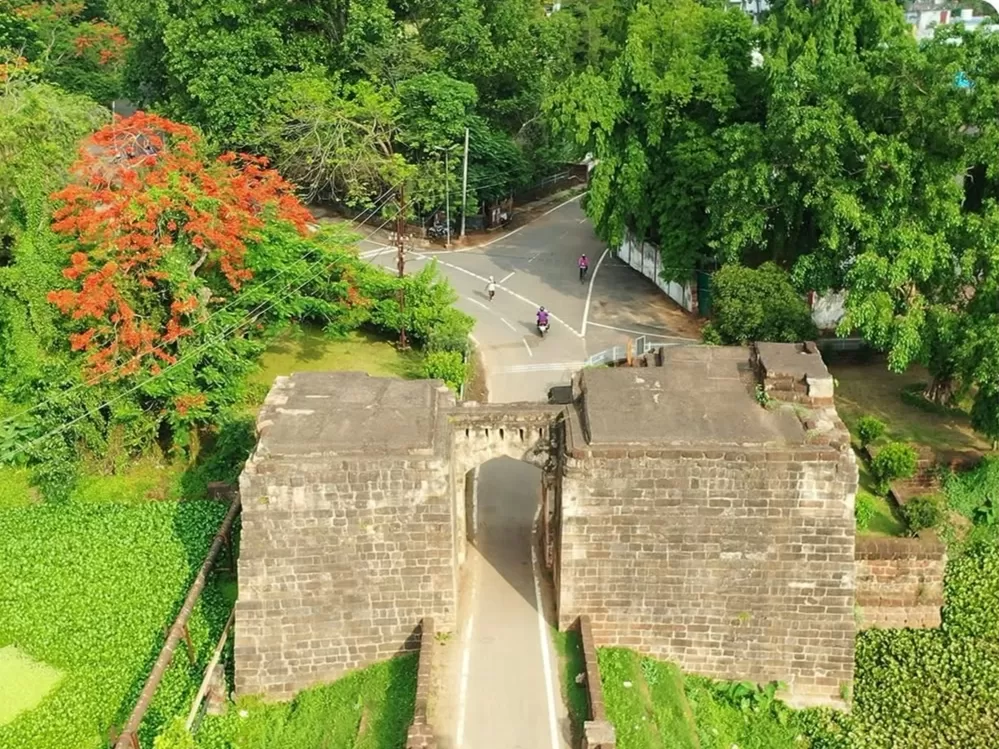
What makes Barabati Fort distinct is its location beside Barabati Stadium and its connection to Cuttack’s old fortification landscape, where only partial ruins remain today. For travelers, it offers a short historical stop with clear photo points around the main gate structure.

History of Barabati Fort, Cuttack

Barabati Fort was built in the 14th century by the Ganga dynasty and later became an important administrative and military centre in medieval Odisha. Its strategic location near the Mahanadi river system helped control trade routes and regional movement through Cuttack.

The fort remained significant under successive rulers, including the Mughals and Marathas, before coming under British control. Over time, much of the original fort structure was lost, leaving behind the main arched gateway and scattered ruins visible today.

Today, Barabati Fort is maintained as a heritage site and public open space, and visitors mainly experience its historical identity through the surviving gate structure, the remains of the fort walls, and the surrounding grounds that once formed part of the larger fort complex.

Best Time to Visit Barabati Fort, Cuttack

Barabati Fort is best visited during the cooler months when walking around the open grounds and exploring the ruins is more comfortable. The site has limited shaded areas, so summer afternoons can feel hot, while monsoon visits may involve muddy patches and reduced comfort for photography.

  • Ideal months: October to February
  • Best season experience: Pleasant weather for outdoor walking and clearer visibility around the fort gateway and ruins
  • Good shoulder season: March and late September (warm but manageable during morning and evening hours)
  • Periods to avoid: May to mid-June due to high daytime heat and strong sun exposure in the open fort grounds
  • Monsoon note: July to September may bring slippery surfaces and wet ground conditions, especially after heavy rain

How to Reach Barabati Fort, Cuttack

  • Nearest Airport: Biju Patnaik International Airport (BBI), Bhubaneswar (approx. 30–35 km). Taxis and app-based cabs are commonly used for direct travel to Cuttack.
  • Nearest Railway Station: Cuttack Railway Station (approx. 5–7 km). Auto-rickshaws and local taxis are easily available outside the station.
  • By Road: Barabati Fort is located near Barabati Stadium and is well connected by main city roads. It can be reached by private vehicle, taxi, or auto-rickshaw from most parts of Cuttack.
  • Local Transport: City buses and shared auto services operate on nearby routes, but direct drop near the fort entrance is easiest by auto-rickshaw or taxi.
  • Last-mile Note: Traffic congestion is common near the stadium area during events, and parking may become limited on match days or festival gatherings.

What to Expect When You Visit Barabati Fort, Cuttack

  • You will see the remaining structure of a historic fort complex, mainly the large arched gateway and scattered ruins across open ground.
  • The site is more like an open heritage park than a fully preserved fort, so visitors should expect limited standing structures beyond the main entrance gate.
  • The surroundings include Barabati Stadium and nearby city roads, so the area can feel busy during events and peak evening hours.
  • Walking is mostly on flat open ground, but some sections have uneven surfaces and broken stone areas around the ruins.
  • Facilities inside the fort area are limited, and visitors generally rely on nearby city shops and vendors outside the main entrance.
  • Most visitors spend time taking photographs near the gate, walking around the ruins, and using the open space for short outings.
  • There is limited shade, so daytime visits in summer can feel hot and tiring.
  • During match days or major events, access routes and parking availability may be affected due to crowd management near the stadium.

Important Visitor Information for Barabati Fort, Cuttack

  • Crowd & Weather Notes: The fort area is generally quiet in the morning but becomes more active in the evening due to local visitors. Summer heat can be strong because the grounds are mostly open with limited shade.
  • Peak Hours: 4:30 PM to 7:30 PM, especially on weekends when locals visit the open grounds.
  • Quiet Hours: 8:00 AM to 10:30 AM is usually the best time for peaceful walking and photography.
  • Dress Code: No dress code is required, as it is an outdoor heritage site.
  • Safety Notes: Some parts of the ruins have uneven stones and broken surfaces, so careful walking is needed near the old structure remains.
  • Monsoon Caution: During rainy months, the ground can become muddy and slippery, especially near low-lying ruin sections.
  • Event-Day Limitation: Large events at Barabati Stadium can cause traffic blocks, restricted access roads, and limited parking near the fort area.
  • On-ground Practical Note: The fort is an open public space, so visitors should keep personal belongings secure during crowded evening hours.

Photography and Viewpoints at Barabati Fort, Cuttack

  • The best photo angle of Barabati Fort is from the front of the main arched gateway, where the full height and stone detailing of the entrance structure is clearly visible.
  • Wide shots are possible from the open ground area, which allows the gateway to be framed with surrounding greenery and fort ruins in the background.
  • Morning light is best for clear architectural photographs, as the fort gate is easier to capture without harsh shadows and crowd movement is lower.
  • Late afternoon provides softer lighting for photography, but local visitor presence increases, especially near the gate area.
  • There are no elevated viewpoints inside the fort, so photography is mostly ground-level and focused on the gateway, ruins, and open landscape.
  • Photography is generally allowed in the open fort area, but movement near the stadium side may be restricted during major events or security arrangements.
  • Weekend evenings may make it difficult to take empty-frame shots due to groups gathering near the main entrance.
  • During monsoon months, the ground can be wet and muddy, which may limit access to some angles near the ruins.

Near By Attraction

Chandrashekhar Mahadev Temple, sacred Shiva temple in Bhubaneswar, Odisha nestled amid lush greenery and spiritual ambiance. Temple

Chandrashekhar Mahadev Temple

Chandrashekhar Mahadev Temple is a Hindu temple in Dhenkanal, Odisha, dedicated to Lord Shiva and visited mainly for local worship and religious gatherings.

Frequently Asked Questions About Barabati Fort

Barabati Fort is located in Cuttack city in Odisha, India, near the banks of the Mahanadi River.
Barabati Fort is known for its historic fort ruins, massive gateway, and surrounding open grounds.
The best time to visit Barabati Fort is from October to March when the weather in Odisha is pleasant for outdoor sightseeing.
Visitors can reach Barabati Fort by road from different parts of Cuttack, while Bhubaneswar serves as the nearest major airport and railway hub in Odisha.
There is generally no significant entry fee to visit Barabati Fort, though local guidelines may apply.
Barabati Fort is usually open during daytime hours and closes by evening.
Around one to two hours are sufficient to walk around and explore the remains of Barabati Fort.
Barabati Fort is suitable for photography due to its historic gateway and open landscape views.
Official guides are not always available at Barabati Fort, so visitors typically explore independently.
Barabati Fort is suitable for families as it offers open space and easy walking access.
Tourists can find hotels and guesthouses in Cuttack and Bhubaneswar, Odisha, within convenient driving distance of Barabati Fort.

Loved this place ? Let’s Plan Your Odisha Trip

Get customized Odisha tour planning designed around temple visit timing, coastal weather patterns, wildlife seasonality, and realistic travel pacing across regions. Whether you are visiting for spiritual journeys, heritage architecture, beach relaxation,

⚡ Quick Response | 💰 Free consultation | 🕒 24×7 expert support

×

Plan Your Trip