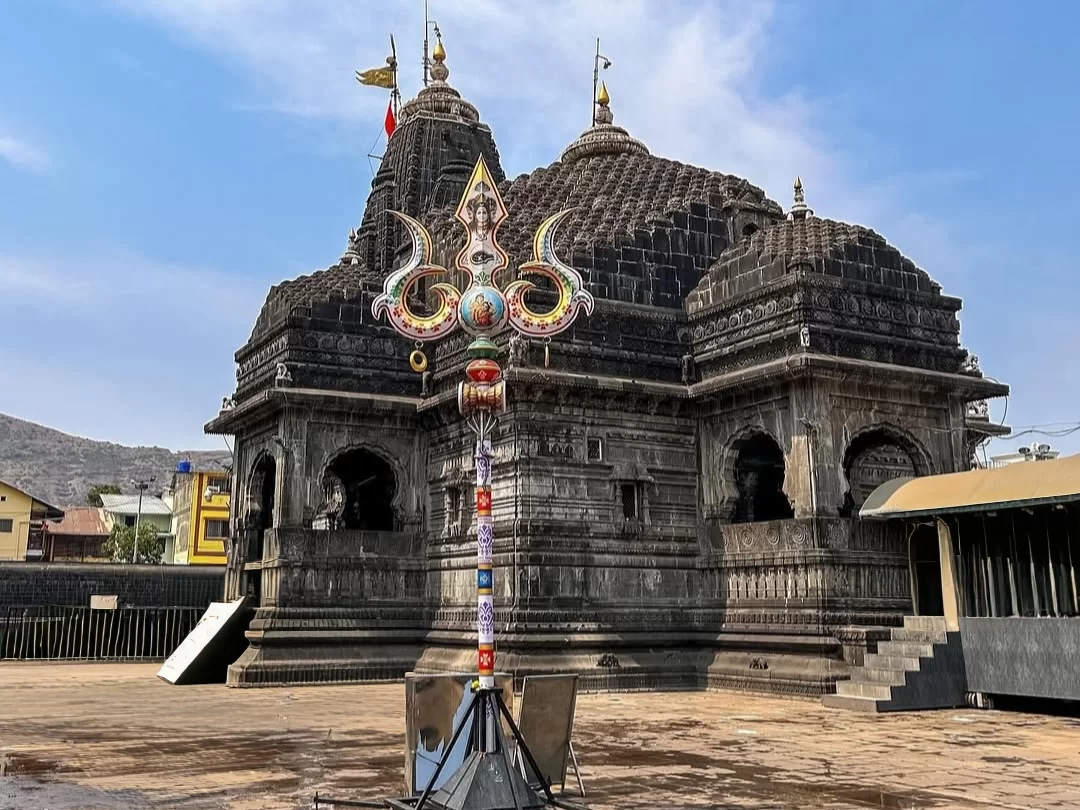
Trimbakeshwar Jyotirling Mandir Nashik – Sacred Jyotirlinga of Lord Shiva

Trimbakeshwar Jyotirling Mandir , Nashik
Situated in the town of Trimbak, around 30 km from Nashik, Trimbakeshwar Jyotirling Mandir is a highly revered pilgrimage site in India. The temple is known for its unique three-faced Shiva lingam representing Brahma, Vishnu, and Mahesh. Built in black stone with traditional Hemadpanthi architecture, it holds immense spiritual importance and attracts devotees throughout the year, especially during Maha Shivratri and the Kumbh Mela.

Quick Facts About Trimbakeshwar Jyotirling Mandir

Quick Facts About Trimbakeshwar Jyotirling Mandir Nashik

Entry Fee No entry fee to visit the temple premises but special puja charges apply if opted
Timings Open daily generally from 5 00 AM to 9 00 PM for darshan and rituals
Altitude (m) Located at approximately 720 meters above sea level at the source of the Godavari river
Ideal Visit Duration Forty five minutes to two hours including darshan and exploring the temple area
Best Time of Day Early morning or late afternoon for darshan with fewer crowds and cooler conditions
Crowd Level High crowds especially on weekends, festivals like Mahashivaratri and during auspicious days of Shravan month
Distance from City Centre (km) About 28 kilometers from central Nashik city and Nashik bus stand to Trimbakeshwar town
Walking Difficulty Low walking difficulty on paved temple courtyard and paths around the mandir
Parking Available Yes parking available near the temple complex and town area
Last Mile Access Taxi auto rickshaw and local bus services available to reach Trimbakeshwar town and temple
Suitable for Kids Yes suitable for children with adult supervision
Suitable for Seniors Yes generally suitable with flat temple area and resting spots
Wheelchair Friendly Partially wheelchair accessible on main paved areas though some parts of the complex may have steps

Why Visit Trimbakeshwar Jyotirling Mandir, Nashik

Atmosphere at Trimbakeshwar Jyotirling Mandir is intensely spiritual and deeply reverent, set against the scenic backdrop of the Brahmagiri Hills near Nashik. The temple town carries a sacred aura, with the sound of Vedic chants, temple bells, and ritual recitations filling the air throughout the day. As one of the twelve Jyotirlingas dedicated to Lord Shiva, the site attracts thousands of pilgrims, yet it retains a powerful sense of devotion and authenticity that defines its spiritual character.

What makes Trimbakeshwar Mandir special is its unique Jyotirlinga, which represents the trinity of Brahma, Vishnu, and Mahesh within a single sacred structure. Built in the 18th century by Peshwa Balaji Baji Rao, the temple showcases classic black stone architecture with intricate carvings that reflect traditional Hemadpanthi style. The origin of the Godavari River at nearby Kushavarta Kund further enhances its religious importance, making the temple not only a place of worship but also a significant pilgrimage center associated with sacred river rituals and ancestral rites.

Beyond its religious prominence, the temple offers cultural and mythological depth rooted in ancient Hindu scriptures. It is especially important for performing Narayan Nagbali, Kalsarpa Shanti, and other Vedic rituals conducted under the guidance of trained priests. Surrounded by hills and traditional temple streets, Trimbakeshwar provides pilgrims, spiritual seekers, and heritage travelers with a profound experience that combines faith, architecture, and sacred geography in one powerful destination.

History of Trimbakeshwar Jyotirling Mandir, Nashik

Trimbakeshwar Jyotirling Mandir, located in the town of Trimbak near Nashik, Maharashtra, is one of the twelve revered Jyotirlingas dedicated to Lord Shiva. The present temple structure was rebuilt in the 18th century by Peshwa Balaji Baji Rao (Nanasaheb Peshwa) after the earlier structure had deteriorated. Built from black basalt stone in traditional Nagara architectural style, the temple reflects the grandeur of Maratha-era craftsmanship.

The temple holds profound religious importance because the Jyotirlinga here is unique in representing the Hindu Trinity—Brahma, Vishnu, and Mahesh (Shiva)—symbolized by three small lingams within the sanctum. Over time, natural erosion has altered the original form of the lingam, adding to its mystical and sacred aura. The temple is also closely associated with the origin of the sacred Godavari River, which is believed to emerge from the nearby Brahmagiri Hills.

Trimbakeshwar has been a major pilgrimage center for centuries and plays a significant role during the Kumbh Mela held in Nashik. Rituals such as Narayan Nagbali, Kaal Sarp Shanti, and Tripindi Shraddha are performed here, drawing devotees from across India. The temple continues to be a living spiritual center, preserving ancient Shaivite traditions while serving as one of Maharashtra’s most important sacred destinations.

Best Time to Visit Trimbakeshwar Jyotirling Mandir Nashik

The best time to visit Trimbakeshwar Jyotirling Mandir in Nashik depends on seasonal weather conditions and pilgrimage flow, as the temple is one of the twelve sacred Jyotirlingas and attracts devotees throughout the year. Visiting during comfortable months ensures a smooth darshan and spiritual experience.

October to March is considered the ideal period to visit. During these months, the weather around Trimbak remains cool and pleasant, making it comfortable for temple visits, participation in rituals such as Rudrabhishek, and exploring the nearby Brahmagiri hills without discomfort from heat.

Summer months from April to June can be warm, especially during midday. Early morning visits are strongly recommended during this season to avoid high temperatures and long queues while experiencing a peaceful darshan.

Monsoon season from July to September transforms the surrounding hills into lush green landscapes, enhancing the scenic beauty of the region. However, heavy rainfall may lead to slippery pathways and increased humidity. This season is spiritually vibrant but requires caution during travel.

  • October to March for pleasant weather and comfortable temple visits
  • April to June for early morning darshan to avoid heat and crowds
  • July to September for lush greenery and scenic surroundings, with caution during rain
  • Mahashivratri and Shravan month attract heavy pilgrim footfall
  • Early mornings offer a smoother and more peaceful spiritual experience

How to Reach Trimbakeshwar Jyotirling Mandir, Nashik

  • By Air: The nearest airport is Nashik Airport (Ozar Airport), located approximately 50 km from Trimbakeshwar. For wider connectivity, Mumbai International Airport (around 180 km away) serves as the nearest major international hub. Taxis and app-based cab services are available from both airports for direct travel to the temple town.
  • By Train: Nashik Road Railway Station is about 40 km from Trimbakeshwar and is well connected to major cities such as Mumbai, Delhi, and Pune through express and superfast trains. From the station, visitors can hire taxis or use Maharashtra State Transport buses to reach the temple.
  • By Road: Trimbakeshwar is well connected by road to Nashik (30 km), Mumbai (180 km), and Pune (240 km) via state highways and national highways. Regular state transport buses and private vehicles operate frequently, making road travel convenient and scenic through the Western Ghats.
  • Local Transport: Within Trimbakeshwar town, auto-rickshaws and shared jeeps are commonly available for short distances. The temple is centrally located in the town and is accessible with minimal walking from nearby parking areas.

What to Expect When You Visit Trimbakeshwar Jyotirling Mandir Nashik

  • Immersive surroundings that reflect the true natural, cultural, or spiritual character of the destination, offering a peaceful and enriching travel experience.
  • Well-maintained visitor pathways and accessible viewing points designed to provide comfortable exploration while preserving the authenticity of the location.
  • Opportunities to engage with local traditions, regional architecture, or natural landscapes, allowing travelers to gain deeper cultural understanding.
  • Scenic photo spots and panoramic viewpoints that highlight the area’s unique beauty throughout different times of the day.
  • Informational boards, guides, or locally available assistance that help visitors learn the historical or environmental importance of the site.
  • Seasonal changes in atmosphere, crowd levels, and visual appeal, ensuring a different yet memorable experience depending on the time of visit.
  • Nearby amenities such as refreshment stalls, rest areas, or small markets offering local flavors and handicrafts.
  • A calm and respectful environment that allows visitors to fully absorb the significance and charm of the destination.

Important Visitor Information of Trimbakeshwar Jyotirling Mandir Nashik

  • Crowd & Peak Hours: Expect very heavy footfall during Mondays, Shravan month, Mahashivratri, and other major Hindu festivals. Early mornings are crowded for darshan, while late afternoons on weekdays are relatively less busy.
  • Weather Notes: Summers can be warm, while the monsoon season brings lush greenery but slippery temple surroundings. Winters are pleasant and ideal for visits.
  • Dress Code: Wear modest and traditional attire suitable for a sacred Jyotirling temple. Men may be required to wear dhoti for certain rituals inside the sanctum. Footwear must be removed before entering the temple premises.
  • Safety Tips: Keep personal belongings secure in crowded queues, follow temple rules and ritual guidelines, respect religious customs, and adhere to instructions given by temple authorities for a safe and smooth darshan.

Photography and Viewpoints at Trimbakeshwar Jyotirling Mandir, Nashik

  • The temple’s black stone Hemadpanthi architecture provides dramatic contrast photography, especially under soft morning or late afternoon light.
  • Intricate carvings, sculpted pillars, and the detailed shikhara offer excellent close-up opportunities highlighting medieval craftsmanship.
  • The temple courtyard allows wide-angle compositions capturing the spiritual ambiance along with devotees and ritual activities.
  • During monsoon, the surrounding Brahmagiri Hills create a lush green backdrop, adding depth and scenic context to photographs.
  • Festivals such as Maha Shivaratri present vibrant decorations, traditional attire, and devotional gatherings ideal for cultural photography.
  • Nearby Kushavarta Kund and the surrounding ghats provide reflective water compositions and spiritually immersive storytelling frames.

Near By Attraction

Shree Saptashrungi Nivasini Devi Shaktipeeth idol in Nashik adorned with red saree gold jewelry and floral garlands against vibrant orange carved backdrop Temple

Shree Saptashrungi Nivasini Devi Shaktipeeth

Shree Saptashrungi Nivasini Devi Shaktipeeth, located in Nashik, Maharashtra, India, is a prominent Hindu temple dedicated to Goddess Saptashrungi, a form of Goddess Durga.

Historic stone architecture of Sundar Narayan Mandir in Nashik, Maharashtra, featuring detailed carvings and a tall shikhara against a blue sky, a revered temple included in Maharashtra tour packages. Temple

Sundar narayan mandir

Sundar Narayan Mandir, located in Nashik, Maharashtra, India, is a revered Hindu temple dedicated to Lord Vishnu.

Steep rock cut staircase leading to summit cave entrance at Harihar Fort Nashik surrounded by lush green monsoon landscape Fort

Harihar Fort

Harihar Fort, located in Nashik, Maharashtra, India, is a historic hill fort known for its steep climb and panoramic views of the surrounding landscape.

Frequently Asked Questions About Trimbakeshwar Jyotirling Mandir

The best time to visit Trimbakeshwar Jyotirling Mandir is between October and March when the weather in Maharashtra remains pleasant for temple visits. Early morning hours are ideal to avoid long queues.
Trimbakeshwar Jyotirling Mandir is located in Trimbak town near Nashik in Maharashtra. It is one of the twelve Jyotirlinga shrines dedicated to Lord Shiva.
Trimbakeshwar Jyotirling Mandir can be reached within about 45 minutes to 1 hour from Nashik by private vehicle or state transport bus. The road connectivity between Nashik and Trimbak is smooth and well maintained.
Trimbakeshwar Jyotirling Mandir is generally open from early morning until late evening with specific timings for aarti and special rituals. Timings may vary on festival days, so checking locally is advisable.
There is no general entry fee for regular darshan at Trimbakeshwar Jyotirling Mandir, though special darshan passes may be available for quicker access. Ritual services and pujas have separate charges.
Most devotees require around one to two hours for darshan at Trimbakeshwar Jyotirling Mandir depending on crowd levels. During peak pilgrimage periods, waiting time can increase significantly.
Trimbakeshwar Jyotirling Mandir experiences heavy crowds during Shravan month and Maha Shivratri. Planning an early morning visit during these times helps manage waiting duration.
Trimbakeshwar Jyotirling Mandir is accessible for senior citizens, though long queues and standing time may require planning. Assistance services and organized queue systems are usually available.
Devotees visiting Trimbakeshwar Jyotirling Mandir are expected to wear modest and traditional attire. Men performing special rituals inside the sanctum may be required to wear dhoti as per temple guidelines.
Trimbakeshwar Jyotirling Mandir can be comfortably covered in a one day trip from Mumbai with an early start. The travel time and darshan duration make it suitable for a full day pilgrimage plan.

Loved this place ? Let’s Plan Your Maharashtra Trip

Get customized Maharashtra tour planning designed around seasonal weather shifts, long-distance road travel flow, hill station comfort, coastal timing, and heritage exploration pacing. Whether you are visiting for historic caves, spiritual journeys, beach

⚡ Quick Response | 💰 Free consultation | 🕒 24×7 expert support

×

Plan Your Trip