+91 9910402252
admin@chalbanjare.com


| Entry Fee | No entry fee free to visit the temple premises |
|---|---|
| Timings | Open daily from early morning about 5 00 AM to late evening about 10 00 PM for darshan and visits |
| Altitude (m) | Located at approximately 577 meters above sea level on the banks of the Godavari river in Nashik |
| Ideal Visit Duration | Thirty minutes to one hour including darshan and walking around the temple complex |
| Best Time of Day | Early morning or late afternoon for quieter visits and cooler weather |
| Crowd Level | Moderate to high during festivals such as Ramnavami Dussehra and other religious occasions otherwise moderate |
| Distance from City Centre (km) | About three kilometers from the central Nashik bus stand and local city centre |
| Walking Difficulty | Low walking difficulty on paved pathways within the temple area and surrounding Panchavati ghats |
| Parking Available | Yes parking available near the temple area and around Panchavati roads |
| Last Mile Access | Auto rickshaws taxis and local bus services available to reach the temple from Nashik city |
| Suitable for Kids | Yes suitable for children as a religious and cultural visit |
| Suitable for Seniors | Yes generally suitable with easy access paths and resting spots nearby |
| Wheelchair Friendly | Partially wheelchair accessible on main paved areas though steps and older structures may limit full accessibility |
Atmosphere at Shree Kalaram Mandir in Panchavati is deeply devotional and historically resonant, offering visitors a spiritually immersive experience in one of Nashik’s most sacred areas. Located near the banks of the Godavari River, the temple stands within a region closely associated with the Ramayana, creating an environment where mythology, faith, and tradition converge. The rhythmic chanting of prayers, the fragrance of incense, and the steady flow of devotees establish a calm yet powerful spiritual ambiance that feels both timeless and authentic.
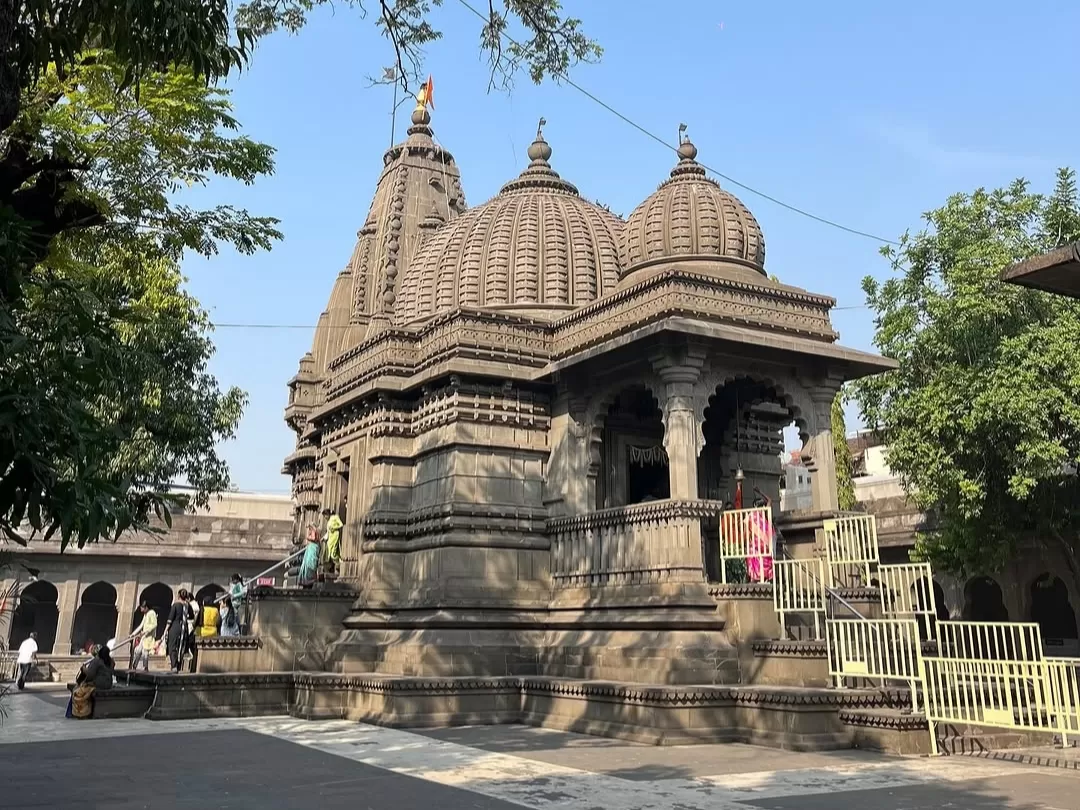
What makes Shree Kalaram Mandir special is its striking black stone idol of Lord Rama and its impressive 18th-century Hemadpanthi-style architecture. Built in 1788, the temple is crafted entirely from black basalt stone, giving it a distinctive and majestic appearance. Its historical relevance also extends to India’s social reform movements, as it was the site of the Kalaram Temple Entry Satyagraha led by Dr. B. R. Ambedkar in 1930. This combination of architectural beauty, religious importance, and socio-historical significance makes the temple far more than just a place of worship.
Beyond its spiritual appeal, the temple’s location in Panchavati allows visitors to explore nearby sacred ghats and Ramayana-linked sites, enriching the overall pilgrimage experience. It attracts devotees, history enthusiasts, and cultural travelers seeking insight into Maharashtra’s religious heritage. Whether visiting during Ram Navami, Kumbh Mela season, or a peaceful morning darshan, Shree Kalaram Mandir offers a meaningful and culturally layered experience that leaves a lasting spiritual impression.
Shree Kalaram Mandir, located in the sacred area of Panchavati in Nashik, Maharashtra, was built in 1788 by Sardar Rangarao Odhekar, a prominent noble during the Maratha period. The temple is dedicated to Lord Rama and is named “Kalaram” because of the black stone idol (kala means black) of Lord Rama enshrined in the sanctum. The idols of Goddess Sita and Lord Lakshmana, also carved in black stone, accompany the main deity.
Constructed in the traditional Nagara style of temple architecture, the temple is built entirely from black basalt stone and features a tall spire rising prominently above Panchavati. Its location holds deep mythological importance, as Panchavati is believed to be the place where Lord Rama, Sita, and Lakshmana stayed during their exile, making the temple spiritually significant for devotees of the Ramayana.
Shree Kalaram Mandir also played an important role in India’s social reform movements. In 1930, Dr. B. R. Ambedkar led the historic Kalaram Temple Entry Satyagraha here, advocating for the rights of marginalized communities to enter Hindu temples. Today, the temple stands not only as a revered pilgrimage site but also as a landmark of religious devotion and social transformation in Maharashtra.
The best time to visit Shree Kalaram Mandir in Panchavati, Nashik depends on weather comfort and religious calendar events, as the temple attracts devotees throughout the year. Planning your visit during pleasant months ensures a peaceful darshan and comfortable exploration of the temple complex.
October to March is considered the ideal period to visit. During these months, Nashik experiences cool and pleasant weather, making it comfortable for temple visits, rituals, and exploring nearby sacred ghats in Panchavati without exposure to extreme heat.
Summer months from April to June can be warm, especially during midday. Early morning visits are recommended during this season to avoid high temperatures while participating in prayers and experiencing the temple’s serene spiritual atmosphere.
Monsoon season from July to September brings refreshing rainfall that enhances the beauty of the surrounding Panchavati area. While humidity levels may rise, the temple remains accessible and less crowded, offering a calm and devotional environment.
 Temple
Amruteshwar Temple is an ancient Hindu temple dedicated to Lord Shiva, located at Ratanwadi near Bhandardara in Maharashtra.
 Waterfall
Umbrella Falls is a seasonal waterfall near Bhandardara in Maharashtra, formed by water flowing over a semicircular rock formation below Wilson Dam.
 Lake
Lake
Arthur Hill Lake, also known as Bhandardara Lake, is a large reservoir formed by the Wilson Dam on the Pravara River in Ahmednagar district, Maharashtra.
Get customized Maharashtra tour planning designed around seasonal weather shifts, long-distance road travel flow, hill station comfort, coastal timing, and heritage exploration pacing. Whether you are visiting for historic caves, spiritual journeys, beach
⚡ Quick Response | 💰 Free consultation | 🕒 24×7 expert support

