+91 9910402252
admin@chalbanjare.com


| Entry Fee | No entry fee free to visit the temple complex |
|---|---|
| Timings | Open daily generally from 6 00 AM to 7 00 PM |
| Altitude (m) | Located at approximately 560 meters above sea level in Nashik Road area |
| Ideal Visit Duration | One to two hours to explore the temple complex including replicas and galleries |
| Best Time of Day | Early morning or late afternoon for cooler weather and peaceful visit |
| Crowd Level | Moderate crowds with more visitors on weekends and holidays |
| Distance from City Centre (km) | About 6 kilometers from central Nashik city area and about one and a half kilometers from Nashik Road railway station |
| Walking Difficulty | Low walking difficulty with paved paths around the marble temple complex |
| Parking Available | Yes parking available near the temple entrance and grounds |
| Last Mile Access | Auto rickshaw taxi and local transport available to reach the temple from Nashik city |
| Suitable for Kids | Yes suitable for children with spacious grounds and calm ambiance |
| Suitable for Seniors | Yes generally suitable with gentle paved areas and seating spots |
| Wheelchair Friendly | Partially wheelchair accessible on main paved routes though some sections may have steps |
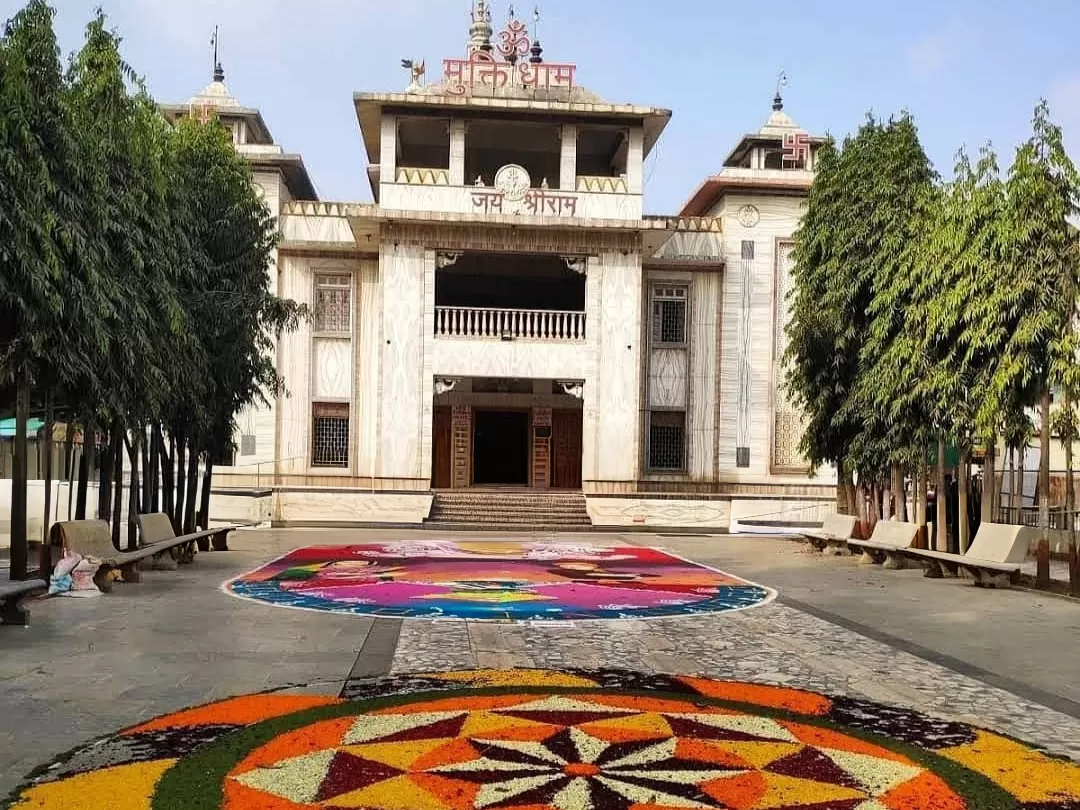
Atmosphere at Muktidham Mandir is peaceful, orderly, and spiritually uplifting, offering visitors a calm environment for reflection and devotion in Nashik. Located near the banks of the Godavari River, the temple complex is thoughtfully designed with white marble structures that create a serene and visually harmonious setting. The quiet surroundings, devotional chants, and well-maintained pathways make it an ideal place for families and pilgrims seeking a structured and comfortable spiritual experience.
What makes Muktidham Mandir special is its unique architectural concept and religious inclusivity. Built in 1971 using Rajasthani marble, the temple houses replicas of the twelve Jyotirlingas of Lord Shiva, allowing devotees to symbolically experience all major Jyotirlinga shrines in one location. The walls are inscribed with verses from the Bhagavad Gita, adding philosophical depth to the visit. This combination of devotional representation, accessible design, and scriptural presence makes it distinct from traditional temple complexes.
Beyond its spiritual significance, Muktidham Mandir serves as an important cultural landmark within Nashik’s pilgrimage circuit. Its clean layout and informative structure make it approachable for first-time visitors, elderly devotees, and those traveling with children. Whether you visit as part of a broader Nashik spiritual journey or for quiet contemplation, the temple offers a meaningful experience rooted in faith, architectural elegance, and religious education.
Muktidham Mandir in Nashik, Maharashtra, was built in 1971 by the late Shri Jayrambhai Bytco, a prominent industrialist and philanthropist. Constructed using white marble sourced from Rajasthan, the temple complex was envisioned as a spiritual center where devotees could experience the essence of multiple sacred pilgrimage sites in one place.
The temple is dedicated to various Hindu deities, including Lord Krishna, Lord Vishnu, Goddess Lakshmi, Lord Shiva, and others. One of its most distinctive features is the engraved display of verses from the Bhagavad Gita on its walls, making it not only a place of worship but also a center for spiritual learning. The architecture reflects a blend of traditional North Indian temple design with modern construction techniques.
Over the years, Muktidham Mandir has become a significant spiritual landmark in Nashik, especially for pilgrims visiting the nearby holy sites associated with the Kumbh Mela. Its serene atmosphere, marble craftsmanship, and devotional importance continue to attract worshippers and visitors seeking peace and spiritual reflection.
The best time to visit Muktidham Mandir in Nashik depends on seasonal weather conditions, as the temple complex includes open courtyards and marble structures that are best explored comfortably. Choosing the right season ensures a peaceful and pleasant spiritual visit.
October to March is considered the ideal period to visit. During these months, Nashik experiences cool and comfortable weather, making it perfect for walking around the temple complex, admiring the intricate marble carvings, and spending time in prayer without exposure to intense heat.
Summer months from April to June can be warm, particularly during midday hours. Early morning or late evening visits are recommended during this season to avoid high temperatures while enjoying a calm and devotional atmosphere.
Monsoon season from July to September brings moderate rainfall, enhancing the greenery around Nashik. While humidity may increase slightly, the temple remains accessible and sees relatively fewer crowds, offering a serene experience for visitors.
 Temple
Amruteshwar Temple is an ancient Hindu temple dedicated to Lord Shiva, located at Ratanwadi near Bhandardara in Maharashtra.
 Waterfall
Umbrella Falls is a seasonal waterfall near Bhandardara in Maharashtra, formed by water flowing over a semicircular rock formation below Wilson Dam.
 Lake
Lake
Arthur Hill Lake, also known as Bhandardara Lake, is a large reservoir formed by the Wilson Dam on the Pravara River in Ahmednagar district, Maharashtra.
Get customized Maharashtra tour planning designed around seasonal weather shifts, long-distance road travel flow, hill station comfort, coastal timing, and heritage exploration pacing. Whether you are visiting for historic caves, spiritual journeys, beach
⚡ Quick Response | 💰 Free consultation | 🕒 24×7 expert support

