Quick Facts About Khandala Point
Quick Facts – Khandala Point Matheran
| Entry Fee | Free |
| Timings | Open throughout the day; best visited during daylight hours. |
| Altitude (m) | Approximately 800 m above sea level. |
| Ideal Visit Duration | 20–30 minutes. |
| Best Time of Day | Morning or late afternoon. |
| Crowd Level | Low to moderate; slightly busier on weekends. |
| Distance from City Centre (km) | Approximately 4–5 km from Matheran Market. |
| Walking Difficulty | Easy to moderate; gradual natural trail. |
| Parking Available | No |
| Last Mile Access | On foot or horseback. |
| Suitable for Kids | Yes (with supervision). |
| Suitable for Seniors | Yes (manageable walking distance). |
| Wheelchair Friendly | No |
Why Visit Khandala Point, Matheran
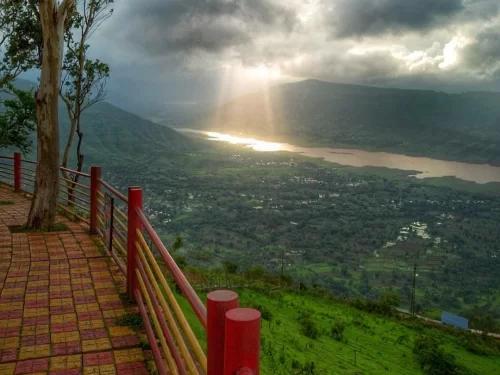
Khandala Point in Matheran attracts visitors for its direct views toward the Khandala and Lonavala hill ranges across the valley. Travelers come here to observe the deep gorge below, the distant railway line curves, and the dramatic monsoon cloud movement that often sweeps through this side of the plateau. It is a convenient stop for those covering multiple nearby viewpoints on foot.
The atmosphere at Khandala Point is relatively calm, with a narrow cliff-edge outlook framed by forested paths leading up to it. The walk to the point follows Matheran’s red laterite trails, and the viewing area is compact compared to broader points like Panorama Point. During monsoon and post-monsoon months, mist frequently rolls in, briefly covering and revealing the valley below.
What makes Khandala Point distinct is its clear orientation toward the well-known Khandala hill section of the Western Ghats, offering a recognizable cross-valley perspective rather than a straight downward valley view. For travelers exploring Matheran on foot, it provides a different angle of the surrounding landscape and adds variety to a viewpoint circuit.
History of Khandala Point, Matheran
Khandala Point is one of the natural cliff-edge viewpoints identified during the early development of Matheran hill station in Raigad district, Maharashtra. Matheran was established as a colonial-era hill retreat in 1850 by Hugh Poyntz Malet, then Collector of Thane, and several elevated edges were gradually marked as formal viewing points for visitors. Khandala Point emerged as one such designated lookout due to its strategic orientation toward the plains.
The viewpoint is named for the distant view toward the Khandala and Karjat region, which can be seen from its edge on clear days. During the British period, these natural vantage points were incorporated into walking and horseback trails, forming part of the structured leisure landscape that defined Matheran’s early tourism experience.
Khandala Point has remained a natural, undeveloped escarpment rather than a built monument. Its continued preservation within the Matheran Eco-Sensitive Zone reflects the long-standing conservation model of the hill station, where scenic geology and valley views remain the central historic character of the site.
Best Time to Visit – Khandala Point Matheran
Khandala Point in Matheran is most rewarding when the valley views toward Khandala and the Ulhas River basin are clear, as this west-facing cliff viewpoint is highly dependent on visibility and seasonal haze.
- Ideal months: October to February is the most reliable period for clear valley views and comfortable walking conditions.
- Weather during the best season: Post-monsoon and winter bring pleasant daytime temperatures (roughly 15–25°C), clearer skies, and green valley landscapes after the rains. The walking paths remain firm and safer compared to the monsoon months.
- Periods to avoid (and why): June to September sees heavy rainfall in Matheran, often leading to dense fog, very low visibility at the cliff edge, and slippery red-mud trails. April and May afternoons can feel warm and slightly hazy, reducing long-distance valley clarity.
How to Reach Khandala Point Matheran
- Nearest Airport: Chhatrapati Shivaji Maharaj International Airport, Mumbai (approximately 90 km from Matheran). From the airport, taxis or app-based cabs to Neral/Dasturi Naka take around 2.5–3.5 hours depending on traffic on the Mumbai–Pune Expressway and connecting roads.
- Nearest Railway Station: Neral Junction (around 21 km from Matheran) is the closest major railhead on the Central Railway line. From Neral, the heritage Neral–Matheran toy train operates subject to seasonal schedules and weather conditions. Alternatively, taxis are available up to Dasturi Naka, the designated parking point before Matheran’s vehicle-free zone.
- Road Access & Last-Mile Connectivity: Motor vehicles are permitted only up to Dasturi Naka, as Matheran is an eco-sensitive no-vehicle hill station. From Dasturi Naka, visitors must proceed on foot, by horseback, or by hand-pulled rickshaw toward Matheran town. Khandala Point lies approximately 4–5 km from the main market area and is reached via walking trails that are mostly level but can become muddy and slippery during the monsoon season.
What to Expect When You Visit Khandala Point Matheran
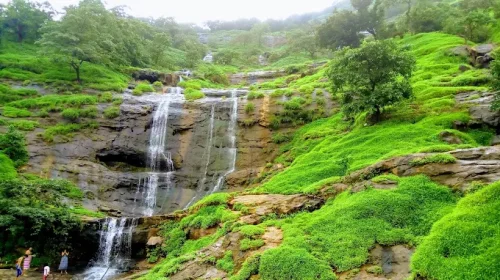
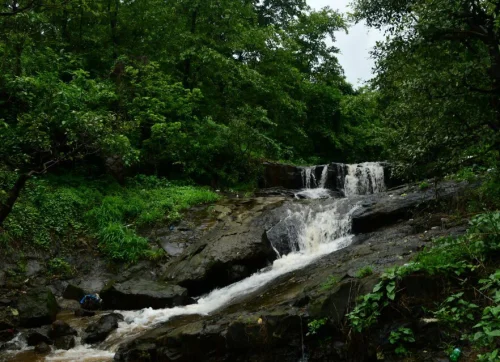
- Environment and Surroundings: Khandala Point is located on the western edge of Matheran hill station in Raigad district, Maharashtra, offering open views toward the Khandala and Lonavala ranges of the Western Ghats. The viewpoint faces deep valleys, forested slopes, and seasonal waterfalls that become visible during the monsoon months (June to September). The terrain consists of red laterite soil and exposed rock surfaces, with protective railings near the main edge. During monsoon, strong winds, mist, and slippery ground conditions are common, and visibility may change quickly.
- Facilities and Amenities: Basic fencing and limited seating are available near the viewing area. There are no permanent restroom facilities at the exact point; the nearest public toilets are in the main Matheran market area. Small seasonal vendors may operate along the walking route, especially on weekends and holidays, but food and drinking water options are not guaranteed. Visitors should carry essentials, as waste bins and structured amenities are limited.
- Accessibility and Movement: Matheran is a no-vehicle zone; motor vehicles are permitted only up to Dasturi Naka. From there, visitors must walk, hire a horse, or use a hand-pulled rickshaw (subject to availability). Khandala Point is approximately 1.5–2 km from the main market area, making it accessible by a moderate walk on mostly level but uneven pathways. Surfaces can become muddy during the rainy season. Footwear with grip is advisable due to loose soil and occasional stone patches.
- Typical Visitor Behavior and Conditions: The viewpoint is popular during late afternoon and sunset hours, particularly in the post-monsoon and winter seasons (October to February). Weekends and public holidays attract steady footfall. Visitors usually spend 15–30 minutes at the edge for viewing and photography. During heavy monsoon fog, the valley view may be fully obscured, and strong winds can limit how close visitors stand to the railing.
Important Visitor Information – Khandala Point Matheran
- Crowd & Weather Notes: Khandala Point is moderately visited compared to Panorama Point but becomes busy during weekends, winter months (October to February), and clear sunset evenings. In monsoon (June to September), the valley fills with clouds and waterfalls are visible in the distance, but pathways can become muddy and slippery due to laterite soil.
- Peak / Quiet Hours: Late afternoon between 4:30 PM and sunset is the peak visiting time for valley views and photography. Weekday mornings remain relatively quiet, especially before 11:00 AM.
- Dress Code: No mandatory dress code applies. Comfortable walking shoes with good grip are recommended as the approach involves unpaved forest paths. Light layers are advisable during winter evenings when temperatures drop.
- Safety Notes: The viewpoint has exposed cliff edges with minimal railings; visitors should maintain safe distance from edges, particularly during fog or strong winds. As Matheran is an automobile-free hill station, access requires walking or hiring a horse; carry sufficient water as permanent facilities near the point are limited.
Photography and Viewpoints – Khandala Point Matheran
- Best viewpoints/angles: The primary railing edge offers a clear valley-facing frame with layered Sahyadri ridgelines; step slightly toward the left flank of the viewpoint (within marked safe areas) to capture deeper valley depth and railway line glimpses in the distance on clear days; during monsoon, frames with drifting clouds rolling across the cliffs are strongest from the central edge.
- Lighting & time-of-day: Late afternoon provides directional side light across the valley slopes, adding contrast to the terrain; early mornings offer softer light and better clarity before haze builds up; in monsoon months, cloud cover changes rapidly—visibility can shift within minutes, affecting long-distance landscape shots.
- Rules/restrictions: Still photography is allowed at the viewpoint, but crossing safety barriers or standing on exposed cliff edges is unsafe and not permitted; drone use is generally restricted in hill stations like Matheran and may attract action from local authorities—always follow posted signage and local guidance.
- Crowd & access factors: Evenings and weekends draw larger crowds, especially during sunset hours, limiting tripod space near the railing; weekdays and early mornings provide more open compositions; the approach path can be dusty in summer and slippery during monsoon, which affects gear stability and footing.