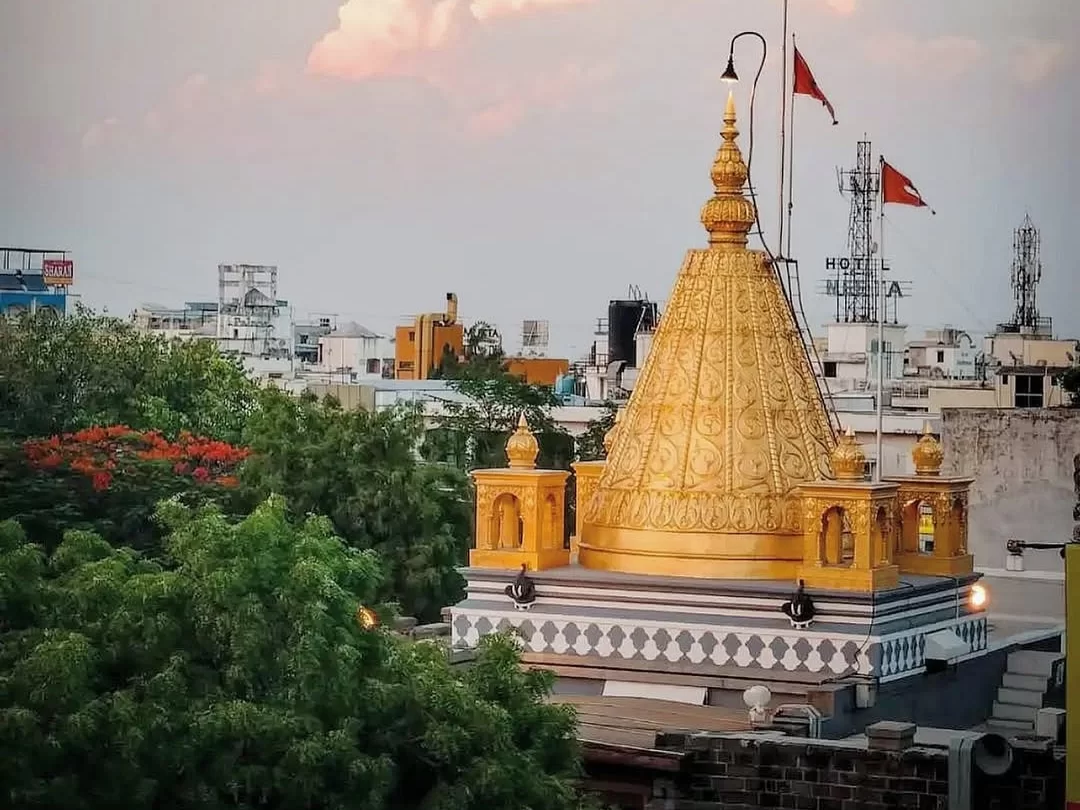
Dwarkamai, Shirdi, Maharashtra, India

Dwarkamai , Shirdi
Tourists and pilgrims visit Dwarkamai to offer prayers, witness the sacred fire (dhuni), and experience the spiritual atmosphere associated with Sai Baba. It is a central site in Shirdi’s religious circuit.

Quick Facts About Dwarkamai

Quick Facts About Dwarkamai, Shirdi

Entry Fee Free
Timings Open daily (usually 5:00 AM – 11:00 PM; visit during non-prayer hours for sightseeing)
Altitude (m) Approx. 591 m
Ideal Visit Duration 30 minutes – 1 hour
Best Time of Day Morning or evening (during aarti for spiritual experience)
Crowd Level High (especially during weekends, festivals, and aarti times)
Distance from City Centre (km) Located in central Shirdi
Walking Difficulty Easy (mostly flat area inside the shrine)
Parking Available Limited parking near the shrine
Last Mile Access Auto-rickshaw, taxi, or private vehicle access available
Suitable for Kids Yes (safe for family visits)
Suitable for Seniors Yes (gentle walking, seating available)
Wheelchair Friendly Partially (main area accessible; some crowded sections may be difficult)

Why Visit Dwarkamai, Shirdi

Dwarkamai in Shirdi is the spiritual center where Sai Baba spent much of his life, attracting devotees and travelers seeking a profound religious experience. Visitors come here to offer prayers, participate in daily rituals, and witness the sanctity of the mosque associated with Sai Baba’s teachings. It is a key destination for those on a pilgrimage to understand and connect with Sai Baba’s legacy.

The atmosphere at Dwarkamai is deeply devotional and serene, with continuous chanting, aarti ceremonies, and the hum of prayers creating a spiritually immersive environment. Visitors can walk through the prayer hall, observe the sacred lamp, and participate in rituals while absorbing the peaceful surroundings. The site is especially significant during festivals and special observances.

What makes Dwarkamai special is its direct association with Sai Baba’s life and teachings, offering travelers a personal and spiritual connection to the saint. The mosque’s historical importance, devotional energy, and preserved sanctity make it unique among religious sites in Shirdi. For visitors, it provides both a culturally significant and spiritually uplifting experience.

History of Dwarkamai, Shirdi

Dwarkamai in Shirdi, Maharashtra, is a historic mosque that became the spiritual center of Shri Sai Baba’s life. Sai Baba resided here for several decades during the late 19th and early 20th centuries, teaching his followers and performing spiritual and charitable activities.

The mosque, though modest in architecture, gained immense cultural and religious significance due to Sai Baba’s association. It was a place for daily prayers, community gatherings, and the dissemination of his teachings on faith, compassion, and service to humanity.

Today, Dwarkamai is one of the most important pilgrimage sites in Shirdi. Devotees from across India and abroad visit to pay homage, participate in rituals, and experience the historical and spiritual legacy of Sai Baba.

Best Time to Visit Dwarkamai, Shirdi

Dwarkamai in Shirdi is best visited during the cooler months when the weather is comfortable for darshan, walking around the premises, and attending aarti. Pleasant conditions enhance the spiritual experience and make visiting the ashram more enjoyable.
  • Ideal Months: October to February (best for temple visits, darshan, and attending rituals).
  • Weather During Best Season: Mild temperatures with low humidity, ideal for exploring the ashram complex, participating in spiritual activities, and spending time comfortably.
  • Periods to Avoid: April to June due to intense summer heat, which can make walking and attending darshan tiring, and July to September during monsoon when heavy rains may affect accessibility and comfort.

How to Reach Dwarkamai, Shirdi

  • Nearest Airport: The nearest airport is Shirdi Airport, located around 10–12 km from Dwarkamai. From the airport, tourists can hire a taxi or auto-rickshaw via local roads to reach the ashram.
  • Nearest Railway Station: The nearest railway station is Shirdi Railway Station, approximately 14–15 km from Dwarkamai. It is well-connected to major cities like Mumbai, Pune, Nashik, and Aurangabad.
  • Road Access & Last-Mile Connectivity: Dwarkamai is accessible via Shirdi–Rahata Road and other city streets. Private vehicles, taxis, and auto-rickshaws provide convenient last-mile connectivity. Walking from nearby parking or drop-off points is required to reach the ashram entrance.
  • Travel Conditions to Note: The area can get very crowded during weekends, holidays, and festival seasons. Early morning visits are recommended for a peaceful experience and to avoid congestion. Roads are generally in good condition, and mobile connectivity is stable.

What to Expect When You Visit Dwarkamai, Shirdi

  • Historic spiritual environment: Expect the main mosque where Sai Baba lived for decades, featuring a simple and serene setting with a large prayer hall and inner sanctum.
  • Peaceful yet devotional atmosphere: The ashram is active with continuous chanting, prayers, and rituals, creating a spiritually immersive experience for devotees.
  • Walking and movement: Visitors navigate the prayer hall, courtyards, and nearby facilities. Comfortable footwear is recommended, and modest attire is required.
  • Facilities and amenities: Basic facilities include seating areas, drinking water, and restrooms. Food and prasad distribution is managed within the complex for devotees.
  • Photography guidelines: Photography is typically restricted inside the main hall and sanctum. Visitors may take pictures in outer courtyards with respect for devotees.
  • Accessibility considerations: The complex is generally walkable, but narrow corridors and crowded areas may pose challenges for seniors or wheelchair users.
  • Visitor behavior: Quiet and respectful conduct is expected. Visitors engage in prayers, meditation, and observing daily rituals performed in the mosque.
  • Crowd conditions: Dwarkamai experiences high footfall during weekends, holidays, and religious festivals, while early mornings on weekdays are relatively quieter.
  • Religious and cultural significance: Dwarkamai is the most important site in Shirdi, being Sai Baba’s residence and spiritual center, attracting devotees from across India and abroad.
  • Visit duration: Most visitors spend 30 minutes to 1.5 hours experiencing the prayer hall, participating in rituals, and reflecting in the peaceful environment.

Important Visitor Information for Dwarkamai, Shirdi

  • Crowd & Weather Notes: Dwarkamai is a sacred site in Shirdi, attracting thousands of devotees daily. Winter months (October to February) are the most comfortable for visiting. Summers can be hot and humid, while monsoon rains may make surrounding courtyards and pathways slippery.
  • Peak Visiting Hours: The site is busiest during early morning (5:00 AM to 10:00 AM) and evening hours (4:00 PM to 8:00 PM), especially on weekends, public holidays, and during major religious festivals like Ram Navami and Guru Purnima.
  • Quiet Visiting Hours: Mid-mornings on weekdays and early afternoons are generally quieter, providing a peaceful atmosphere for darshan, meditation, and photography.
  • Dress Code (If Applicable): Modest clothing is required. Visitors should cover shoulders and knees. Footwear must be removed before entering the main shrine areas.
  • Safety & Practical Cautions: Maintain decorum and silence inside the shrine. Supervise children closely, especially in crowded areas. Photography may be restricted in sanctum areas, so confirm rules before taking pictures. Carry water and sun protection during summer visits, and watch your step on stone or tiled floors.

Photography and Viewpoints at Dwarkamai, Shirdi

  • Best viewpoint for wide ashram shots: The main courtyard and entrance provide a clear view of Dwarkamai, capturing the prayer hall, surrounding verandas, and sacred spaces in a wide-angle frame.
  • Most photogenic spot: Side corridors and elevated corners allow photographers to include the prayer hall, arches, and inner courtyard, adding depth and perspective to compositions.
  • Best time of day for natural lighting: Early morning (5:30 AM to 8 AM) provides soft sunlight, calm conditions, and fewer visitors, ideal for exterior and courtyard photography.
  • Golden hour advantage: Late afternoon (4 PM to 6 PM) casts warm light on the prayer hall and surrounding structures, enhancing textures and producing visually striking photographs.
  • Midday lighting conditions: Between 11 AM and 3 PM, bright sunlight can flatten architectural details and create glare on stone and painted surfaces, making morning or late afternoon preferable.
  • Best photography subjects: Prayer hall, arches, sacred inner courtyard, columns, and devotional gatherings (with respect) provide opportunities for wide-angle and detailed shots.
  • Interior photography restrictions: Photography inside the main hall is strictly restricted, especially during aarti and devotional activities. Flash is prohibited to maintain sanctity.
  • Crowd factors affecting photography: Weekends, festivals, and aarti timings attract large crowds, limiting unobstructed shots in courtyards and external verandas.
  • Best crowd-free photography window: Weekday mornings, early after opening, provide the calmest environment for capturing exterior areas without visitors in the frame.
  • Drone and professional shoot rules: Drone photography and commercial filming are prohibited without prior permission from ashram authorities to ensure respect for devotees, safety, and heritage preservation.

Near By Attraction

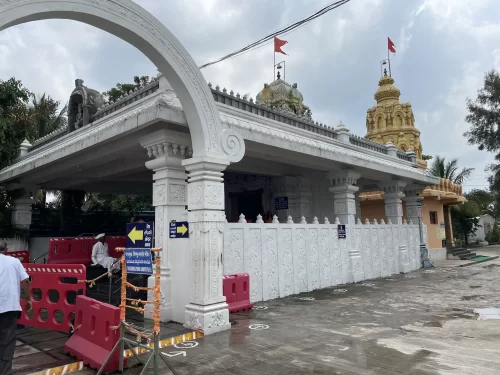
Panchamukhi Vishnu Ganpati Temple. Sacred Hindu temple dedicated to Lord Ganpati with traditional architecture. Temple

Panchamukhi Vishnu Ganapati Temple

Panchamukhi Vishnu Ganapati Temple is a Hindu temple in Shirdi dedicated to Lord Ganesha with five faces (Panchamukhi).
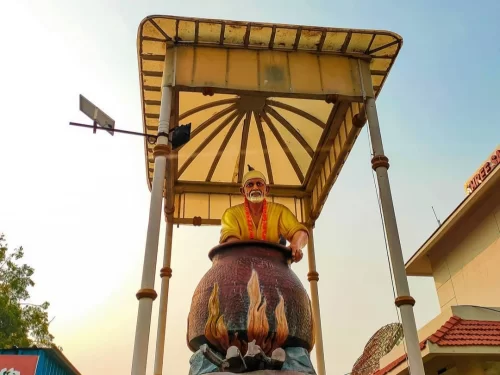
Prasadalaya Shirdi. Sai Baba temple dining hall serving free meals to thousands of devotees daily. Temple

Prasadalaya

Prasadalaya is the community dining hall located within the Shri Sai Baba Mandir complex in Shirdi, Maharashtra.
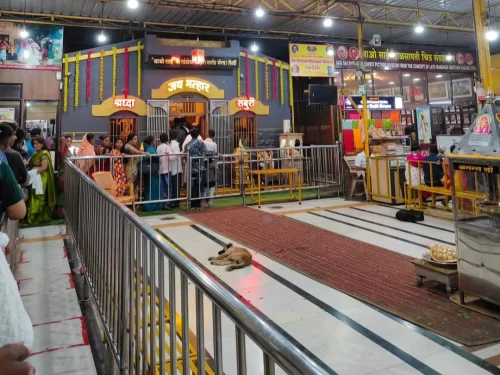
Shri Khandoba Mandir Shirdi. Historic temple dedicated to Lord Khandoba, sacred site linked to Sai Baba’s arrival in Shirdi. Temple

Shri Khandoba Mandir

Shri Khandoba Mandir is a Hindu temple in Shirdi, Maharashtra, dedicated to Lord Khandoba.

Frequently Asked Questions About Dwarkamai

Dwarkamai is located in Shirdi in Maharashtra within the Sai Baba Temple complex. It is the mosque where Sai Baba spent a significant part of his life.
Dwarkamai can be reached within 5 to 10 minutes by taxi or auto from Shirdi railway station. It is situated inside the main temple premises and accessible on foot from nearby hotels.
The best time to visit Dwarkamai is between October and March when the weather in Shirdi remains pleasant for temple visits. Early morning hours offer a calmer devotional atmosphere.
Dwarkamai is important for devotees as it was the residence of Sai Baba and houses the sacred dhuni that continues to burn. Pilgrims visit to seek blessings and experience its spiritual significance.
Dwarkamai is suitable for family visits as it involves minimal walking within the temple complex. Visitors of all age groups can comfortably participate in darshan.
There are numerous hotels near Dwarkamai in Shirdi ranging from budget lodges to premium accommodations. Staying near the temple complex provides convenient access for multiple visits.
Dwarkamai provides organized entry management security checks and basic facilities for devotees. Drinking water points and restrooms are available within the broader temple complex.
Most visitors spend 20 to 40 minutes at Dwarkamai depending on crowd levels. It is usually visited along with the Sai Baba Samadhi Mandir and other nearby shrines.
Dwarkamai becomes highly crowded during major festivals like Ram Navami and Guru Purnima. Planning visits during early hours helps reduce waiting time.
Travelers visiting Dwarkamai should wear modest clothing and follow temple guidelines. Carrying minimal belongings makes entry smoother during busy periods.

Loved this place ? Let’s Plan Your Maharashtra Trip

Get customized Maharashtra tour planning designed around seasonal weather shifts, long-distance road travel flow, hill station comfort, coastal timing, and heritage exploration pacing. Whether you are visiting for historic caves, spiritual journeys, beach

⚡ Quick Response | 💰 Free consultation | 🕒 24×7 expert support

×

Plan Your Trip