Quick Facts About Maheshwar
Quick Facts of Maheshwar
| Entry Fee | No general entry fee for the town; individual temples, ghats, and heritage properties may have separate charges |
| Timings | Town accessible 24 hours; temples and fort areas typically open between 6:00 AM – 8:00 PM (varies by site) |
| Altitude (m) | Approximately 146 meters above sea level |
| Ideal Visit Duration | 3–5 hours for town, ghats, temples, and fort area |
| Best Time of Day | Early morning and evening (for riverfront views and temple visits) |
| Crowd Level | Moderate; higher on weekends, festivals, and religious occasions |
| Distance from City Centre (km) | 0 km (Maheshwar itself is the town center) |
| Walking Difficulty | Easy to moderate (stone steps, uneven ghats, and narrow lanes in old town areas) |
| Parking Available | Yes, limited public parking near fort area and main ghats |
| Last Mile Access | Auto-rickshaws, local taxis, and walking access within town |
| Suitable for Kids | Yes, with supervision near riverfront and ghats |
| Suitable for Seniors | Partially suitable; steps, uneven surfaces, and walking distances may be challenging in ghat and fort areas |
| Wheelchair Friendly | No; most areas have steps, uneven stone paths, and limited accessible infrastructure |
Why Visit Maheshwar
Visitors come to Maheshwar to experience a living riverside town where daily life unfolds along the ghats of the Narmada River, combining spiritual activity, local traditions, and slow-paced travel in one walkable destination.
The on-ground atmosphere is calm and authentic, with temple bells, boatmen at the river steps, handloom weavers working in small workshops, and pilgrims performing rituals along the ghats, creating a grounded and culturally immersive environment.
What makes Maheshwar distinct is its rare mix of active handloom culture, continuous riverside rituals, and a fort-temple landscape that is not staged for tourism but functions as part of everyday local life.
History of Maheshwar
Maheshwar is an ancient riverside town situated on the banks of the Narmada River in Madhya Pradesh. It is historically identified with the ancient city of Mahishmati, a prominent settlement referenced in early Indian texts as a major political and administrative center of central India.
Archaeological and literary sources indicate that the region was an important urban center in early Indian history due to its strategic location along river trade routes and its fertile river plains, which supported continuous human settlement for centuries.
Maheshwar gained structured political importance in the 18th century when it became the capital of the Holkar dynasty under Queen Ahilyabai Holkar. Her reign marked a period of planned development, during which forts, temples, ghats, and public spaces were constructed along the riverfront.
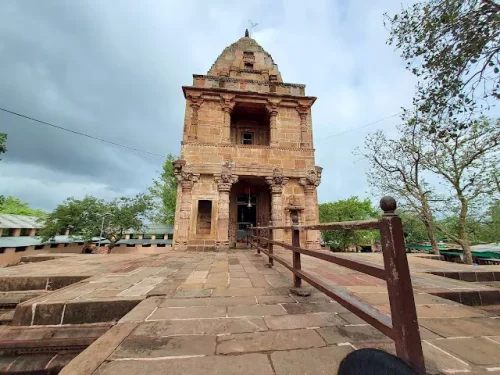
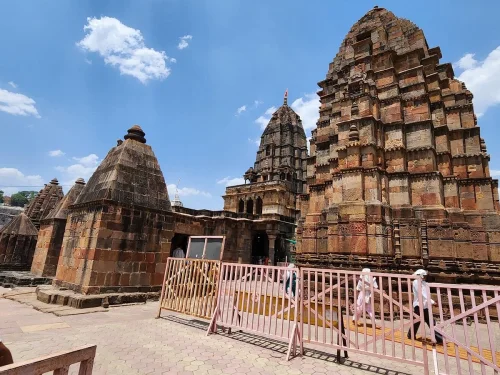
The Ahilya Fort complex, river ghats, temple corridors, and palace structures built during this period still form the historic core of the town and represent Maratha-era governance, architecture, and urban planning.
Today, Maheshwar remains a preserved heritage town where its historical layout, riverfront architecture, and royal-era infrastructure continue to define its identity, offering visitors a living experience of its historical evolution rather than a modern urban transformation.
Best Time to Visit Maheshwar
Maheshwar is most suitable for travel during the cooler part of the year, when outdoor exploration, riverfront walks, and heritage site visits can be done comfortably without climate-related disruptions.
- Ideal months: October to March
- Best-season conditions: Mild daytime temperatures, cool evenings near the Narmada River, low humidity, clear visibility, and stable weather for sightseeing, boating, temple visits, and photography
- Periods to avoid: April to June due to extreme heat and sun exposure; July to September because of monsoon rainfall, slippery ghats, high humidity, and limited river-based activities
How to Reach Maheshwar, Madhya Pradesh, India
- Nearest Airport: Devi Ahilya Bai Holkar Airport, Indore (approx. 90 km). From the airport, tourists can hire taxis or private cabs directly to Maheshwar. Travel time is usually 2.5–3 hours depending on traffic and seasonal road conditions.
- Nearest Railway Station: Indore Junction (approx. 90 km) is the most reliable railhead with strong connectivity to major Indian cities. Khargone railway station (approx. 40 km) is closer but has limited train services and restricted long-distance connectivity.
- Road Access & Last-Mile Connectivity: Maheshwar is well connected by road via Indore, Khargone, and Mandu through state highways and district roads. Regular buses, shared jeeps, and private taxis operate from Indore and Khargone. The final approach into the historic town area involves narrow roads near the ghats and fort zone, where large vehicles may face access limitations.
What to Expect When You Visit Maheshwar, Madhya Pradesh
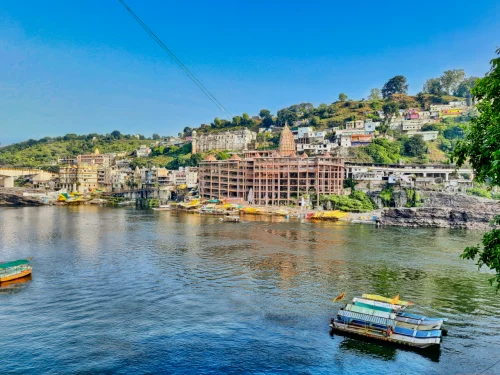
- Environment and surroundings: Maheshwar is a small riverside town on the banks of the Narmada River with a calm, traditional atmosphere. The ghats, stone steps, temples, and old structures create a heritage setting rather than a modern tourist environment. Expect quiet mornings, active riverbanks in the evening, and a slow-paced local lifestyle.
- Facilities and amenities: Basic tourist facilities are available, including local eateries, small hotels, guesthouses, drinking water points near ghats, and public rest areas. There are limited high-end restaurants or luxury services. Shopping areas mainly consist of handloom saree shops and small local markets.
- Accessibility and movement: Most attractions such as ghats, temples, and Maheshwar Fort are within walking distance, but pathways can be uneven and crowded during peak hours. Vehicle access is limited near riverfront areas, and visitors should expect to walk for local exploration.
- Typical visitor behavior and conditions: The town attracts pilgrims, domestic tourists, and handloom buyers. Religious activity is common, especially near temples and ghats. Early mornings and evenings are the busiest times. Silence, modest clothing, and respectful behavior are expected in temple and riverfront areas.
- Practical limitations: Limited signage, minimal tourist information centers, and basic infrastructure may make navigation slightly challenging for first-time visitors. Monsoon season can cause slippery ghats and restricted river access. Medical and emergency facilities are basic and located away from the riverfront.
Important Visitor Information for Maheshwar
- Crowd & Weather: Maheshwar remains relatively calm on most weekdays, with noticeable crowds during festivals, weekends, and religious occasions. Summers (April–June) can be extremely hot, while monsoon months may cause humidity and slippery ghats near the Narmada River.
- Peak & Quiet Hours: Peak visiting hours are early mornings (6:00–9:00 AM) and evenings (5:00–8:00 PM), especially around river ghats and temples. Midday and late afternoons are usually quieter and less crowded.
- Dress Code: Modest clothing is recommended, particularly when visiting temples and ghats. Covering shoulders and knees is culturally respectful and often expected in religious areas.
- Safety & Practical Cautions: Stone steps along the ghats can be slippery, especially after rains or during river rituals. Maintain caution near the river currents, avoid isolated riverbanks after dark, and keep personal belongings secure in crowded areas.
Photography and Viewpoints at Maheshwar
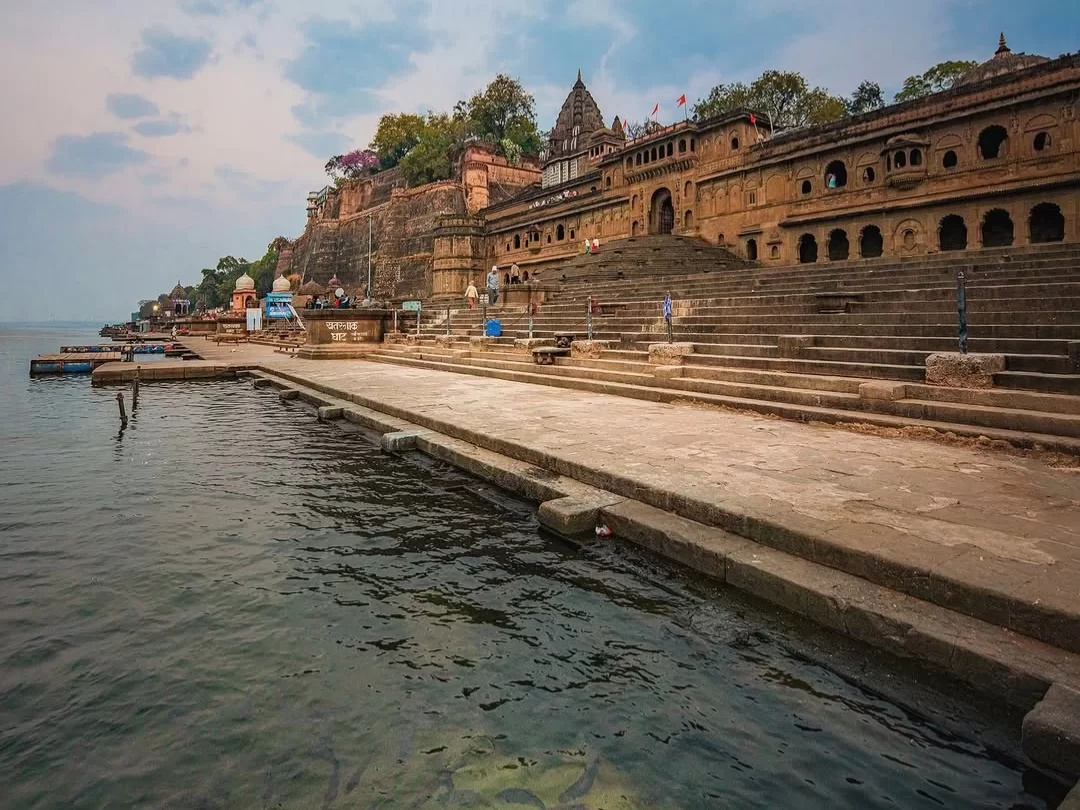
- Ahilya Ghat riverfront offers the most iconic compositions, with stone steps, temple spires, and the Narmada River forming layered foreground-to-background frames, especially near the fort-facing ghats.
- Maheshwar Fort terraces provide elevated viewpoints overlooking the river, ghats, and town rooftops, ideal for wide-angle landscape shots and symmetrical riverfront perspectives.
- Sunrise photography gives soft golden light on the river surface and temple silhouettes, with low crowd movement along the ghats and calm water reflections.
- Late afternoon to sunset creates warm tones on sandstone architecture and dramatic sky colors over the Narmada, particularly from the western-facing ghats and fort ramparts.
- Temple photography restrictions apply inside active shrines; photography is often not permitted inside sanctum areas, and visitors should follow local instructions and signage.
- Crowd patterns increase during morning and evening aarti times, festivals, and weekends, making early mornings the most accessible for clear, unobstructed compositions.
- Boat-level perspectives from the riverbank offer unique low-angle shots of the fort, ghats, and temples, but access depends on seasonal water levels and local boat availability.