Chhatribagh in Indore, Madhya Pradesh, India

Chhatribagh , Indore
Tourists visit Chhatribagh to see Maratha-era chhatris with carved stone details and riverside setting along the Khan River. It is typically explored as part of an Indore heritage walk along with Rajwada and nearby old city landmarks.

Quick Facts About Chhatribagh

Chhatribagh Indore – Quick Facts

Entry Fee No entry fee (public heritage site).
Timings Open 24 hours; daylight hours are recommended for visiting.
Altitude (m) Approx. 553 m above sea level (Indore elevation).
Ideal Visit Duration 30–60 minutes.
Best Time of Day Early morning or late afternoon for better light and lower heat.
Crowd Level Low to moderate; quieter on weekdays.
Distance from City Centre (km) Approx. 2 km from Rajwada (central Indore).
Walking Difficulty Easy; mostly flat pathways around the cenotaph structures.
Parking Available Limited roadside parking nearby.
Last Mile Access Motorable road up to the site; short walk within the complex.
Suitable for Kids Yes.
Suitable for Seniors Yes; minimal walking required.
Wheelchair Friendly Partially; flat grounds but no dedicated accessibility infrastructure.

Why Visit Chhatribagh, Indore

Visitors come to Chhatribagh, Indore as a quick stop to see a cluster of royal cenotaphs (chhatris) set inside a compact garden space. It’s usually paired with nearby old-city sights like Rajwada and the central market areas, making it an easy addition to a heritage walk rather than a stand-alone destination.

On the ground, the atmosphere feels local and unhurried, with shaded paths, stone structures tucked between trees, and a steady flow of residents using the garden as a quiet break from the traffic outside. The site is small enough to explore slowly in one loop, and the calm inside contrasts sharply with the busy streets around it.

What makes Chhatribagh, Indore distinct for travelers is how closely it places architectural detail within everyday city life. Instead of a fenced-off monument experience, you get a lived-in urban garden where heritage structures sit in the middle of a working neighborhood, giving a more realistic sense of Indore beyond its headline attractions.

History of Chhatribagh Indore

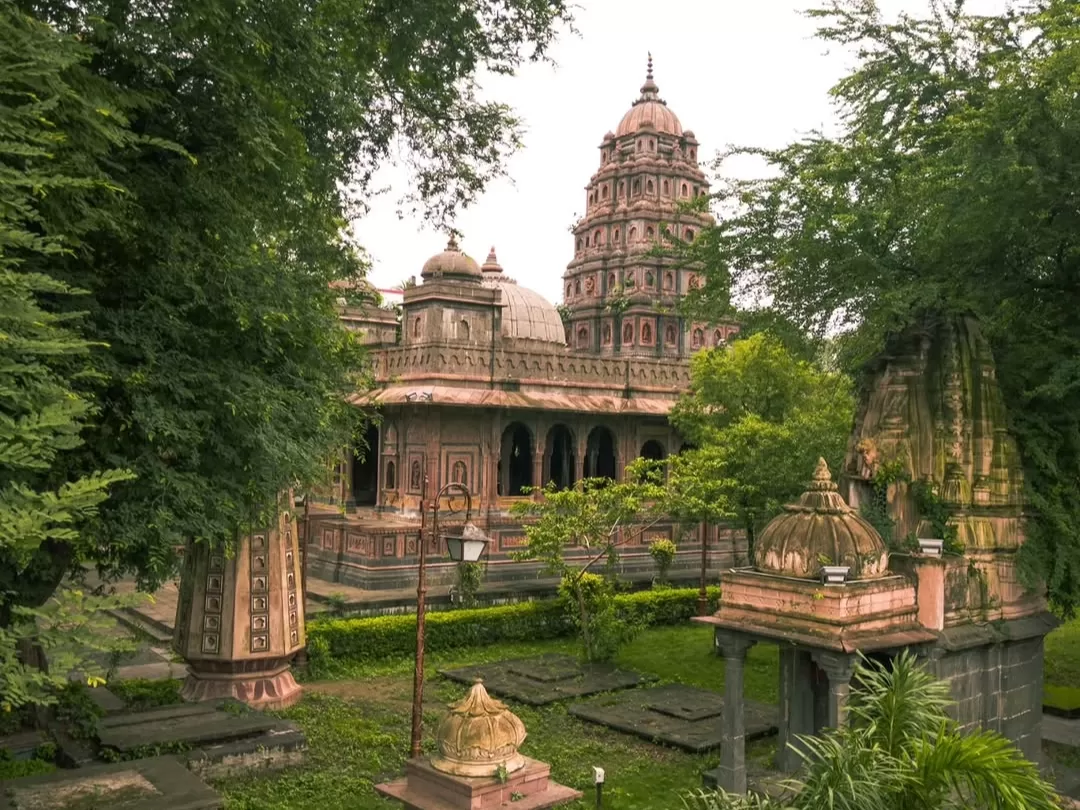
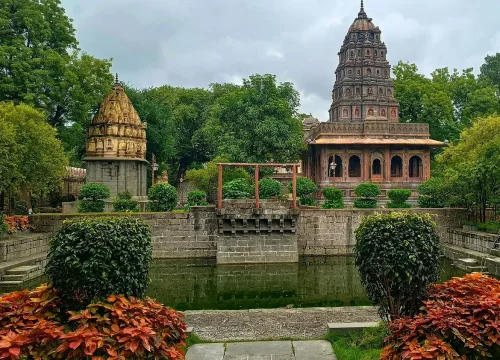
Chhatribagh in Indore is a historic cluster of cenotaphs (chhatris) built in memory of the rulers and members of the Holkar dynasty, who governed Indore and large parts of central India during the 18th and 19th centuries. Located along the banks of the Khan River, the site developed as a royal cremation ground where commemorative structures were constructed to honor deceased rulers.

Most of the chhatris were commissioned between the late 18th and early 19th centuries, reflecting Maratha architectural traditions combined with local craftsmanship. The cenotaphs feature elevated platforms, domed pavilions, intricately carved pillars, and ornamental stone detailing that highlight the artistic style patronized by the Holkars.

Chhatribagh remains an important historical landmark in Indore, offering visitors insight into the city’s Maratha-era legacy. The architectural forms and inscriptions preserved at the site provide a tangible connection to the Holkar rulers who shaped Indore’s political and urban development.

Best Time to Visit Chhatribagh, Indore

Chhatribagh in Indore is best visited in the cooler season, when you can explore the historic chhatris comfortably on foot and pair the stop with nearby old-city sightseeing without the heat or monsoon humidity getting in the way.

  • Ideal months: October to March, with November to February being the most comfortable for daytime walking.
  • Weather during the best season: Pleasant, dry days with cooler mornings and evenings—ideal for spending time around the chhatri structures, photography in softer light, and exploring nearby heritage streets without the fatigue of peak summer temperatures.
  • Periods to avoid (and why): April to June due to high heat in Indore that can make the open, sun-exposed areas uncomfortable, and July to September because monsoon rain and humidity can limit how long you’ll want to stay outdoors.

How to Reach Chhatribagh, Indore, Madhya Pradesh

  • Nearest Airport: The nearest airport is Devi Ahilya Bai Holkar Airport, Indore (IDR), approximately 9–11 km from Chhatribagh. The airport is well connected with frequent flights from Delhi, Mumbai, Bengaluru, Hyderabad, and other major Indian cities. From the terminal, you can reach Chhatribagh in about 25–45 minutes by prepaid taxi, app-based cab, or auto-rickshaw, depending on city traffic.
  • Nearest Railway Station: Indore Junction (INDB) is the closest major railway station, located around 3–4 km from Chhatribagh. It is one of the busiest stations in Madhya Pradesh with strong connectivity to Mumbai, Delhi, Jaipur, Pune, and Ahmedabad. From the station, Chhatribagh is a quick 10–20 minute ride by auto-rickshaw, taxi, or local city bus.
  • By Road & Last-Mile Connectivity: Chhatribagh lies in central Indore near the Rajwada–Sarafa area, making it easy to access from most parts of the city. Indore is connected by road via major highways including NH52 and NH47, with frequent intercity buses from Bhopal, Ujjain, Omkareshwar, and Dewas to Indore’s main bus terminals. The final approach to Chhatribagh is through busy market roads, so expect slow-moving traffic and limited parking, especially in the evening and on weekends. For a smoother last-mile experience, app cabs, auto-rickshaws, or walking from nearby landmarks are often more practical than driving your own vehicle.

What to Expect When You Visit Chhatribagh, Indore

Chhatribagh in Indore is a small historic area known for its cluster of chhatris (cenotaph-style memorial structures). It is typically visited as a brief heritage stop rather than a full-day attraction, and the experience is shaped by the busy city surroundings rather than a quiet monument complex.

  • Environment and surroundings: Expect an urban setting with traffic noise, narrow approach roads, and a neighborhood feel around the site. The chhatris are the main visual focus, but the space around them is limited, and the atmosphere is not like a large landscaped heritage park.
  • Facilities and amenities: Visitor facilities are minimal. Do not expect a formal ticket counter, visitor center, or dedicated restrooms on-site. Small local shops and basic amenities may be available nearby in the surrounding streets, but not as part of the monument area.
  • Accessibility and movement: Access usually involves walking through regular city lanes and entering a compact heritage space. Surfaces may be uneven, and the site may include steps around the chhatri platforms. Wheelchair and stroller movement can be difficult due to limited space and the lack of smooth pathways.
  • Typical visitor behavior and conditions: Most visitors come for quick viewing and photography. The site is generally not crowded for long periods, but you may see short bursts of visitors, especially on weekends. Because it sits within a living city area, you may also notice local residents passing by or using the space casually.

Chhatribagh is best approached as a short, city-based heritage stop where the surroundings are active and practical planning (timing, footwear, and expectations about facilities) matters more than a curated tourist experience.

Important Visitor Information for Chhatribagh, Indore

  • Crowd and weather notes: Chhatribagh is a central Indore heritage area that tends to be busiest on weekends and during local festivals, when visitors come for the historic chhatris and nearby market activity. The site is open-air, so afternoons can feel harsh in peak summer, while the monsoon season can make the surrounding lanes muddy and slippery.
  • Peak and quiet visiting hours: Footfall is typically highest from late morning through early evening, when nearby shops and city traffic are at their peak. For quieter viewing and cleaner photo conditions, early morning is usually the calmest time.
  • Dress code: There is no formal dress code. Comfortable walking footwear is useful, as access involves uneven pavement and busy lanes around the heritage structures.
  • Safety notes and practical cautions: The area around Chhatribagh includes active roads, crowded market movement, and narrow lanes—watch for fast-moving two-wheelers. Some chhatri platforms and steps can be worn or uneven, and surfaces may be slick after rain. Keep personal belongings secure in busy periods, especially near roadside stalls.

Photography & Viewpoints at Chhatribagh, Indore

Chhatribagh in Indore is a historic garden complex known for its cluster of chhatris (cenotaph-style pavilions) and calm, symmetrical pathways. The strongest photographs come from using the repeating arches, domes, and long sightlines of the garden layout, especially when the site is quiet and the stonework is evenly lit.
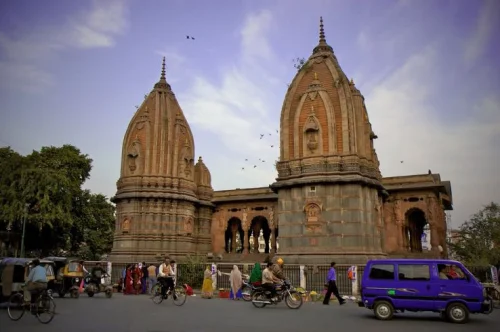
  • Central axis viewpoint: Stand on the main walkway and shoot straight down the garden’s central line to capture symmetry, with chhatris aligned in the frame. This viewpoint works best when the path is clear of visitors.
  • Chhatri-arch framing: Position yourself just inside a chhatri and photograph outward through the arches to frame the garden and adjacent structures. This angle highlights the depth of the pavilion columns and carved details.
  • Domes and finials from low angle: From the base of the chhatris, shoot upward to emphasize the domes against the sky. The cleanest skyline shots are usually in the earlier part of the day before haze increases.
  • Garden-wide composition: Step back to include both greenery and architecture in one frame, especially from corners of the garden where you can capture multiple chhatris together without tight cropping.
  • Time-of-day lighting: Morning light is generally softer on the stone and produces fewer harsh shadows under the domes. Midday light creates strong contrast under arches, while late afternoon often gives warmer tones on the pavilion surfaces.
  • Crowd and access factors: Chhatribagh is a public space, and local visitors often gather in the late afternoon and evening. For clean architectural shots, the first hour after opening is usually the least crowded.
  • Photography rules: Photography is generally allowed in the garden areas. If any sections are under maintenance or roped off, they should not be entered for closer angles. Drone use or commercial filming typically requires permission from local authorities.

Near By Attraction

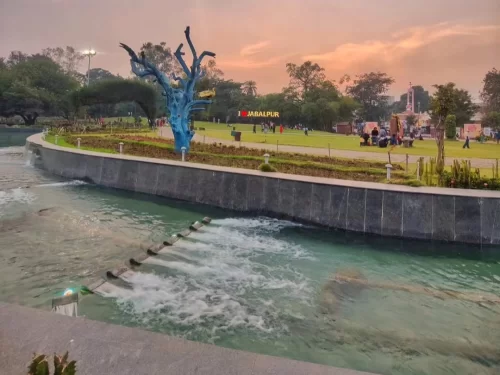
 Bhawartal Garden in Indore featuring landscaped lawns, a flowing water channel, and evening visitors under a sunset sky, a popular stop in Madhya Pradesh tour packages Garden

Bhawartal Garden

Bhawartal Garden, located in Indore, Madhya Pradesh, India, is a well-maintained urban park known for its green landscapes and peaceful ambiance.

Mahatma Gandhi Hall at Indore in golden sunset light, featuring red sandstone domes and arches, perfect cultural experience Madhya Pradesh tour package. Tourist Attraction

Gandhi Hall

Gandhi Hall is a historic town hall building in central Indore, originally built in 1904 as King Edward Hall.

St. Anna’s Church (White Church) in Indore, a historic white colonial-era church surrounded by lush greenery, popular landmark included in Madhya Pradesh tour packages Church

St. Anna's Church (White Church)

St. Anna’s Church, commonly known as White Church, is a 19th-century Roman Catholic church located near Residency in Indore.

Frequently Asked Questions About Chhatribagh

Chhatribagh is located in Indore, Madhya Pradesh, near the Krishnapura Bridge area along the Kahn River. It is easily accessible by road from the city center.
Chhatribagh can generally be visited from sunrise to sunset. Daytime visits are recommended for clear views of the cenotaph structures.
There is usually no entry fee to visit Chhatribagh. Visitors can access the heritage site freely during open hours.
Visitors can reach Chhatribagh by taxi, auto rickshaw, or local transport within Indore, Madhya Pradesh. The site is well connected by city roads.
Parking is available near Chhatribagh in designated roadside areas. Space availability may vary during weekends and public holidays.
The best time to visit Chhatribagh is between October and March when the weather in Indore, Madhya Pradesh is pleasant. Early mornings and evenings offer comfortable conditions for photography.
Most travelers spend about 30 to 60 minutes exploring Chhatribagh and its architectural structures. Additional time may be needed for photography.
Chhatribagh is suitable for family visits and provides open space for relaxed exploration. The walking paths are manageable for children and senior citizens.
Photography is generally allowed at Chhatribagh for personal use. Visitors should avoid climbing on structures or causing damage while taking pictures.
Food outlets and restaurants are available near Chhatribagh in Indore city. Restroom facilities may be limited directly at the site.

Loved this place ? Let’s Plan Your Madhya Pradesh Trip

Get customized Madhya Pradesh tour planning designed around safari seasons, road travel distances, heritage site exploration time, and comfortable pacing across regions. Whether you are visiting for wildlife safaris, temple architecture, historical monume

⚡ Quick Response | 💰 Free consultation | 🕒 24×7 expert support

×

Plan Your Trip