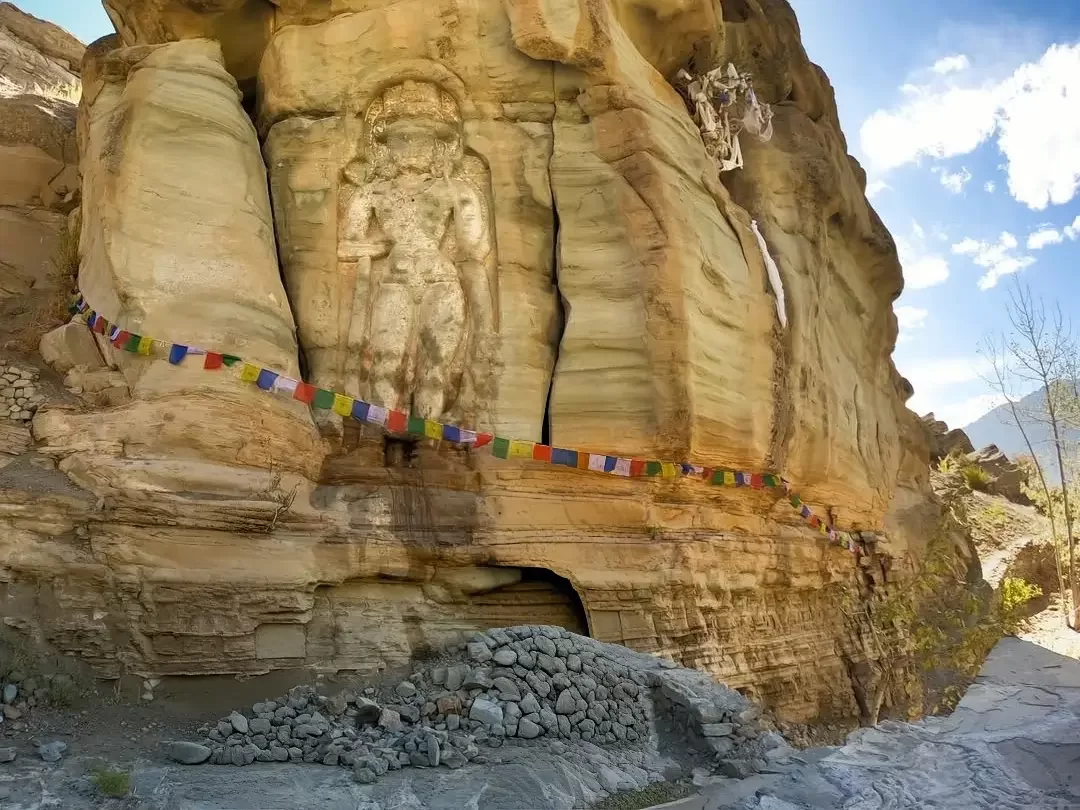
Apati Buddha Maitreya Statue Kargil Ladakh India

Apati Buddha , Dha hanu
Apati is a village in Ladakh’s Kargil district known primarily for the Apati Chamba or Apati Buddha — a rock-cut relief statue of the Maitreya (Future) Buddha on a mountainside. This ancient sculpture predates Tibetan Buddhist art and is part of a trio of similar cliff carvings in the region. While the village itself is small and quiet, the cliff statue attracts visitors for its historical depth and heritage value.

Quick Facts About Apati Buddha

Entry Fee Free
Timings 06:00 - 18:00
Altitude (m) 2750
Ideal Visit Duration (hrs) 1
Best Time of Day Morning
Crowd Level Low
Distance from Kargil (km) 10
Walking Difficulty Easy
Parking Available Yes
Last Mile Access Walk
Suitable for Kids Yes
Suitable for Seniors Yes
Wheelchair Friendly No

Why Visit Apati Buddha

Apati Buddha is visited for its historical depth rather than scale or ornamentation. It represents one of the earliest surviving examples of Buddhist art in the Ladakh region and offers insight into the period before Tibetan Buddhist architecture became dominant. The site appeals to travelers interested in heritage, archaeology, and the early spread of Buddhism along Himalayan trade routes.

Atmosphere

The atmosphere around Apati Buddha is quiet and unstructured, shaped more by the natural landscape than by tourism. There are no crowds, controlled entry points, or formal facilities. The relief stands exposed on the rock face near a small village, creating a setting that feels contemplative and largely unchanged over time.

What Makes It Special

What makes Apati Buddha distinctive is its age and form. The rock cut relief of the Maitreya Buddha is carved directly into the cliff, reflecting artistic traditions that predate later monastery construction in Ladakh. Its presence alongside similar cliff carvings in the region points to an early Buddhist cultural layer that is rare to encounter today, especially in such an accessible and uncommercialized setting.

Origins and Early Buddhist Context of Apati Buddha

The Apati Buddha relief is believed to date back to the early centuries of Buddhist presence in the western Himalayas, well before the establishment of large monastic complexes in Ladakh. The rock carved image of the Maitreya Buddha reflects an early artistic and religious phase associated with trans Himalayan trade routes that connected Central Asia, Kashmir, and the Indus valley.

Unlike later monasteries shaped by Tibetan Buddhist schools, the Apati Buddha represents a period when Buddhist expression took the form of open air rock reliefs rather than enclosed structures. This suggests the site functioned as a visible marker of faith and teaching for travelers and local communities rather than a monastic residence.

Today, the relief holds heritage importance rather than serving as an active ritual site. It stands as material evidence of Ladakh’s layered religious past, highlighting the transition from early Buddhist influences to later Tibetan traditions that now dominate the region.

Best Time to Visit Apati Buddha

The best time to visit Apati Buddha is from late April to October, when Kargil region roads are fully accessible and weather conditions allow comfortable outdoor exploration. As the site is an open rock relief without shelter, clear weather and daylight play an important role in the overall experience.

May to September offers the most reliable conditions, with moderate temperatures and good visibility of the cliff carving. Winter months bring extreme cold and snowfall, making access uncomfortable and photography difficult.
  • Late April to June provides clear skies and minimal visitor presence
  • July and August may see occasional rain but remain accessible
  • September offers crisp air and excellent visibility for photography
  • October marks the onset of cold with shorter daylight hours

How to Reach Apati Buddha

  • By Air: The nearest airport is Leh Airport. From Leh, travel by road to Kargil, which remains the main base for visiting Apati Buddha.
  • By Road from Kargil: Apati Buddha is located near Apati village, around 10 km from Kargil town. It can be reached easily by taxi or private vehicle via a short drive.
  • By Road from Leh: Leh to Kargil road is open seasonally, usually from April to November, depending on weather and pass conditions.
  • Local Access: The rock relief is visible near the roadside close to Apati village. A short walk on uneven ground is required from the parking point.
  • Public Transport: Shared taxis and local buses operate between Kargil and nearby villages, but schedules can be irregular.

What to Expect When You Visit Apati Buddha

  • A small, open air heritage site with a single rock carved Buddha relief as the main point of interest
  • No formal entry gate, ticket counter, or visitor facilities at the site
  • A quiet rural setting near Apati village with minimal tourist activity
  • Close viewing of the cliff carving from ground level, requiring attention to footing
  • Limited information boards or explanations, making prior context helpful
  • Exposure to weather conditions, as there is no shelter at the site
  • Short visit duration, suitable as a brief stop while traveling through Kargil region

Important Visitor Information

  • Crowd and Weather Notes: Apati Buddha remains largely uncrowded throughout the year. Weather exposure is direct, with strong sunlight during the day and cold winds common in the Kargil region, even in summer.
  • Peak and Quiet Hours: There are no defined peak hours due to minimal tourism. Early morning and late afternoon offer quieter conditions and better light for viewing.
  • Dress Code: No formal dress code is enforced, but modest clothing is recommended as the site holds historical and religious significance for locals.
  • Safety Notes: The area around the rock relief has uneven ground and loose stones. Visitors should watch their footing and avoid climbing the rock face. There are no safety barriers or on site supervision.

Photography and Viewpoints at Apati Buddha

  • The rock carved Maitreya Buddha is best photographed from a slight distance to capture the full relief and surrounding cliff context.
  • Morning light illuminates the carving more evenly, reducing harsh shadows on the rock surface.
  • Midday sun can create strong contrast and glare on the stone, making details harder to capture.
  • There are no elevated viewpoints or platforms, so photography is done from ground level near the roadside.
  • The surrounding village and barren hills provide a natural, uncluttered backdrop for wide shots.
  • Tripods can be used carefully, but space is limited and the ground is uneven.
  • Close up photography should be done respectfully without touching or climbing the rock surface.
  • Wind and dust are common, so basic protection for camera equipment is advisable.

Near By Attraction

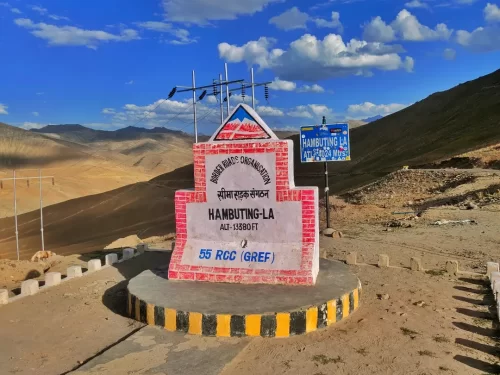
Hamboting La monument at BRO Ladakh during partly cloudy day, featuring brick arch altitude marker mountains terrain, perfect adventure Ladakh tour package. Mountain

Hamboting La

Hamboting La is a high-altitude mountain pass in Ladakh that connects the Zanskar region with the Suru Valley.

Frequently Asked Questions About Apati Buddha

Apati Buddha is located near Sumur village in Nubra Valley and is known for its ancient rock carved Maitreya Buddha statue. The statue is set against a natural rock face overlooking the valley landscape.
Apati Buddha is approximately 120 to 130 kilometers from Leh and the journey usually takes 4 to 6 hours via Khardung La Pass depending on road and weather conditions.
Travelers reach Apati Buddha by driving from Leh across Khardung La into Nubra Valley and continuing toward Sumur village where the statue is located close to the roadside.
Visitors require an Inner Line Permit to travel to Nubra Valley because it is a restricted region. Permits are arranged in Leh before departure.
The best time to visit Apati Buddha is between May and September when roads are open and weather conditions are stable for crossing high mountain passes.
Apati Buddha can sometimes be visited in winter if the Khardung La route remains open though snowfall may disrupt travel plans.
Travelers usually spend 20 to 30 minutes at Apati Buddha as it is a short stop suitable for photography and brief exploration.
Apati Buddha is easily accessible from the roadside with minimal walking which makes it suitable for senior citizens who are comfortable with high altitude travel.
Apati Buddha is special because it is an ancient rock carving believed to date back several centuries and represents Maitreya the future Buddha carved directly into a large stone slab.
There are no food stalls directly at Apati Buddha though small guesthouses and eateries are available in nearby villages such as Sumur and Diskit.
Road conditions toward Apati Buddha include paved stretches mixed with mountain roads particularly while crossing Khardung La Pass. Weather can affect driving time.
Apati Buddha is often combined with visits to Diskit Monastery Hunder Sand Dunes and other Nubra Valley attractions as part of a two day or three day trip.

Loved this place ? Let’s Plan Your Ladakh Trip

Get customized Ladakh tour planning designed around altitude comfort, acclimatization time, weather windows, and real Himalayan road conditions. Whether you are visiting for high mountain passes, monasteries, lakes, or remote valley experiences, our exper

⚡ Quick Response | 💰 Free consultation | 🕒 24×7 expert support

×

Plan Your Trip