Quick Facts About Sree Padmanabhaswamy Temple
Sree Padmanabhaswamy Temple, Kerala Quick Facts
| Entry Fee | No entry fee for temple ?????; charges may apply for special poojas and offerings |
| Timings | Typically 3:30 AM–12:00 PM and 5:00 PM–7:20 PM; timings may vary on festivals and special occasions |
| Altitude (m) | Approximately 10 m above sea level |
| Ideal Visit Duration | 1–2 hours |
| Best Time of Day | Early morning or evening during temple rituals |
| Crowd Level | High; especially during weekends, festivals, and auspicious days |
| Distance from City Centre (km) | Approximately 1 km from Thiruvananthapuram city centre |
| Walking Difficulty | Easy; short walking distance within the temple premises |
| Parking Available | Yes, paid parking available nearby |
| Last Mile Access | Easily accessible by road; taxis, auto-rickshaws, and local buses are available |
| Suitable for Kids | Yes |
| Suitable for Seniors | Yes |
| Wheelchair Friendly | Partially accessible; some sections and traditional entrances have steps |
Why Visit Sree Padmanabhaswamy Temple, Thiruvananthapuram, Kerala
Visitors come to Sree Padmanabhaswamy Temple to worship Lord Vishnu in the rare Anantha Shayana (reclining) form and experience one of Kerala's most revered Hindu temples. It is a major pilgrimage destination and an essential stop for those exploring the spiritual heritage of Thiruvananthapuram.
The on-ground atmosphere is traditional and disciplined, with strict temple customs, regular rituals, and a continuous flow of devotees throughout the day. The temple complex reflects Kerala's architectural style, featuring stone corridors, carved pillars, and a peaceful environment centered on worship.
What makes Sree Padmanabhaswamy Temple distinct is its unique blend of active religious practice, classical Kerala temple architecture, and centuries-old traditions that continue to shape daily worship. Its spiritual importance, cultural significance, and carefully preserved rituals offer visitors an experience unlike most other temples in southern India.
History of Sree Padmanabhaswamy Temple, Kerala
Sree Padmanabhaswamy Temple in Thiruvananthapuram is one of the most revered Vaishnavite temples in India, dedicated to Lord Vishnu in the reclining Anantha Shayana posture. References to the temple appear in ancient Tamil and Sanskrit literature, indicating its long-standing religious importance.
The temple attained prominence under the Travancore royal family, particularly in 1750 when Maharaja Anizham Thirunal Marthanda Varma dedicated his kingdom to Lord Padmanabha through the ceremonial Thrippadi Danam. Thereafter, the rulers of Travancore governed as "Padmanabha Dasa," considering themselves servants of the deity.
Renowned for its Dravidian and Kerala-style architecture, intricate carvings, and centuries-old traditions, Sree Padmanabhaswamy Temple continues to be one of Kerala's most significant pilgrimage sites and an enduring symbol of the state's royal and religious heritage.
Best Time to Visit Sree Padmanabhaswamy Temple, Thiruvananthapuram, Kerala
Sree Padmanabhaswamy Temple can be visited throughout the year, but the cooler and relatively drier months offer a more comfortable experience for darshan and exploring the historic temple precincts and nearby attractions in Thiruvananthapuram.
- Ideal Months: November to February is the best time to visit, with comfortable conditions for temple visits and sightseeing around the city.
- Weather Conditions: These months generally bring warm but pleasant weather with lower humidity than the monsoon season, making it easier to attend darshan and walk around the temple surroundings.
- Periods to Avoid: June to September often experiences heavy monsoon rainfall, which can affect local travel and outdoor exploration. Major festivals such as Alpasi and Painkuni draw large crowds, so visitors should expect longer waiting times during these periods.
How to Reach Sree Padmanabhaswamy Temple, Kerala
- By Air: Thiruvananthapuram International Airport is the nearest airport, located about 6 km from Sree Padmanabhaswamy Temple. The airport is well connected to major Indian and international destinations. Prepaid taxis, app-based cabs, and auto-rickshaws provide a convenient 15–20 minute ride to the temple.
- By Train: Thiruvananthapuram Central Railway Station is the nearest railhead, situated around 1 km from the temple. It is one of Kerala's major railway stations with regular trains from cities such as Chennai, Bengaluru, Mumbai, Delhi, and Kochi. Auto-rickshaws and taxis are readily available outside the station.
- By Road: The temple is located inside East Fort in the heart of Thiruvananthapuram and is easily accessible via NH 66 and the city's road network. KSRTC buses, private buses, taxis, and auto-rickshaws frequently operate to East Fort. The final approach to the temple is on foot through the temple precinct, and visitors should expect heavy traffic and limited parking during festivals and peak darshan hours.
What to Expect When You Visit Sree Padmanabhaswamy Temple, Thiruvananthapuram, Kerala
- Sree Padmanabhaswamy Temple is located in the heart of Thiruvananthapuram, surrounded by busy city streets, traditional markets, and historic buildings, while the temple complex itself maintains a serene religious atmosphere.
- The temple is an active place of worship with strict entry regulations. Only practicing Hindus are permitted inside the temple, and all visitors must follow the prescribed dress code before entering the premises.
- Facilities include designated counters for footwear, cloakrooms, and shops selling traditional attire and ???? items near the entrance. Parking is limited close to the temple, especially during peak pilgrimage periods.
- Visitors should expect security screening and orderly queues for darshan. Waiting times can increase significantly during weekends, festivals, and special religious occasions.
- Movement within the temple involves walking through stone corridors, courtyards, and designated pathways. Photography, videography, and the use of mobile phones are prohibited inside the temple premises.
- The temple attracts a steady mix of local devotees, pilgrims, and domestic tourists throughout the year. The atmosphere is devotional, with regular rituals, Vedic chants, and traditional ceremonies taking place at scheduled times.
- Visitors should plan for limited sightseeing information inside the temple, as the primary focus is religious worship. Those not eligible to enter can still appreciate the temple's impressive Dravidian architecture and gopuram from the exterior.
Important Visitor Information for Sree Padmanabhaswamy Temple, Thiruvananthapuram, Kerala
- The temple experiences heavy crowds during weekends, Vaikuntha Ekadashi, Alpasi and Painkuni festivals, and other major Hindu observances, while weekday mornings are generally less crowded.
- Early morning darshan sessions are typically the quietest, whereas evening darshan hours attract larger numbers of devotees due to daily rituals and aarti.
- A strict dress code is enforced. Men must wear a mundu (dhoti) without shirts inside the temple, while women are required to wear a saree, set-mundu, or other traditional attire that complies with temple regulations.
- Only Hindus are permitted to enter the temple. Visitors should be prepared for security checks and follow all instructions issued by temple authorities.
- Mobile phones, cameras, electronic devices, and large bags are not permitted inside the temple and must be deposited at designated counters before entry.
- The temple premises can become crowded during peak pilgrimage periods, so visitors should allow extra time for security procedures, footwear deposit, and darshan queues.
Photography and Viewpoints at Sree Padmanabhaswamy Temple, Thiruvananthapuram, Kerala
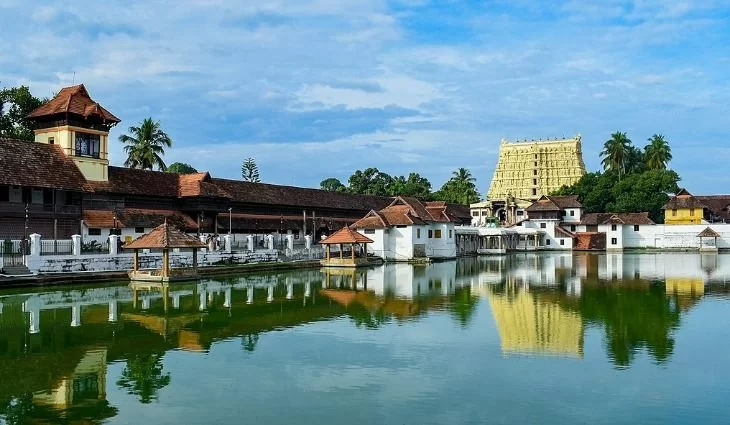
- The best exterior photographs are taken from the eastern entrance, where the seven-tiered Dravidian gopuram can be captured in full along with the temple's traditional stone architecture.
- The Padma Theertham temple tank provides one of the finest viewpoints, offering reflections of the towering gopuram and surrounding temple complex, particularly when the water is calm.
- Early morning light enhances the intricate carvings on the gopuram and creates softer shadows across the temple façade, while the golden light before sunset adds warmth to the granite structures.
- Photography and videography are strictly prohibited inside the temple complex, including the sanctum, mandapams, and inner courtyards. Visitors must comply with the temple's security regulations and deposit cameras and mobile phones where required.
- The temple experiences its largest crowds during Alpasi and Painkuni festivals, Vaikuntha Ekadashi, and daily morning darshan hours, making exterior viewpoints near the entrance busier than usual.
- Security screening and the temple's traditional dress code influence access, and visitors should allow additional time before reaching the main entrance where exterior photography is permitted.
- The narrow approach roads can become congested with pilgrims and vehicles, so the clearest views of the gopuram are usually available shortly after the temple opens or before evening worship begins.