Quick Facts About Kanakakkunnu Palace
Kanakakkunnu Palace, Thiruvananthapuram, Kerala Quick Facts
| Entry Fee | No entry fee to the palace grounds; charges may apply for special exhibitions or events |
| Timings | 10:00 AM–5:00 PM (palace interiors); palace grounds are generally accessible daily |
| Altitude (m) | Approximately 35 m above sea level |
| Ideal Visit Duration | 1–2 hours |
| Best Time of Day | Late afternoon or early evening for pleasant weather and garden walks |
| Crowd Level | Moderate; high during cultural festivals, exhibitions, and weekends |
| Distance from City Centre (km) | Approximately 3 km from Thiruvananthapuram city centre |
| Walking Difficulty | Easy |
| Parking Available | Yes, parking is available within the palace premises |
| Last Mile Access | Direct road access to the palace entrance |
| Suitable for Kids | Yes |
| Suitable for Seniors | Yes |
| Wheelchair Friendly | Partially; gardens are accessible, but some heritage sections may have steps |
Why Visit Kanakakkunnu Palace, Thiruvananthapuram, Kerala
Visitors come to Kanakakkunnu Palace to explore a heritage landmark surrounded by landscaped gardens and cultural venues in the heart of Thiruvananthapuram. It is a popular stop for those interested in architecture, public events, and leisurely walks within the city's museum precinct.
The on-ground atmosphere is relaxed and family-friendly, with open lawns, tree-lined pathways, and frequent cultural exhibitions, performances, and festivals held on the palace grounds. The setting offers a pleasant contrast to the busy streets nearby.
What makes Kanakakkunnu Palace distinct is its role as a living cultural venue rather than a conventional palace museum. Its blend of heritage architecture, public green spaces, and year-round cultural activities provides visitors with both historical context and a contemporary local experience.
History of Kanakakkunnu Palace, Thiruvananthapuram, Kerala
Kanakakkunnu Palace was built during the reign of Maharaja Sree Moolam Thirunal of the Kingdom of Travancore in the late 19th century. Constructed atop a hill in Thiruvananthapuram, it served as a venue for hosting royal guests and conducting ceremonial events.
Unlike the principal royal residences, Kanakakkunnu Palace was designed primarily for leisure, entertainment, and state receptions. Its architecture reflects a blend of traditional Kerala design with colonial influences characteristic of the Travancore period.
Today, Kanakakkunnu Palace is a protected heritage landmark managed by the Government of Kerala. It regularly hosts cultural festivals, exhibitions, and public events, preserving its historical association with the Travancore royal family while serving as a prominent cultural venue.
Best Time to Visit Kanakakkunnu Palace, Thiruvananthapuram, Kerala
Kanakakkunnu Palace is best visited during the cooler and relatively drier months, when visitors can comfortably explore the palace grounds, landscaped gardens, and open-air cultural venues alongside nearby heritage attractions.
- Ideal Months: November to February is the most suitable period for visiting, with pleasant weather for outdoor walks and cultural events.
- Weather Conditions: These months generally offer warm, comfortable days with lower humidity, making it enjoyable to spend time in the palace gardens and surrounding heritage precinct.
- Periods to Avoid: June to September brings heavy monsoon rainfall, which can limit outdoor exploration of the palace grounds and affect scheduled open-air events, although the palace remains accessible.
How to Reach Kanakakkunnu Palace, Thiruvananthapuram
- By Air: Thiruvananthapuram International Airport is the nearest airport, located about 7 km from Kanakakkunnu Palace. The airport is well connected to major domestic and international destinations. Taxis, app-based cabs, and auto-rickshaws provide convenient access to the palace.
- By Train: Thiruvananthapuram Central Railway Station is the nearest major railway station, approximately 3 km away. It has excellent rail connectivity with cities across India. Visitors can reach the palace within 10–15 minutes by taxi, auto-rickshaw, or city bus.
- By Road: Kanakakkunnu Palace is located on the Vellayambalam–Kowdiar Road, adjacent to Napier Museum and Thiruvananthapuram Zoo. It is easily accessible by KSRTC buses, private buses, taxis, and auto-rickshaws from all parts of the city. Parking is available within the palace grounds but may be limited during cultural festivals, exhibitions, and weekends.
What to Expect When You Visit Kanakakkunnu Palace, Thiruvananthapuram, Kerala
- Kanakakkunnu Palace is located in the heart of Thiruvananthapuram within a landscaped heritage complex, surrounded by gardens, open lawns, and cultural institutions, offering a peaceful setting despite its central location.
- The palace is primarily used as a venue for cultural events, exhibitions, and government-sponsored festivals rather than as a royal residence open for extensive interior tours. Access to certain sections may depend on ongoing programs or maintenance.
- Facilities include landscaped walking areas, seating spaces, public restrooms, and parking. Additional cafés, restaurants, and other visitor amenities are available in the nearby city area.
- The palace is easily accessible by road through taxis, auto-rickshaws, city buses, and private vehicles. Visitors can move comfortably around the grounds using paved pathways with minimal walking effort.
- The atmosphere is generally relaxed on regular days, attracting walkers, families, photographers, and tourists. Visitor numbers increase significantly during cultural festivals, art exhibitions, and evening events hosted at the venue.
- Photography is usually permitted in the outdoor areas, while access to indoor halls may be restricted during official functions or ticketed exhibitions.
- Visitors should expect the experience to focus on the palace's architecture, gardens, and cultural significance, with the availability of exhibitions and public events varying according to the local event calendar.
Important Visitor Information for Kanakakkunnu Palace, Thiruvananthapuram, Kerala
- The palace grounds attract the highest number of visitors during weekends, public holidays, and major cultural events such as the Nishagandhi Dance Festival, while weekday mornings are generally quieter.
- Morning hours are ideal for exploring the palace surroundings with fewer crowds, whereas evenings become livelier as visitors gather in the gardens and open-air venues.
- Thiruvananthapuram experiences a warm, humid climate throughout the year, with monsoon showers from June to September that can make outdoor areas wet and slippery.
- There is no formal dress code, but comfortable, modest clothing and suitable walking footwear are recommended for exploring the palace grounds and gardens.
- During cultural festivals and public events, parking areas and walkways can become congested, so visitors should allow additional time for entry and movement around the venue.
- Exercise caution on wet pathways and staircases after rainfall, and follow any temporary access restrictions during exhibitions or cultural performances.
Photography and Viewpoints at Kanakakkunnu Palace, Thiruvananthapuram, Kerala
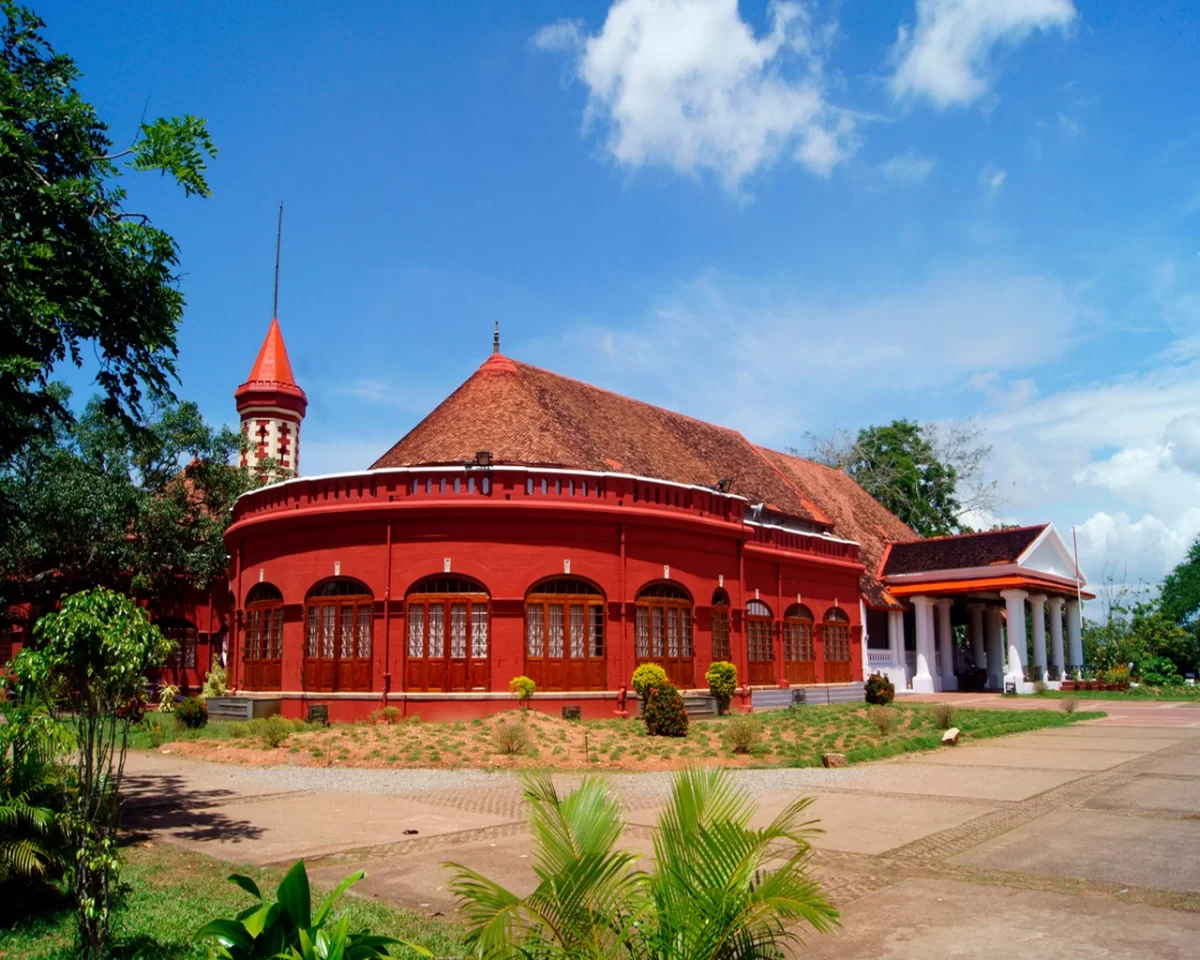
- The front lawn offers the best symmetrical view of Kanakakkunnu Palace, showcasing its traditional Kerala-style architecture, red-tiled roof, and broad entrance framed by landscaped gardens.
- Side pathways through the palace grounds provide attractive angles of the heritage building with mature trees, flowering gardens, and open green spaces surrounding the structure.
- Morning light evenly illuminates the palace façade and gardens, while the warm light before sunset enhances the wooden details and creates pleasing contrast across the lawns.
- Photography is generally permitted in the palace grounds and exterior areas, but access to interior halls may be restricted during exhibitions, cultural events, or official functions.
- The palace complex becomes especially busy during the Nishagandhi Dance Festival, cultural programs, weekends, and public holidays, making the main entrance and lawns more crowded.
- The spacious, level grounds provide multiple accessible viewpoints for photographing both the palace and its surrounding gardens without significant elevation changes.
- Decorative lighting during evening cultural events creates distinctive night photography opportunities, although temporary stages and event infrastructure may partially obscure the palace façade.