Best Places to Visit in Varkala
Varkala offers backwaters, hidden beaches, temples, islands, and peaceful coastal experiences along Kerala’s Arabian Sea coastline.
+91 9910402252
admin@chalbanjare.com


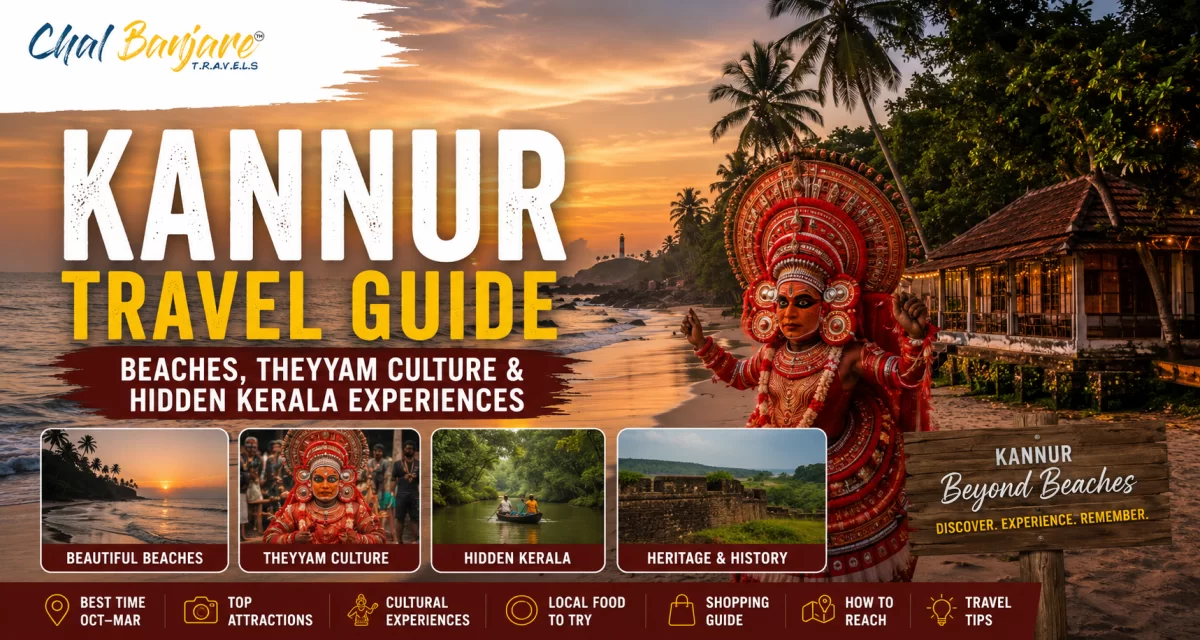
Kannur offers peaceful beaches, Theyyam rituals, colonial forts, local food, and hidden cultural experiences along Kerala’s Malabar coast.
Kannur is one of Kerala’s most underrated travel destinations because it combines peaceful beaches, strong cultural heritage, traditional rituals, colonial history, local food culture, and slow coastal life without the overwhelming crowds seen in places like Kochi, Munnar, or Alleppey. Located in northern Kerala along the Arabian Sea coastline, Kannur offers a more grounded and authentic Kerala experience that feels less commercialised and more connected to local traditions.
The destination is especially known for its clean beaches, Theyyam performances, handloom culture, historic forts, fishing villages, and quiet backwaters. Travellers who enjoy slow travel often appreciate Kannur because the atmosphere is calmer, roads are less crowded, and many experiences revolve around observing local life rather than rushing through tourist attractions. The region also works well for travellers interested in culture, photography, and peaceful coastal exploration.
Kannur is best suited for travellers who want peaceful beaches, local cultural depth, and a slower style of Kerala travel away from heavily commercial tourist crowds.
Kannur is best explored slowly because the destination focuses more on cultural experiences, beaches, village life, and relaxed sightseeing rather than fast-paced attraction hopping. Most travellers spend around 3 to 4 days here, which allows enough time to visit beaches, forts, backwaters, cultural spots, and nearby villages without rushing.
Travellers interested in Theyyam festivals, photography, local food, or slow coastal stays sometimes extend their trip further. Kannur is also commonly combined with nearby northern Kerala destinations such as Bekal, Wayanad, Kozhikode, or Thalassery for a broader Malabar coast experience.
| Trip Duration | Recommended Experiences | Ground Reality |
|---|---|---|
| 2 Days | Beaches, fort visit, local food, sunset exploration | Good for short coastal relaxation trips |
| 3–4 Days | Culture, beaches, Theyyam, village experiences | Most balanced option for first-time visitors |
| 5+ Days | Slow travel, photography, nearby destination exploration | Ideal for travellers wanting deeper cultural experiences |
Most first-time travellers enjoy Kannur best with a relaxed 3 to 4 day itinerary that balances beaches, cultural experiences, local food, and peaceful coastal exploration.
Kannur offers multiple travel styles depending on what travellers want from the destination. Some visitors come mainly for peaceful beaches and coastal relaxation, while others focus on Theyyam culture, local heritage, food experiences, and traditional Kerala village life. The destination is especially attractive for travellers who enjoy slower journeys instead of heavily commercial sightseeing schedules.
Beach-focused travellers usually spend more time around Payyambalam Beach, Muzhappilangad Drive-In Beach, and quiet coastal villages. Cultural travellers often plan their itinerary around Theyyam performances, forts, temples, and local art traditions. Slow-travel visitors typically combine beaches, cafés, local interactions, photography, and peaceful stays spread across different parts of Kannur district.
| Travel Style | Best For | Ground Reality |
|---|---|---|
| Beach Experiences | Relaxation, sunsets, coastal drives | Cleaner and quieter than many crowded beach towns |
| Cultural Experiences | Theyyam, forts, heritage, local traditions | Best explored with flexible timing and local guidance |
| Slow Travel Experiences | Photography, village life, peaceful stays | Ideal for travellers wanting calm and authentic Kerala experiences |
Travellers who combine beaches, cultural exploration, and slow local experiences usually enjoy Kannur the most because the destination naturally rewards relaxed and immersive travel.
Payyambalam Beach is one of the most popular and accessible beaches in Kannur, known for its long sandy shoreline, relaxed atmosphere, and beautiful Arabian Sea sunsets. Located close to Kannur town, the beach attracts both locals and travellers looking for peaceful evening walks, sea views, and a calm coastal environment without the overcrowded commercial feel found in many major beach destinations.
The beach is especially lively during evenings when families, local visitors, and tourists gather along the shoreline to enjoy cooler weather and sunset colours across the sea. Wide open spaces, lined walkways, coconut trees, and sea breeze make the area suitable for relaxed exploration and photography. Early mornings are quieter and better for travellers wanting peaceful beach time.
Payyambalam Beach is ideal for travellers who want a simple and peaceful Kerala beach experience with sunset views, local atmosphere, and relaxed coastal scenery.
Muzhappilangad Drive-In Beach is one of Kannur’s most unique attractions because it allows vehicles to drive directly along the beach shoreline. Stretching across a long section of compact sand, this beach is considered one of the longest drive-in beaches in India and offers a very different coastal experience compared to regular walking-only beaches.
The beach is especially popular among road trip travellers, bikers, photographers, and families who enjoy scenic coastal drives beside the Arabian Sea. The surrounding landscape includes coconut groves, rocky sections, fishing activity, and open sea views. Early mornings and late afternoons are the best times for driving because the weather feels cooler and the lighting becomes more scenic for photography.
Muzhappilangad Beach is best suited for travellers who enjoy road journeys, open coastal landscapes, and unique outdoor experiences beyond regular beach sightseeing.
Meenkunnu Beach is one of Kannur’s quieter and lesser-commercialised beaches, known for its peaceful atmosphere, natural coastal beauty, and uncrowded shoreline. Located slightly away from busy urban areas, the beach is popular among travellers looking for calm surroundings, photography opportunities, and slow coastal experiences without heavy tourist activity.
The beach landscape includes soft sands, coconut trees, rocky coastal sections, and open sea views that become especially scenic during sunrise and sunset hours. Because of its quieter atmosphere, Meenkunnu often feels more untouched compared to larger Kerala beaches. The route leading toward the beach also passes through small village roads and greenery, adding to the peaceful travel experience.
Travellers searching for quieter beaches and hidden coastal photography spots often find Meenkunnu Beach one of the most peaceful seaside experiences in Kannur.
Theyyam is one of the most powerful cultural experiences in Kannur and a major reason many travellers visit northern Kerala during the festival season. This traditional ritual performance combines dance, music, elaborate costumes, face painting, spirituality, and local folklore into a dramatic temple ceremony deeply connected to Malabar culture. Unlike stage performances designed for tourists, Theyyam remains a living ritual practiced inside village temples and sacred community spaces.
Performances usually begin late at night or early morning and can continue for several hours depending on the ritual and temple tradition. The atmosphere around the temple becomes intense and spiritual with drum performances, fire rituals, chanting, and large local gatherings. Watching Theyyam closely allows travellers to experience a side of Kerala culture that feels deeply rooted in local belief systems and community identity.
Watching Theyyam in Kannur is not just a cultural activity but a deeply immersive experience that connects travellers with the spiritual and artistic traditions of the Malabar region.
Kannur offers one of the richest cultural landscapes in Kerala because the region still preserves strong local traditions, folk practices, village rituals, and community-based customs connected to Malabar history. Beyond beaches and sightseeing, travellers often discover that Kannur’s true identity lies in its traditional art forms, temple festivals, local food culture, martial arts heritage, and everyday village life.
Theyyam is only one part of this broader cultural environment. Travellers exploring Kannur slowly can observe traditional wooden homes, local weaving industries, temple architecture, fishing communities, and regional food practices that remain deeply connected to the area’s historical roots. Compared to highly commercial tourist cities, Kannur still feels culturally grounded and authentic.
Travellers interested in authentic regional culture often find Kannur far more rewarding than heavily commercial tourist destinations because the traditions here remain active and closely connected to daily life.
Village temples in Kannur become highly active during the Theyyam and festival season, creating some of the most memorable cultural travel experiences in Kerala. These temples are usually located inside small rural communities surrounded by coconut groves, village roads, and traditional homes, giving the entire journey a strong local atmosphere.
Festival days often begin before sunrise and attract local devotees, performers, musicians, and visitors from nearby villages. Travellers visiting during the season should expect crowded temple surroundings, traditional rituals, loud percussion instruments, and long performance schedules that may continue through the night. The experience feels far more intimate and community-driven than large commercial festivals.
Visiting Kannur’s village temples during Theyyam season gives travellers one of Kerala’s most authentic cultural experiences, where ritual traditions, local communities, and folk spirituality come together in a powerful atmosphere.
St Angelo Fort is one of the most important historical attractions in Kannur and a major landmark reflecting the region’s colonial past. Built by the Portuguese in the 16th century and later controlled by the Dutch and British, the fort stands along the Arabian Sea coastline with massive laterite walls, sea-facing bastions, and wide panoramic views of the surrounding coast.
The atmosphere inside the fort feels peaceful and scenic rather than crowded, making it suitable for history lovers, photographers, and travellers interested in heritage exploration. Walking through the fort allows visitors to observe old cannons, coastal defence structures, stone pathways, and viewpoints overlooking fishing boats and the Arabian Sea. Early mornings and evenings are especially pleasant because the sea breeze keeps the area cooler.
St Angelo Fort combines history, sea views, and colonial architecture, making it one of the most rewarding heritage experiences for travellers visiting Kannur.
Arakkal Museum offers insight into the royal history and cultural heritage of the Arakkal family, the only Muslim royal family known to have ruled parts of Kerala. Located inside a section of the historic Arakkal Palace complex, the museum showcases artefacts, royal belongings, documents, weapons, furniture, and objects connected to Malabar’s political and maritime history.
The museum experience is more intimate and historically focused compared to larger city museums, making it suitable for travellers interested in understanding Kannur’s regional identity and coastal trade connections. Visitors can observe traditional architecture, old interiors, and historical exhibits that reflect the cultural diversity of northern Kerala and its long relationship with Arabian trade routes.
Arakkal Museum adds cultural depth to a Kannur itinerary by showcasing the royal, political, and maritime history that shaped the Malabar coast over centuries.
Kannur’s coastal belt includes old lighthouse areas and scenic viewpoints that combine sea views, colonial surroundings, and peaceful coastal landscapes. These locations are less commercialised compared to famous tourist lighthouses in Kerala, which allows travellers to enjoy a quieter atmosphere with uninterrupted Arabian Sea views and open coastal scenery.
The surrounding areas often include fishing villages, rocky shorelines, old structures, coconut trees, and traditional coastal roads that create excellent conditions for photography and relaxed exploration. Sunrise and sunset hours are especially beautiful because the changing light enhances the sea views and historic surroundings. Many travellers combine lighthouse viewpoints with nearby beaches and fort visits during the same route.
Kannur’s coastal heritage viewpoints are ideal for travellers who enjoy combining history, sea landscapes, and peaceful photography experiences within a relaxed coastal setting.
One of the most rewarding parts of travelling through Kannur is exploring its quiet fishing villages and lesser-known coastal roads that remain untouched by large-scale tourism. Unlike heavily commercial beach destinations, many coastal areas around Kannur still preserve traditional village life where fishing activity, coconut farming, and local community culture continue at a relaxed pace.
Driving or riding through these coastal routes allows travellers to experience narrow roads lined with coconut trees, colourful fishing boats, small local markets, and peaceful sea-facing villages. The atmosphere feels especially authentic during early mornings when fishermen return from the sea and village life slowly becomes active. These hidden coastal stretches are ideal for travellers who enjoy discovering places beyond standard tourist routes.
Travellers who enjoy peaceful exploration and local coastal culture often find Kannur’s hidden village roads more memorable than mainstream tourist attractions.
Beyond its beaches, Kannur also offers calm backwater landscapes, mangrove regions, and countryside scenery that create excellent opportunities for slow nature-focused travel. These quieter areas are less commercialised than Kerala’s famous houseboat regions, making the experience feel more relaxed and locally connected.
Travellers exploring the rural side of Kannur often come across small river channels, coconut plantations, village bridges, paddy fields, and peaceful waterways surrounded by greenery. Boat rides through mangrove areas provide scenic views of tropical vegetation and local village life, while countryside roads offer calm landscapes ideal for photography and peaceful exploration.
Kannur’s backwaters and countryside experiences are best enjoyed slowly, allowing travellers to appreciate the calm landscapes and everyday rhythm of rural northern Kerala.
Kannur is one of the best places in Kerala for travellers interested in slow travel because the destination naturally encourages longer stays, local interaction, and peaceful exploration instead of rushed sightseeing. Village homestays are especially popular among travellers wanting a more personal and authentic experience connected to local food, culture, and everyday life.
Many homestays are located near beaches, backwaters, or village surroundings where guests can experience traditional Kerala hospitality, home-cooked Malabar meals, and quieter living environments. Local cafés and small eateries in Kannur focus more on regional food culture and relaxed atmosphere rather than tourist-heavy nightlife or commercial dining scenes. This makes the destination ideal for travellers wanting meaningful and slower travel experiences.
Travellers looking for authentic local experiences and peaceful coastal living often find Kannur one of Kerala’s most rewarding destinations for slow and meaningful travel.
Kannur is one of the best places in Kerala to experience authentic Malabar cuisine, which is known for its rich spices, coastal flavours, seafood dishes, and strong Arab-influenced food traditions. Unlike generic tourist restaurants, many eateries in Kannur still serve locally prepared dishes using traditional recipes that reflect the region’s cultural history and coastal lifestyle.
Malabar biryani is one of the most famous food experiences in Kannur, especially because of its lighter fragrant rice, slow-cooked meat preparation, and unique spice balance. Seafood is also an important part of the local cuisine, with fresh fish, prawns, mussels, squid, and crab commonly available across restaurants and coastal eateries. Coconut, curry leaves, and black pepper remain central ingredients in many dishes.
Travellers interested in regional food culture often find Kannur especially memorable because the cuisine remains deeply connected to local traditions and coastal life.
Kannur’s tea shops and bakery culture form an important part of everyday local life and offer travellers a more authentic social experience than modern tourist cafés alone. Small roadside tea stalls, traditional bakeries, and casual snack shops are common throughout the town and villages, creating relaxed spaces where people gather throughout the day.
Travellers exploring Kannur slowly often stop at local tea shops for Kerala-style chai, banana snacks, pazham pori, cutlets, puffs, and freshly baked items. Compared to metro-city café culture, Kannur’s café scene feels quieter and more community-oriented. In recent years, modern cafés have also started appearing in urban areas, blending coastal atmosphere with local food influences and relaxed interiors.
Kannur’s tea shops and café culture are best experienced slowly, allowing travellers to enjoy the relaxed rhythm of local conversations, snacks, and coastal town life.
Traditional Kerala meals in Kannur are deeply connected to local village culture and are often served in simple restaurants, family-run eateries, and countryside food spaces rather than luxury dining environments. Meals usually include rice, fish curry, vegetable preparations, pickles, coconut-based dishes, and locally prepared seafood reflecting the flavours of northern Kerala.
Village food experiences become especially interesting when travellers explore traditional toddy shops and small local dining spots where food is prepared in a highly regional style. These places are known for spicy seafood dishes, tapioca combinations, fried fish, and rustic cooking methods that feel very different from commercial restaurant chains. The atmosphere remains informal, local, and strongly connected to Kannur’s coastal identity.
Travellers wanting authentic Malabar flavours and local culinary experiences usually enjoy Kannur most when they explore beyond tourist restaurants and try village-style food culture.
Kannur offers some of the most peaceful coastal photography experiences in Kerala because many of its beaches remain less commercialised and less crowded than popular tourist hubs. The Arabian Sea coastline around Kannur becomes especially scenic during sunset when golden light spreads across the sea, fishing boats, coconut trees, and long sandy shorelines.
Beaches such as Payyambalam, Meenkunnu, and Muzhappilangad are particularly popular among photographers because they provide wide open coastal views and quieter surroundings for capturing sunsets and natural landscapes. Evening hours usually create softer lighting conditions and cooler weather, making beach walks and photography more comfortable than daytime exploration.
Travellers interested in peaceful coastal photography often find Kannur highly rewarding because of its quiet beaches, soft evening light, and naturally scenic Arabian Sea landscapes.
Beyond beaches, Kannur’s countryside landscapes provide excellent opportunities for photography focused on village life, tropical scenery, and Kerala’s coastal environment. Coconut groves, backwaters, paddy fields, fishing villages, and quiet rural roads create visually rich landscapes that feel more authentic and less urbanised than many commercial tourist destinations.
Travellers exploring the interiors of Kannur often discover peaceful canals, narrow roads lined with palm trees, traditional homes, and small waterways reflecting the surrounding greenery. Early morning and late afternoon are usually the best times for landscape photography because the softer light enhances textures, colours, and reflections across the countryside.
Kannur’s rural landscapes are best explored slowly because many of the region’s most beautiful photography opportunities appear naturally along village roads and peaceful backwater routes.
Theyyam photography is one of Kannur’s most visually powerful cultural experiences because the performances involve elaborate costumes, detailed face painting, ritual movement, fire elements, and dramatic temple environments. During the Theyyam season, photographers from across India visit Kannur to document the intense visual identity of these traditional Malabar ritual performances.
Photographing Theyyam requires patience and respectful behaviour because the performances are deeply spiritual and community-oriented rather than commercial stage shows. The strongest photography moments often happen during preparation rituals, costume detailing, fire sequences, and emotional interactions between performers and local devotees. Lighting conditions can vary significantly because many performances happen at night or before sunrise.
For photographers interested in culture and storytelling, Kannur’s Theyyam traditions offer one of the most unique and emotionally powerful visual experiences anywhere in Kerala.
Bekal is one of the most popular day trip destinations from Kannur because it combines coastal road journeys, beach landscapes, and one of Kerala’s most impressive seaside forts. Located further north along the Malabar coast, the route toward Bekal passes through scenic coastal highways, fishing villages, coconut groves, and peaceful Arabian Sea viewpoints that make the journey itself highly enjoyable.
The main attraction is Bekal Fort, a massive historic structure built beside the sea with panoramic coastal views, stone pathways, observation points, and landscaped surroundings. Travellers often combine the fort visit with nearby beaches and sunset photography sessions because the open coastline creates excellent scenic conditions during evening hours.
Bekal works exceptionally well as a day trip from Kannur because it combines heritage, beaches, and one of the most scenic coastal driving routes in northern Kerala.
Wayanad provides a completely different experience from Kannur’s coastal atmosphere and is one of the best mountain getaway options for travellers wanting forests, waterfalls, plantations, and cooler hill weather. The drive from Kannur toward Wayanad passes through changing landscapes that gradually transition from coastal plains into winding forest roads and elevated mountain terrain.
Travellers visiting Wayanad from Kannur often explore tea plantations, viewpoints, waterfalls, wildlife zones, and forest areas while enjoying the cooler climate compared to the humid coastline. The region is especially attractive for nature lovers, road trip travellers, photographers, and people wanting a combination of Kerala beaches and hill stations within the same itinerary.
Wayanad adds natural diversity to a Kannur itinerary by combining forests, mountains, and cooler landscapes with the relaxed coastal atmosphere of northern Kerala.
Kasaragod is another rewarding day trip option from Kannur, especially for travellers interested in quieter beaches, backwaters, forts, and Malabar heritage experiences. The district remains less commercialised than many Kerala tourist regions, which allows visitors to explore peaceful coastal landscapes and cultural sites at a slower pace.
The route toward Kasaragod includes scenic coastal stretches, village landscapes, and backwater areas that reflect the broader character of northern Kerala. Along with beaches and waterways, travellers can also explore heritage structures, traditional communities, and lesser-known historical spots connected to the Malabar coast’s trading and cultural history.
Kasaragod complements Kannur well by offering peaceful coastal scenery, heritage experiences, and a slower style of travel deeply connected to northern Kerala’s Malabar identity.
Winter is the best time to visit Kannur because the weather becomes more comfortable for beach visits, sightseeing, cultural exploration, and road trips across the Malabar coast. From November to February, humidity levels feel lower compared to summer, and outdoor activities such as fort visits, Theyyam performances, photography, and beach walks become much more enjoyable.
This season is especially popular among travellers combining beaches with cultural experiences because many Theyyam festivals also take place during these months. Clear skies, softer sunlight, and calmer evenings create excellent conditions for sunset photography and relaxed coastal travel. Winter is also the most comfortable season for exploring nearby destinations such as Bekal and Wayanad.
Travellers looking for the most balanced Kannur experience with pleasant weather, beaches, and cultural activities usually prefer visiting during the winter season.
Monsoon transforms Kannur into a lush coastal landscape filled with dense greenery, dramatic sea views, rain-covered roads, and powerful Arabian Sea waves. From June to September, the entire region feels more atmospheric and visually intense, especially around beaches, village roads, and backwater areas. The rain enhances the beauty of coconut groves and countryside scenery, making Kannur attractive for slow travel and photography.
However, monsoon travel also requires flexibility because heavy rainfall can affect outdoor plans and beach movement. Sea conditions become rougher, and certain coastal activities may not be suitable during strong rain periods. Travellers should prepare for wet weather, slower movement, and changing light conditions while exploring the region.
Monsoon is best for travellers who enjoy atmospheric landscapes, tropical rain scenery, and peaceful slow travel rather than beach-focused activity-heavy itineraries.
Summer in Kannur, mainly from March to May, brings warmer temperatures and higher humidity, especially during afternoon hours. While daytime heat can feel intense near the coast, the destination still works well for travellers looking for budget-friendly stays, quieter beaches, and relaxed slow-travel experiences without peak-season crowds.
Morning and evening hours remain the best time for beach walks, photography, café visits, and sightseeing because the weather becomes comparatively more comfortable. Summer sunsets across Kannur’s beaches continue to remain visually beautiful, and hotel prices are often lower than winter season rates, making the destination attractive for budget-conscious travellers.
Summer works best for travellers who prioritise quieter beaches, flexible itineraries, and budget-friendly coastal travel experiences in Kannur.
Travellers visiting Kannur mainly for Theyyam should plan the trip carefully around the seasonal performance calendar because Theyyam ceremonies do not happen daily throughout the year. Most performances take place between October and May, with peak activity usually occurring from December to March across village temples and local shrines in Kannur and nearby Malabar regions.
Since performances are organised according to temple-specific schedules, travellers should research festival dates in advance instead of expecting spontaneous performances everywhere. Many rituals begin late at night or before sunrise, which means flexible travel timing and early movement are often necessary. Rural temple locations may also require private transport or local guidance because some venues are located away from main town areas.
Travellers who plan Kannur around the Theyyam calendar usually enjoy a far deeper cultural experience than those visiting without understanding the festival timings and local traditions.
Kannur remains warm and humid for most of the year because of its coastal location, so comfortable clothing and weather-friendly packing are important for a smooth trip. Lightweight cotton clothes work best for beach visits, village exploration, fort walks, and road travel because the weather can feel sticky during afternoons, especially in summer and monsoon seasons.
Travellers spending time around beaches, backwaters, villages, and rural temple areas should also prepare for strong sunlight and occasional mosquitoes, particularly during evenings. Carrying simple essentials such as sunscreen, sunglasses, caps, and mosquito repellent can make outdoor experiences far more comfortable, especially for long beach walks or countryside exploration.
Simple practical packing helps travellers enjoy Kannur’s beaches, villages, and cultural sites comfortably without struggling with the region’s coastal humidity and changing weather conditions.
Kannur offers multiple stay experiences depending on travel style, budget, and the type of atmosphere travellers want during the trip. Beach resorts are ideal for travellers looking for sea views, relaxed coastal stays, and resort-style comfort, while homestays provide more local interaction and a slower, culturally connected experience.
Heritage stays are becoming increasingly popular among travellers interested in traditional Kerala architecture, old family homes, and culturally immersive environments. Many of these properties preserve local design elements and offer quieter surroundings away from busy tourist areas. Choosing the right accommodation type can significantly shape the overall Kannur experience.
| Stay Type | Best For | Ground Reality |
|---|---|---|
| Beach Resorts | Relaxation, sea views, family vacations | Comfortable stays with easier beach access and resort facilities |
| Homestays | Slow travel, local interaction, cultural experiences | More personal atmosphere with authentic local hospitality |
| Heritage Stays | Architecture, culture, peaceful retreats | Traditional environments with quieter and more immersive surroundings |
Travellers who choose accommodations based on their travel style usually enjoy Kannur far more because the destination naturally supports slow, peaceful, and culturally immersive experiences.
For first-time travellers, Kannur works best as part of a broader northern Kerala route that combines beaches, cultural experiences, forts, village landscapes, and nearby hill destinations. Unlike fast-paced tourist cities, Kannur rewards slower exploration, so travellers should avoid overcrowding the itinerary with too many locations in a short time.
A balanced route usually combines Kannur’s beaches and Theyyam culture with nearby destinations such as Bekal, Kasaragod, Wayanad, or Kozhikode. Coastal road trips along the Malabar coastline are especially scenic because the route passes through fishing villages, coconut groves, sea-facing roads, and quieter countryside landscapes. Travellers interested in culture and photography often prefer spending more time in smaller villages rather than rushing between attractions.
| Trip Duration | Recommended Route Combination | Ground Reality |
|---|---|---|
| 2–3 Days | Kannur + Bekal | Good for beaches, forts, sunsets, and relaxed coastal travel |
| 4–5 Days | Kannur + Bekal + Kasaragod | Balanced mix of beaches, heritage, and cultural exploration |
| 6+ Days | Kannur + Wayanad + Bekal + Kozhikode | Ideal for slow travel, photography, mountains, and Malabar culture |
Most first-time travellers enjoy Kannur more when they combine beaches, village experiences, and cultural exploration within a relaxed Kerala coastal itinerary.
Kannur appeals to different types of travellers because the destination offers peaceful beaches, powerful cultural traditions, and lesser-known Kerala experiences that feel far more authentic than mainstream tourist circuits. Choosing the right travel style before arriving helps travellers decide how much time to spend on beaches, Theyyam experiences, countryside exploration, and local food culture.
Beach-focused travellers usually spend more time near Payyambalam and Muzhappilangad, while culture-focused travellers plan their trip around Theyyam performances, forts, local temples, and heritage attractions. Slow travellers often explore hidden coastal roads, fishing villages, homestays, tea shops, and countryside landscapes that reveal the quieter side of Malabar life.
| Travel Style | Best For | Ground Reality |
|---|---|---|
| Beach Experiences | Sunsets, coastal drives, peaceful relaxation | Quieter and cleaner than heavily commercial beach towns |
| Cultural Experiences | Theyyam, heritage, local traditions | Best explored during festival season with flexible schedules |
| Hidden Kerala Experiences | Villages, slow travel, photography | Ideal for travellers seeking authentic local atmosphere |
Travellers who combine beaches, culture, and hidden local experiences usually discover the most authentic and memorable side of Kannur.
Before planning a Kannur trip, travellers should understand that the destination is best experienced slowly through beaches, culture, village exploration, and local food rather than rushed sightseeing schedules. The overall experience improves significantly when travellers plan around season, Theyyam timing, and realistic travel pace.
Kannur remains less commercialised than many Kerala tourist destinations, which is one of its biggest strengths. However, this also means some experiences such as Theyyam performances, hidden village exploration, and rural stays may require advance planning and flexible movement. Choosing the right season and accommodation style helps create a smoother and more immersive travel experience.
With the right season, relaxed itinerary, and interest in local culture, Kannur becomes one of Kerala’s most rewarding destinations for beaches, heritage, photography, and authentic Malabar travel experiences.


Get customized Kerala tour planning designed around monsoon seasons, backwater cruising routes, hill travel timing, and comfortable coastal stays. Whether you are visiting for houseboat experiences, beach relaxation, wildlife reserves, cultural heritage,
⚡ Quick Response | 💰 Free consultation | 🕒 24×7 expert support