Quick Facts About Shree Chandika Durgaaparameshwari Temple
Shree Chandika Durgaaparameshwari Temple Quick Facts
| Entry Fee | No entry fee |
| Timings | Generally open from 6:00 AM–12:30 PM and 4:30 PM–8:00 PM daily. |
| Altitude (m) | Approximately 12 m above sea level |
| Ideal Visit Duration | 45 minutes–1.5 hours |
| Best Time of Day | Morning for peaceful darshan or evening during temple aarti. |
| Crowd Level | Moderate; higher during Navaratri, Fridays, weekends, and special temple festivals. |
| Distance from City Centre (km) | Approximately 32 km from Udupi and 5 km from Kundapura. |
| Walking Difficulty | Easy |
| Parking Available | Yes, ample parking facilities are available within the temple premises. |
| Last Mile Access | Located directly on NH-66 at Kumbhashi with direct road access to the temple entrance. |
| Suitable for Kids | Yes |
| Suitable for Seniors | Yes |
| Wheelchair Friendly | Partially; major temple areas are accessible, though some sections may have steps. |
Why Visit Shree Chandika Durgaaparameshwari Temple Karnataka
Visitors come to Shree Chandika Durgaaparameshwari Temple to worship Goddess Durgaaparameshwari and experience a revered spiritual site deeply connected to local religious traditions.
The atmosphere is devotional and serene, with daily prayers, traditional rituals, and festive celebrations attracting devotees and visitors throughout the year.
What makes Shree Chandika Durgaaparameshwari Temple distinct is its strong association with Shakti worship, traditional coastal Karnataka temple customs, and its continuing role as an important center of faith for the surrounding community.
History of Shree Chandika Durgaaparameshwari Temple
Shree Chandika Durgaaparameshwari Temple is a revered Hindu shrine dedicated to Goddess Durgaaparameshwari, a manifestation of the Divine Mother worshipped across coastal Karnataka. The temple has long served as an important center of Shakti worship, reflecting the region's deep-rooted traditions of goddess devotion.
For generations, the temple has played a significant role in the religious and cultural life of local communities, with devotees gathering to participate in rituals, annual festivals, and traditional ceremonies dedicated to the goddess. The shrine continues to preserve customs that have been passed down through centuries of worship.
Today, Shree Chandika Durgaaparameshwari Temple remains an active place of devotion and a notable spiritual landmark, offering visitors an opportunity to experience the religious heritage and cultural traditions of coastal Karnataka.
Best Time to Visit Shree Chandika Durgaaparameshwari Temple
Shree Chandika Durgaaparameshwari Temple is best visited from October to March when the weather in coastal Karnataka is pleasant, making it comfortable for darshan, spiritual activities, and exploring the temple surroundings.
- Ideal months: October to March is the most favorable period to visit Shree Chandika Durgaaparameshwari Temple, offering comfortable temperatures and enjoyable conditions for pilgrimage and sightseeing.
- Weather conditions during the best season: Pleasant mornings, moderate daytime temperatures, lower humidity, and clear weather provide ideal conditions for attending temple rituals, festivals, and spending time within the peaceful temple complex.
- Periods to avoid: June to September brings heavy monsoon rainfall to the coastal region, which can affect travel and outdoor activities. April and May are generally warmer and more humid, making daytime visits less comfortable. Navratri and major temple festivals attract significantly larger crowds and longer waiting times for darshan.
How to Reach Shree Chandika Durgaaparameshwari Temple
- Nearest Airport: Mangalore International Airport, located approximately 60 km from Shree Chandika Durgaaparameshwari Temple, is the nearest airport. Taxis and private vehicles are readily available for the onward journey to Udupi.
- Nearest Railway Station: Udupi Railway Station, about 5 km away, is the nearest railway station and offers regular connectivity along the Konkan Railway route.
- Road Access and Last-Mile Connectivity: Shree Chandika Durgaaparameshwari Temple is situated in the Udupi region and is well connected by road from Udupi city and nearby towns. Visitors can reach the temple by private vehicle, taxi, auto-rickshaw, local bus, or local transport services. The final approach is fully motorable, with parking facilities available near the temple premises, followed by a short walk to the shrine. The temple remains accessible throughout the year, though visitor numbers increase during Navratri and other major religious festivals.
What to Expect When You Visit Shree Chandika Durgaaparameshwari Temple
- Environment and Surroundings: Shree Chandika Durgaaparameshwari Temple is a revered Hindu shrine dedicated to Goddess Durgaaparameshwari. Visitors can expect a traditional temple setting with a strong devotional atmosphere, daily worship rituals, and surroundings that reflect local religious traditions and culture.
- Facilities and Amenities: Basic facilities such as shoe storage areas, drinking water points, prasadam counters, and shops selling flowers and religious offerings are generally available near the temple. Additional restaurants and visitor services can be found in the surrounding locality.
- Accessibility and Movement: The temple is accessible by road and can be explored comfortably on foot through courtyards, prayer halls, and designated worship areas. Movement within the temple premises is generally easy and suitable for most visitors.
- Visitor Conditions: Devotees visit throughout the year for darshan, special pujas, and religious ceremonies. Crowd levels increase significantly during Navratri, Fridays, annual temple festivals, and other important Hindu observances, when waiting times and temple activity are generally higher. Visitors are expected to follow temple customs and maintain respectful conduct within the premises.
Important Visitor Information for Shree Chandika Durgaaparameshwari Temple
- Shree Chandika Durgaaparameshwari Temple experiences its highest devotee footfall during Navratri, Durga Puja celebrations, Fridays, weekends, and major Hindu festivals.
- Early morning hours generally offer a peaceful atmosphere for darshan and worship, while evenings and festival periods tend to attract larger crowds.
- The temple remains accessible throughout the year, though monsoon rains may occasionally affect movement around the temple premises and surrounding pathways.
- Modest attire is recommended within the temple premises, and footwear must be removed before entering the shrine area.
- Visitors should follow temple customs, maintain decorum during prayers and rituals, respect queue arrangements, and observe any photography restrictions within the temple complex.
Photography and Viewpoints at Shree Chandika Durgaaparameshwari Temple
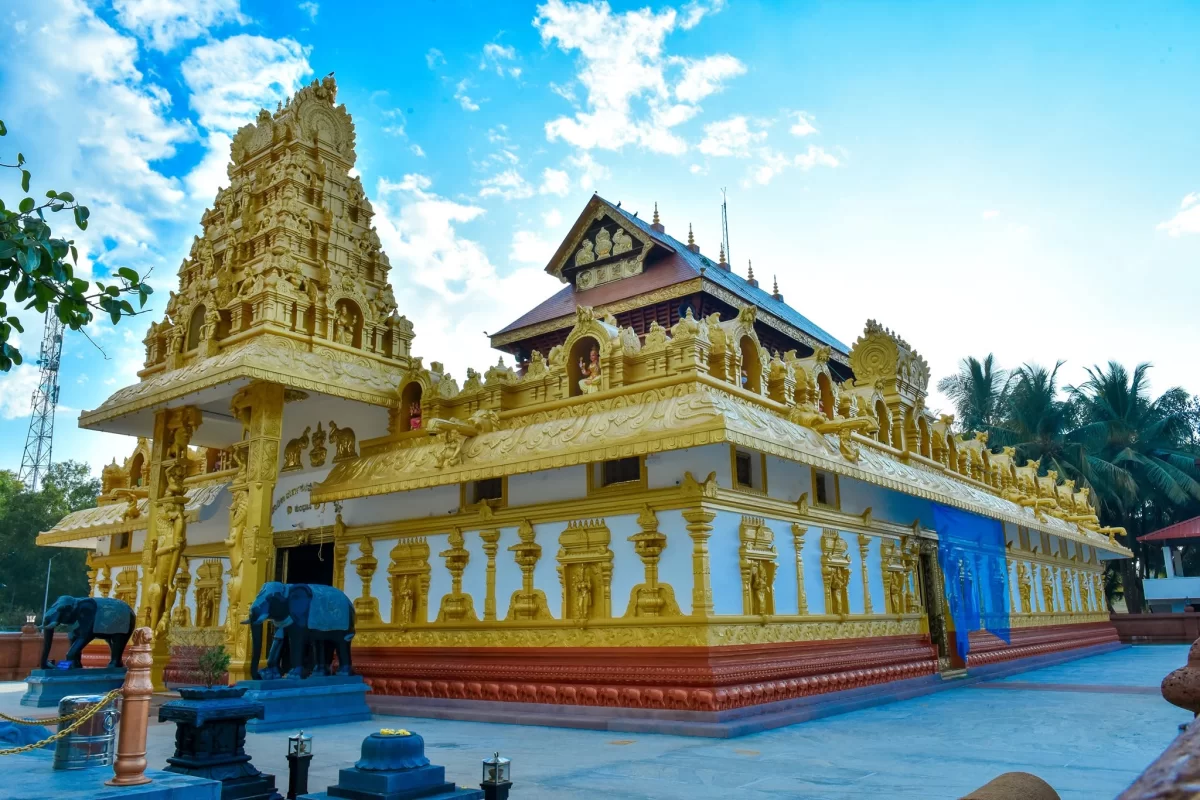
- The best photographs are captured from the temple entrance and courtyard, where the traditional coastal Karnataka temple architecture, colorful gopuram, and sacred surroundings can be framed together.
- Early morning provides soft natural light and fewer devotees, making it ideal for photographing the temple exterior, shrines, and architectural details before peak worship hours.
- The temple's ornate carvings, decorative pillars, vibrant sculptures, and religious motifs are best photographed during daylight hours when details and colors are clearly visible.
- The surrounding temple grounds offer multiple angles for capturing the shrine's spiritual atmosphere and traditional architectural features.
- Photography is generally permitted in the exterior areas of the temple complex, but photography inside the sanctum sanctorum and during religious rituals may be restricted. Visitors should follow instructions issued by temple authorities.
- Navratri, annual temple festivals, weekends, and major religious celebrations attract larger crowds, which can affect access to preferred photography locations within the premises.
- Tripods, commercial photography equipment, videography setups, and drone operations may require prior permission and may be restricted within the temple complex.