Quick Facts About Jawaharlal Nehru Planetarium Bangalore
| Entry Fee | Varies by show and age group |
| Timings | 09:00 - 17:00 |
| Altitude (m) | 920 |
| Ideal Visit Duration (hrs) | 2 |
| Best Time of Day | Morning / Afternoon |
| Crowd Level | Moderate / High |
| Distance from City Centre (km) | 1 |
| Walking Difficulty | Easy |
| Parking Available | Yes |
| Last Mile Access | Road |
| Suitable for Kids | Yes |
| Suitable for Seniors | Yes |
| Wheelchair Friendly | No |
Why Visit Jawaharlal Nehru Planetarium, Bengaluru
Visitors come to Jawaharlal Nehru Planetarium for its science-focused sky theatre shows, astronomy programmes, and interactive science exhibits that explain space, planets, and celestial phenomena in a structured, educational format.
The on-ground atmosphere is calm and organised, with indoor galleries, a controlled theatre environment, and a steady flow of families, students, and school groups attending scheduled shows.
What sets this place apart is its combination of a full-scale digital planetarium dome, curated science exhibitions, and location within the Cubbon Park area, making it a structured indoor learning stop rather than a casual walk-through attraction.
History of Jawaharlal Nehru Planetarium, Bengaluru
Jawaharlal Nehru Planetarium, Bengaluru, was established in 1989 and inaugurated by former Prime Minister Rajiv Gandhi as a public science education facility.
It was developed and is operated by the Bangalore City Corporation (Bruhat Bengaluru Mahanagara Palike) with the objective of promoting astronomy and scientific awareness through structured educational programmes and planetarium shows.
Best Time to Visit Jawaharlal Nehru Planetarium, Bengaluru
Jawaharlal Nehru Planetarium is suitable for visits throughout the year, as it is a fully indoor attraction, but overall experience is influenced by school calendars, crowd density, and city travel conditions.
- Ideal months: November to February and June to September, when school schedules are more predictable and weekday visits are quieter.
- Weather conditions during the best season: Cooler months improve travel comfort to the venue, and monsoon months can affect road access due to traffic congestion and waterlogging in nearby areas.
- Periods to avoid: April–May school holidays and weekends with scheduled group bookings, as shows often sell out early and waiting times increase.
How to Reach Jawaharlal Nehru Planetarium, Bengaluru
- Nearest airport: Kempegowda International Airport (BLR), approximately 34 km away; taxi and app-based cab services provide direct access, with travel time varying widely due to city traffic.
- Nearest railway station: Bengaluru City Junction (KSR Bengaluru), about 4 km from the planetarium; suburban rail and metro connections can be combined with short auto-rickshaw or cab rides for last-mile access.
- Road access and last-mile connectivity: Located on Sri T. Chowdaiah Road near Indira Gandhi Musical Fountain Park and High Grounds; well connected by BMTC buses, with auto-rickshaws and cabs available for final access. Traffic congestion is common during office hours and event days in the surrounding area.
What to Expect When You Visit Jawaharlal Nehru Planetarium, Bengaluru
- Environment and surroundings: The planetarium is set within a landscaped campus near Indira Gandhi Musical Fountain Park and High Grounds, surrounded by government buildings and arterial roads, with noticeable city traffic noise outside the premises.
- Facilities and amenities: Indoor dome theatre for sky shows, exhibition halls, basic seating areas, ticket counters, restrooms, and limited refreshment stalls; facilities are functional rather than leisure-oriented.
- Accessibility and movement: Mostly paved walkways and indoor access, but movement depends on scheduled show timings; queues form before shows, and entry is generally controlled in batches.
- Typical visitor behavior and conditions: Regular school groups, families, and student visitors are common; weekends and holidays see higher crowd density, especially around show hours, with quieter periods between scheduled programs.
Important Visitor Information for Jawaharlal Nehru Planetarium, Bengaluru
- Crowd and weather notes: Indoor facilities mean visits are not affected by rain or heat, but monsoon months still see heavy footfall due to school outings and academic groups.
- Peak and quiet visiting hours: Peak crowding occurs during scheduled show timings, especially on weekends, public holidays, and school vacation periods; quieter periods are typically between shows on weekday afternoons.
- Dress code: No dress code is enforced; standard casual clothing suitable for an indoor public facility is appropriate.
- Safety notes and practical cautions: Entry is controlled by ticketing and show schedules, so late arrivals may miss shows; visitors should follow staff instructions inside the dome theatre and exhibition areas, especially during crowd movement before and after shows.
Photography and Viewpoints at Jawaharlal Nehru Planetarium, Bengaluru
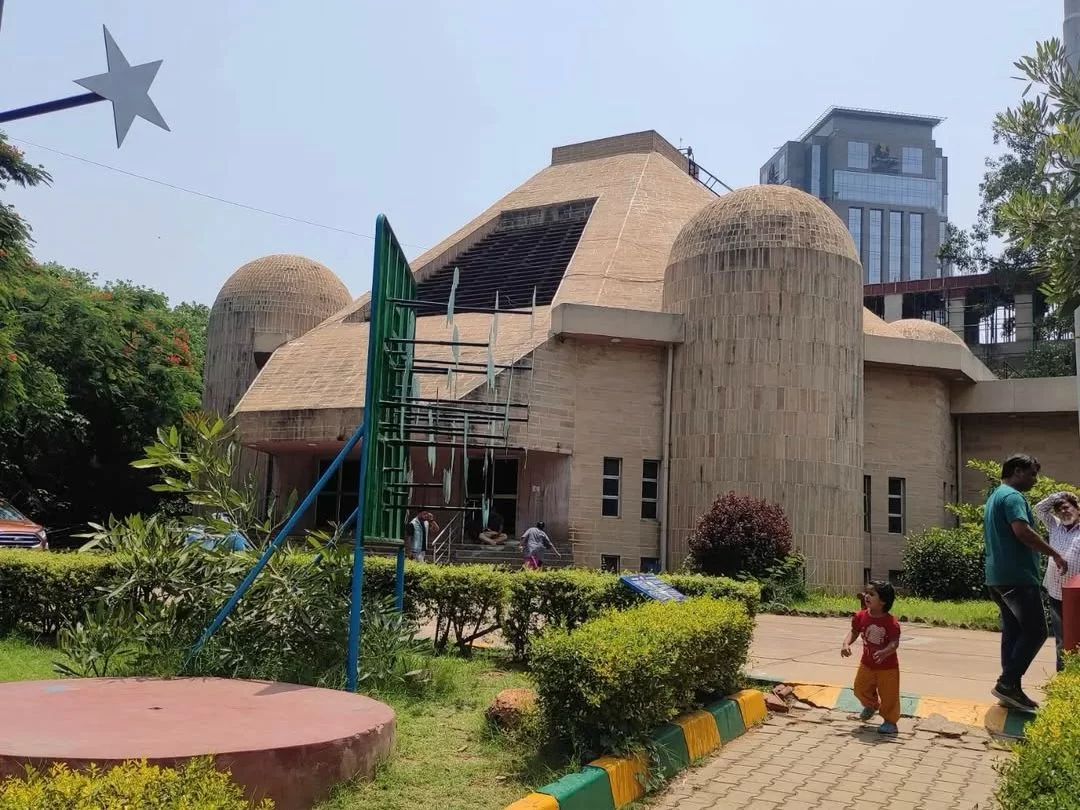
- Best viewpoints: Exterior shots are best from the Cubbon Park side approach, capturing the dome structure with surrounding greenery; the main entrance plaza allows clear frontal views of the building.
- Lighting conditions: Late morning to early afternoon provides even natural light on the white dome and façade; evening light is limited due to tree cover and surrounding buildings.
- Photography rules: Photography is generally restricted inside the dome theatre and during sky shows; indoor exhibit areas may also have limitations depending on displays and staff instructions.
- Crowd and access factors: Weekends, school holidays, and show intervals create dense crowds near entry gates and ticket counters, making clean exterior and interior shots difficult during peak hours.