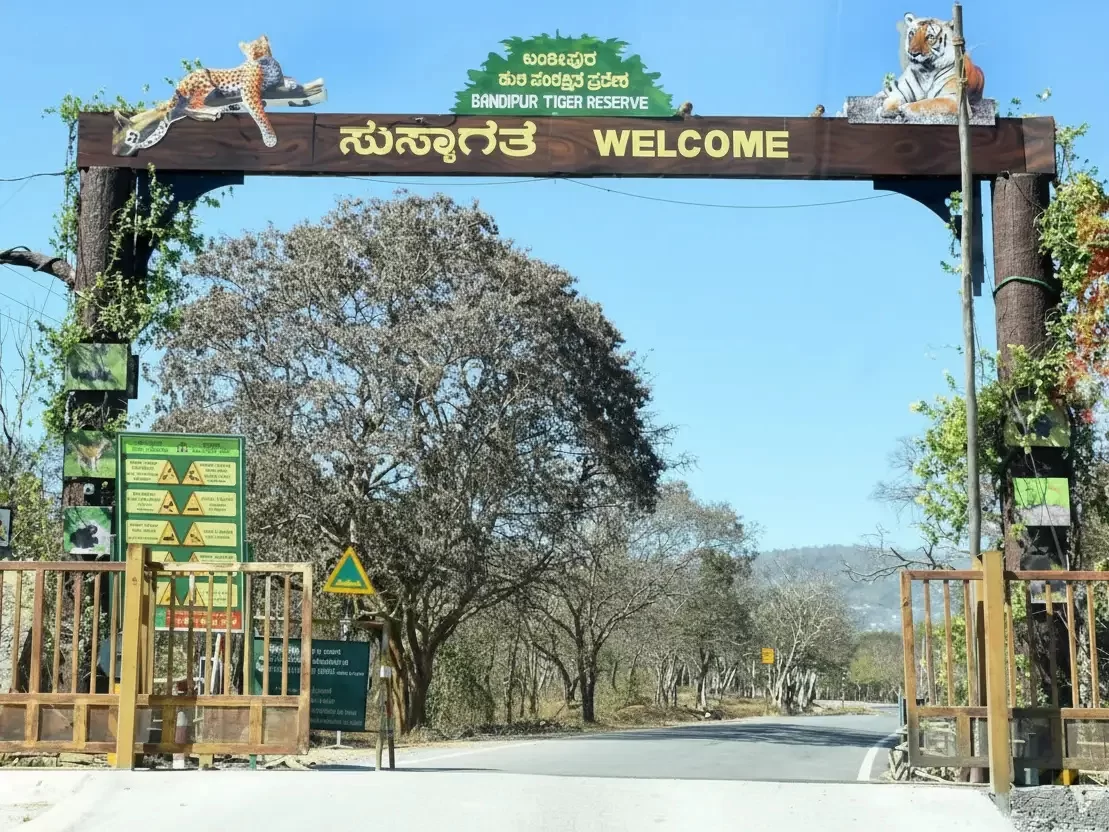
Bandipur National Park, Chamarajanagar, Karnataka, India

Bandipur National Park , Bandipur National Park
Visitors come to observe wildlife such as tigers, elephants, leopards, deer, and numerous bird species through regulated safaris in a protected forest ecosystem. The park is one of India’s most important conservation areas and forms a continuous wildlife landscape with nearby reserves including Nagarhole, Mudumalai, and Wayanad.

Quick Facts About Bandipur National Park

Bandipur National Park Quick Facts

Entry Fee Safari charges apply; jeep and bus safari rates vary based on vehicle type and visitor category.
Timings Park entry generally from 6:00 AM to 6:00 PM; safari timings are usually 6:30 AM–9:30 AM and 3:30 PM–6:30 PM.
Altitude (m) Approximately 680–1,450 m above sea level
Ideal Visit Duration Half day to 1 full day
Best Time of Day Early morning and late afternoon for the best wildlife sightings.
Crowd Level Moderate to high during weekends, holidays, and the winter season.
Distance from City Centre (km) Approximately 80 km from Mysuru and 220 km from Bengaluru.
Walking Difficulty Easy; most sightseeing is conducted through guided safari vehicles.
Parking Available Yes, parking facilities are available near safari reception centres and resorts.
Last Mile Access Direct road access via NH-766 followed by entry through designated safari gates and visitor centres.
Suitable for Kids Yes, safari experiences are suitable for children under supervision.
Suitable for Seniors Yes; vehicle safaris minimize physical effort.
Wheelchair Friendly Partially; visitor centres are accessible, though safari vehicle accessibility may vary.

Why Visit Bandipur National Park Karnataka

Visitors come to Bandipur National Park to experience one of southern India’s most important wildlife reserves, known for its rich biodiversity, forest landscapes, and safari opportunities.

The atmosphere is natural and immersive, with dense woodlands, open grasslands, and the possibility of spotting wildlife such as elephants, deer, gaur, and numerous bird species in their natural habitat.

What makes Bandipur National Park distinct is its location within the Nilgiri Biosphere Reserve, its connectivity with neighboring protected forests, and its role as a major conservation landscape supporting diverse wildlife populations across southern India.

History of Bandipur National Park

Bandipur National Park, located in Karnataka, was originally established as a private hunting reserve by the Maharajas of Mysore. Known as the Venugopala Wildlife Park during the princely era, the area was protected for its rich forests and abundant wildlife long before modern conservation initiatives were introduced.

In 1974, Bandipur was declared one of the first tiger reserves under India's Project Tiger programme, marking a significant milestone in the country's wildlife conservation efforts. The park subsequently expanded and became an important part of the Nilgiri Biosphere Reserve, one of India's largest protected ecological landscapes.

Today, Bandipur National Park is recognized as one of India's premier wildlife destinations, safeguarding diverse species including tigers, elephants, leopards, and numerous bird species while preserving a vital section of the Western Ghats and southern India's forest heritage.

Best Time to Visit Bandipur National Park

Bandipur National Park is best visited from October to May when wildlife sightings are more frequent, safari conditions are favorable, and visitors can comfortably explore one of South India's premier tiger reserves.

  • Ideal months: October to May is the most favorable period to visit Bandipur National Park, with February to May often offering the best wildlife-viewing opportunities.
  • Weather conditions during the best season: Post-monsoon months bring lush landscapes and pleasant temperatures, while the drier summer months concentrate wildlife around water sources, improving chances of spotting elephants, deer, gaur, and predators during safaris.
  • Periods to avoid: June to September brings heavy monsoon rainfall, resulting in dense vegetation, reduced visibility, and occasional disruptions to safari experiences. Wildlife can be more difficult to spot during this period despite the park's scenic greenery.

How to Reach Bandipur National Park

  • Nearest Airport: Mysuru Airport, located approximately 80 km from Bandipur National Park, is the nearest airport. For better connectivity, many travelers use Kempegowda International Airport Bengaluru, about 220 km away.
  • Nearest Railway Station: Mysuru Junction Railway Station, approximately 75 km away, is the nearest major railway station and offers excellent connectivity to major cities across India.
  • Road Access and Last-Mile Connectivity: Bandipur National Park is situated along National Highway 766 between Mysuru and Ooty and is easily accessible by private vehicle, taxi, tourist coach, and state-run buses. Visitors can reach the designated safari and tourism zones directly by road. Internal movement within the core forest area is regulated, and wildlife safaris are conducted through authorized vehicles and designated routes. Night traffic restrictions are enforced on certain forest roads passing through the park, so travelers should plan their journey accordingly.

What to Expect When You Visit Bandipur National Park

  • Environment and Surroundings: Bandipur National Park is a protected wildlife reserve in Karnataka forming part of the Nilgiri Biosphere Reserve. Visitors can expect extensive forests, grasslands, water bodies, and natural habitats that support elephants, deer, gaur, leopards, and numerous bird species.
  • Facilities and Amenities: Visitor facilities include safari booking counters, forest lodges, eco-resorts, parking areas, restrooms, and designated interpretation centers. Food and accommodation options are available near the park's tourism zones, while facilities inside core forest areas are restricted.
  • Accessibility and Movement: The park is accessible by road from Mysuru, Ooty, and nearby towns. Wildlife viewing is primarily conducted through authorized jeep or bus safaris, and visitor movement within protected zones is regulated by forest authorities.
  • Visitor Conditions: Wildlife sightings depend on natural animal movement and are never guaranteed. Visitors should expect early morning or late afternoon safari schedules, follow forest regulations, maintain silence during wildlife viewing, and avoid feeding or approaching animals. Mobile network coverage may be limited in some forest sections, and seasonal weather conditions can influence safari operations.

Important Visitor Information for Bandipur National Park

  • Bandipur National Park experiences the highest visitor numbers during weekends, public holidays, and the wildlife tourism season from October to May.
  • Early morning and late afternoon safari slots generally offer the best opportunities for wildlife sightings, while midday hours are typically less active for animal movement.
  • Summer months often improve wildlife visibility around water sources, whereas monsoon rains can affect safari conditions and access to certain forest routes.
  • No specific dress code applies, but neutral-colored clothing, comfortable footwear, and sun protection are recommended for safari activities.
  • Visitors must follow forest department regulations, remain inside designated safari vehicles, avoid making loud noises, and strictly refrain from feeding or disturbing wildlife.

Photography and Viewpoints at Bandipur National Park

  • The safari routes through Bandipur National Park offer the best photography opportunities, allowing visitors to capture elephants, deer, gaur, langurs, and a wide variety of bird species within their natural forest habitat.
  • Early morning and late afternoon safaris provide the most favorable lighting conditions and the highest chances of wildlife sightings, making them ideal for nature and wildlife photography.
  • The park's mix of dry deciduous forests, open grasslands, and waterholes creates diverse photographic settings that showcase the landscapes of the Nilgiri Biosphere Reserve.
  • Water sources and grassland clearings often provide excellent vantage points for photographing wildlife, particularly during the dry season when animals gather around available water.
  • Winter and post-monsoon months offer particularly rewarding photography conditions, with pleasant weather, greener landscapes, and improved visibility throughout the park.
  • Photography is permitted during authorized safaris, but visitors must remain inside designated vehicles, avoid disturbing wildlife, and comply with all forest department regulations.
  • Drone photography, flash photography aimed at wildlife, and any activity that may disturb animals are prohibited within the national park.

Near By Attraction

Frequently Asked Questions About Bandipur National Park

Loved this place ? Let’s Plan Your Karnataka Trip

Get customized Karnataka tour planning designed around regional diversity, seasonal weather shifts, road travel distances, and realistic pacing. Whether you are visiting for heritage monuments, temple architecture, hill retreats, wildlife reserves, beach

⚡ Quick Response | 💰 Free consultation | 🕒 24×7 expert support

×

Plan Your Trip