Quick Facts About Nilnag Lake
| Entry Fee | Free |
| Timings | Daytime |
| Altitude (m) | 3300 |
| Ideal Visit Duration (mins) | 45 |
| Best Time of Day | Late Morning |
| Crowd Level | Low |
| Distance from Srinagar (km) | 50 |
| Walking Difficulty | Easy |
| Parking Available | Limited |
| Last Mile Access | Road + Walk |
| Suitable for Kids | Yes |
| Suitable for Seniors | Limited |
| Wheelchair Friendly | No |
Why Visit Nilnag Lake near Yusmarg
Visitors come to Nilnag Lake for its quiet forest setting and deep blue water, which offers a calm contrast to busier meadow destinations in Kashmir. It appeals to travelers looking for a short nature stop without heavy crowds or commercial activity.
The on-ground atmosphere is peaceful and shaded, with dense pine and fir trees surrounding the lake and limiting noise from outside areas. The space feels cool and still, making it suitable for slow walks and brief rest stops rather than extended activities.
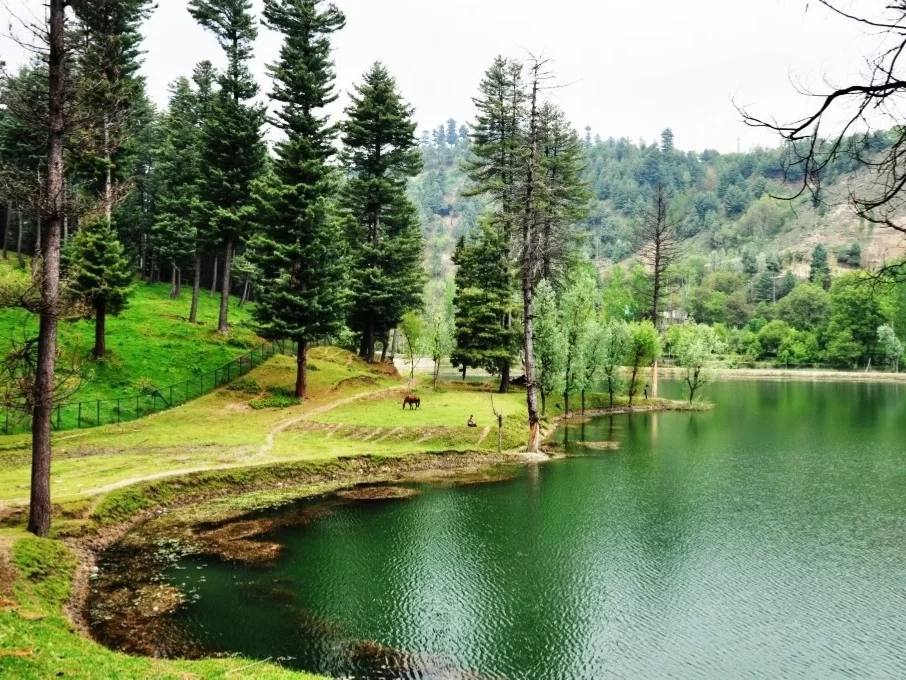
What makes Nilnag Lake distinct for travelers is its secluded feel and color variation, as the water often appears dark blue due to depth and forest cover. It suits visitors who prefer low-key natural settings and are comfortable with limited facilities.
History of Nilnag Lake, Budgam
Nilnag Lake has no recorded association with rulers, settlements, or built heritage. It is a natural freshwater lake formed by mountain springs and seasonal runoff in the forests of the Pir Panjal foothills.
Historically, the lake area was used by nearby villages as a seasonal grazing and resting spot, valued mainly for its clean water and surrounding forest cover. Its remote location meant it remained outside formal administrative or trade routes.
Nilnag Lake became known beyond local communities only in recent decades as access roads improved and nature-based tourism expanded in Budgam district. Its historical relevance is tied to long-term natural use and geographic isolation rather than cultural, religious, or political significance.
Best Time to Visit Nilnag Lake Yusmarg
Nilnag Lake near Yusmarg is best visited when forest trails are snow-free and the lake is fully visible, as access and the overall experience depend heavily on seasonal weather and ground conditions.
- Ideal months: May to October, when the walking trail from Yusmarg is accessible and the lake’s greenish-blue water can be clearly seen.
- Weather during the best season: Cool to mild daytime temperatures, shaded forest paths, clear air, and calm lake surroundings suitable for short hikes.
- Periods to avoid: November to April due to heavy snowfall, icy trails, closed access routes, and safety concerns while walking through forested areas.
How to Reach Nilnag Lake, Yusmarg
- Nearest Airport: Srinagar International Airport (Sheikh ul-Alam Airport), approximately 50 km away. The airport has regular flights from major Indian cities. From the airport, travel is by road via Budgam and Yusmarg, usually taking 2 to 3 hours depending on traffic and road conditions.
- Nearest Railway Station: Srinagar Railway Station (Nowgam), about 45 km from Nilnag Lake. It is connected to the Banihal–Baramulla rail line. From the station, visitors must hire a taxi, as there is no direct public transport to Yusmarg or Nilnag Lake.
- Road Access & Last-Mile Connectivity: Nilnag Lake is accessed via Yusmarg. Vehicles can reach the Yusmarg parking area, after which Nilnag Lake requires a trek of approximately 4 km through forest trails. The trail is moderate and may be muddy or slippery after rainfall. During winter, heavy snowfall often restricts access, and trekking conditions can be unsafe without local guidance.
What to Expect When You Visit Nilnag Lake
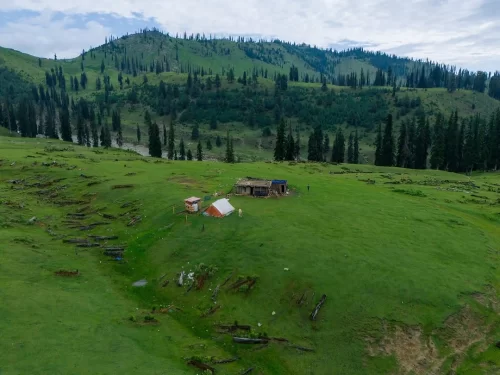
- The environment at Nilnag Lake is forested and enclosed, with tall pine trees surrounding a small, dark-blue freshwater lake. The setting feels quiet and shaded rather than open or panoramic.
- Facilities are minimal. Basic walking paths may be present, but there are no reliable restrooms, food stalls, or managed seating areas near the lake.
- Accessibility involves a short walk from the parking area through forest paths. The trail is uneven and can become muddy or slippery after rain.
- Movement around the lake is limited by dense trees and soft ground. There is no continuous walking loop, and visitors usually stay near the main viewing edge.
- Visitor numbers are generally low to moderate. Most people come for short visits and quiet walks rather than extended stays.
- Weather and light conditions affect the experience. The forest canopy keeps the area cool and dim, and damp conditions are common, especially during monsoon months.
Important Visitor Information for Nilnag Lake, Yusmarg
- Crowd and Weather Notes: Nilnag Lake remains lightly visited compared to nearby Yusmarg meadows, with modest crowding during summer weekends from May to September. The forested setting keeps temperatures cooler, and sudden rain or fog can occur, especially in the afternoon.
- Peak and Quiet Visiting Hours: Late morning to early afternoon offers the most comfortable conditions and better light around the lake. Early mornings can be damp and cold due to shade and dew, while evenings see quick temperature drops.
- Dress Code: No formal dress code applies, but layered clothing is recommended due to cool forest temperatures. Comfortable walking shoes are necessary, as access involves a short walk through uneven woodland paths.
- Safety Notes and Practical Cautions: The trail to Nilnag Lake can become slippery after rain. There are no facilities, food stalls, or medical support near the lake. Visitors should avoid venturing into dense forest areas, carry essentials, and return before late afternoon as daylight fades quickly under tree cover.
Photography and Viewpoints at Nilnag Lake, Yusmarg
- The wooden viewpoint platform near the lake edge offers the clearest framing, capturing the deep blue water against surrounding pine forests and open meadows.
- Low-angle shots from the shoreline work well for reflections, especially when the water is calm and forest lines mirror cleanly on the lake surface.
- Late morning between 10 am and 12 pm provides the most even lighting, as the sun clears surrounding trees and reduces deep shadow across the lake.
- Early morning scenes are often shaded and cooler in tone due to dense forest cover, limiting color depth in photographs.
- Photography is allowed for personal use, but stepping into the water or disturbing the lake edge is discouraged to preserve the natural setting.
- The area remains relatively uncrowded, though mist and cloud cover can reduce visibility, making clear-weather visits best for wide lake views.